

How to glass for game effectively
The term ‘eagle-eyed’ is a common expression used to describe someone extremely observant and adept at spotting small details. The phrase clearly derives from the remarkable vision of birds of prey. An eagle, for example, has both monocular and binocular vision 4-8 times stronger than a human, allowing it to locate and focus on prey from up to 4.8km away. With a visual acuity of 20/5, an eagle can see at 20m what a human can at 5m. The third eyelid, or nictitating membrane, keeps their eyes clean, clear and focused, even during high-speed hunting dives – vital when considering that peregrine falcons can reach speeds up to 290km/h. These apex predators exploit their environment with precision and their extraordinary vision is one of the defining advantages of their hunting success.
Predators at work
All hunters are predators – humans included – because we prey upon and exploit other animals for sustenance. While the realities of animals dying to provide for us have been somewhat sanitised in modern times, hunting is far from a one-sided affair. Nature equips our quarry with senses often superior to our own: keen hearing, acute vision, an exceptional sense of smell, natural camouflage, and the speed and instincts to evade predators. In response, hunters have developed strategies, sometimes enhanced by technology, to gain the upper hand.
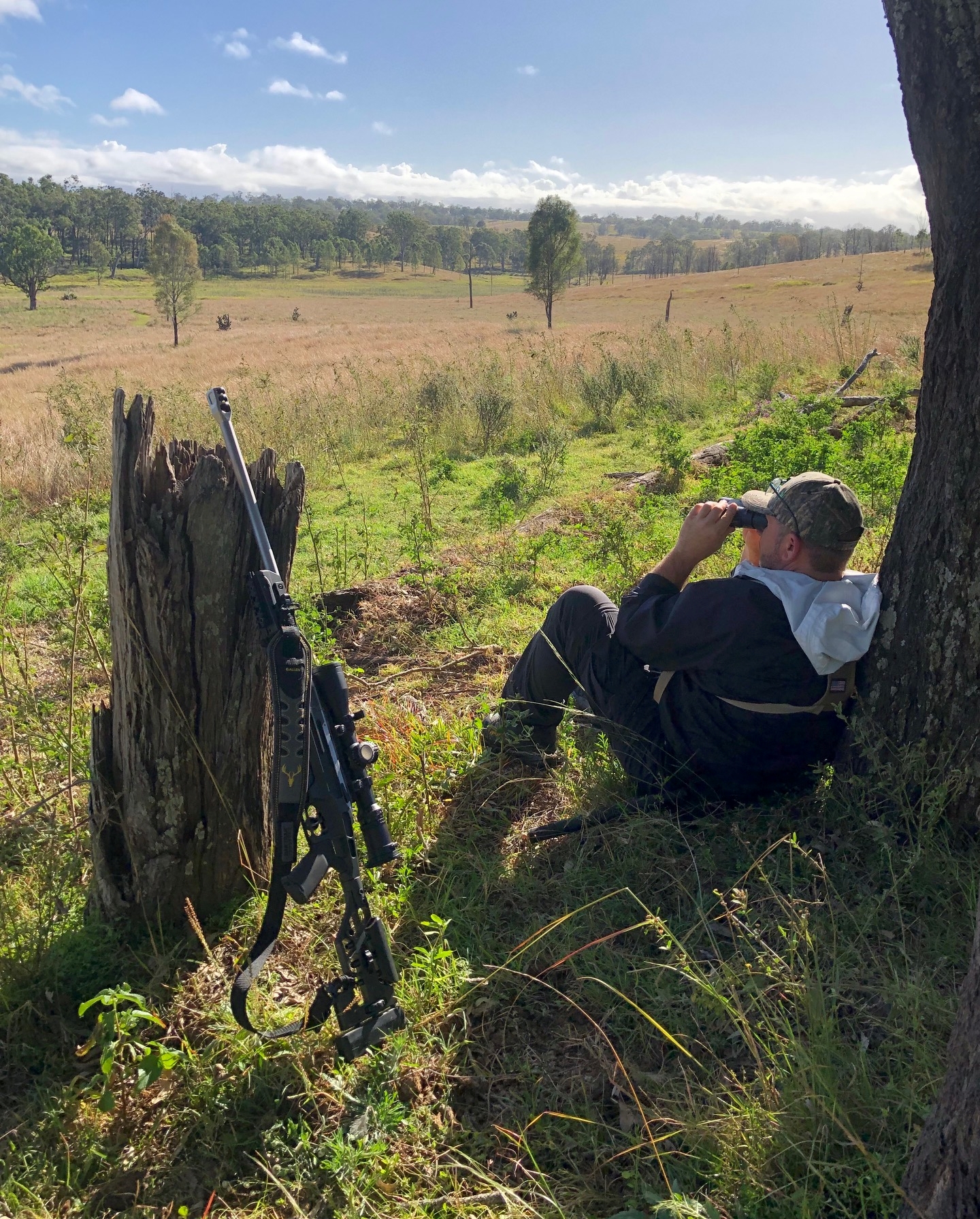
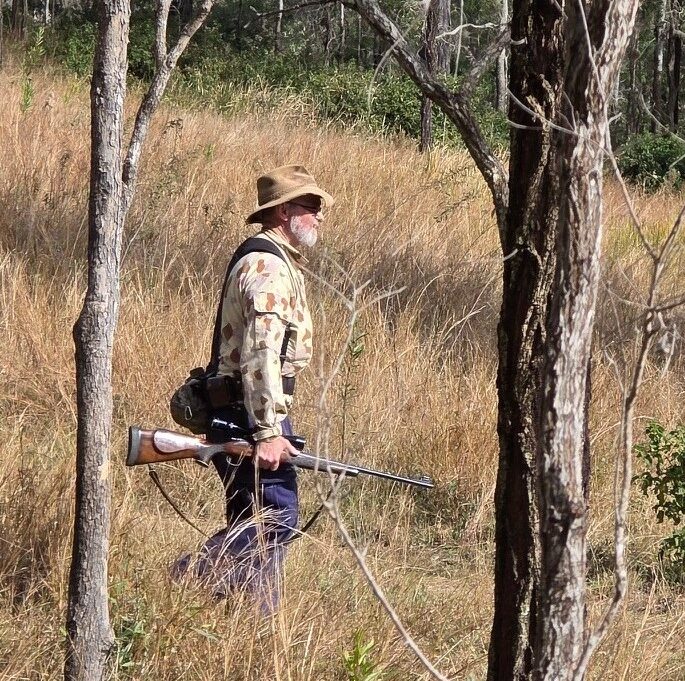
Chief among these strategies is stalking: moving stealthily and observantly though terrain, managing wind, vegetation and ground to remain undetected. In my experience, the success of a stalk is often determined not by the distance covered but by the thoroughness of the approach. Patience and discipline – rigorously interrogating the terrain – pays off. One technique that greatly aids this is glassing: scanning the terrain with binoculars, spotting scopes or even a rifle’s telescopic sight. It requires patience and concentration, allowing hunters to identify potential targets, assess the terrain and plan purposeful stalks. Successful glassing depends on three factors: equipment, knowledge and technique.
Equipment
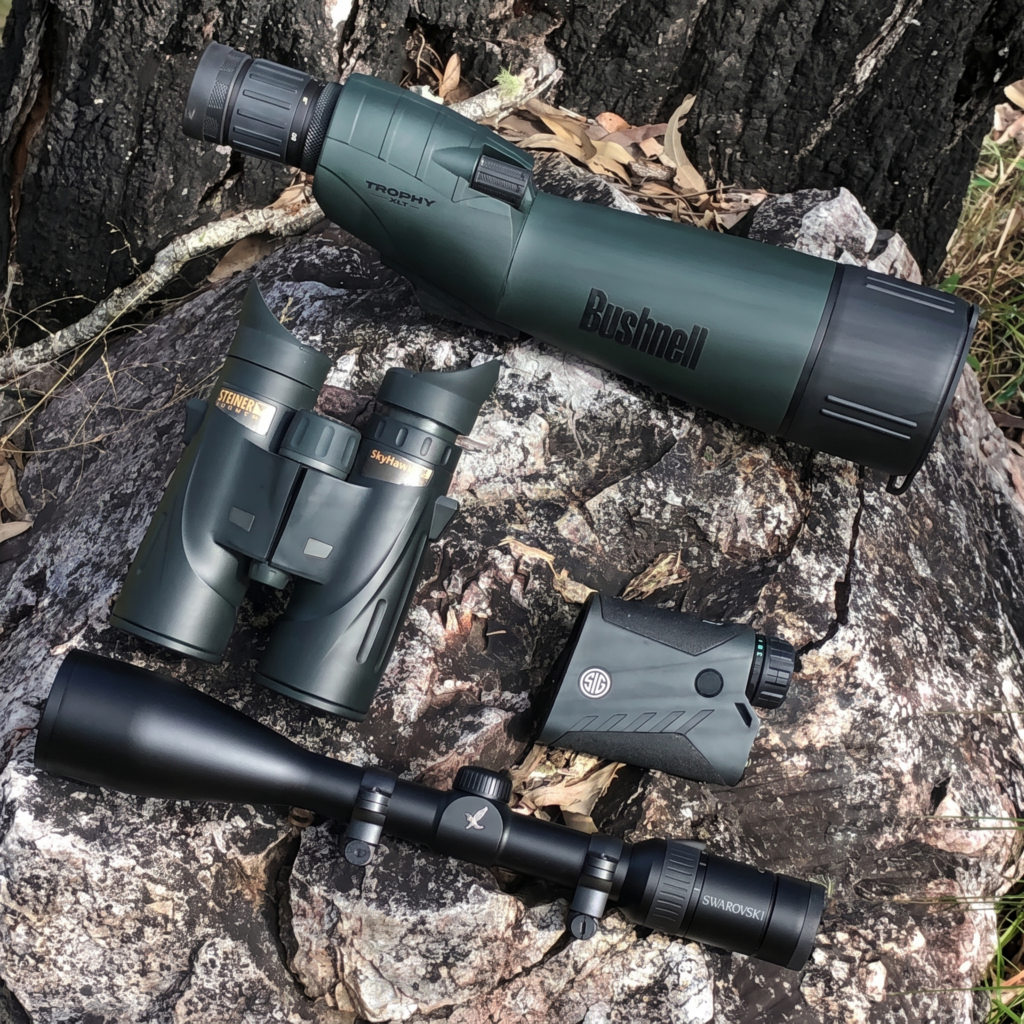
The key is choosing what suits your needs and investing in the best quality you can afford. The simplest tool is a riflescope, which can double as a glassing device. I often use my scope from cover to glass the face of a ridge or gully before moving forward, though the field of view is limited and prolonged use can cause arm fatigue.
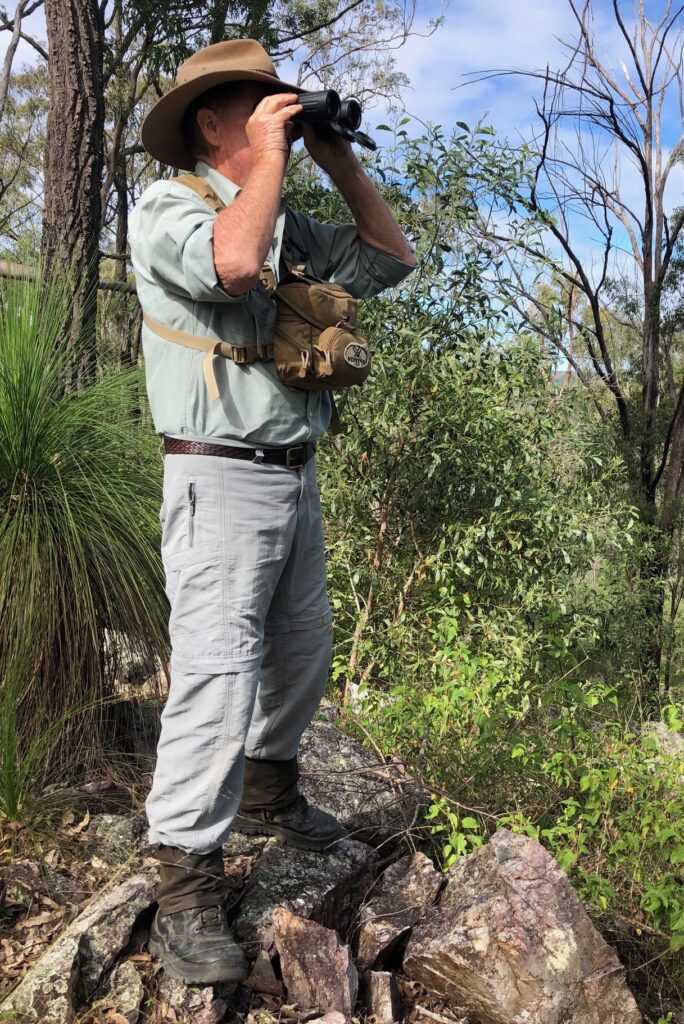
A step up is binoculars, ideally 10-15x magnification, carried in a purpose-designed harness. They are lightweight, easy to sweep across terrain, and reduce eye and arm fatigue. Monoculars are another option, and rangefinders – some built into binoculars – are useful adjuncts.
For maximum magnification, a dedicated spotting scope is best. Typically used with a tripod, it offers longer range and clarity but is bulkier and less convenient to carry. Some ‘tactical’ scopes have built-in rangefinders. Thermal imaging devices also extend glassing beyond dawn and dusk. Ultimately, the choice of equipment is personal and dictated by terrain, duration and hunting style.
To reduce fatigue while glassing, I now take the GAME-BAR CARBON+ Bundle from WALK’N’STALK, reviewed in Australian Hunter 95. This ultra-light carbon-fibre tool acts as a hiking pole, rifle rest and gambrel, with other functions that facilitate glassing, photography, shooting and even field butchering.

Knowledge
Effective glassing relies on understanding both your hunting ground and the habits of the game. Animals follow seasonal patterns and favour certain areas at different times of day. Focus on locations where game will likely be found – warm sunlit ridge faces in winter mornings, dense, shady creek-sides during summer heat, or areas with shelter, food and water. Look for wallows, scrapes, rubs, game trails and access points, and prioritise early morning and late afternoon hunts.
Know what to look for. Often you won’t see the whole animal immediately – just a hint: a flick of an ear, the tip of a rack, a contrasting patch of colour, a shadow in the trees. Understanding these partial presentations and the behaviours they suggest is crucial. Even small vegetation can conceal a large animal.
I recall one experience when my son and I skipped glassing a ridge, choosing instead to follow a dozer track to prime hunting land because ‘that was where the deer would be’. To our surprise, a sizable stag stood up from behind a small bush right beside the track, barely concerned as he trotted off. While we could have taken him, he was not our target that day. The lesson was clear: always glass the terrain you intend to traverse.
Technique
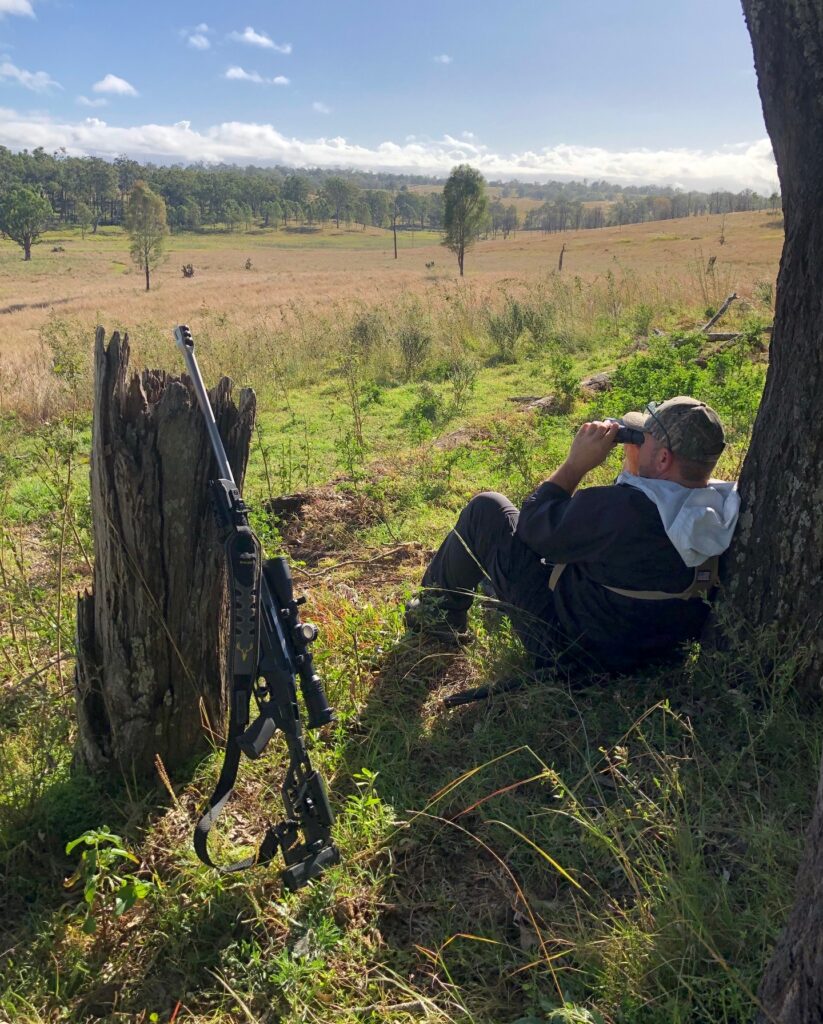
Effective glassing begins with selecting a suitable eyrie. Prior experience and reconnaissance of your hunting ground, if possible, will often dictate the best positions to glass from and allow you to establish a network of sites to work. Ideally, it is an elevated position with good visibility, protection from the elements and concealment. Manage the wind, avoid skylining yourself and ensure you can move discreetly to a secondary position if needed.
Adopt a slow, methodical approach: divide the terrain down into manageable sectors and scan using a grid pattern. Whether it be vertical or horizontal – or both – start with ‘macro’ sweeps to identify obvious targets, then conduct a slower, detailed ‘micro’ scan of openings, clearings, or areas of interest like water sources or wallows. Duration is flexible, depending on experience, time of day, weather or animal behaviour.
Even subtle changes – light, view angle, animal movement or grazing patterns – can alter the scenario rapidly. I recall one hunt, after intel from a farmer, sitting with a friend glassing a creek flat adjacent to a dam for an entire afternoon. Just as we were leaving close to last light, three deer stood up about 300m ahead. They had been bedded there the whole time but it was only as the day cooled off that they rose for a feed and a drink. Needless to say, one ended up in the freezer. It just goes to show that if you play the game you will get a win.
Watch and act
Glassing is more than a simple hunting adjunct to a successful hunt – it is essential. It requires patience and discipline from discreet, sheltered, downwind positions, and take the time to observe location hotspots. By detecting animals and assessing behaviour before a stalk, hunters maximise their chances of success. Like all apex predators, we watch, wait and strike at the right moment. The advice is simple: take the time to get your eyes on the prize and you will be rewarded.
Share this article
Related
Articles


Related
Recipes
Sorry, no related items found.