
Managing severe bleeding in the bush
Ever used the term ‘Better out than in’? Yes, some things are better out than in. Blood is not one of them! This issue we explore the ins and outs of major bleeds, and what to do when someone ‘springs a leak’.
The cardiovascular system is like a plumbing system. A pump (the heart), pipes (veins and arteries) and fluid (blood) cycle through the body to supply the organs with oxygen. Humans need a certain amount of blood in their body to keep the system pressurised. Major, uncontrolled bleeds cause blood pressure to drop, eventually leading to ‘hypovolaemic shock’.
Bleeding can be either external or internal.
With internal bleeding, blood stays in the body but is no longer contained within the pipes. It is normally associated with widespread blunt trauma that damages internal organs. Think of a leak in a pipe that is buried underground. Initially, you can’t see the leak itself, but you will eventually see the evidence of it.
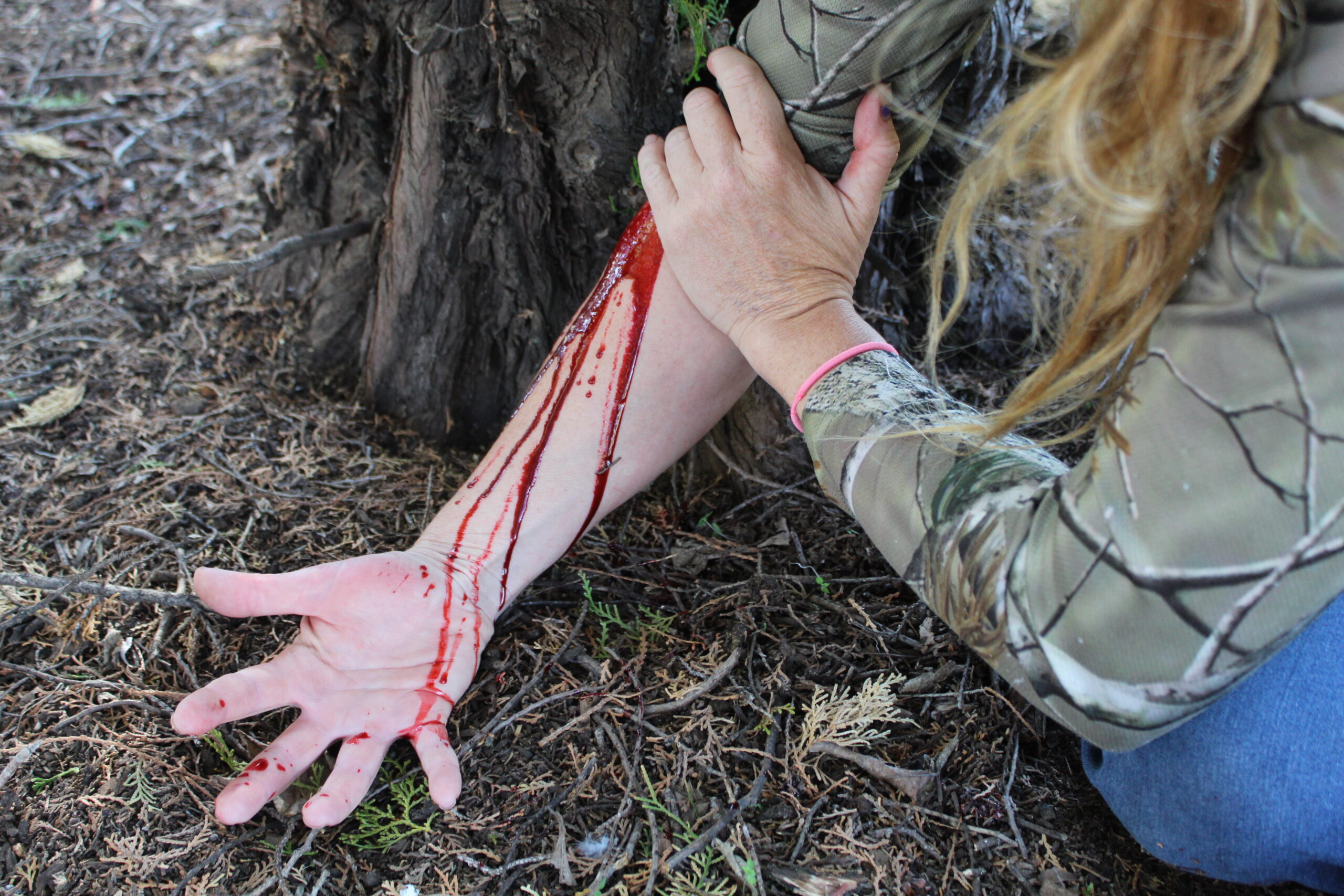
External bleeding is where the blood vessels have been cut from the outside. Wounds to arteries can bleed profusely and may spurt bright red blood with each heartbeat. In venous bleeds, dark red blood flows steadily along the skin. Capillary wounds generally ooze bright red blood. They are superficial and more easily controlled.

As a first aider, your swift intervention, using Pressure, Elevation and Rest can save a life. The aim of management is to keep the fluid in the pipes and slow down the pumping action of the heart to reduce further blood loss.
Management
In all first aid situations, first provide basic life support (BLS) by following DRSABC.
Danger: Assess the scene for dangers to yourself. Apply gloves and other protective measures.
Response: While you gather your first aid resources (and wits) assess the response level of the casualty. Ask them to adopt a position of comfort, ideally sitting or lying. You could have the patient apply direct pressure on the wound using their hand.
Send for help: In major bleeds, time is critical. Have someone call 000/112 for an ambulance if the casualty has lost a lot of blood. In a remote area, it is best to call immediately. You can always call back to cancel emergency services if you think you’ve ‘jumped the gun’.
Airway/Breathing: As a casualty progresses into shock, it is vital to CHECK, CLEAR and MAINTAIN their airway, and ensure they are breathing normally. A casualty that becomes unresponsive or has airway or breathing difficulties should be put into the recovery position.

Critical bleeds: Apply firm pressure to the wound using a combine dressing or folded triangular bandage (or whatever clean item you have on hand). Secure it with a roller bandage, making sure it provides firm pressure on the wound and extends above and below it. If bleeding continues through the initial pad, apply a second one, this time using more pressure. Check that the pad and bandage are directly on the wound.
An arterial tourniquet should be used when bleeding cannot be controlled with pressure. It is used in the case of arterial (spurting) bleeds. Applying a torniquet correctly requires training and practice.
Elevate the wound if possible. This uses gravity to slow the blood flow and allows a blood clot to form. For arms, you can apply an elevation sling. A leg can be elevated over a raised object such as a rolled-up swag or backpack. Do not raise the legs where there is suspected internal injury, such as breaks, to the lower body.
Manage shock: Physiological shock (different from emotional shock) occurs when there is insufficient supply of blood to the body’s organs. Initially the body compensates by shutting down blood flow to less important areas, such as the skin, and altering the pumping activity of the heart. However, if left untreated, the organs will fail due to lack of oxygen.


Symptoms of shock include:
- Pale, cool and sticky skin
- Confused or anxious behaviour
- Nausea or vomiting.
Lie the casualty down and keep them warm. Cold ground poaches significant heat from the body. Insulate underneath the casualty using a tent fly, swag, blankets, tarps or waterproof jackets, then wrap in warm layers using sleeping bags or blankets. Make sure that the injuries are accessible for monitoring and further treatment.
A casualty experiencing shock will experience poor brain oxygenation resulting in confusion, anxiety, agitation and often a sense of ‘impending doom’. They will benefit from rest and reassurance to lessen their symptoms.
Remember, prevention is the best cure. Ensure you and your hunting buddies use commonsense, protective gear and safe technique when handling knives and firearms. After a successful hunt, it is best to be the butcher, not the butchered!
Christie recommends attending first aid training by a reputable provider. This information is general advice. Always operate within your level of training.
Got a question? Reach out to Christie Pisani at [email protected]
Share this article
Related
Articles


What to carry hunting: Essential gear for safety and success


Related
Recipes
Sorry, no related items found.