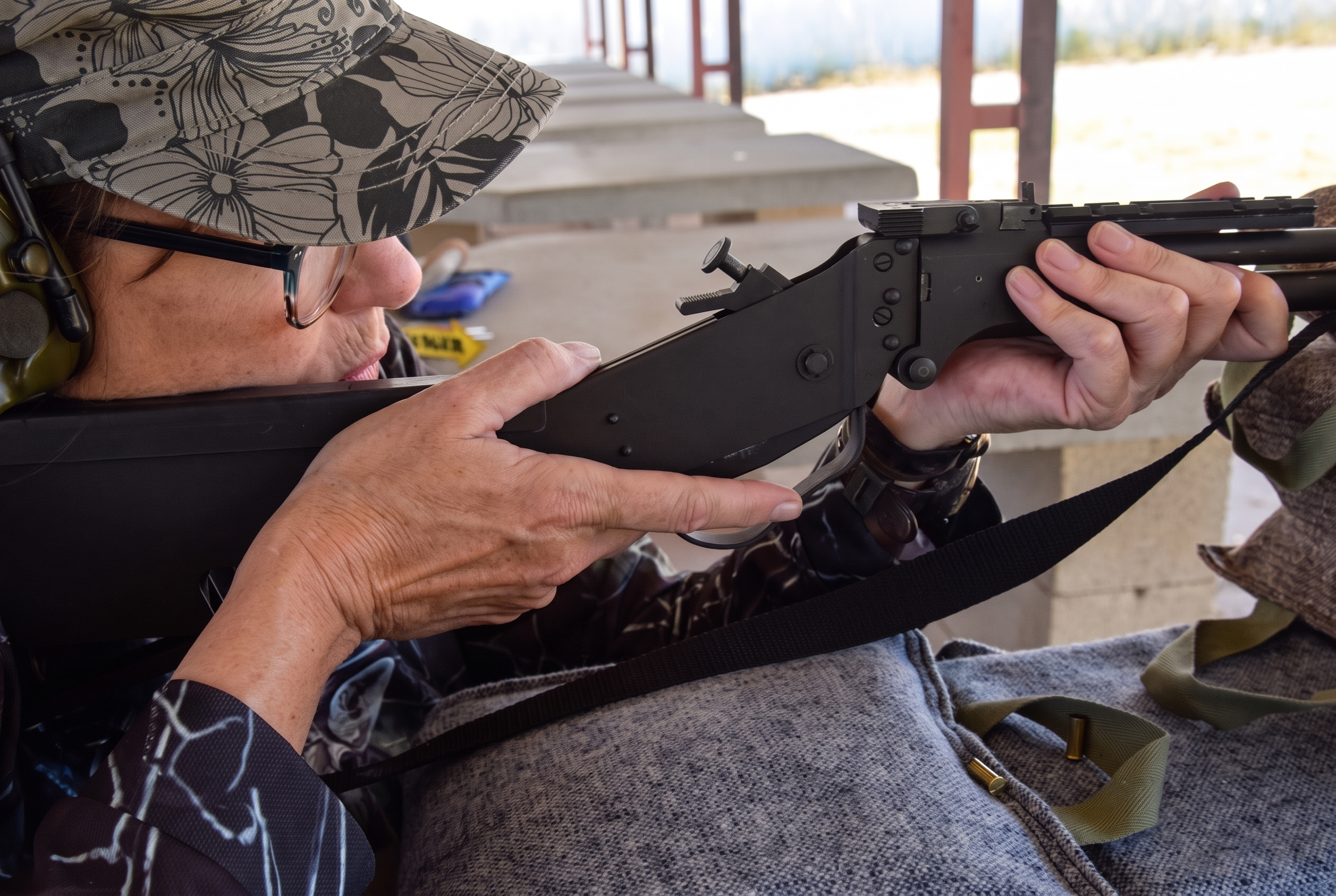
Back to basics with the M6 Scout
In the early 1980s, my father-in-law, Jim, acquired a brand new M6 Scout manufactured by Springfield Armory, the self-proclaimed ‘oldest name in American firearms’. It was gifted to him by a hunting buddy to satisfy a few outstanding debts (in the days before firearm regulations) and was very welcome indeed.
As an ‘over-under’ combination break-action rifle, the M6 Scout combines a .22LR upper barrel with a .410 lower shotgun barrel. Jim subsequently fitted a telescopic sight and has spent many happy days despatching small game.
Some 35 years later, it remains in Jim’s inventory of ‘go-to’ firearms for hunting trips. Which is why he had it with him on a family hunt at Tenterfield some time ago. And from the moment I saw it, I was intrigued.
The evident utilitarianism of the M6 Scout immediately appealed to me. I’ve never been one for flashy equipment. I own an English longbow because I like the challenge of pitting my skills against my quarry, unaided by technology. It demands a disciplined stalk to get close enough for a clean despatch.
In a similar vein, my first car was a 1970 VW Beetle. Rather than opting for a modern Japanese automatic, I enjoyed mastering the quirks of the dak-dak’s snatchy clutch. I know that driving this vehicle within the limits of its acceleration and braking power made me a better driver. Motorcycle ownership did the same.
These days, I own a 6×6 ex-military Land Rover 110 Perentie. Those in the know understand its idiosyncrasies. Within this context, the M6 Scout presented itself as the most ‘back to basics’ firearm I’d ever seen. With no ‘furniture’ on the buttstock or forestock, and with lots of stamped and forged parkerized steel to look at, it seemed to be as bare as firearms come.
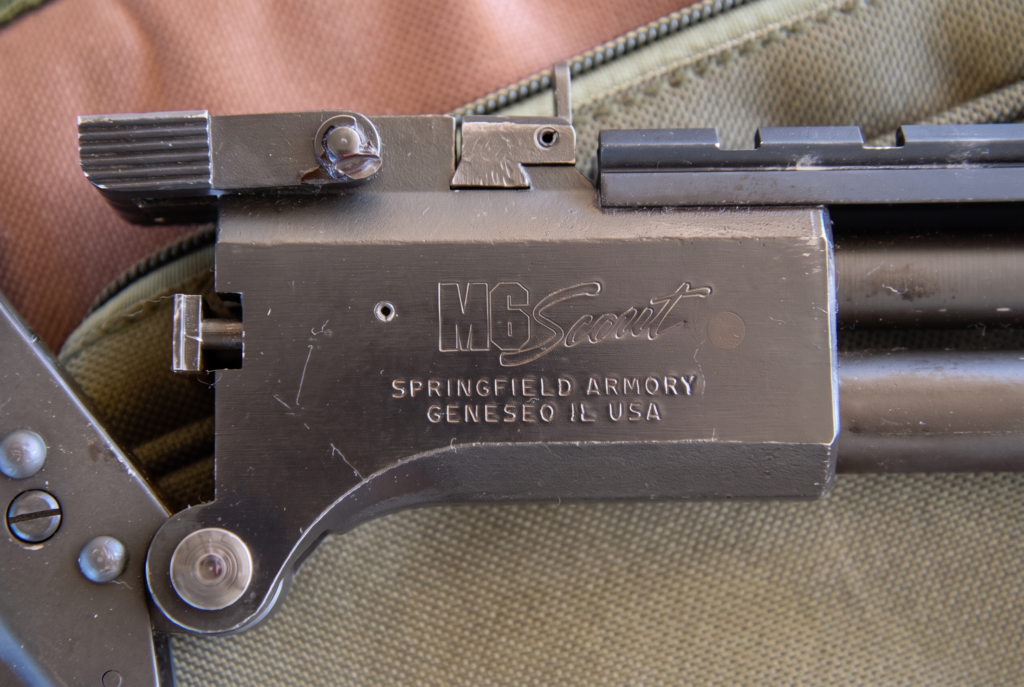
And if this wasn’t enough to interest me, being an army officer married to an infantryman, the military credentials of the M6 Scout resonated in a way that other firearms hadn’t.
You see, the M6 Scout has its origins firmly in the aftermath of World War Two and the Cold War era. Officially known as the ‘Rifle-Shotgun, Survival Cal .22/.410, M6’, it was included in the survival kit of US airmen operating over the wilds of the Arctic and across other remote operating areas. Notably, it was not intended to be used in combat. Instead, its purpose was to enable downed pilots to forage for wild game and to protect against potentially hostile wildlife.
Using stamped steel production methods common in firearms like the AK-47, the M6 Scout could be mass produced. And the break-action design offered additional military benefits. For one, it was a remarkably compact so could be stowed away in ejection seats and life rafts. It was light enough for someone fatigued and starving to carry and operate, and ambidextrous for use by both left and right-handed airmen. The trigger squeeze-bar meant that it could be fired using gloves when operating in cold Northern Hemisphere conditions, or if injured. Further, the ability to visually inspect the chamber easily was an added safety feature for users who may have been great aviators but novice marksmen.
The only trouble was that, when I first saw Jim’s M6 Scout, I didn’t have a firearms licence. So, I was relegated to observing how it performed in the field, despatching bunnies in short order to furnish rabbit pie for the extended family. My interest was firmly piqued – and my husband Scott noticed.
So, I was delighted when, five years ago, Scott acquired an M6 Scout of his own, purchased secondhand for $1500 with a red dot sight. The original owner bought it new – probably around the same time that Jim was gifted his. He’d told Scott that he acquired the firearm for a bit of hunting during a lap of Australia. As it turned out, ultimately, he’d only sent about a dozen rounds downrange with it.
It’s worth observing that the Springfield Armory M6 Scout differs from earlier military variants. The original M4 was manufactured by the Harrington & Richardson Arms Company. Based on their bolt-action M265 sporting rifle, the wooden stock was replaced with a telescoping wire stock and the frame was made of sheet metal. The firearm had a 14″ detachable barrel chambered for .22 Hornet ammunition with a 4-round detachable box magazine.
In 1952, Ithaca Gun Company began producing a replacement, the ‘M6 Aircrew Survival Weapon’. This was an under-over combination comprising the .22 Hornet with a .410-bore shotgun beneath. The trigger was replaced by a squeeze-bar for use by a gloved or injured hand, and due to it now being break-action the magazine was replaced by a storage compartment in the buttstock to hold both types of ammunition.
Due to the short barrel length, the M6 was not authorised for civilian use and, when the military phased out the firearm in the 1970s, Springfield Armory set about generating its own version for the commercial market.
Imported from the Czech Republic, the barrel length was increased to 18″ to make it legal outside of the military, and the trigger bar was encircled with a trigger guard. Because the trigger guard now prevented the firearm from folding neatly in two, a removable hinge pin was added to allow some disassembly for storage.
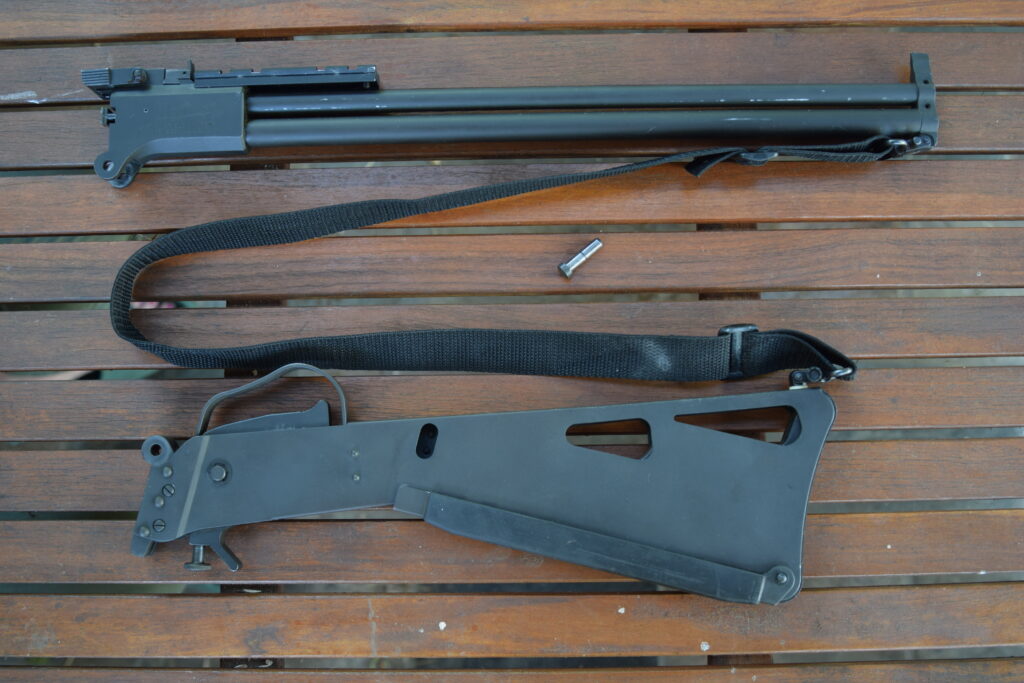
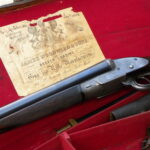
When Scott first showed me his newly acquired M6 Scout, it was still stored in its manufacturer’s compact 530x300mm plastic moulded case. Its disassembled parts fitted neatly into their purpose shaped niches, with the operator’s manual tucked inside the lid.

And it was about this point that I could readily see myself shadowing Scott on his bowhunts. The 2kg firearm strung easily over my shoulder, ready to despatch an animal if his aim was not true, or if we met a particularly angry looking ridgeback at close quarters.
Now as an authorised Class A and B firearms licence holder, I’m starting to bring this vision to reality. And I have to say that the M6 Scout is proving to be a remarkably amenable training partner.
There are several features of the M6 Scout that make it suitable for a novice shooter, as it was for downed pilots. As a single-shot, break-action rifle, it’s simple to operate and safer to use.
The straightforward design means there are fewer moving parts than in many other firearms, which reduces the likelihood of stoppages. While common mechanical failures may be easy to rectify, like a magazine misfeed for example, such stoppages do nothing to build confidence in unfamiliar hands.
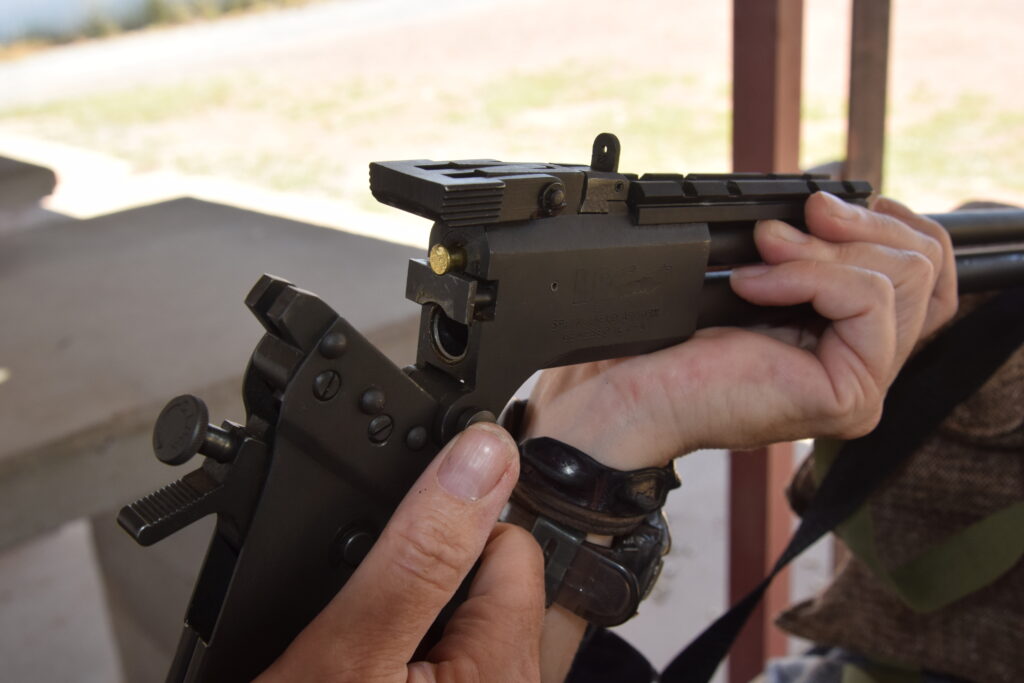
Relatedly, preparing the M6 Scout to fire is a clear, deliberate process with little room for error. On top of the straightforward unloading and loading with the M6 Scout, it is easy to visually inspect both barrels to ensure there are no obstructions or live rounds present. This significantly reduces the risk of accidental discharge.
On the SSAA range, I’ve been using open sights to build my competence. The operator’s manual recommends use of the round aperture (peep sight) for rifle shooting and the V-notch for shotgun. As a member of the Australian Army, I am more comfortable using the peep sight. It more closely approximates the round sight picture I am accustomed to using with the 1.5x ring sight fitted to the F88 Steyr. But I’m growing used to the V-notch and it’s all just a matter of practice. For heightened accuracy, the Picatinny rail, fitted by the previous owner, allows a wide range of sights and scopes to be fitted.
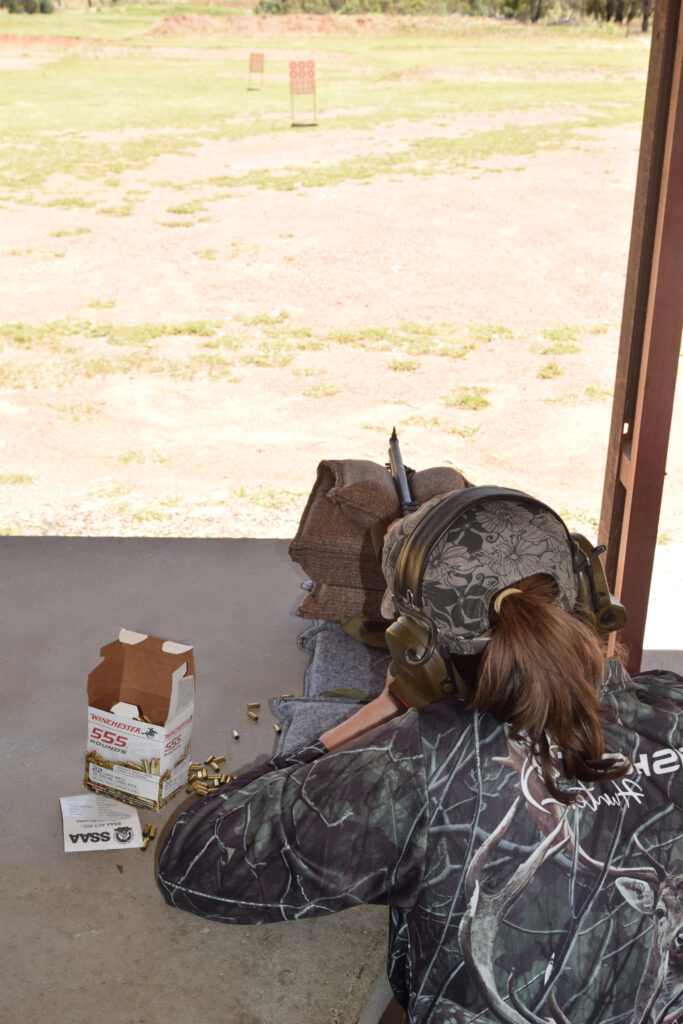
Switching between the two barrels is easy. The firing pin selector is a simple rotating knob fitted on top of the hammer. By rotating the knob clockwise, it disengages, locks and raises the selector to choose the rifle barrel. Simply lower the knob to select the lower shotgun barrel. The over-under combination means that both barrels can be loaded simultaneously, allowing for easy selection of a suitable round or a quick follow-up shot.
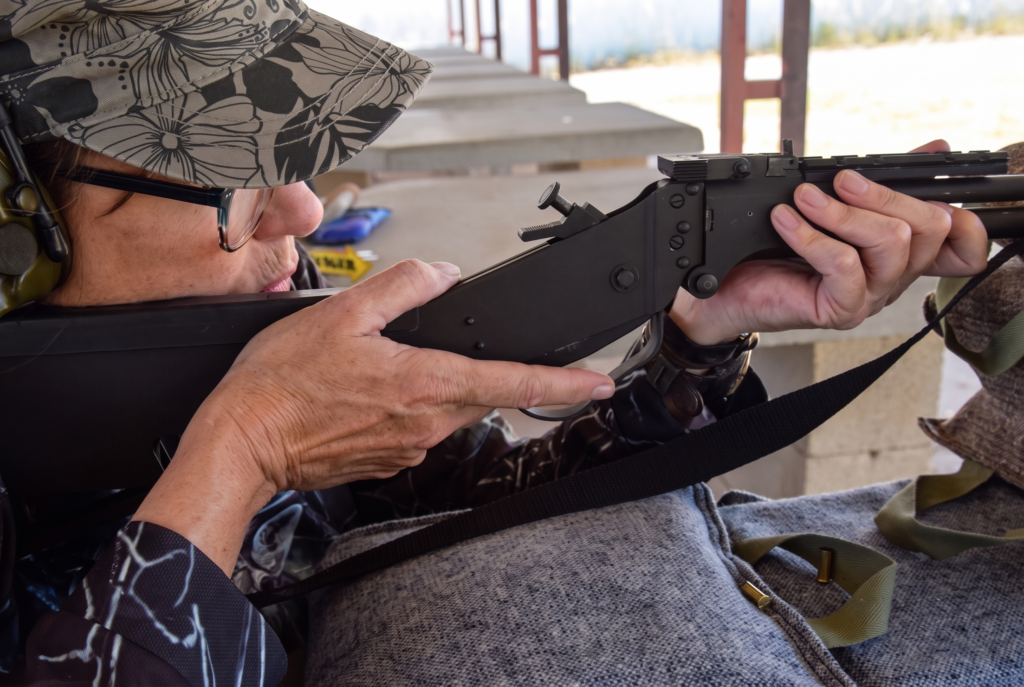
And being as simply constructed as it is, the M6 Scout boasts reliability, even in adverse weather conditions. Despite the lack of furniture, the ergonomics of the M6 Scout work well for me. There is no rubber butt or cheekrest, but with little recoil, I have felt no need for any extra padding. The narrow stock fits neatly into my shoulder.
Aircrew were originally instructed to wrap the barrels with parachute cord as a field expedient forestock. However, the barrel nestles comfortably into my relatively small hands, enabling a firm hold. That’s not to rule out adding para-cord in the future when I’m spending more time in the field and less at the range.
Truth be known, while range days are currently helping to improve my firearms competence, even now it’s not all about bench rests and paper targets. With the red-dot sight mounted, the first time I took the M6 Scout into the field, I had little difficulty despatching a couple of rabbits from 35m.
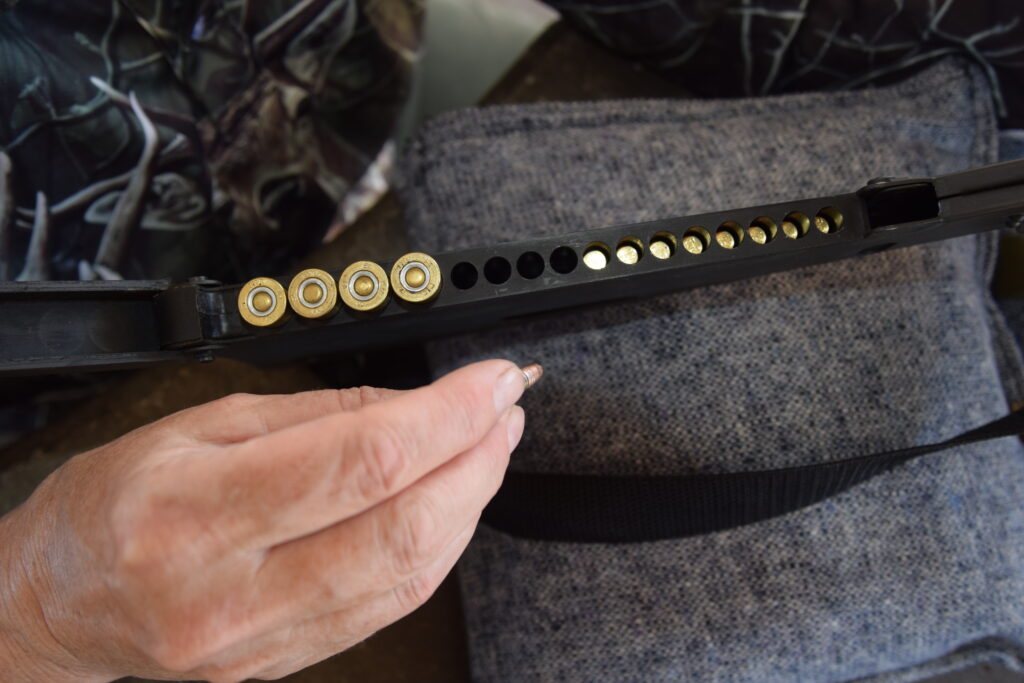
The M6 Scout is a highly versatile firearm for small to medium game hunting, which is its intended purpose. The nine .22LR rounds and four .410 shotgun shells stored in the stock offer a whole range of ammunition choices. The .22 calibre options range from bird/ratshot to hollow point slugs. And, having an open choke, the .410 barrel can be loaded with shot sizes all the way up to a rifled slug. This configuration means that I can hunt anything from starlings to wild boar.
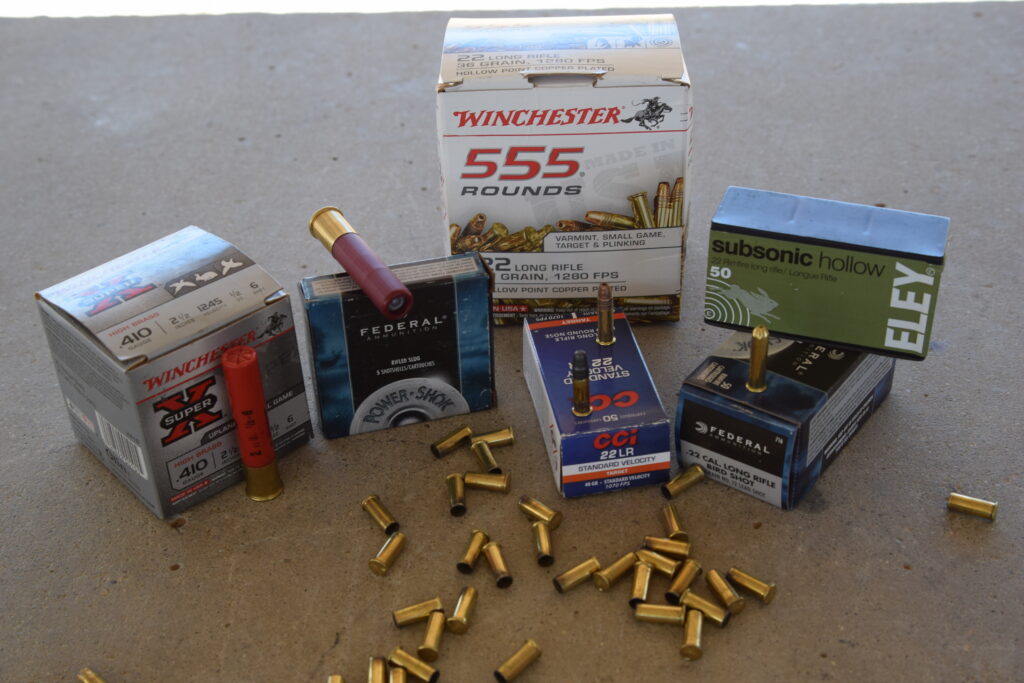
Wanting a little extra power, Jim has always regretted that his gifted M6 Scout is not a .22 Hornet/.410 combo, because this configuration is also available on the market (along with the .22 Magnum/.410 combo). However, I’ll be surprised if I come to share his concerns.
In all, I am delighted with the opportunity to learn the ropes using the M6 Scout. Just as is the case when I have previously chosen a ‘back to basics’ option over something more sophisticated, I am confident that I will be a better hunter for having started my marksmanship journey with this firearm.
Equally, I don’t expect the M6 Scout to become redundant anytime soon. The features that make it light, simple, reliable, safe and versatile will not change as my proficiency increases. I’ll simply become more efficient in the way that I use it. And that all sounds like a recipe for home-harvested tasty game dinners for years to come.

Keep an eye out on ssaagunsales.com for an M6 Scout or another combination firearm that looks just as appealing.
Specifications
Manufacturer: Springfield Armory, USA
Chamberings: .22LR, .22 Magnum or .22 Hornet over .410 bore
Action: Break-action
Barrel length: 46.4cm /18.25″
O/A length: 81cm / 32″
Folded length: 46.4cm / 18.25″
Weight: 2.1kg (4.7 pounds)
Feed: (Dual) single-shot
Share this article

 Website
 Facebook
Related
Articles



Related
Recipes
Sorry, no related items found.