
Hunting banteng on the Cobourg Peninsula
There are not many places in this world that haven’t been explored but for someone like me, an uncharted adventure on a guided hunt is sought after. A wild experience providing a true disconnect from everyday life. An escapade that brings foreign feelings but with a sense of belonging.
For a bloke from Victoria, the Northern Territory has always been a hunting destination that ticks the right boxes. Notions of the large game that roam wild in the vast flood plain country of Arnhem Land are etched into my subconscious. One animal is tembadau, or banteng as they’re commonly known.
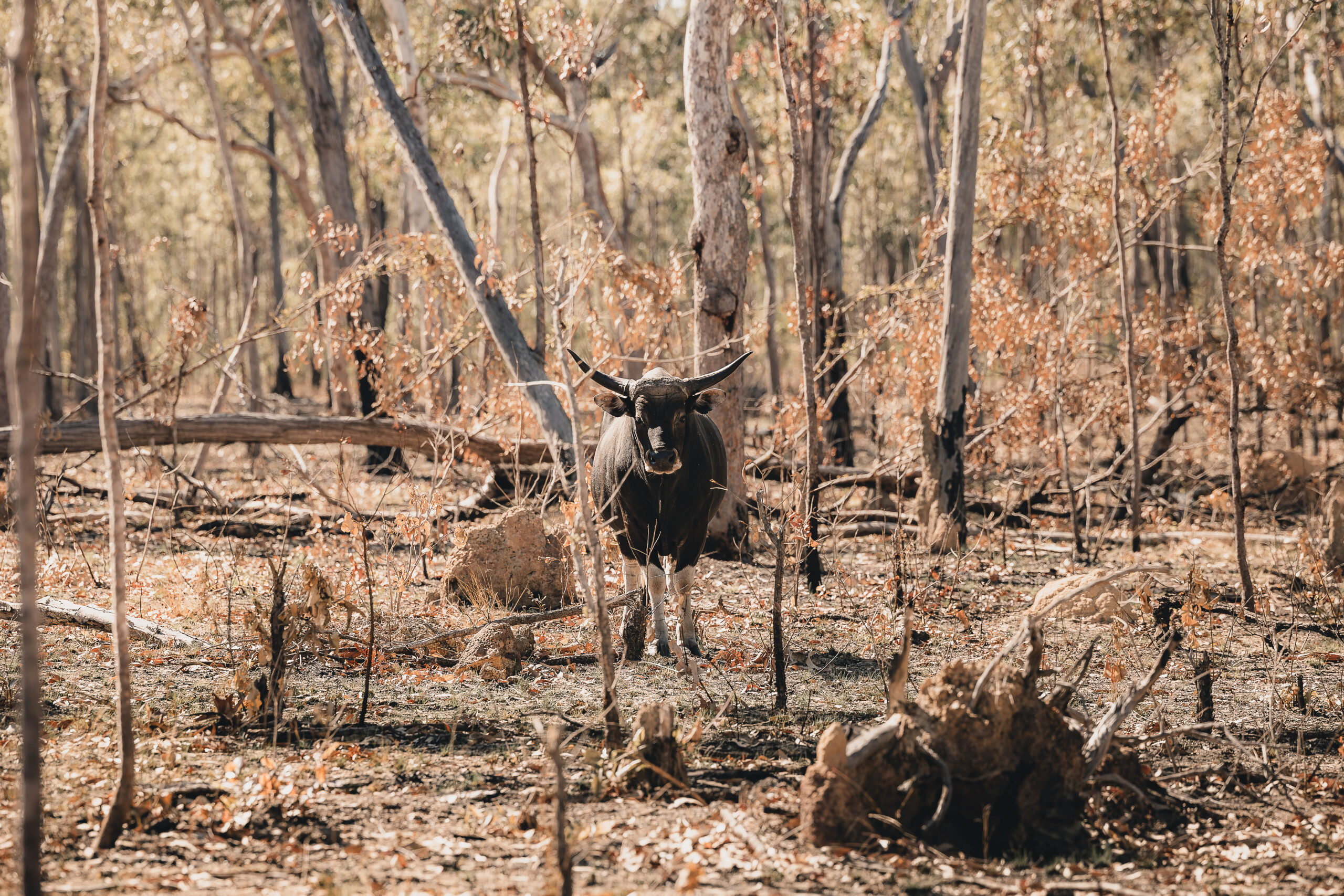
Originating on various land masses throughout southeast Asia, bantengs are one of the world’s large bovine species. They behave more like a deer than a bovine, making them quite challenging to hunt on foot.
Australia is home to a healthy and wild population of genetically pure bantengs after 20 domesticated animals were introduced during the establishment of a British military outpost in 1849. The Port Essington outpost, known today as the Cobourg Peninsula, was abandoned and the animals that were let free adapted to form the nucleus of the now thriving population we can hunt today. In almost 200 years, bantengs have only branched out 200-odd kilometres from that original outpost; most other introduced species have spread like wildfire in Australia.
The Cobourg Peninsula is located approximately 350km east of Darwin. The drive from Darwin winds through the sparsely populated scrublands of Arnhem Land. With every kilometre further away from town it feels more like drifting back in time to a much simpler existence.
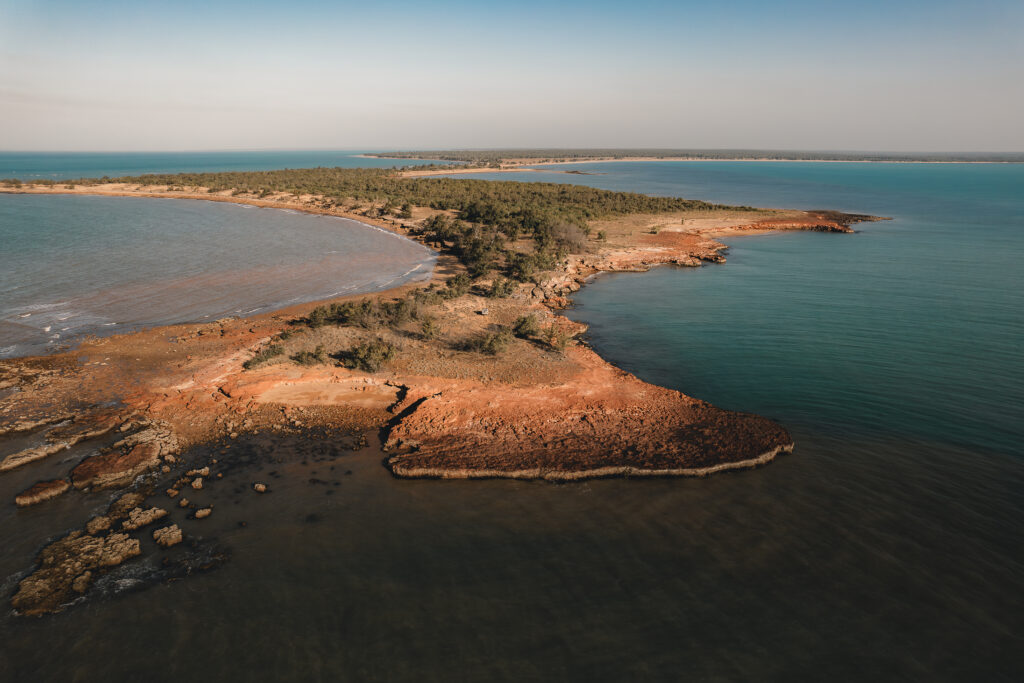
The peninsula forms part of Garig Gunak Barlu National Park and this 2100km2 area is virtually uninhabited by humans. The land mass is deeply indented with coves, bays and mangroves. To the north is the Arafura Sea, and in the south the Van Diemen Gulf. A picturesque and truly unique destination to set foot in with rifle in hand. While driving through the national park, it’s like traversing an untouched wilderness.
Turning off the bitumen and onto the dusty track heading north amplified our excitement levels. The chat between us never really dropped off during the drive but as the dust flew, it picked up a notch and there was an energy in the air, anticipation for the unknown adventure awaiting. The ancient rock cliffs protruding from the flat land create a scenic entry to the national park. A large flooded plain erupted with magpie geese lifting due to our approaching vehicle. What an amazing welcome to Garig Gunak Barlu. Our first crocodile sighting was on the East Alligator River at the famous tourist destination, Cahills Crossing. Some people are happy to stop their journey here, ours continued deeper towards the coast. As we rounded a bend a large, black bodied buffalo bull was standing in the middle of the track. He initially didn’t want to move but as we got closer, he begrudgingly turned and heavily stomped into the scrub.
Peering into every creek we crossed looking for barramundi, one had many juvenile fish in a large pool. There must’ve been larger fish in there somewhere.
As we drove towards the peninsula, I couldn’t help thinking we could’ve been on a Lord Derby eland hunt in Central Africa. Burnt sections of low temperature grassfires, some still smouldering, with narrow mid-grown trees and taller older gums were scattered throughout. Palms and pandanus gave it a distinct tropical feel. Sections of spear grass taller than a human remained in unburnt areas, a reminder of the wet season prior. It would be difficult to spot game in these patches and even harder to stay quiet in the entanglement. As the track got narrower and turns more frequent, suddenly, the thick brush canopy we were travelling through vanished, and a vast vista of the Arafura Sea materialised. We had made it to camp, set on a cliff overlooking the beautiful turquoise sea. It was a foreign feeling for a safari, it felt more like a beachside holiday.
Stepping out of the 4×4, Wendy, our camp chef, was there to greet us, having already set up camp. Our guide on this hunt was Nick Joyce, a jovial country boy who grew up on a sixth-generation family farm in South Australia. He is a reasonably young guide but don’t let his age fool you, he has accumulated more bush knowledge in a decade than some would gather in a lifetime. He cut his teeth in the NT while on a 12-month walkabout in which he hunted flood plain buffaloes with a bow for an Aboriginal community in Arnhem Land. His operation is called The Last Frontier Safaris. He was soon busy blowing away the fine red dust that had gathered on our bags from the drive with a battery leaf blower.
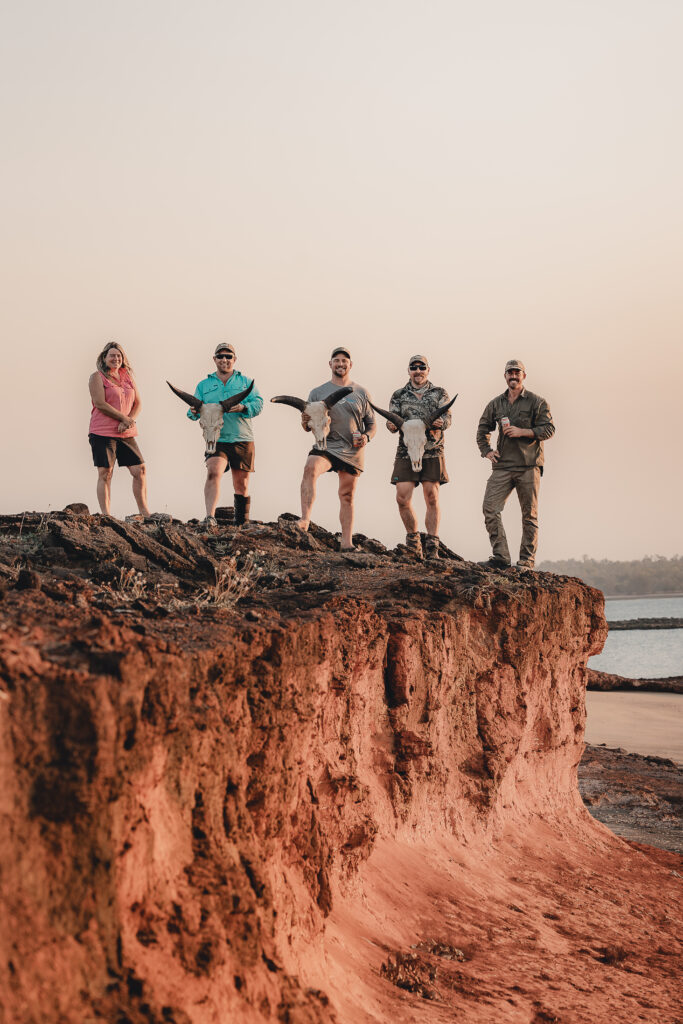
Joining me on this hunt were Jared and Tom. Both had hunted buffaloes before, but this was the first time we’d all be looking for a banteng bull.
Shortly after, we checked zero on the rifles. Jared brought his Sauer Elegance in .375 H&H Mag fitted with a Swarovski optic. Tom travelled with his left-handed Blaser R93 .338 Win Mag fitted with a Leica scope.
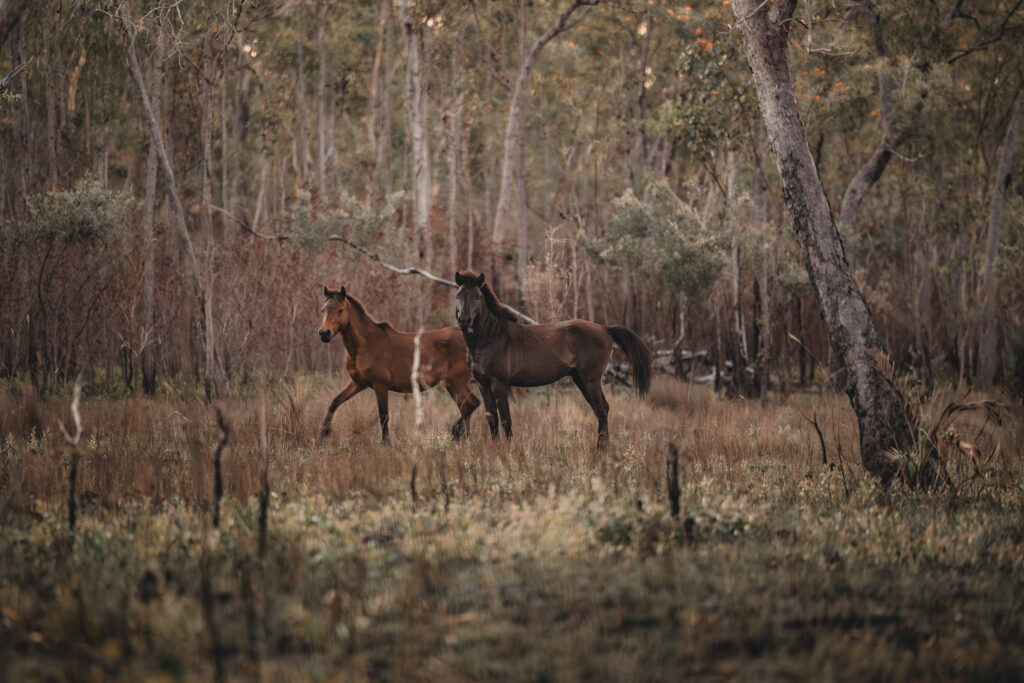
We headed out for an afternoon hunt, targeting a natural soak near where good banteng sign had been seen on the track in. There was a reasonable distance to the soak, requiring a decent pace to get there before the sun went down, the going hard for Jared who was in a moon boot with a broken leg from a fall five weeks earlier. Wallows and spores were evident immediately when we arrived where the spring first breaks ground. On our first Cobourg Peninsula sunset, we quietly stalked along a small creek. Tom was selected to shoot first if a mature bull was spotted. In the final 15 minutes of light, as we stalked north towards the coast, we encountered three Timor ponies. A stallion, mare and their yearling. When they became aware of us the stallion would huff and round up the others, run a short distance and stop, pausing to look our way. This behaviour was repeated three times before they made cover but, surprisingly, they followed us along the bush edge, running, stopping and snorting. Witnessing behaviour like this makes you think a stalk to be impossible if there are ponies and bantengs feeding together. This day was full of firsts, a day not soon forgotten.
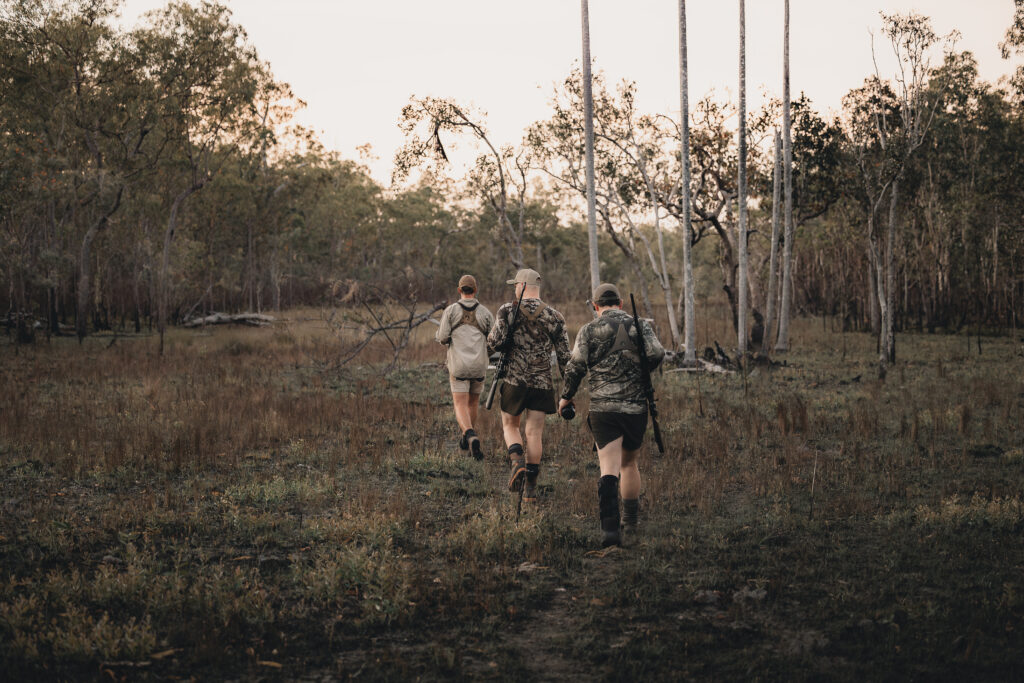
Awaking before sunrise on our first full hunting day, the jug was boiled and coffee followed soon after. We would target a large, open flood plain area at first light then move to the thickets as the sun got higher, edging slowly between the dry and muddy border of the pan.
The decision was made to have Jared hunt because if something were to happen with his still healing leg, he may not be able to hunt later in the week. As our group edged out into more dry country, Jared spotted movement of a distant banteng bull. The bull was moving fast but only meandering unalerted, grazing. It’s amazing how quickly large game travel when walking at what appears to be a slow pace. Beginning our stalk, we moved towards the bull but the wind swirled to give us away almost immediately.
There were banteng tracks and wallows near the water’s edge. Not long after getting back to the dense, moist air of the swamp, we bumped a solid boar from his bed. I was anticipating a shot, but the boar made it to cover safely. Jared said he wasn’t after stinking boar, so let him be.
We returned to camp empty-handed and had a bite to eat during the heat of the day. The afternoon was spent exploring new areas of the concession, again fresh water was key to our efforts. A mob of female and young bantengs was spotted nearing sunset, their burnt orange bodies surprisingly camouflaged in the dry leaf and palm tree scrub. It was only when they got to open country that they stood out. They were wary for a bovine species, most will tolerate you if the wind is right and you aren’t in their danger zone, but not this mob. Once the bantengs located us, it wasn’t long before they took off, only dust remaining in the air.
We then spotted two bulls in the distance. One was worth trying for in the fading light. We played cat and mouse with them until they appeared to vanish. We walked out of the scrub in the dark, in awe of this majestic bovine.
Another pre-dawn wake-up gave us time to enjoy more coffee and witness the first rays of sunlight to the east. The wind hadn’t let up since our arrival and this morning was no different, not gale force but enough to chill the morning air. A welcome breeze considering how hot it would be without it.
The stiff easterly on the coastline turned into a swirling mess not too far from the bush line. The predominant breeze was favourable during our morning walk but as soon as we spotted a lone banteng bull it started to tickle the back of our necks.
The bull had us pinned, inquisitive enough of what we were but on edge to make his escape. It was a tense standoff, at 100m, for the next 10 minutes. The bull pretending to lose interest and sway his head in a motion that appeared to be going back to feeding. If we moved in that moment the game was up because he would whip his head back up, pinning us again before even coming close to feeding. Jared was on the rifle; you could imagine what was going through his mind in this uneasy moment.

On foot a banteng bull is an impressive sight. A large, muscular body with an intimidating stare, the interaction with this bull is something that will not leave me.
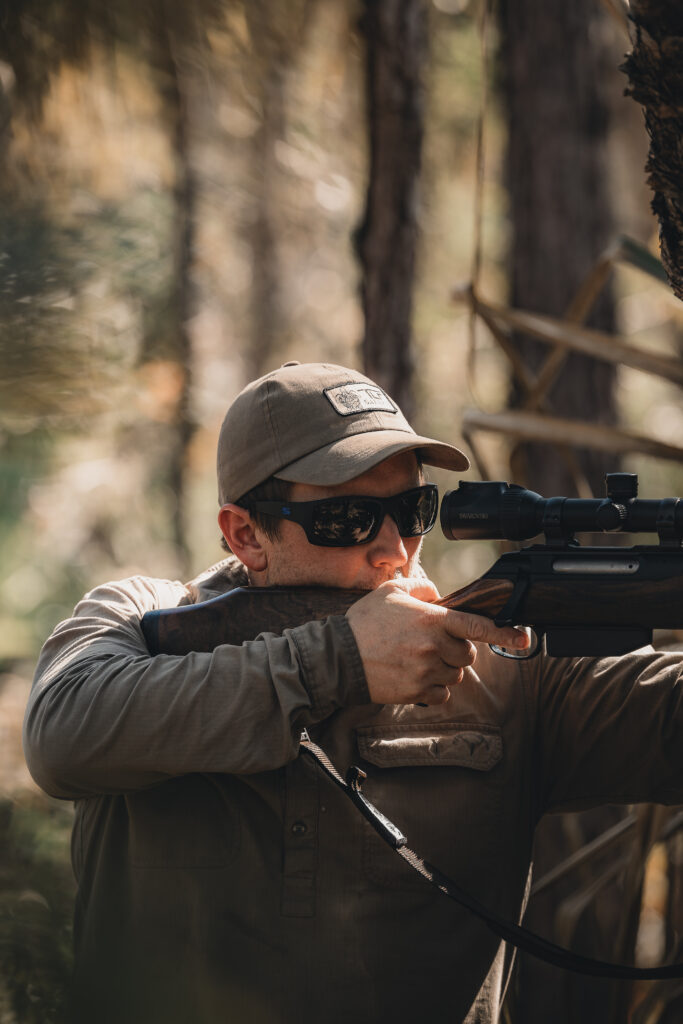
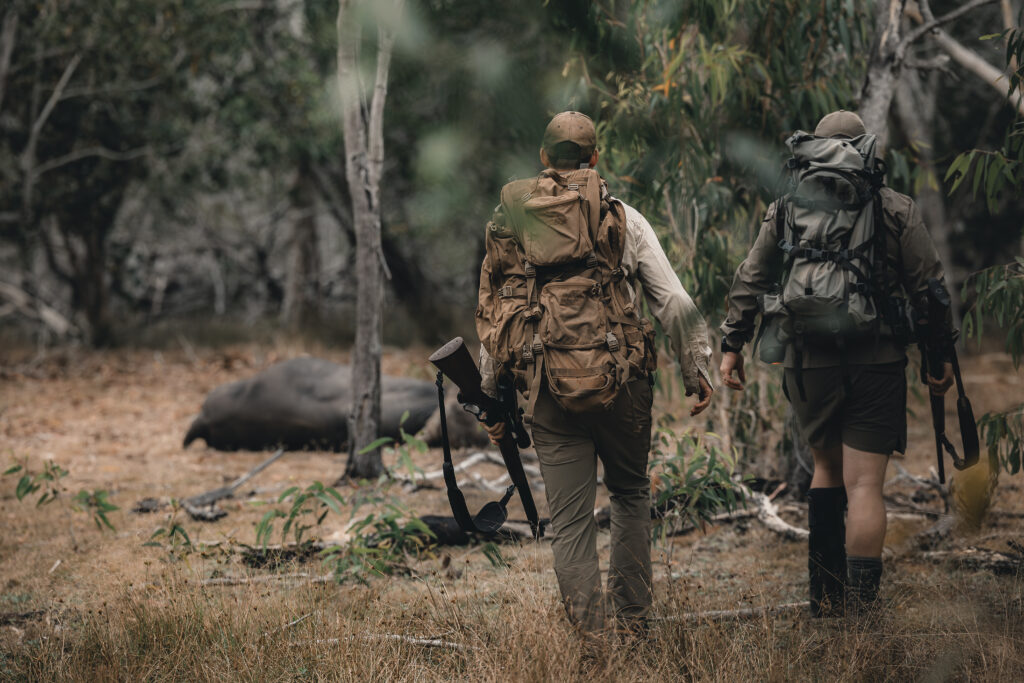
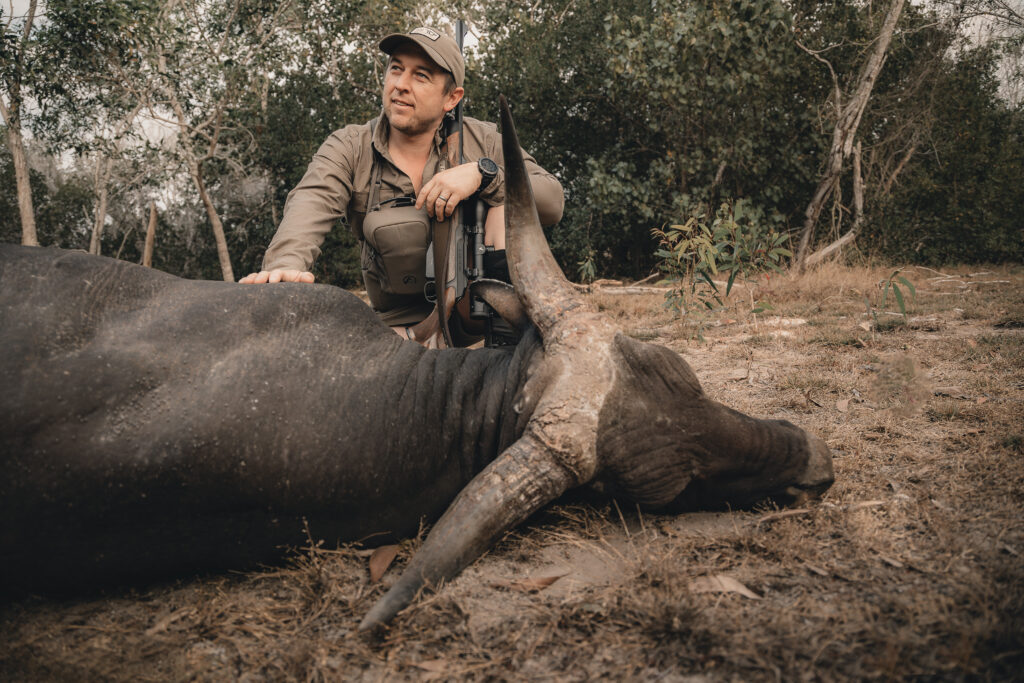
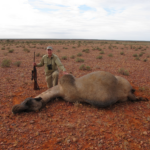
When the bull finally decided to move off, Jared was ready with his rifle to place a well-executed broadside shot and the bull found his final resting place. What a gorgeous animal, boasting a velvety style hide with striking white socks, belly and rump patch contrasted with a dark brown, almost black body. Bantengs blend in extremely well in the burnt areas where they can often be found feeding on fresh growth. This bull had thousands of little ticks on its skin, more than I have seen on any animal I have hunted before. It was amazing that none ended up digging into us on this trip.
One of the intended uses of the original 20 bantengs was to provide the occupants of the outpost with a stable source of protein. I was keen to see how banteng tasted so we took the backstraps with us to camp and rested them in the fridge for two days. The meat is lean like venison but with a larger grain structure. When cooking the steaks, I seasoned a few with garlic, salt and pepper, others were left plain. The meat didn’t taste like the southern beef I’m accustomed to or like venison, but it was certainly edible. It did need to hang quite a bit longer than two days though and would be great as a tenderised schnitzel.
The wind died off slightly in the afternoon, triggering us to drop the tinnie into the Arafura Sea for the first time. It was exciting, with the endless possibilities going through my mind in exploring an uncharted area. Nick was taking us to a distant spot that, quite possibly, had never been hunted.
Nearing the finger we were targeting, to our surprise, we spotted bantengs on the beach from the boat. We couldn’t believe our eyes. Nick had only just mentioned that he’d always wanted to see them on the beach. A quick plan was made to stalk the bulls and the boat was navigated to shore. It was incredible to stalk along the beach, barefoot, Tommy with rifle in hand.
Not more than 50m into our stalk, a loud warning blow was heard from a concealed banteng nearby. Startled, we continued, heading for the bulls spotted from the boat. As we crested the beach at the location we last spotted them, a loud snort alerted us to another bull peering at us through brush in the dark shade. For such a big animal, wow they can blend in. Their dark coat is perfect for when they stand still in the shadows.
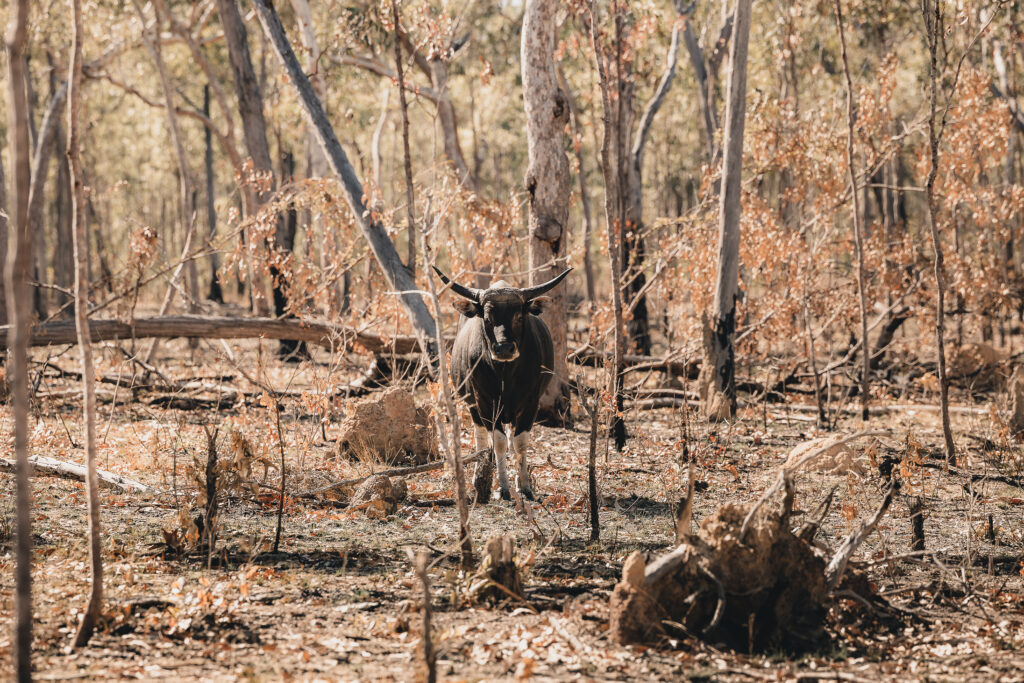
We suspect he moved into cover after being alerted to the first bull’s warning call. Then, all we could see was his white rump patch prancing through the scrub as he bolted, crashing through the spindly trees. Even though the stalk didn’t work out, the vibrant red sunset, warm weather and sand between our toes on the walk back were part of the reason why there were smiles on our faces! There is-no one else in this world who experienced the day we just had; a feeling of extreme gratitude flooded in.
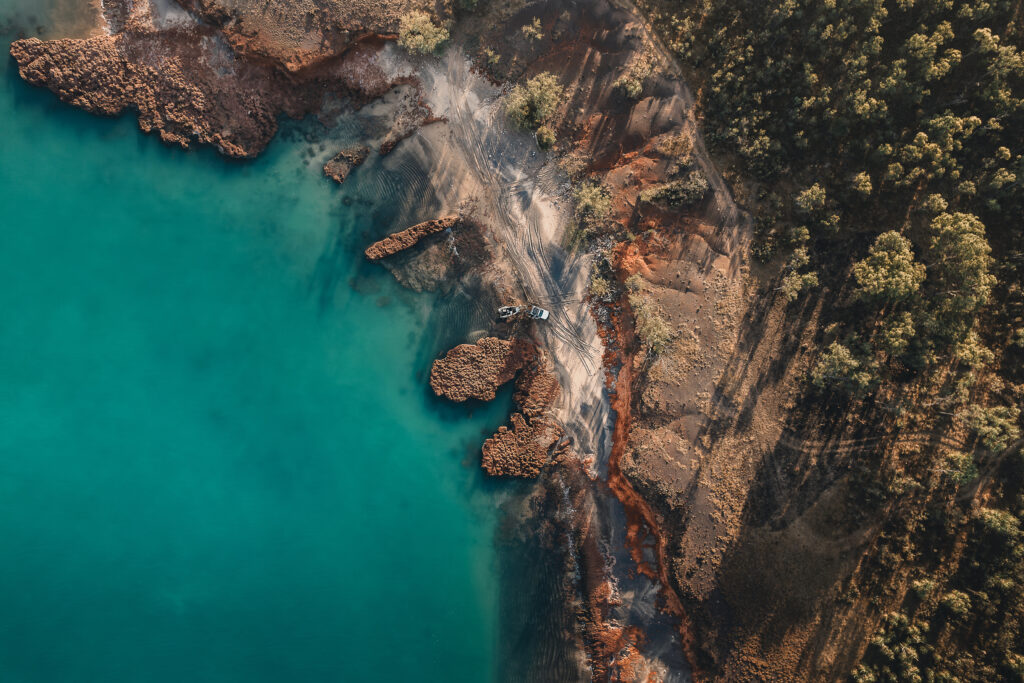
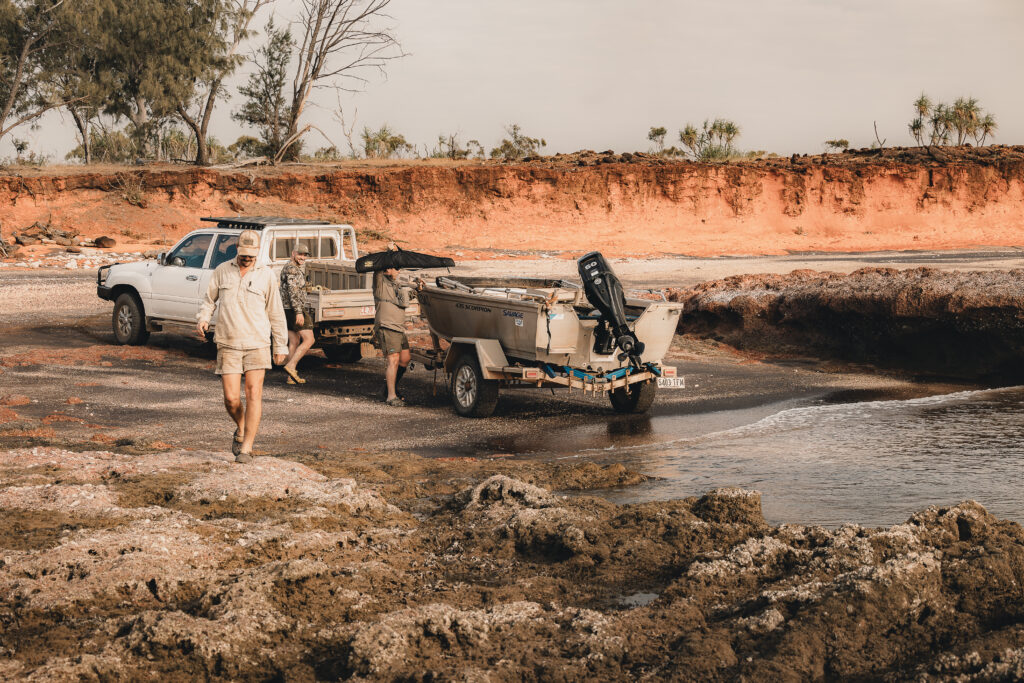
The wind had finally died off on the fourth day, so a decision was made to launch the boat and chase bantengs on the beach again. We just couldn’t help ourselves while the easterly was down. Fish were busting the surface where we launched the tinnie, there was no time for fishing, we were chasing a bull for Tommy. We headed west towards a sandy beach where landing a boat would be simple. I disembarked the beached boat with Tom and Nick, Jared stayed behind to rest his leg. The morning sun was glorious as we headed along the clearings close to shore. The hunting was slow and steady, you never know when a banteng will materialise so it’s best to be patient. We deviated away from the beach into the thick, searching for fresh water. We edged around a lagoon; banteng sign was evident in the form of dung. We sneaked quietly, trying to locate an unaware banteng bull.
I’m not sure how Nick spotted the bull 150m through the trees, I certainly couldn’t. We dropped our packs and took our boots off. The stalk got serious from 100m. I stayed back at 80m, not wanting to blow the opportunity. The march flies and mosquitoes were fierce, reaching skin through clothing and hammering anything bare. I was glad to be back a bit from the action because I could shoo the insects in slow motion for respite.
Nick and Tom crawled and shuffled into the final position. When seated, Tommy took his opportunity when it presented. Then the bush went eerily silent. The boys had taken off in the direction of the banteng. I stood alone and unaware of the outcome. Grabbing the packs and boots, I edged towards Tom and Nick’s voices. Slowly walking towards the sound, I couldn’t see them through the scrub. Their voices got louder on approach; they weren’t speaking quietly so I presumed the heavy, old banteng bull was down. Their smiles said it all, at their feet, in the burnt terrain, was a motionless giant bull. His horns had mass to the tips, he was a big-bodied animal with missing teeth from a life long lived. There was a reasonable walk back to the beach, but Tommy loved every heavy step.
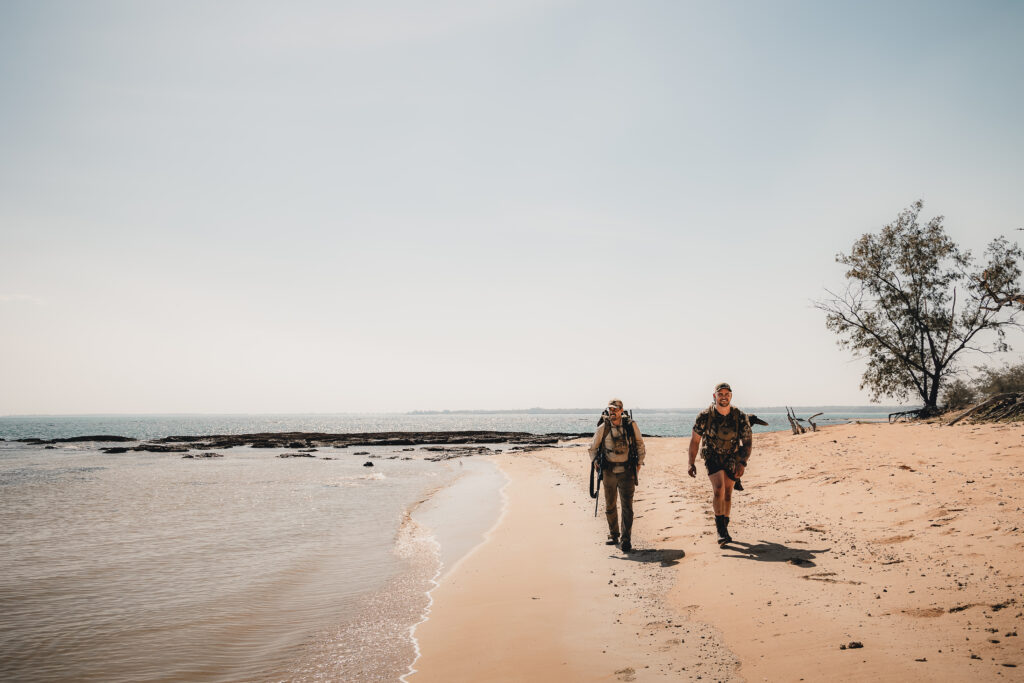
On the way back to where we launched the boat, we managed to catch a trevally which Nick cleaned up for dinner to complement the banteng steaks. There is only one word to describe this place, but it still doesn’t do it justice, that word is paradise.
Adventure means different things for different people, this week had been the definition of the word. It truly had been an amazing time.
The following morning was my turn to swap camera for rifle. There is often conundrum, sometimes I’d rather shoot with the camera. As soon as the camera was zipped away, a feeling of joy was had to be holding the Sauer 404. It’s a beautiful firearm to carry and a pleasure to shoot, enhanced by the crystal-clear Swarovski scope.
Banteng bulls have a habit of just materialising out of the bush. When in likely looking habitat, it’s best to stalk as if there is an animal nearby because there is every chance there could be. Walking into a rather open low point with decent fresh growth, we spotted four Timor ponies ahead. They were unaware of our presence but would ruin our plans if we continued stalking as they were heading directly towards us.
To our right there was movement, a banteng bull slowly edging away into the thicket after noticing us. A sinking feeling came over me, I wondered if that was the opportunity I’d been dreaming of. We continued slowly for 50m, and the ponies became intrigued with us. After our first afternoon’s experience with the ponies, I dreaded this moment. The stallion ran straight up to us and stopped at 40m. This remarkable encounter was rather unexpected.
Moments after, with the stallion still watching us, a second and third banteng bull were spotted walking right to left on a similar path to the ponies. Both were mature but one in particular was what we were looking for. We dropped our packs; Nick went barefoot, and we made an 80m stalk to cut the distance. The whole time the stallion followed behind us but this time the three other ponies started to run and snort. This caused the bulls to gaze at them for a moment, becoming uneasy and slowly moving into the thick brush. Unable to see the banteng, a sinking feeling rushed in, we might’ve missed our chance at these bulls.
We moved slowly ahead, keeping a decent sized tree trunk between us and where the bulls vanished. One of the bulls made an aggressive noise from inside the scrub that could only be compared to a screech, a noise hard to describe and one I’ve never heard before. There were trees being aggressively thrashed where the noise came from, then the swaying trees started to get closer, the bull was heading back out into the clearing. My heart started to race. The bull made his way 15m into the clearing and stopped, staring at the ponies, with no shot available. It only took a few minutes for the bull to lose interest, but it felt like an eternity. Nick was great in this tense moment, reading the situation unfolding in front of us and informing me we had plenty of time to take this bull. A few deep, calming breaths later and the bull started feeding from left to right.
Once the bull was unobstructed and broadside, I squeezed off the shot and a moment later, as if in slow motion, he fell to the ground.
As we approached the bull, I was flooded with adrenaline. Turning to Nick, I thanked him with a huge smile on my face. A hunter’s smile in this moment is unique, it’s not a smile because an animal has been killed, it’s a smile of relief that the animal didn’t suffer, an overwhelming respect for this wild bovine, sharing this micro second of life in his domain, the effort and sacrifice it takes to get to this moment and experience something as magical as this. Sharing this experience with Nick, Tom and Jared will be something to cherish for many years. The vibe at camp and throughout this trip was extraordinary, banter was strong and positive energy filled our waking moments. It’s a week of my life that I will never forget.
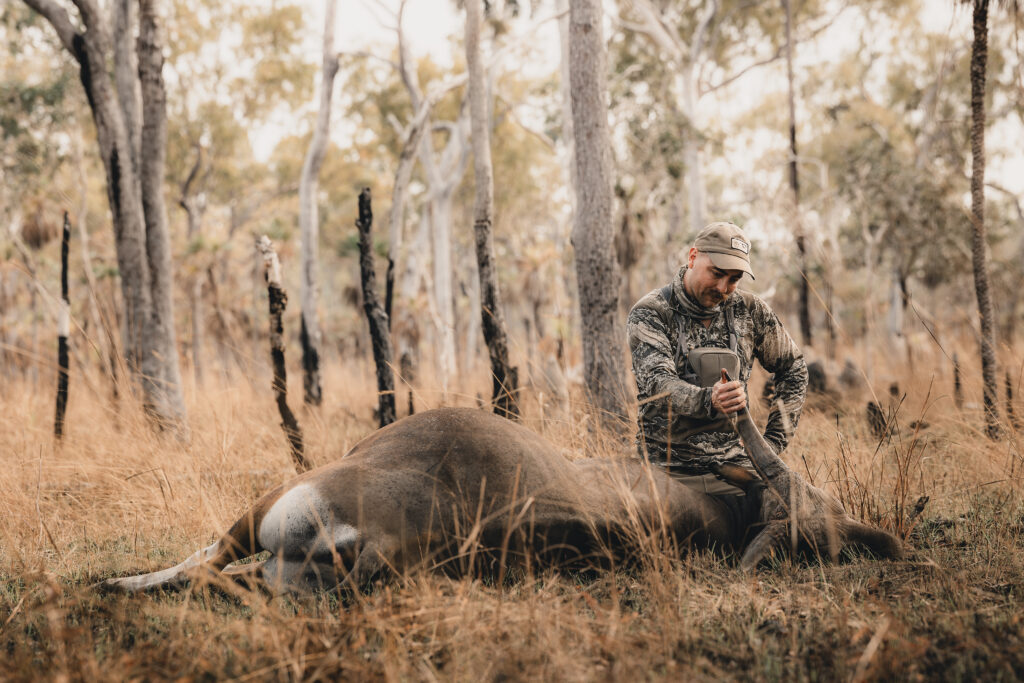
The whole experience was everything one dreams of. A surreal but brief encounter with this bull will represent my first exploration north forever, but hopefully not the last.
The final days of our expedition were spent chasing pigs from the boat and trying to shoot a banteng bull with the camera, fishing for queenfish and just enjoying each other’s company in the peaceful wilderness that exists in remote areas like this. If it wasn’t for the sea rubbish washed up on the beaches you could believe you’ve travelled to an uninhabited part of the world… we didn’t see another human soul.
Share this article
 Website
 Instagram
Related
Articles


Related
Recipes
Sorry, no related items found.