

Woodward Automatic: A British gunmaking classic
The 1880s were a golden period for the gunmakers of Great Britain. Driven shooting in Scotland and elsewhere was immensely popular and many prominent figures of the time competed to see who could bag the largest number of birds during a shoot. Shooting parties were often lavish, lasting several days and attended by the cream of British society. As a result, gunmakers competed fiercely to be recognised as the maker of choice for the rich and famous.
During the 1880s, the hammergun remained king of the heap. Makers such as Purdey and Stephen Grant produced exquisite hammerguns, legendary for their aesthetics, handling and absolute reliability. However, by the early 1880s, many makers were experimenting with hammerless action designs. Purdey, for example, purchased the rights to manufacture a hammerless self-opening sidelock action designed by Frederick Beesley in 1880 for the modest sum of £20. This investment proved extraordinarily sound, as the Purdey/Beesley action (with minor modifications) remains in production by Purdey today.
Holland & Holland introduced a hammerless action in 1885, co-designed by John Robertson – later proprietor of Boss & Co and co-inventor of the famous Boss Over/Under shotgun – which they named the ‘Royal’. The first Royals were complex guns, cocking one lock on opening and the other on closing. They were soon redesigned to simplify manufacture and improve reliability. The Royal side-by-side shotgun, much like the M98 Mauser action, has been widely copied, with faithful reproductions still produced by a handful of gunmakers, most notably in Spain.
The driving force behind these innovations was largely the popularity of high-volume driven shooting. Hammerless guns, especially after the addition of reliable ejectors in the mid-1880s, could be reloaded and brought into action far faster than earlier hammerguns – a strong marketing point for makers. The constant pursuit of recognition as the best and most innovative maker fuelled invention, making the 1880s and 1890s one of the most inventive periods in British gunmaking.
Among the fine makers of the era was James Woodward & Sons. James Woodward began his career in 1827 as a finisher for London gunmaker Charles Moore. By 1843, he became a partner and the firm became Moore & Woodward. Records are unclear on when Moore left the partnership, but by 1851 Woodward was trading independently.
Relatively few patents were granted to Woodward over the years – unusual given the stiff competition and general inventive spirit that imbued British gunmaking at the time. The first patents, Nos. 117 and 600 in 1876, were registered in the names of his son, also named James, and gunmaker Thomas Southgate. They covered a self-cocking mechanism operated by an under-lever, initially for hammerguns but later adapted to hammerless guns, and became known as ‘The Automatic’.
The design allowed hammerguns to cock automatically as the under-lever was pushed forward to lower the barrels, making the gun ready for immediate use when the action was closed – thus a true self-cocking hammergun. With the later hammerless designs, the under-lever was retained, but in the absence of external hammers the mainsprings were compressed and the internal hammers cocked whenever the under-lever was pushed forward.
Interestingly, Woodward appeared to have no scruples about selling either actions or complete guns to other makers. I have seen a hammergun built on an ‘Automatic’ action bearing the name of Alfred Lancaster and am aware of a hammerless sidelock non-ejector engraved with the name of the Scottish maker John Dickson.
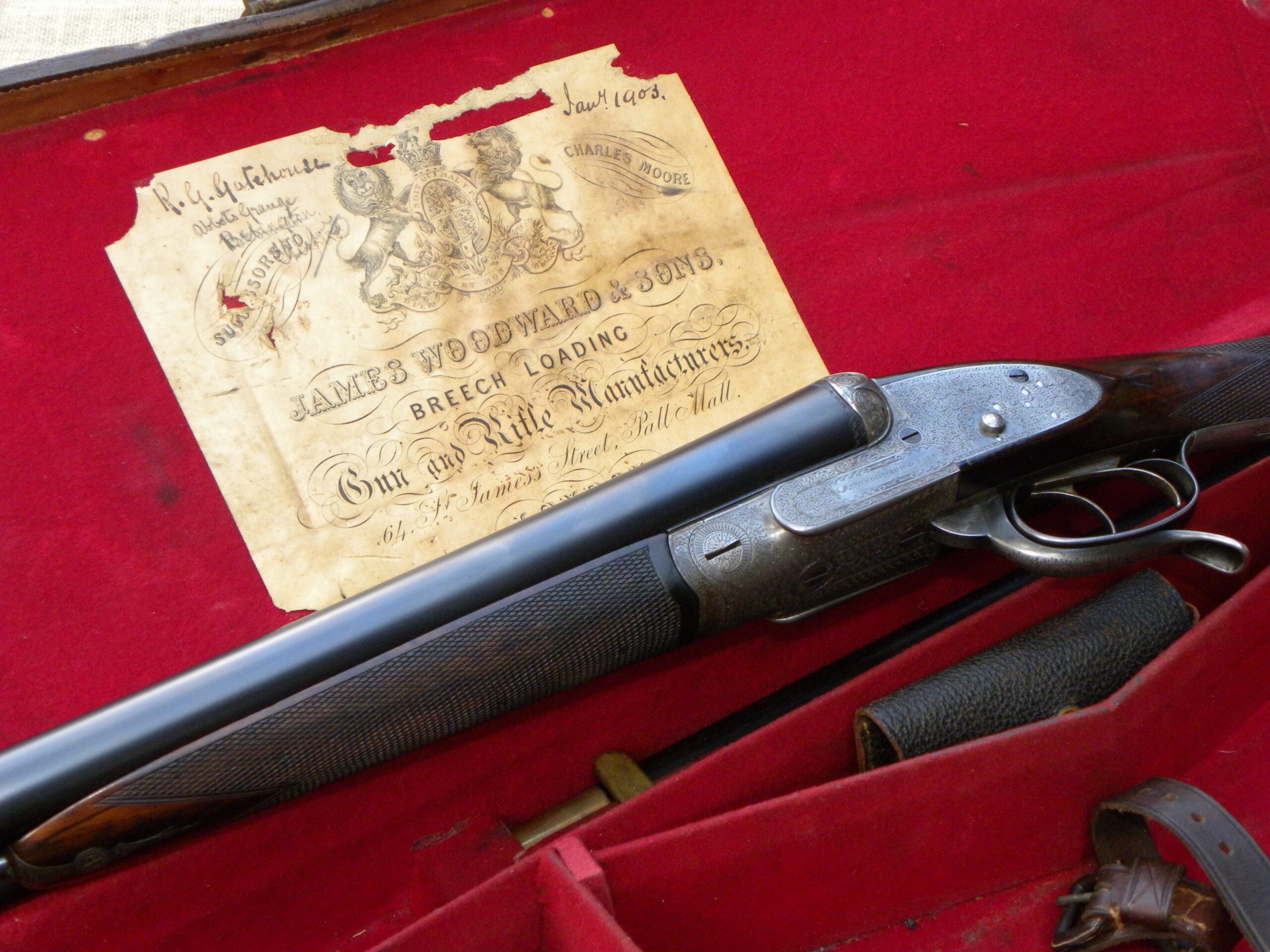
The Woodward hammerless sidelock gun featured on these pages was originally the No. 1 gun of a pair delivered in September 1887 to Mr CE Malcolm. It is a non-ejector ‘Automatic’ model made on an under-lever snap action (or ‘opening lever down guard’ in the Woodward Dimension Books), cased in a leather case with Woodward trade and instruction labels. Remarkably, after 125 years, the sideplates retain a modest blush of colour.
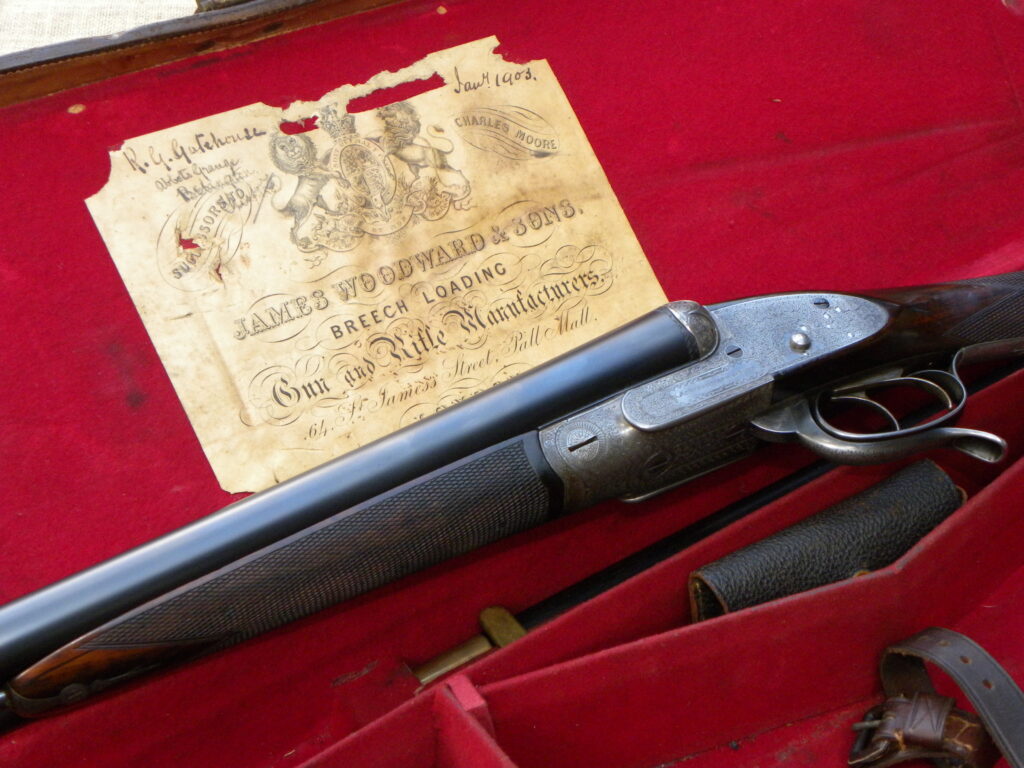
The Whitworth steel barrels are 29″ long (Woodward’s recommended length to customers), choked Improved Cylinder and Modified, with 2½” chambers and the original 14½” length of pull. Originally proofed for black powder, the barrels were resubmitted to the London Proof House for Nitro-proofing before 1905, making them safe for modern ammunition of the correct length and pressure. The finely figured French walnut stock is straight-gripped and ends in a neatly chequered horn butt plate.
The fate of the No. 2 gun remains speculative. The test gun’s Woodward case bears a handwritten note referencing 1903 and RG Gatehouse, possibly the second owner, along with his address. His initials ‘RGG’ are embossed on the lid. Could the pair have been split up and sold separately after being resubmitted to the London Proof House in 1903? Perhaps – though the details are lost to history.
The attention to detail and degree of fit and finish lavished upon every Woodward gun really must be seen to be fully appreciated and it is little wonder Woodward guns are considered among the finest guns made. Inletting and wood-to-metal fit are flawless and there’s not a tool mark or blemish of any kind on the metalwork. Engraving too, was of the highest quality and, like the other leading makers of the period, Woodward developed and maintained its own distinctive style.
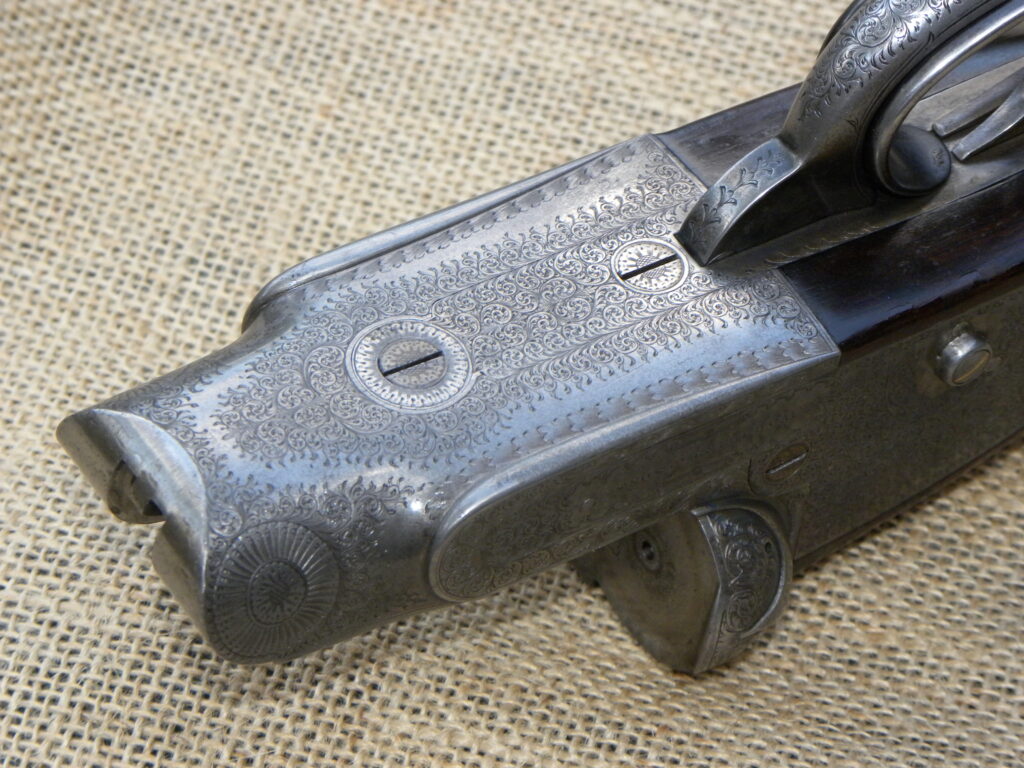
As with most other best-quality makers, Woodward hammerless guns incorporated stylistic features that set them apart immediately. The most recognisable of these are the arcaded ‘umbrella’ fences, so named for their resemblance to an open umbrella when viewed from certain angles. Other instantly recognisable features include the extended tumbler pivots, which also serve as cocking indicators, and the specially shaped safety catch often referred to as a T-bar safety.
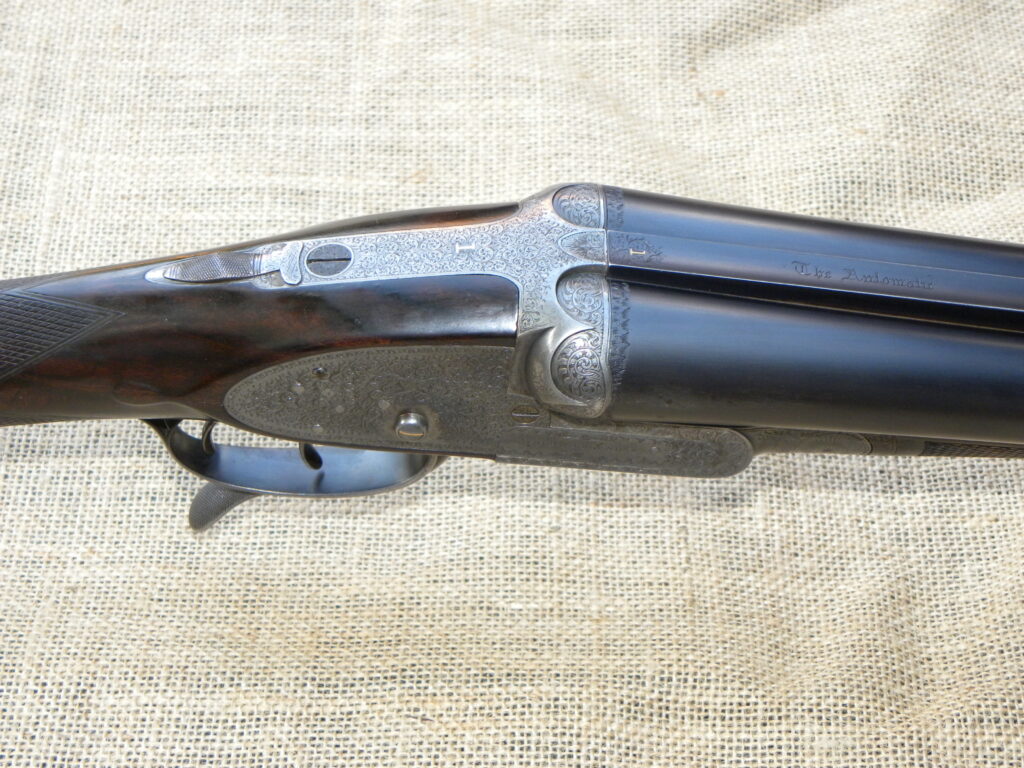
In a typically thoughtful Woodward touch, a small roller bearing is fitted to the lump to facilitate smooth closing of the action, and indeed everything clicks into place as smoothly as melted butter when the gun is closed.

Strength was never sacrificed for elegance. The action incorporates sideclips and the barrel lumps are considerably larger compared to most other game guns of the period, more closely resembling those of a live-pigeon or wildfowling gun. Even after 125 years of use, the action remains tight despite having absorbed the pounding of countless 11/8oz game loads with aplomb – clear evidence that the use of the finest materials, along with careful hand-fitting and finishing, is the key to the longevity of any gun.
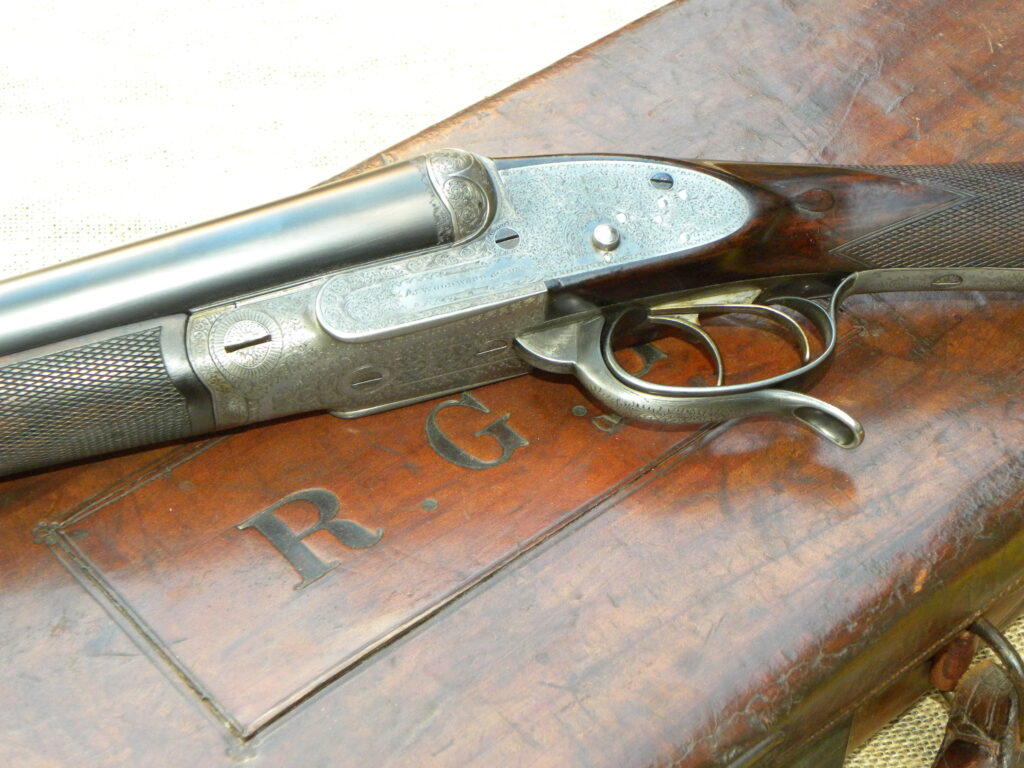
Woodward guns are typically stocked with exceptional wood. Rumour suggests the company enjoyed first pick of freshly seasoned French walnut shipments to London, followed by Boss and Purdey. Many Woodward guns also featured the so-called Prince of Wales grip – a slightly elongated semi-pistol grip ending in a small, flat-surfaced grip cap – originally developed for the prince of Wales. This grip, like the choice of timber, became something of a Woodward trademark.
While Woodward’s reputation rests primarily on shotguns, the company also produced a modest number of double rifles in both the black powder and Nitro eras. The earlier rifles were hammerguns, but the side-by-side hammerless models were generally built on beefed-up ‘Automatic’ actions. I’ve seen two Woodward double rifles: a hammergun with a Jones-type under-lever chambered for the .577/500 BPE and a stunning .450/400 (3¼”) BPE hammerless non-ejector on an ‘Automatic’ action, formerly owned by Rhodesian politician PK van der Byl – as finely made a firearm as I have ever handled.
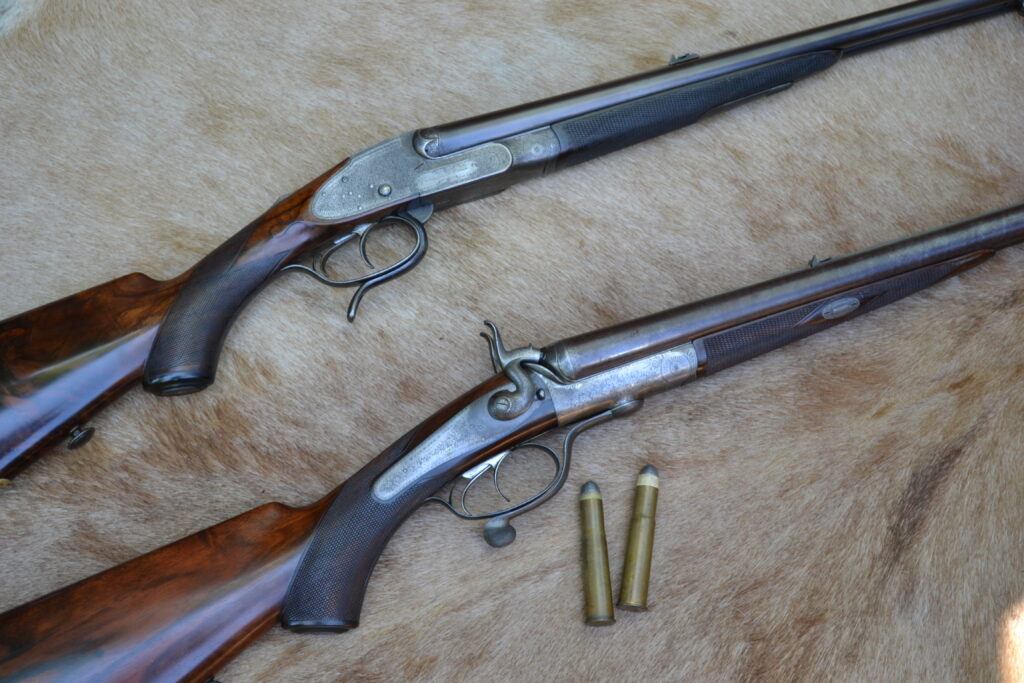
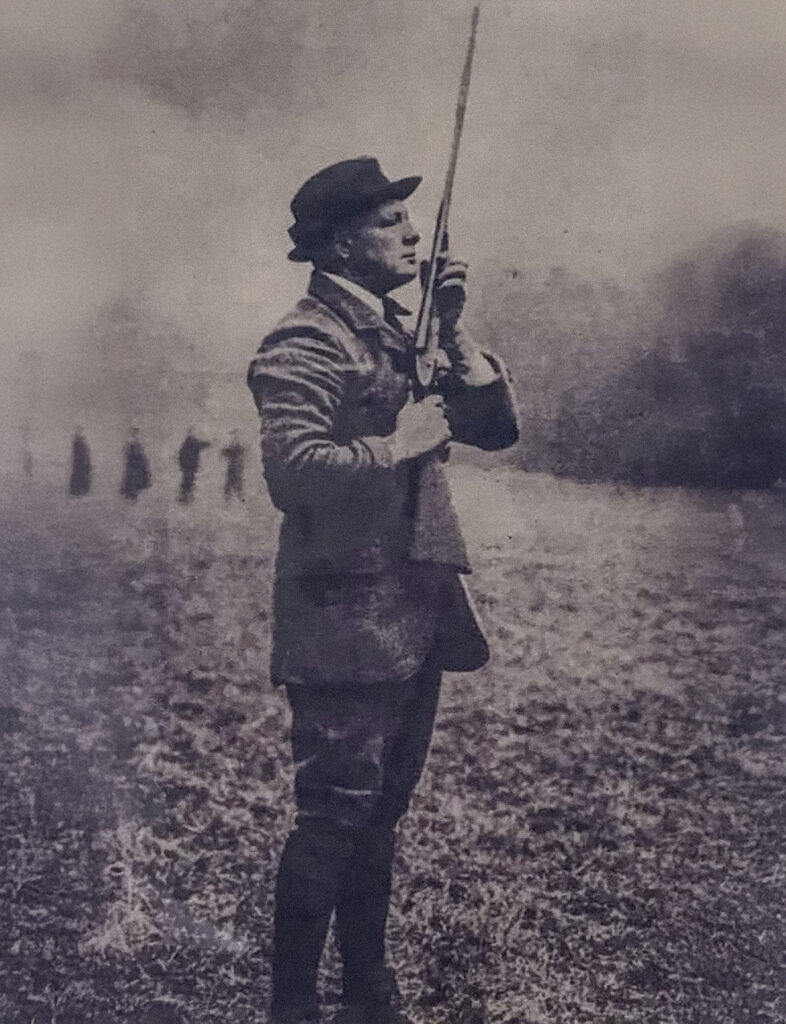
Woodward’s 1921 catalogue lists a ‘High Velocity Cordite’ double rifle with a snap under-lever on what appears to be a strengthened ‘Automatic’ action, available in ‘all bores’ from .303 upwards and fitted with either a snap under-lever or top lever as desired. Rifles like these are exceedingly rare and sought-after today. Among Woodward’s distinguished clients was none other than Winston Churchill, who used a Woodward .500 NE double rifle to hunt a record-book black rhino, and his driven game with a pair of Woodward ‘Automatic’ 12-bores.
It is unlikely that any Woodward Over/Under double rifles were ever made – I’ve never heard of one – so if one showed up it would certainly be notable. Their side-by-sides notwithstanding, Woodward is today best known for their iconic Over/Under gun, an elegant back-action sidelock design first introduced in 1913.
Apart from the legendary Boss Over/Under of 1909, over/under guns made during this period nearly all suffered from the twin burdens of an extravagantly deep action body (brought about using Purdey-style under-bolting) as well as excessive weight. The Woodward Over/Under design instead made use of trunnions on either side of the lower barrel, thus negating the need for cumbersome and weighty Purdey-style underbolts. This meant a much shallower action body that was both elegant and substantially lighter.
The Woodward and Boss Over/Unders quickly became highly sought-after items and are prized by collectors. I was fortunate enough to handle an elegant 12-bore pigeon gun fitted with a single selective trigger made during the 1920s. Its fit was perfect and it was so well balanced that its 3.5kg weight simply disappeared once shouldered.
Woodward survived the Great Depression and the upheaval of World War Two, but by the late 1940s production had dwindled to just three guns per year, and prospects for new orders in the post-war UK economy were bleak. Charles Woodward, a nephew of the founder, offered the company to Purdey in 1947. Purdey initially declined but a year later changed course, purchasing the firm for £444 14s 6d, acquiring the name, goodwill, design rights, materials and remaining stock-in-trade.
Purdey initially produced Over/Under guns strictly to Woodward’s original design before introducing design modifications aimed at reducing weight and improving reliability. By the mid-1920s, Purdey had completed several Over/Under guns, largely in response to US demand. The initial Purdey Over/Under employed no fewer than six bolts for lock-up and suffered from the twin shortcomings of an excessively deep action body and considerable weight.
Unsurprisingly, the gun was not a commercial success and only eight examples were produced. In later years the design was revisited and lightened but even after the removal of a rib extension, two bolts and excess weight, the gun remained less than ideal. As a result, only a further 10 of the redesigned Purdey Over/Unders were made.
One clear casualty of the Purdey takeover, however, was the Woodward ‘Automatic’. As Terry Wieland has observed, the Woodward design would inevitably have been forced to play second fiddle to the Purdey/Beesley action, which formed the backbone of Purdey production. Allowing ‘The Automatic’ to quietly fade away was therefore a logical, if regretful, decision.
Today it is possible to order newly made guns bearing the Woodward name from Purdey. As outlined earlier, the Over/Under model shares much in common with the original Woodward examples, ensuring that the legacy of the breed lives on in the modern Purdey Over/Under. The side-by-side guns, however, are built on sidelock actions most likely sourced from the British trade at large and bear little or no resemblance to Woodward’s iconic side-by-side guns of an earlier era.
In much the same way that surviving vintage World War II fighter planes recall a bygone era of heroic aviation, the remaining Woodward ‘Automatic’ guns serve as enduring beacons of a period when quality workmanship ruled above all else. Owners of these firearms cherish them, not just for their functional excellence, but as a tangible link to a golden age of British gunmaking.
Share this article

Related
Articles



Related
Recipes
Sorry, no related items found.