


Sako 90 Varmint: Range to field
Sako shouldn’t need an introduction to Australian shooters and hunters – it would be fair to say they’ve enjoyed an enviable record across the world for a very long time as a premier-class rifle. As a testament to the Finnish brand’s quality, all my Tikka barrels are made by Sako and none of them have ever given me grief with accuracy. From fond experiences using an L461 Vixen in .222 and a .22-250 L579 model for shooting ferals in the early 1990s, Sako rifles impressed me with their appearance and feel. In fact, the popular ‘L’ series, dual-lug design, fuelled inspiration for many actions still produced today. Later that decade, they released the new-look Sako 75 based on a triple-lug bolt design, which kicked off their short bolt throws, still used today. Then came the very successful Sako 85 and now the ‘90’ series. A couple of years ago, I had flagged interest in reviewing a new Sako 90 but had to be patient. So, when Beretta sought a review on their Sako 90 Varmint Laminated Stainless in .308 Win more recently, it was gladly accepted.

Immediately apparent upon receiving the new Sako is its legacy to their previous Varmint rifle. This isn’t a bad thing because the earlier Sakos have always sold well, and with just a few tweaks on the latest model, they’ve ensured a solid future. Dimensionally similar to my own Tikka Varmint rifle, the Sako shares the same profile heavy barrel, except for its parallel fluting. Given the Varmint rifle’s considerable (unscoped) weight of almost 4kg, the inclusion of barrel fluting is a welcome addition. The .308 Win cartridge benefits from its full-size 600mm (23.7″) barrel and the higher velocity generated from the longer tube is perfect for a simon-pure varmint rifle. Sako barrels are made by cold hammer forging and are notoriously accurate. The barrel’s twist rate of one in 11″ ensures bullets weighing 130-165gr are suitably stabilised. Furthermore, a 20″ barrel using the same twist rate is also available for the .308 Win chambering, with an obvious drop in velocity from the shorter outfit.
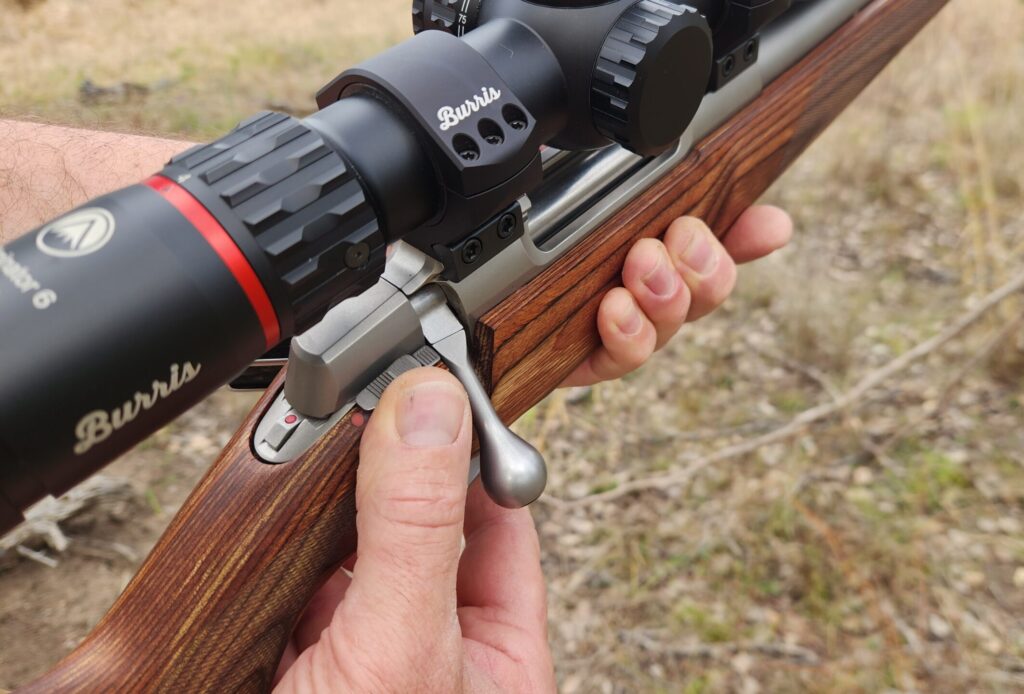
The centrepiece of this Sako is its receiver, made from a single billet of high-strength stainless steel. Thanks to modern CNC machining, Sako have not only retained their silky-smooth bolt-action but have done a masterful job of adding an integral Picatinny rail to the top of the receiver. This inclusion has in no way compromised the appearance of its classic action but subtly and attractively improved practicality. The largely scalloped portion of the receiver above the ejection port allows for easy top-loading, even with a low-mounted scope. The Sako 90’s recognisable three-lug bolt provides a 60-degree lift, which benefits the shooter during fast cycling and enables low mounting of larger-diameter scopes. The supplied Burris ‘Eliminator 6’ is one heck of a bulky scope, yet it never fouled any of the Sako’s metalwork, including the bolt. Interestingly, the new ‘90’ series enclosed bolt face is reminiscent of the older ‘75’, whereas the previous ‘85’ series had a semi-enclosed (partly controlled round feed) bolt face. For a push-feed action, Sako have always had a reputation for large claw extractors. However, the inclusion of two spring-loaded plunge ejectors now takes care of kicking out spent cases.
Unlike other variants of Sako 90, the Varmint rifle is based only on a short action that caters for seven chamberings from .222 Rem to .308 Win. I liked the crosshatch machining of the older Sako 75 and 85 metallic bolt shrouds but for whatever reason they’ve gone with the smooth look instead. A bright red cocking piece indicator rear of the shroud provides the all-important visual status of the rifle’s firing condition when cocked. The bolt release is as per previous models on the left of the receiver, with the inclusion of machined grip lines.
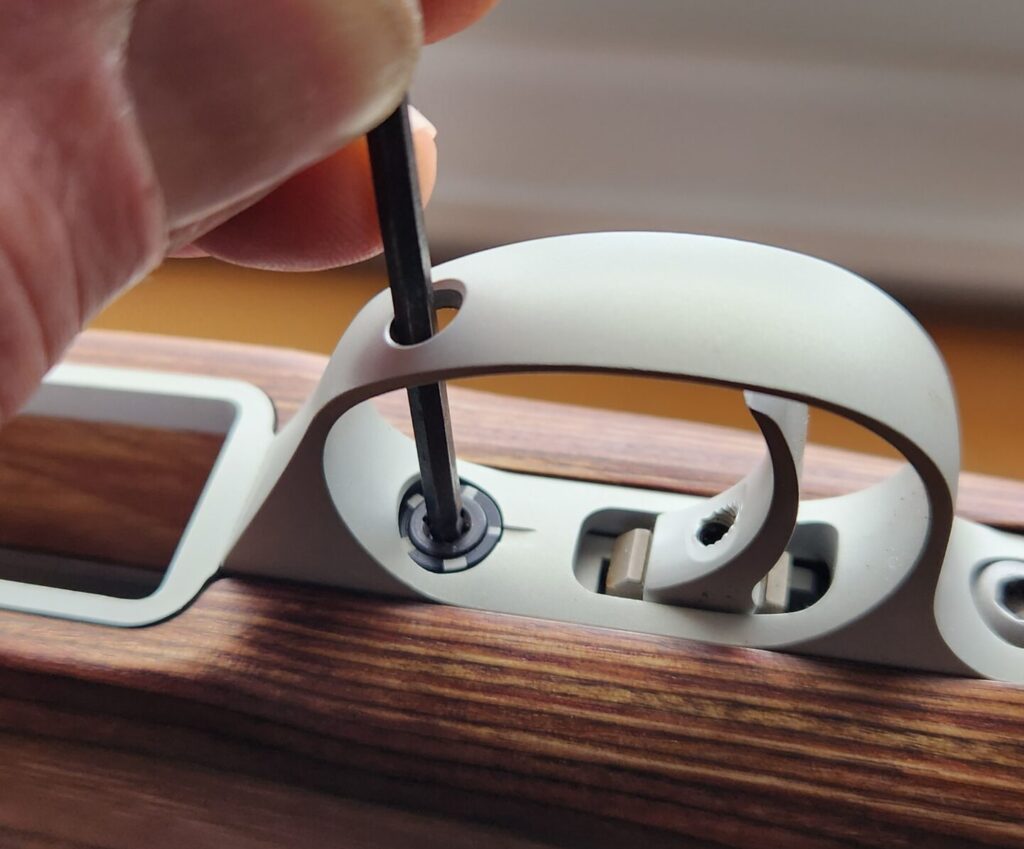
The Varmint has a single-set trigger with a weight of pull from 900g (2lb) minimum to 1.9kg (4lb) maximum. It is easily adjusted by an Allen key through the triggerguard. I prefer light triggers and this one came set to its minimum, breaking impressively sharp with no noticeable creep. Interestingly, the trigger position can be adjusted back and forth to customise finger placement. The two-position safety on the Sako 90 is familiar to me because my Tikkas have a similar design. It’s controlled within reach of the thumb and moves forward from ‘safe’ to ‘fire’ with absolute ease and silence.
The dual-stack magazine, including the follower, is made mostly from stainless steel and comfortably holds five .308 Win cartridges. While mostly a two-hand affair, the mag release takes some getting used to, especially for fast changes, but with a bit of practice can be done single-handedly. The magazine requires depressing before the catch allows it to be removed, reducing the risk of accidental release. I’ll give credit where it’s due, the entire metallic magazine and trigger bottom fit looks slick and reflects Sako’s quality. The bead-blast matte finish of the entire rifle metalwork is appealing and the properties of corrosion resistance, thanks to its mixture of mostly stainless steel and alloy, ensure it can handle the elements.

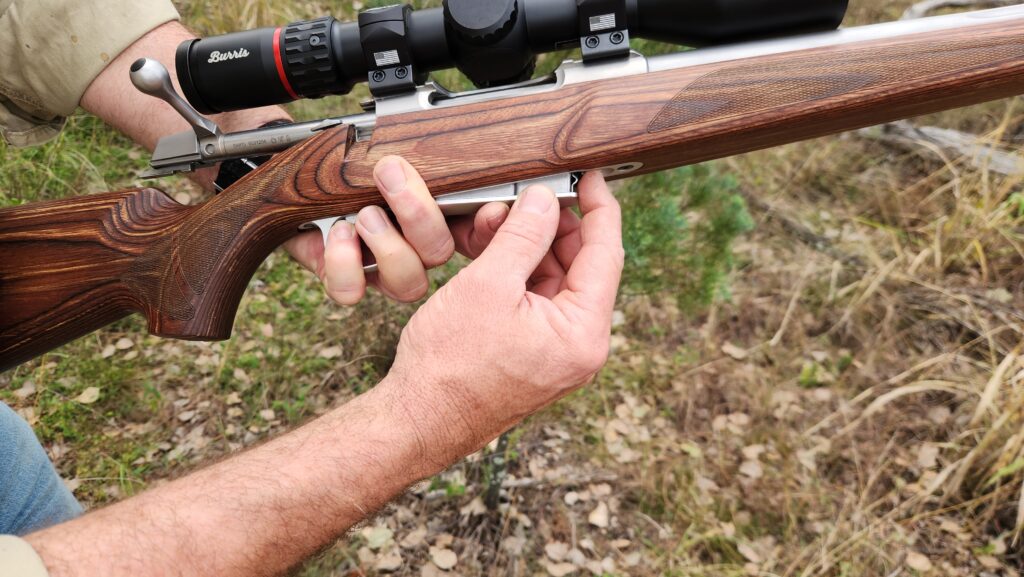
I guess the laminated beechwood doesn’t have the same appeal as the Hunter models’ walnut stock but for a varmint rifle it’s all about purpose. Laminated stocks are notoriously stable without glass bedding and this one mates precisely to the action via a separate recoil bedding plate and lug, held securely by two action screws. Although weighing much more than walnut, the Varmint rifle isn’t meant for walk-around stalking and the heavier platform is beneficial for long-range varminting. The Varmint stock bleeds ‘85’ series DNA and I was hard-pressed to tell the difference. The wide fore-end and fine-line chequering are proportionately contoured to the stock and, as with all Sako and Tikka stocks, their generous palm swell on the pistol grip feels comfortable. The raised cheekpiece ensures a nice face connection and the new black rubber recoil pad helps reduce felt recoil for larger chamberings such as the .308 Win. Naturally, front and rear stainless steel sling studs round out typical field rifle inclusions and are particularly important for bipod use.
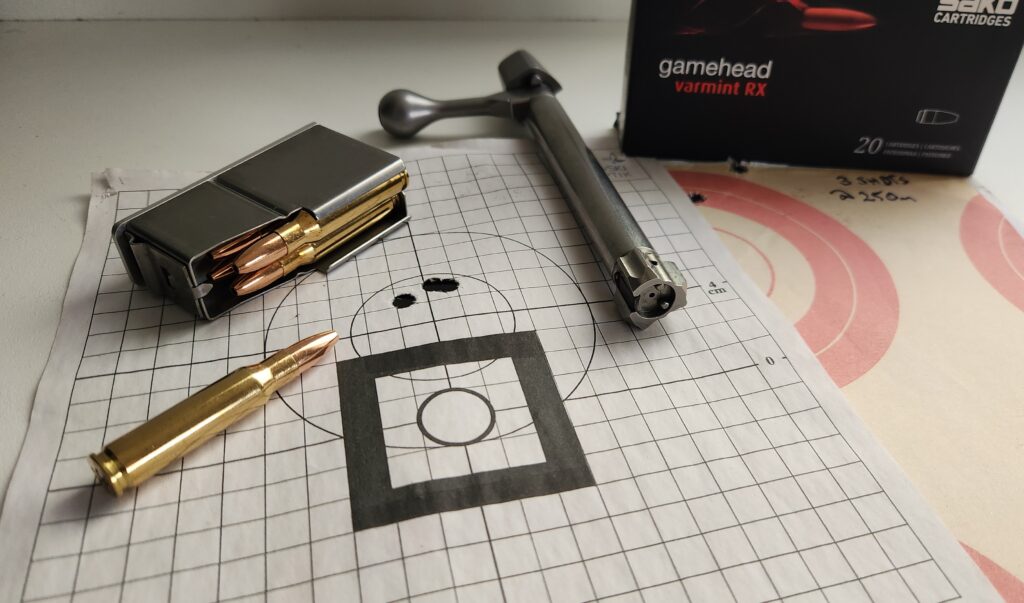
Not surprisingly, my first three shots at the SSAA 100m range confirmed Sako’s ability to build accurate rifles. I had a mixed bag of .308 ammunition leftover from other reviews but the supplier preferred I shot Sako’s own 130gr Gamehead Varmint RX. They obviously knew what worked because the bullets were a perfect match for this rifle, shooting sub-2″ groups at 250m. Unsurprisingly, Sako’s 162gr Powerhead Blade ammo also produced exceptional results. Without any adjustment to the scope, the Burris ‘Eliminator 6’ placed the reticle where it needed it to be at long distances, and I was confident that my next few sojourns to a friend’s property would be fruitful.
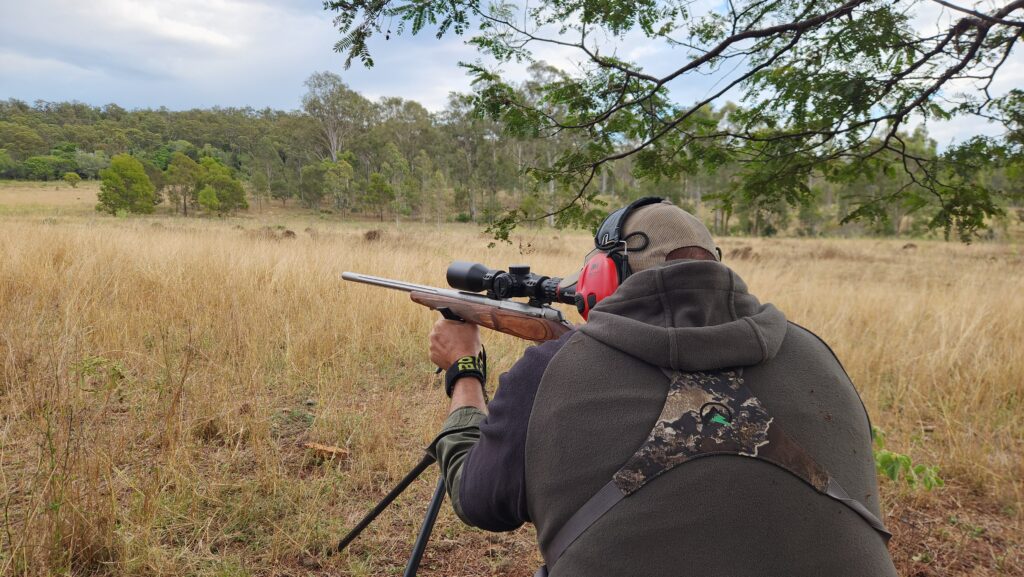
As it turned out, the varmints weren’t so small. After spotting many wild pigs during field testing, I was glad I hadn’t brought a knife to a gunfight! The Varmint 90 proved perfect for taking game at long range and the .308 130gr Gameheads made certain that pigs ploughing up prime agricultural land were despatched. The rifle wasn’t intended for offhand shooting but sometimes you just don’t have a choice. Two of the larger pigs from a mob late one afternoon presented when I couldn’t find a rest. However, the Sako Varmint, despite its size, shouldered nicely and felt extremely comfortable. My first shot landed squarely on a boar from the rear as it fled, dropping it dead in its tracks. In fading light, with the largest boar now at 130m and fleeing back to the treeline, I realised the scope’s low-light performance was not impressive but nonetheless lead the boar enough for a running shot to the neck. When the dust had settled, inspecting my oversize varmints made it clear I had subconsciously forgotten how heavy the rifle was when off-shoulder shooting.

The hollow-point, boat-tail bullets of the Gamehead Varmint RX ammo are primarily marketed toward thinner skinned game such as wild dogs or foxes but worked equally well on feral pigs. Travelling at approximately 3100fps from the Varmint 90’s 60cm barrel, the 130gr bullet has enough velocity and a flat enough trajectory to take down the game it’s intended for at short and long range.
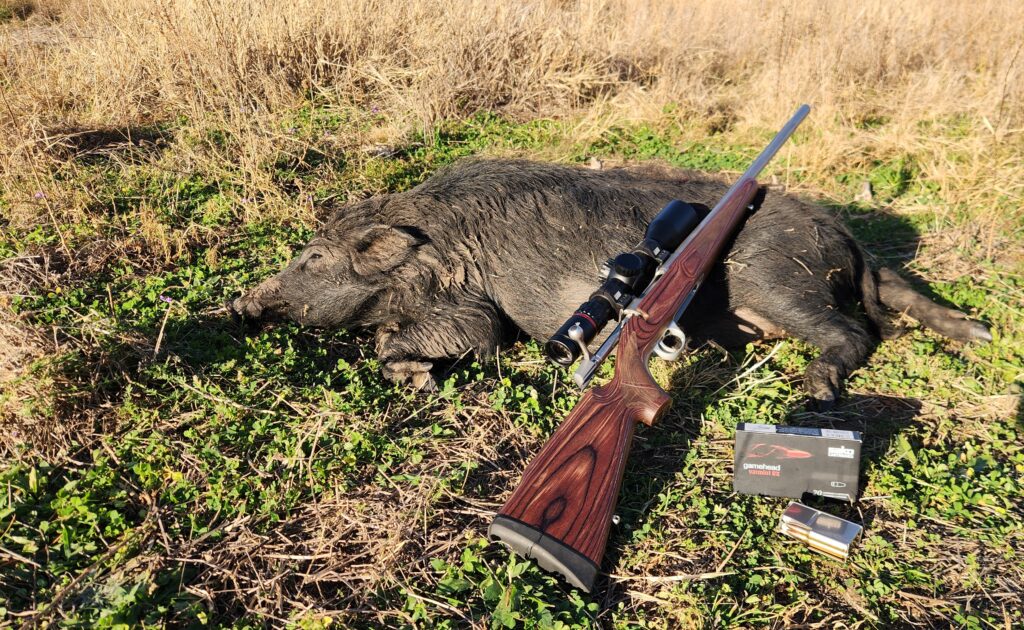
I thoroughly enjoyed my field time with the Varmint 90. Special thanks to The Open Range gunshop in Toowoomba, Queensland, for making it possible. I have no doubt the rifle will continue to enjoy a following among the Sako faithful or those looking for an alternate brand.
The rifle (unscoped) retails for about $3500 at the time of writing and will suit those seeking a reliable rifle that shoots accurately straight out of the box with no customisation. More from Beretta Australia
Share this article

Related
Articles


Related
Recipes
Sorry, no related items found.