

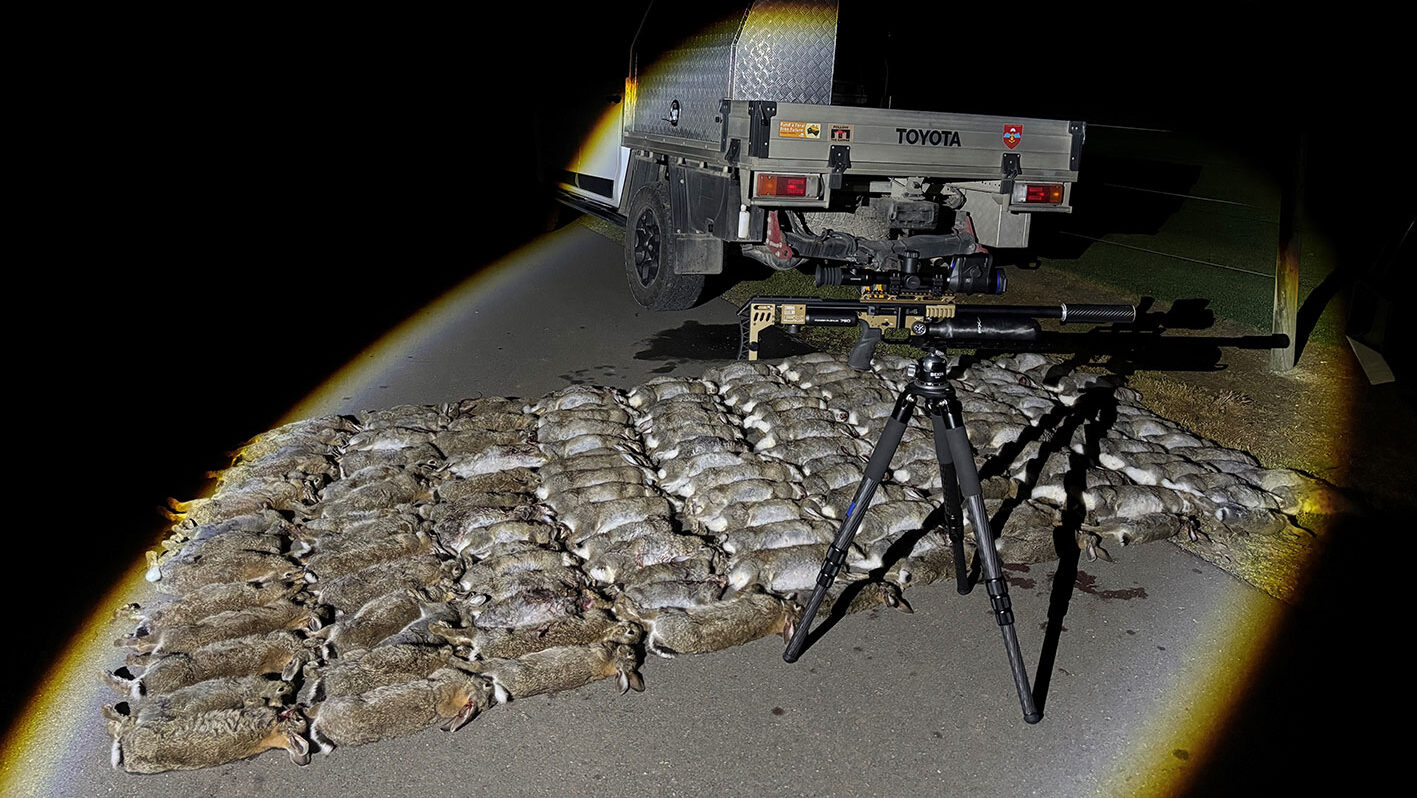
Rabbit numbers on the rise
A wet winter across much of the country has done what wet winters always do to rabbits and given them a green light to breed. Numbers are now climbing in several states, while the biological controls that have kept populations in check are beginning to lose some of their effectiveness. It gives hunters a chance to get out and do some good on the ground while helping tackle a growing conservation problem.
Dr John Virtue of the Centre for Invasive Species Solutions has identified rabbit hotspots in southern Western Australia, suburban Canberra, peri-urban areas around Adelaide, the New South Wales Riverina and southern Queensland.
WA’s Albany region has been hit particularly hard, with rabbits reaching what has been described as plague proportions on farms and even a local golf course. Control crews there are using a familiar mix of methods, including locating warrens, fumigation, ripping and licensed shooting where suitable. In some cases, trained dogs are being used to flush rabbits back underground so warrens can be identified.
The Riverina is also feeling the pressure. One farmer near Coolamon in southern NSW has reportedly avoided planting crops in some paddocks for three consecutive years because of rabbit damage and is spending up to $100,000 a year controlling them on his property.
Biological controls such as myxomatosis and rabbit haemorrhagic disease virus, commonly known as calicivirus, can suppress rabbit numbers strongly for years. Over time, however, resistance develops and populations begin to recover.
The most recent major calicivirus strain, released in Australia in 2017 following years of research and trials, produced substantial reductions in rabbit numbers. Almost a decade later, its impact is beginning to weaken in some areas and rabbits are again becoming more noticeable across farmland, reserves and suburban fringes.

There is also no new biological control ready to take its place. The Rabbit Biocontrol Pipeline, established to identify and develop future strains before resistance became widespread, lost funding in 2022. With rabbit numbers again rising, effective on-ground control remains essential.
Rabbits are an established pest species across Australia, though hunters should always check the rules that apply in their state or territory. Permission from the landholder is essential before entering private property.
A wet winter followed by a mild spring can quickly turn a few rabbits into a serious problem. A night spotlighting or several evenings working warrens with a .22 can remove useful numbers while also putting excellent meat on the table.

Rabbit is lean, versatile and well suited to slow cooking, making good use of an animal that would otherwise continue damaging crops, pasture and native vegetation.
Rabbit hunting can also form a useful part of a broader control program. Warren destruction remains particularly important because rabbits depend heavily on warrens for shelter and breeding. Where fumigation or ripping is also being carried out, continued shooting pressure can help stop numbers rebuilding as quickly.
With rabbit numbers rising in several parts of Australia and biological control losing some of its effectiveness, there is again good reason for hunters to keep an eye on local numbers and make the most of opportunities to help landholders bring them back under control.
Share this article

 Website
 Instagram
 Facebook
Related
Articles

Weipa hunt draws record field


Watagans pest control highlights missed opportunity for recreational hunters


Hunting monster boars and Outback ferals
![IMG_1572[1]](https://australianhunter.com.au/wp-content/uploads/2026/08/IMG_15721-150x150.jpg)
Related
Recipes