

Inside John Rigby’s rifle revival
Mention the name of London gunmakers John Rigby & Co. and visions of adventures in far-off lands filled with dangerous beasts such as man-eating tigers in the forests of India or cantankerous buffalo bulls in the African bush are conjured up. As the oldest gunmakers in continuous existence in the English-speaking world, Rigby can trace their history back to humble beginnings in Dublin, Ireland, in 1775.
In 1865, Rigby opened a retail outlet in London. Business was no doubt good, and as London was at the time gaining a well-earned reputation as the mecca of fine gunmaking, the move to London was timely. The Dublin works would eventually only be closed in 1897, with Rigby hereafter based exclusively in London.
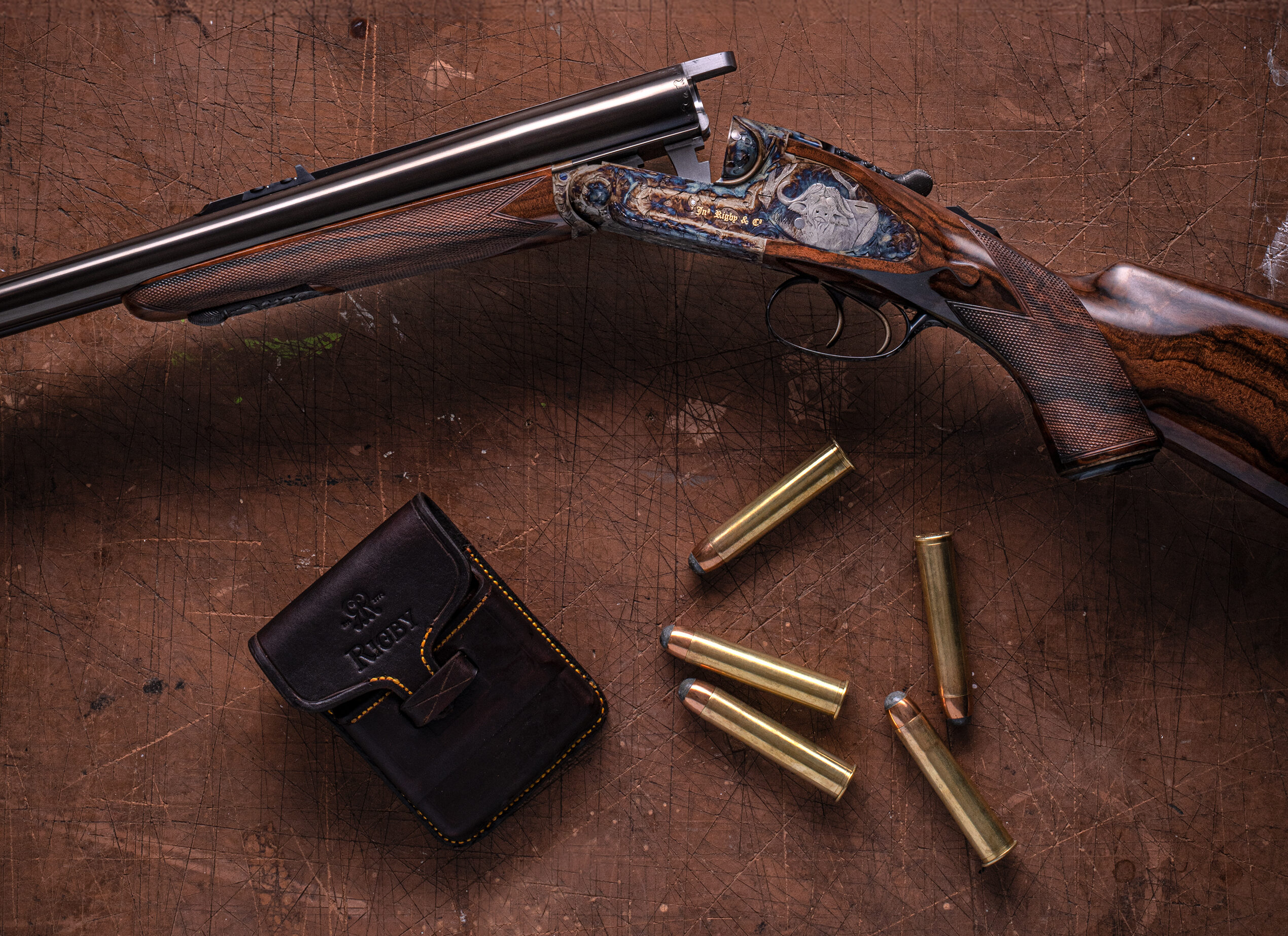
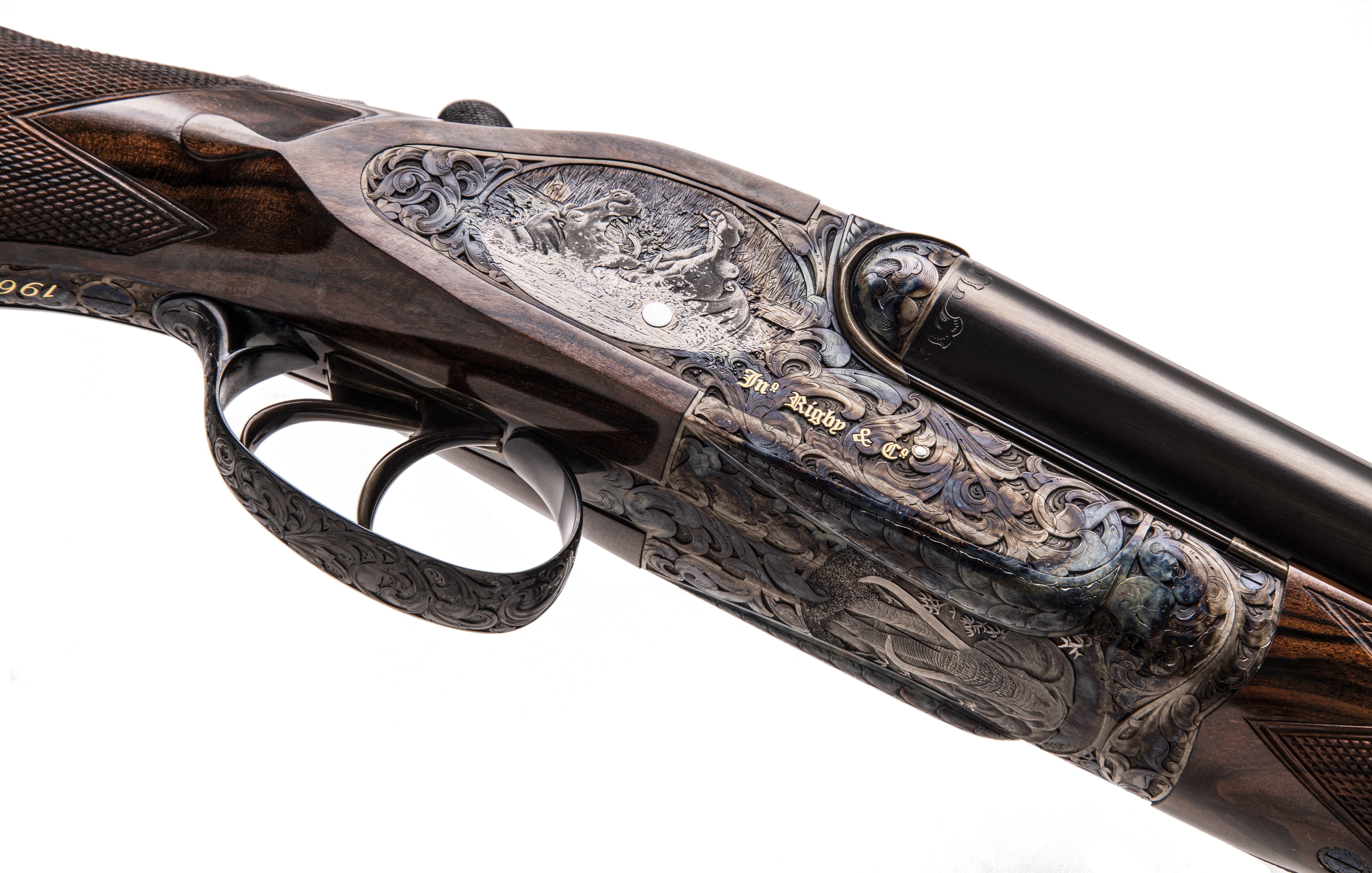
Although Rigby gained fame during the 1870s for their prowess at building match rifles, 1879 would see the introduction of a classic design that is once more in production after a hiatus of more than a century: the rising-bite sidelock action, patent No 1141 of 1879.
I doubt if they realised it at the time, but John Rigby & Co. turned the big-game hunting world on its head in 1898 when they took a leap of faith and introduced a new cartridge: the .450 Nitro-Express (NE). The .450 NE was based on an existing black powder cartridge, the .450 Black Powder Express (BPE), but the addition of a heavier brass case (3½” in length), modern jacketed bullets and nitro powder (in this instance, 70gr of cordite, a recent development that consisted of 58 per cent nitro-glycerine, 37 per cent gun cotton, and 5 per cent Vaseline) boosted the ballistics of the new cartridge considerably. The .450 BPE typically fired a 325gr paper-patched lead bullet at about 1800fps, but the .450 NE launched a 480gr jacketed bullet (either a conventional soft-nose or a non-expanding solid) at an almost breathtaking 2150fps.
Rigby’s chosen ballistics for their .450 NE was no coincidence, though. Its 480gr bullet at 2150fps delivered just about 5000ft/lbs of energy, which is very close to the energy figures quoted at the time for the 8-bore rifle with a suitable loading, one of their more popular black powder dangerous-game chamberings. What Rigby did by modernising an existing black powder cartridge was to repackage the 8-bore in a rifle that was at least 5lbs lighter, a lot handier and quicker into action, and recoiled considerably less. The shooting world took note and would never be the same again.
The .450 NE made the black powder-loaded large bores obsolete overnight. It instantly became the tool of choice for the professional and amateur hunter alike, and I suspect Rigby did brisk business with orders for rifles chambered for the new cartridge. The other English gunmakers were fast to follow in Rigby’s footsteps. Holland & Holland introduced a .450-calibre Nitro-Express of their own, the .500/450 NE. It was ballistically identical to the Rigby round but used a bottlenecked case (a necked-down .500 3½” case) with larger internal capacity and thus slightly lower chamber pressure. It was, just like the Rigby offering, a nitro-powered version of an existing black powder cartridge, the .500/450 Magnum BPE. The .450 No 2 NE, developed by Eley, was introduced by WJ Jeffery & Co. It used a massive 3¾” case for even lower chamber pressure.
As a firm, John Rigby & Co. was no stranger to advanced developments in the field of rifles. The third John Rigby himself was, from 1887 to 1894, the Superintendent of the Royal Arms Factory at Enfield. When the barrels of the early Lee-Metford rifles were found to wear out alarmingly fast under service conditions, the cure was a change to square-grooved rifling in place of the earlier elliptical Metford-type rifling. This period saw the introduction of smokeless propellant for the .303 in place of the heavily compressed charges of black powder used in the cartridge up to this point, and John Rigby played a vital role in both of these developments.
Following on the heels of the .450 NE, 1899 saw the introduction of the rimmed .400/350 NE cartridge by Rigby for use in double and single-shot rifles. Double and single-shot rifles were expensive, though, and Rigby turned to their new-found partners in Germany, the Mauser-Werke in Oberndorf, for a more affordable solution. Mauser accepted the challenge and responded by adapting their existing Siamese Mauser action that was designed for use with the rimmed 8x50R cartridge. Mauser lengthened the standard-length M98 Mauser action by approximately a quarter of an inch, and a special, sloped magazine box and modified extractor claw made it possible to feed the rimmed .400/350 NE cartridges from the Mauser action’s magazine.
Mauser called the new action the M98 Magnum Mauser action, and it quickly became the platform for what is arguably Rigby’s most famous cartridge: the .416 Rigby. The .416 fired a 410gr bullet at 2370fps, and this load generated 5000ft/lbs of muzzle energy. This placed the .416 in the same class as most of the popular British Nitro-Express double rifle cartridges such as the .470 NE and others. Combined with excellent non-expanding, steel-jacketed bullets loaded in the factory ammunition of the time, the .416 Rigby quickly gained an excellent reputation for use on dangerous game.
The slightly longer Magnum Mauser action made the development of cartridges like the .416 Rigby a possibility. Mauser designed a magazine box specifically for the .416, along with a strengthened magazine floorplate, and the combination soon proved popular. Original Rigby rifles in .416 Rigby are today rare and valuable; hardly surprising since only 189 of them were made up to the outbreak of World War Two in 1939. They are highly prized by collectors and are rarely offered for sale.
Rigby was appointed as the Mauser-Werke’s exclusive agents in 1898, a relationship that persisted until 1912. This meant that they had the rights to sell Mauser rifles, actions, and other components in Britain and the colonies. Their subsequent close collaboration with Mauser on the designs described before should therefore be no surprise. Rigby even adopted the 7×57 Mauser cartridge as a standard chambering, renaming it the .275 Rigby. The .275 Rigby was a favourite of W.D.M. Bell, the famed Scottish hunter who used the rather diminutive .275 for a lot of his hunting, including numerous elephants. Another well-known user of the .275 was Jim Corbett, the famed hunter of man-eaters in India.
During the 1920s and 1930s, and despite the ravages of the Great Depression, the British gun trade continued to manufacture the finest sporting arms of the time. Wealthy clients from India and elsewhere kept order books turning over, and demand from Africa and India for quality and reliable hunting arms stayed strong. Things changed rather drastically on September 1, 1939, however.
The British economy was placed on a war footing to support the war effort, and the British gunmakers found themselves doing work in support of the British Armed Forces instead of making fine guns and rifles for sportsmen around the world. When the guns eventually fell silent in 1945, the world had changed, and not necessarily for the better for the British gun trade. Britain was a bleak place for many years after the war’s end, with rationing in place and the grey cloud of war debts to be paid off. Big-game hunting certainly wasn’t a priority during this time.
For Rigby, the situation was without doubt even worse. The Mauser factory in Germany, on which they depended for their supply of bolt-action rifles, was destroyed by occupying French forces in 1946, and with it went the commercial M98 Mauser action, tragically. During the post-war years, Rigby had to use what actions they could get hold of to keep, especially, the .416 Rigby alive, and they even went so far as to modify standard-length M98 actions for the .416, an unwise but probably desperate attempt to keep the doors open. When the French-made Brevex Mauser action came along in the 1950s Rigby had access to a Magnum-sized M98 action again, but the Brevex didn’t linger for long, and only about 50 .416s were made on the Brevex by Rigby.

A 1953-vintage Rigby .416 owned by a friend of mine is perhaps the best illustration of just how desperate Rigby was to keep producing .416s during this period. The rifle is made on a Frankenstein Mauser action; two standard-length M98 actions had been welded together to form one Magnum-length action. Functionally, the rifle performs flawlessly, but the amount of work involved is considerable.
Throughout the 1960s and 1970s, Rigby survived, but only just. In the 1980s, however, things changed when the grand old company was acquired by Paul Roberts. Paul, who traded under the name of J Roberts & Son, had been contracted to build rifles for Rigby, and bought the Rigby name and ledgers in 1984. He set out to restore the Rigby name and, in addition to fine double rifles, made big-game bolt-action rifles on all manner of actions, including modified Brno ZKK-602 actions.
In 1995, Rigby even introduced a new cartridge: the .450 Rigby Rimless. It was conceived by necking up a .416 Rigby case to take a .458″ bullet, and although it isn’t as popular as the .416 Rigby it has a fair following with professional hunters in Africa and elsewhere where dangerous game is hunted.
In 1998, Rigby entered what many Rigby aficionados regard as the company’s darkest period. In this year, the company’s name and records were bought by an American individual, and production was moved to northern California. Many grandiose claims were made about the so-called ‘Cali-Rigby’ offerings, but the reality was that their build quality was rather lacklustre. Many of the traditional (and proven) English gunmaking techniques were discarded, and double rifles based on remanufactured shotgun actions sourced from Germany became the reality. The result was sad and inevitable, and the once-proud name of Rigby became somewhat of a joke in the rifle community.
In 2010, and to salvage the Rigby name, the company’s name and ledgers were bought back by a Dallas, Texas-based investment group. Paul Roberts was once again contracted to make the rifles to be sold under the Rigby name. Alas, the arrangement was short-lived, and in 2013, Rigby changed hands again, this time to the L&O Group from Germany, owners of such other well-known brands as Blaser, Sauer and Mauser. After many years apart, it looked like Rigby and Mauser would once again commence their successful collaboration of old. As things turned out, this is exactly what happened.
Marc Newton, a former employee of Paul Roberts and a passionate admirer of Rigby guns and rifles, was appointed as managing director, and I’m happy to report that Rigby is flourishing under Marc’s dynamic leadership. The revered rising-bite double rifle and shotgun is, more than a century after production was originally halted, again in production and available to those who desire one. A new and more affordable boxlock-actioned double rifle, the Shikari, has recently been released, so just as in the past, Rigby is again offering big-game double rifles on both types of actions.
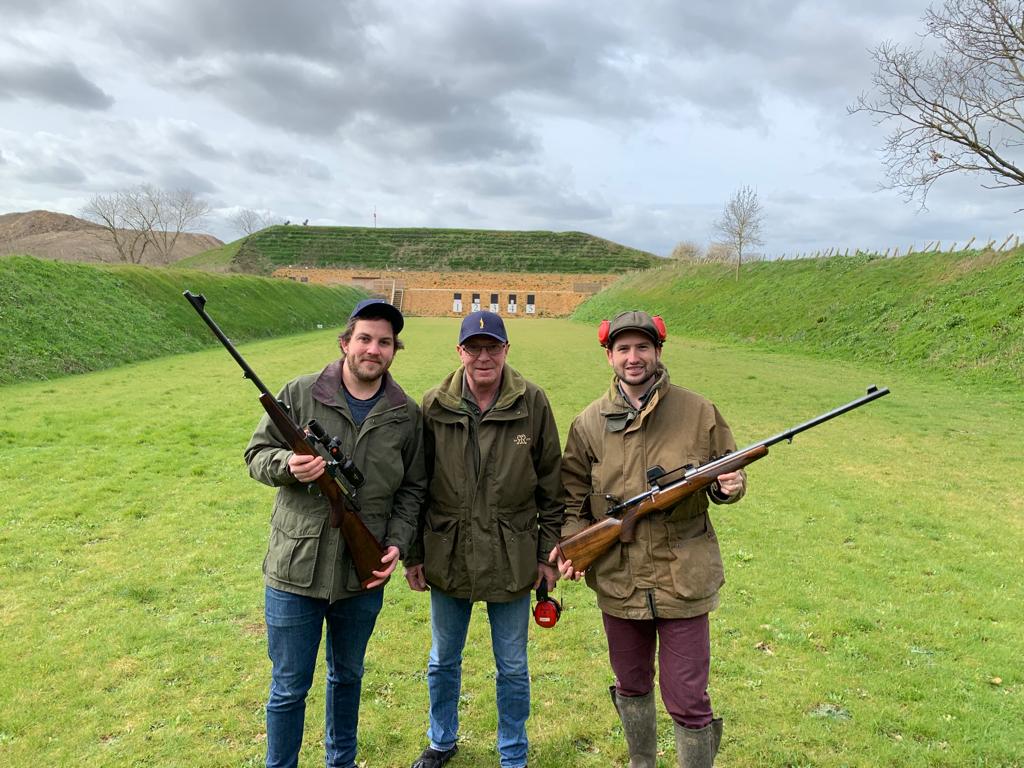
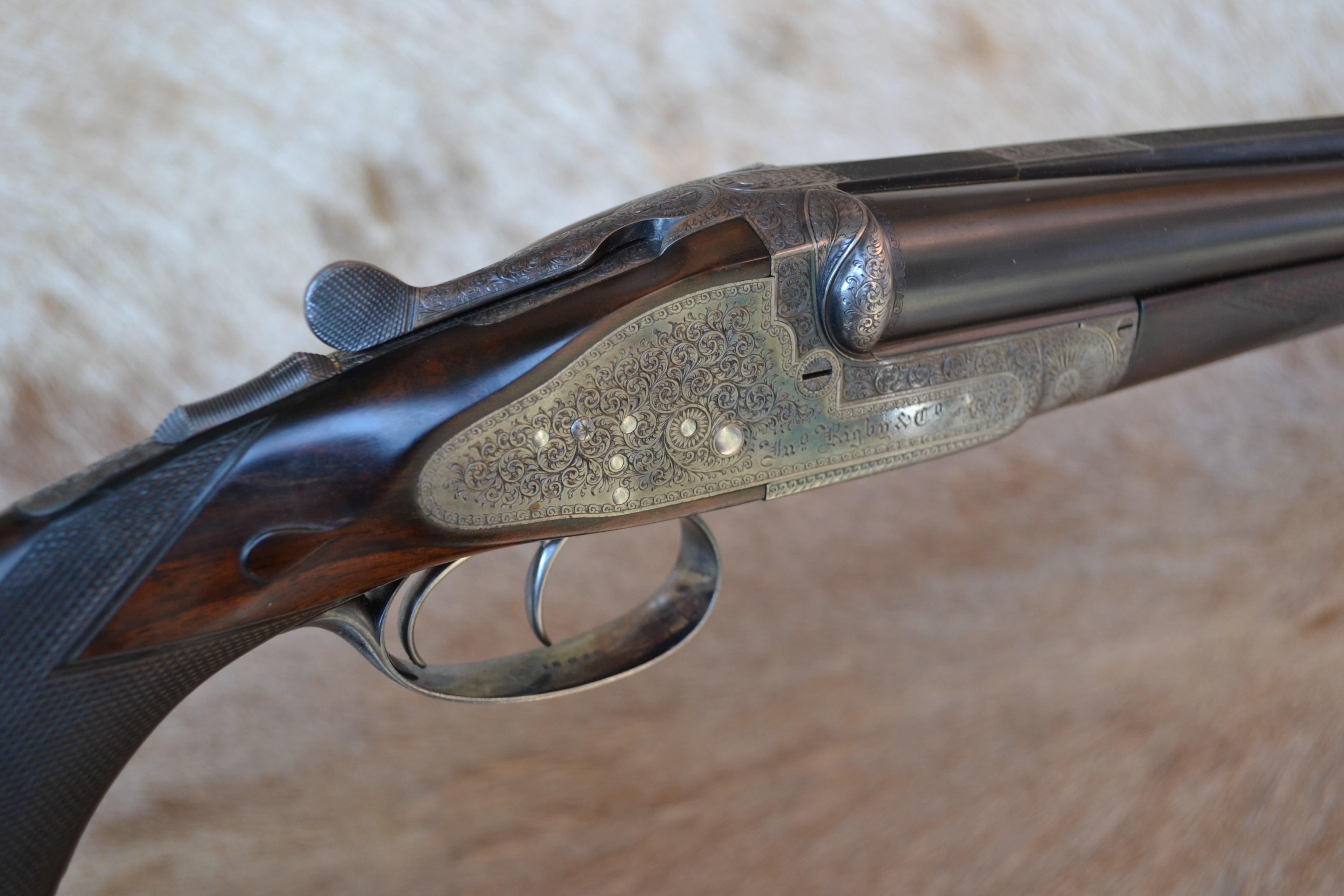
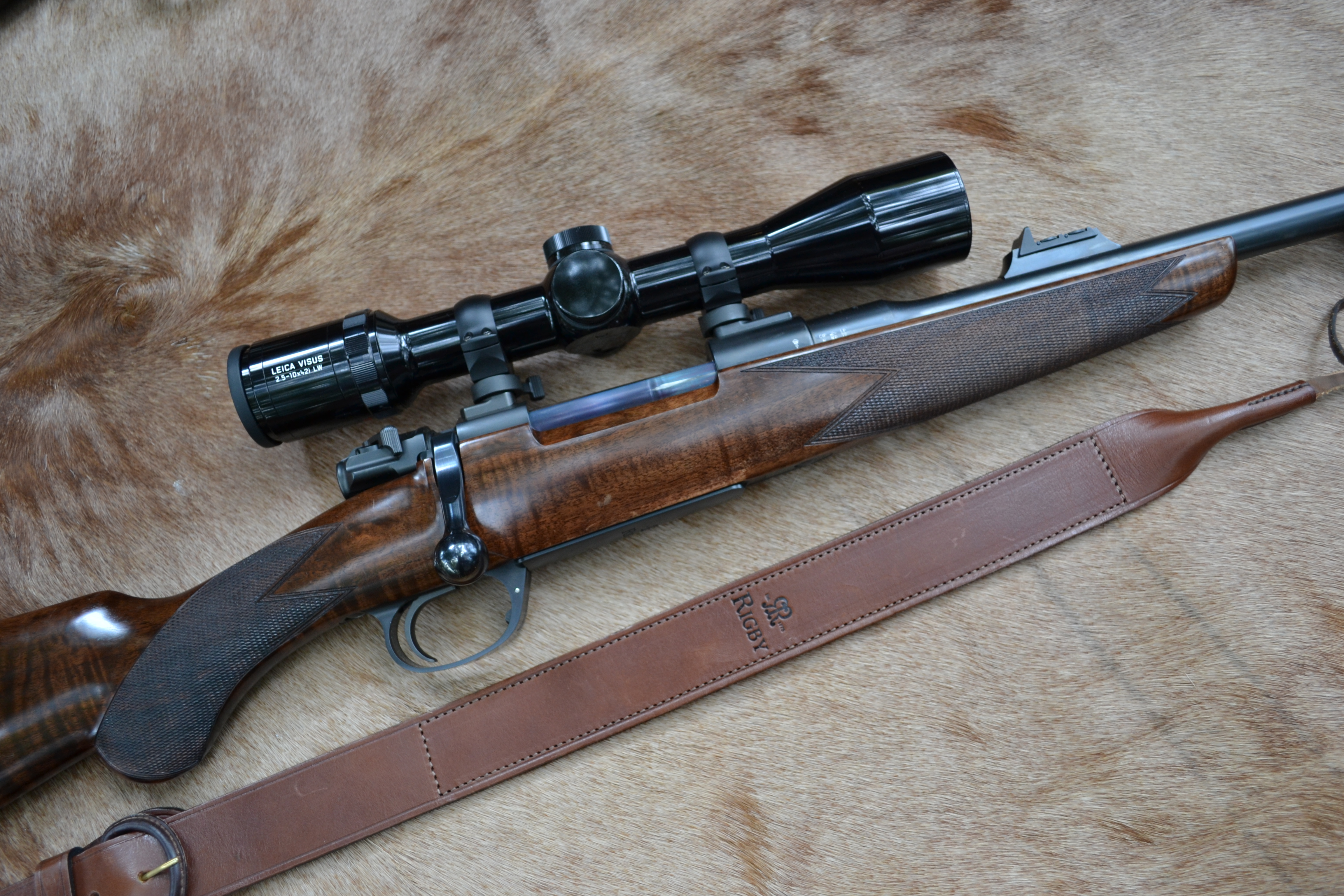
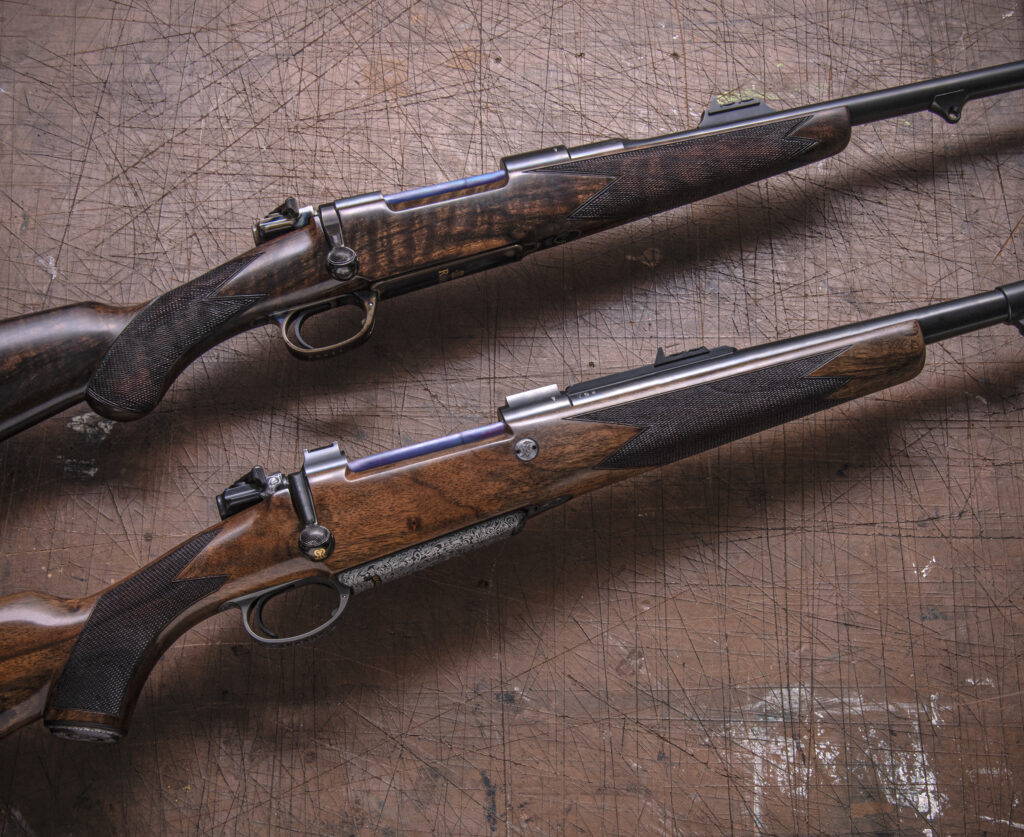
As for bolt-action rifles, Rigby’s bread-and-butter product here is the Big Game model. It is available in .375 H&H, .416 Rigby, .404 Jeffery, and .450 Rigby, and in three distinct configurations as well. The PH model is intended to be a practical working rifle for those who don’t require extra embellishment but demand functionality and reliability, while the Vintage model (available only in .416 Rigby) is intended to cater for those with more traditional taste in rifles. Single square-bridge models are intended for use with open sights, while double square-bridge versions can be fitted with quick-detachable scope mounts. Individual preferences and embellishments such as engraving and upgraded wood are available, and Rigby will gladly quote an individual client in this regard. Standard barrel lengths are either 22″ or 24″, depending on the model.
For those whose hunting needs dictate the use of a smaller-calibre rifle, the Highland Stalker fits the bill. It is available in .275 Rigby, .308 Winchester, .30-06 Springfield, 8x57JS Mauser, and 9.3×62 Mauser and is styled very much like Rigby’s earlier .275s that were carried by the likes of Bell and Corbett. As they are intended as hunting rifles primarily, the Highland Stalker features a slim-profile 23″ barrel, but a Ladies’ model is available as well, fitted with a 22″ barrel to shave off a few extra ounces.
The Magnum model is aimed at those who do their shooting at longer range. As the name suggests, it is chambered for cartridges with a bit more power and carries a heavier-profile 25″ barrel. As this model will invariably be scoped, it is supplied without open iron sights. As with the Big Game, a whole range of options are available to customers who wish to enhance their Highland Stalker.
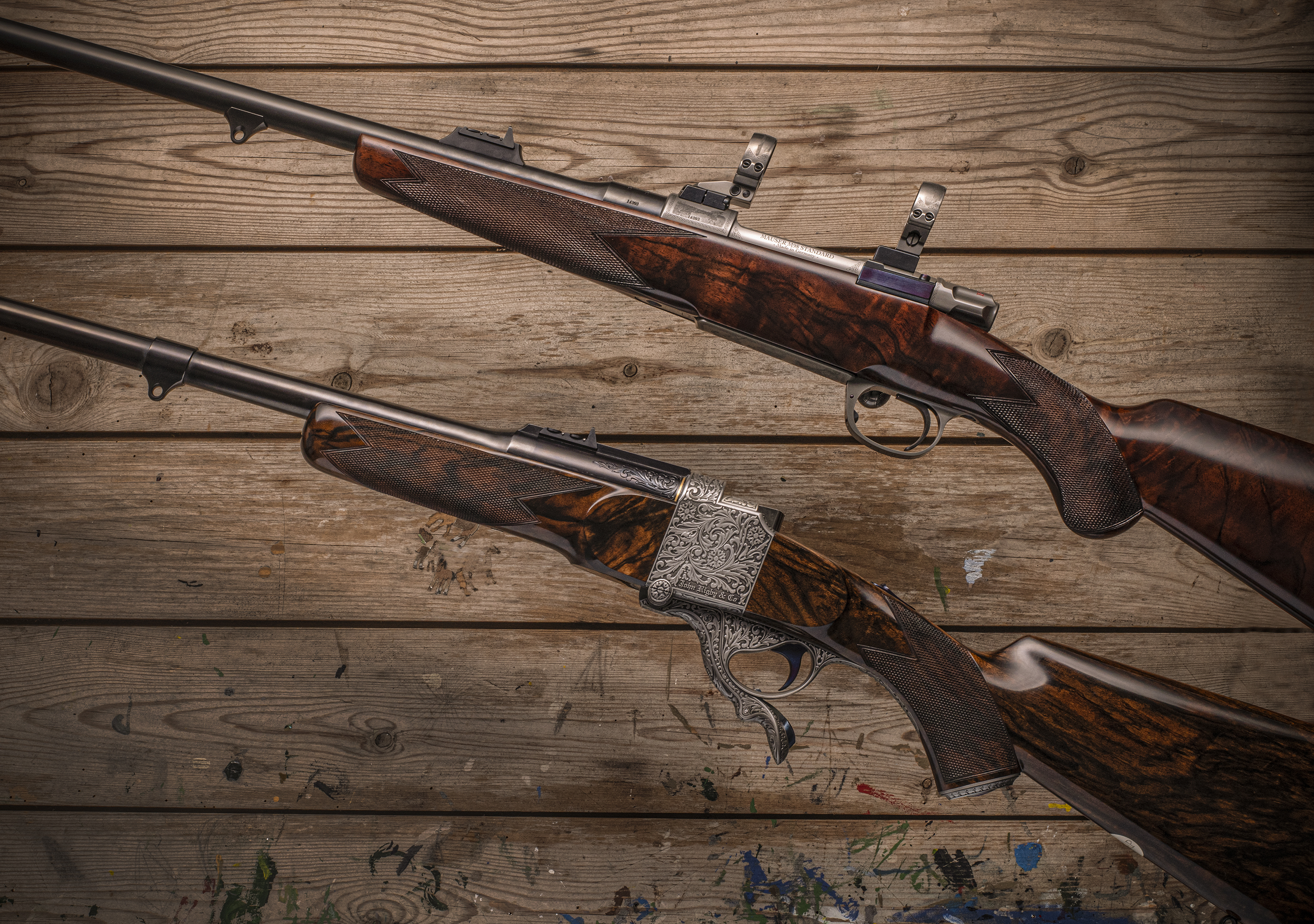
Rigby’s current flagship bolt-action is the London Best and they are uncompromising best-quality rifles built according to individual clients’ requirements. The London Best is intended to compete with the absolute best bolt-action rifles being produced in Britain and elsewhere today, and the fact that they have an unusual amount of time and effort expended upon them is reflected in the price. The price for the London Best is therefore intended as a baseline only as individual clients will no doubt have preferences of their own that will be added to suit their individual tastes.
The London Best Vintage is particularly soft on the eye, available only in .275 Rigby, .350 Rigby and .416 Rigby, styled according to pre-World War II specifications.
Since their renaissance, Rigby has gained a reputation for making limited-edition rifles. These include falling-block single-shot rifles chambered for the latest Rigby cartridge, the rimmed .416 No 2, as well as bolt-action rifles. Of particular interest here in Australia is the Rigby Big Game Australian Water Buffalo special edition. These rifles (only five were made) feature Australian-themed engraving and are chambered in .450 Rigby. I’m sure we will see many limited-edition Rigby rifles in the future.
After decades out in the proverbial cold, John Rigby & Co. (Gunmakers) Ltd is back to what they did best all those years ago – making some of the finest hunting rifles available. The company’s historic collaboration with Mauser and their superb M98 action has been resurrected as well, and if you buy a new Rigby today, it will once again be built on a German-made M98 Mauser action. This is a case of history repeating itself, but in an incredibly positive way!
Rigby guns and rifles are imported into Australia by Pro-Tactical, headquartered in Brisbane. Visit them at protactical.com.au
Share this article
Related
Articles



Related
Recipes
Sorry, no related items found.