


Understanding bolt-action rifles
The bolt-action rifle is undoubtedly the most widely used for hunting. Its simplicity and ease of operation, particularly in dirty environments, is unsurpassed. It is also the action the bulk of people choose when accuracy is uppermost, so it’s no surprise that most military sniper rifles have a bolt-action.
There are a number of variations on the bolt-action, although the majority of hunters will make a choice between a push feed action or a controlled round feed (CRF) action. The push feed does not engage the extractor until the round is chambered, whereas with the CRF the extractor begins its grip on the round the minute the round is fed from the magazine.
One great benefit of the controlled round feed action is that it comes with a large and strong claw extractor. This grips the rim of the cartridge as the bolt is moved forward, and allows a more reliable extraction. The ejector is not part of the bolt either, it’s usually a spring-loaded steel item at the left-hand rear of the action. It has also been proved more reliable in extreme situations than the plunger ejector on a push feed.
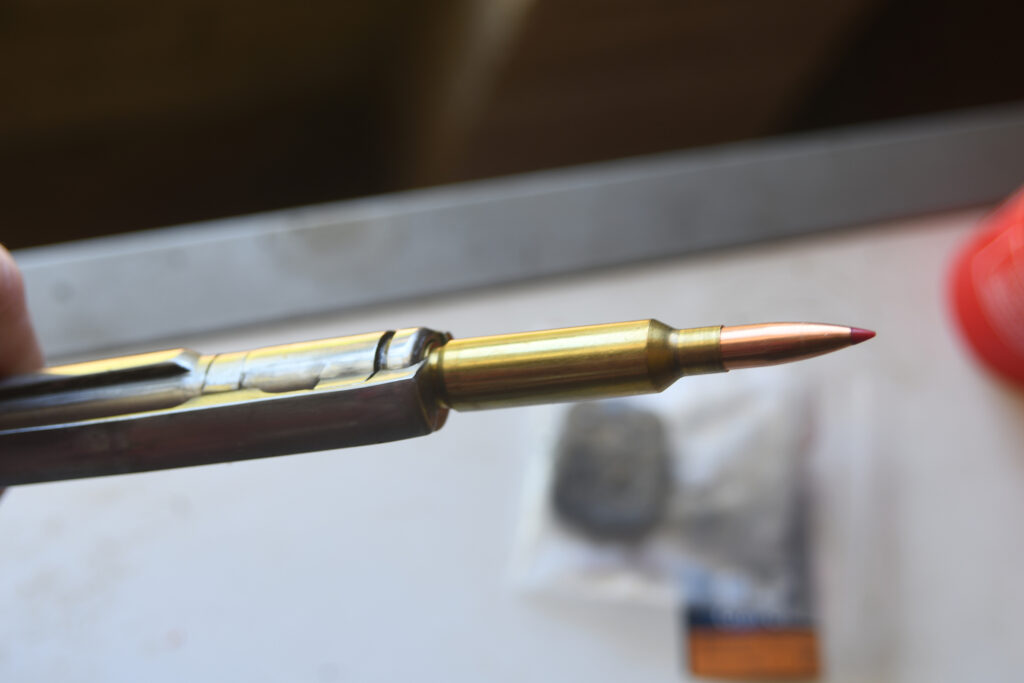
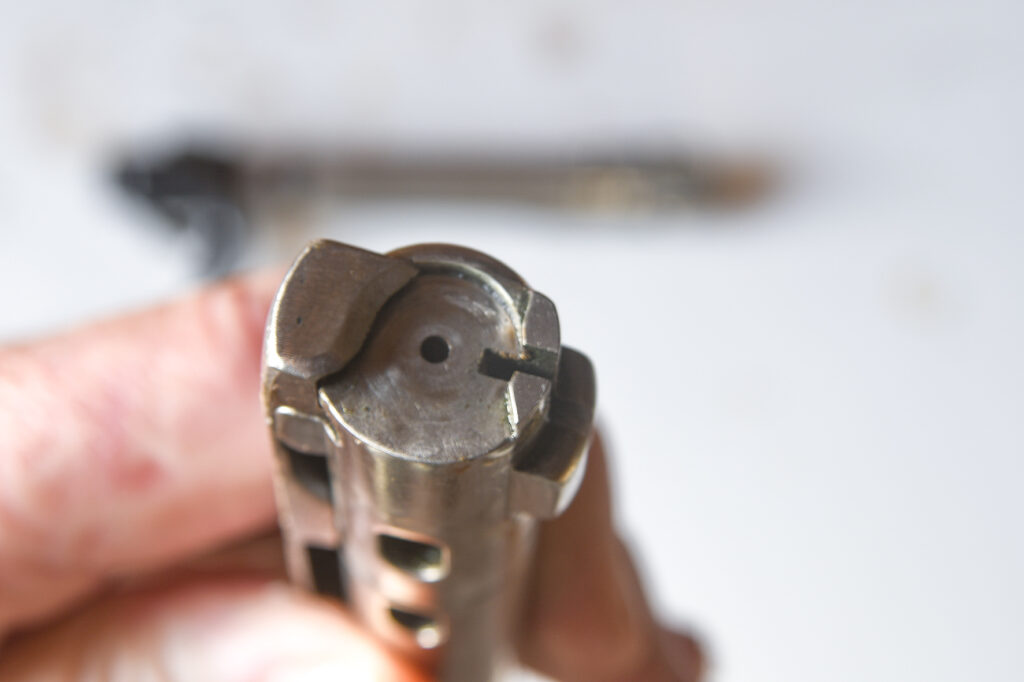
Experienced hunters, particularly those after big game, will usually agree that the CRF is superior as a hunting action because of its utter reliability under all scenarios. The CRF will operate at any angle and will not double feed under a hasty reload when going for a quick second shot.
The Mauser action, in particular the 98 Mauser, is the shining example of this type of bolt-action and has been copied by many manufacturers, including Winchester with their Model 70. Actually, Winchester improved it in the early pre-1964 rifles, to feed empty brass cases. In the CRF action you must feed all rounds from the magazine. Very few have been successfully developed to feed directly into the chamber.
It’s no coincidence that gunmakers like Rigby adopted the Mauser CRF action for their big game rifles. If you need a quick second shot on a Cape buffalo, you MUST have reliable feeding from the magazine. A large, hairy animal out for vengeance and close enough is to be avoided at all costs.
A push feed action is probably the simpler of the two designs, requiring less tooling and is usually cheaper to produce as a result. Plenty of hunting rifles are chambered using the push feed, and almost every target rifle made will be a push feed action. The best known of the push feed actions would be Remington’s 700. This has been sold in huge quantities all over the world, and has also been the basis of many military sniper rifles.
One clear advantage of the push feed for many was the lack of bolt slop in the rearmost open position. The original Mausers were highly prone to this and their detractors always point to this as a failing of the action. It was a deliberate factor though because the 98 Mauser was designed primarily as a military item and close tolerances could mean unreliable ammo feed in cold or muddy conditions.
So when you pick up someone else’s rifle and try to feed a round directly into the chamber and the bolt won’t close, you have probably found a CRF actioned rifle.
There is another variation that comes from European manufacturers and that is the straight pull action. They don’t find a lot of favour here, but that could be due to price among other factors.
Makers like Merkel and Blaser offer them and they are said to be quick for that second shot, but apart from hunters in Europe they don’t sell as well as the push feed action, which would be the most popular in the majority countries.
All firearms have locking lugs, and by far the strongest are those in a bolt-action. Most will have at least two lugs at the breech end of the bolt and mainly the bolt handle will provide a third locking lug. But there have been and still are a number of actions that use rear locking lugs. The SMLE or short magazine Lee-Enfield is the classic example. It is a rear locking action, meaning that the lugs, including the bolt handle, lock down at the rear of the action nearer the bolt.
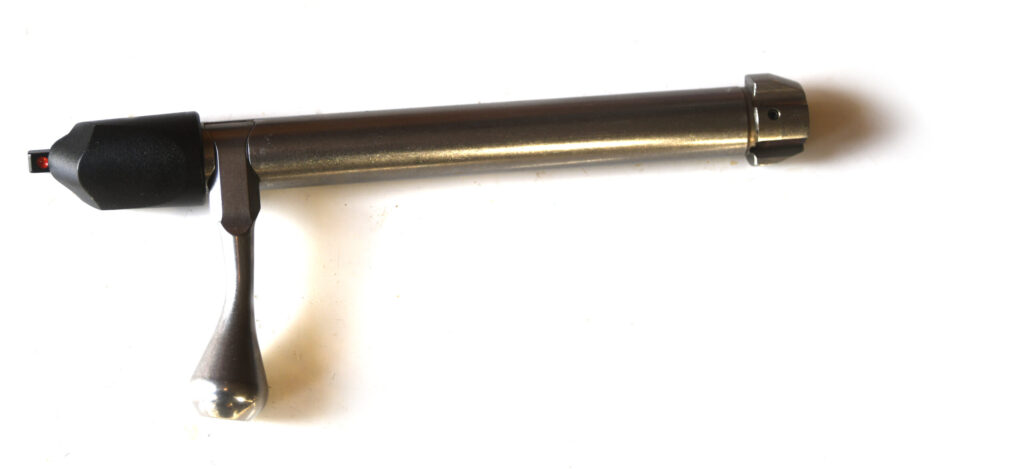
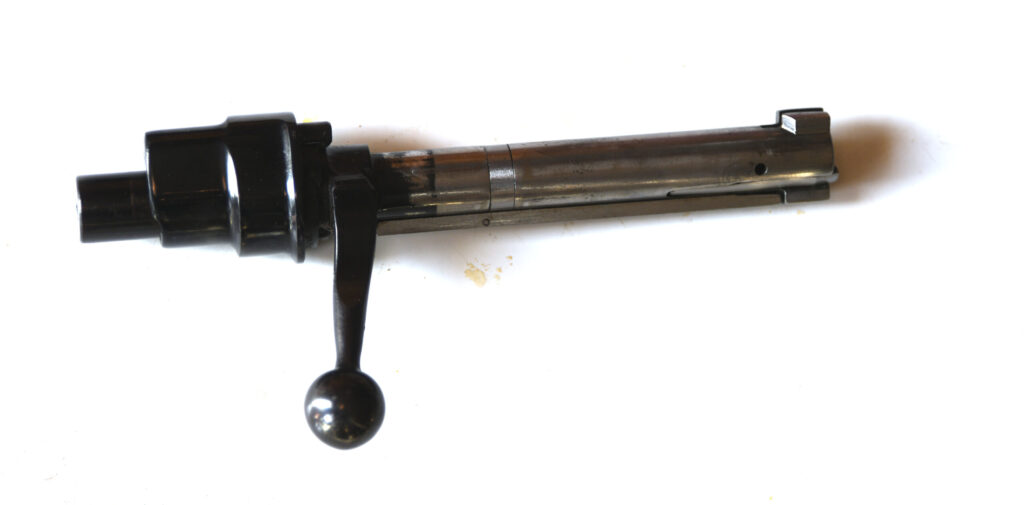
Rear locking actions have a tendency to need full length resizing to reload the case after each firing, whereas actions with front locking lugs are generally stronger and the case is less likely to stretch under firing. Rear locking bolts are also less tolerant of breech pressure.

Most bolt-action rifles have a magazine of some sort. The original military Mauser actions mostly use a ‘trapdoor’ style in which the bottom metal on the magazine is flush with the surrounding wood and metal. Military Mausers had a hole in the floorplate that was designed to be opened by using the pointed Spitzer-style bullet. When pressed in, the catch is disengaged and the floorplate drops down, emptying the magazine.
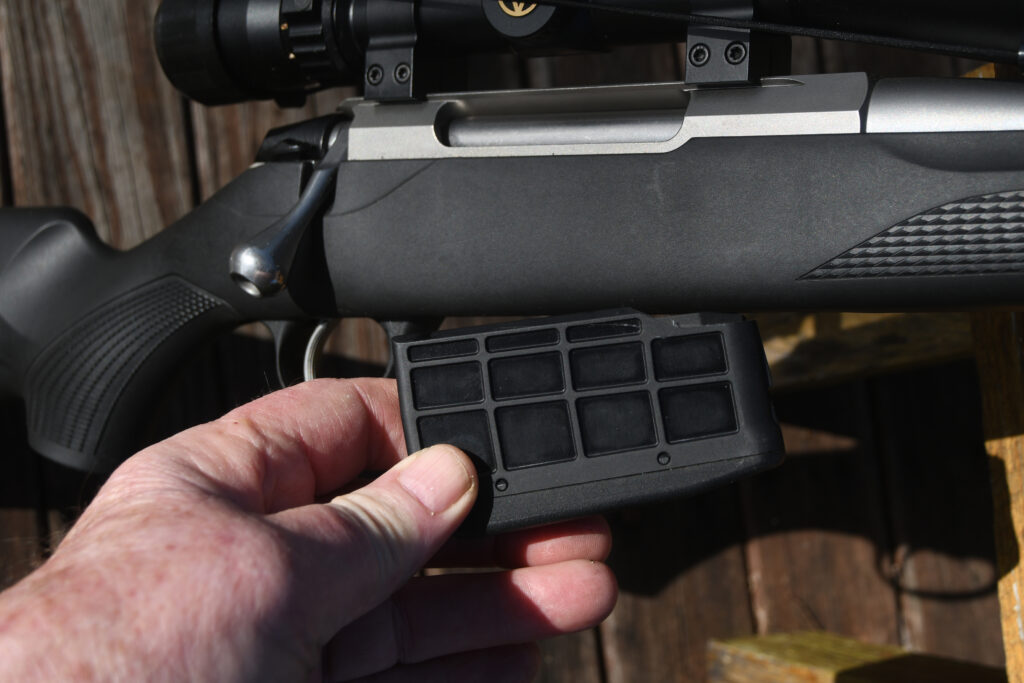
Today, there is usually a release of some sort so this magazine can be unloaded without having to cycle the cartridges through the action. Sporting rifles will have either a removable magazine, or a floorplate that will have a magazine release, which can more easily be depressed to drop open the trapdoor.
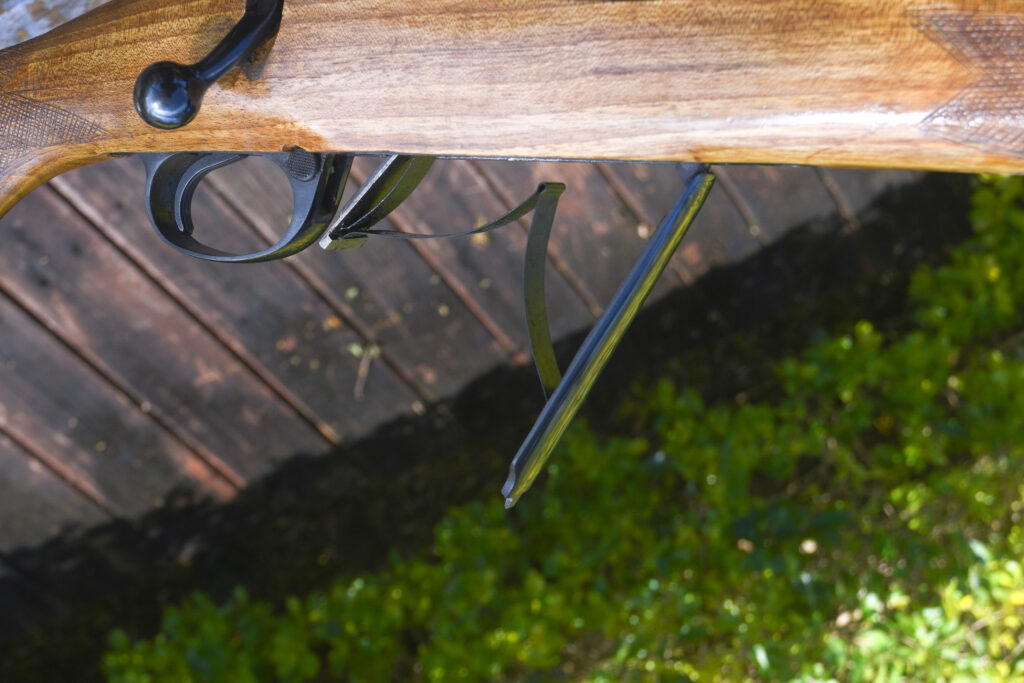
Another variation of the internal magazine is the ‘blind’ mag. This has no floorplate and the rounds must be cycled through the action to unload it. These are more likely to be found on lower cost rifles.
Push feed actions may have a detachable box magazine, which after the release is activated allows the mag to be dropped out for loading or unloading. The advantage of this type of magazine is that you may be able to accommodate larger capacity magazines than the 4-5 rounds capacity of standard flush fitting magazines. You can typically manage a 10-round capacity detachable box mag for some bolt-action rifles.
The disadvantages of the detachable box magazine are two mainly. There is always the chance of the mag being accidentally released and if you go for the 10-round option this can be another thing to get hung up on clothing or scrub. Generally speaking, it’s best to keep your rifle as flush as possible, and minimise extra protuberances. The clear advantage of a detachable box mag is that you can keep a second mag handy, ready loaded.
Most bolt-action rifles are of a fairly simple design that still allow a quick second shot. Not as quick perhaps as the lever-action or pump-action, but most bolt-action rifles will be far more accurate that either of the others. The choice the hunter must make can be decided by their hip pocket in many cases, because by and large the controlled round feed rifle will be more expensive than that with a push feed.
Pros for the push feed – Cheaper to produce, more readily available, simple design.
Cons for the push feed – The possibility of cycling an extra round, extractor not as robust, more prone to being affected by dirt in the plunger extractor.
Pros for the controlled round feed – Extremely reliable to feed from the magazine, more positive extraction, less affected by dirt.
Cons for the CRF – More expensive, mainly found on higher priced rifles, cannot feed rounds directly into the chamber.
It’s easy to see why more shooters and hunters opt for the push feed bolt-action. Personally, I don’t like the idea of having ‘one up the spout,’ in a push feed as this has often led to double feeding. This occurs when the hunter has chambered a round but hasn’t pushed the bolt forward enough to engage the extractor. In a moment of haste, the bolt is drawn back and cycled, picking up another round from the magazine. The tip of this round bumps into the round already in the chamber, creating a jam. Not ideal when dangerous game is involved. Which is why the CRF action is preferred for this job.
Like other experienced hunters, I have both types of bolt-actions in my safes. They all have their uses as well as their plus and minus points.
Share this article

Related
Articles




Related
Recipes
Sorry, no related items found.