
Common reloading mistakes and how to avoid them
When we load develop a cartridge/rifle combination we normally assess the results by reference to the velocity attained and the size of the group. However, despite the reliability of modern components it is easy to make mistakes that will affect the results over the chronograph and on the paper target. Despite good intentions, you can still be caught out.
Almost invariably to some, the initial common error is to use the maximum load in a manual as a starting load. The basis of this fairy tale is the legal implications for powder companies. Within my experience, most accurate loads are below the manual maximums. In a similar vein, using an uncontrolled load off the internet, any such loads MUST be compared to a reputable manual. Both are a casual attitude to load development – if you persist in ignoring the rules, eventually they will bite you.
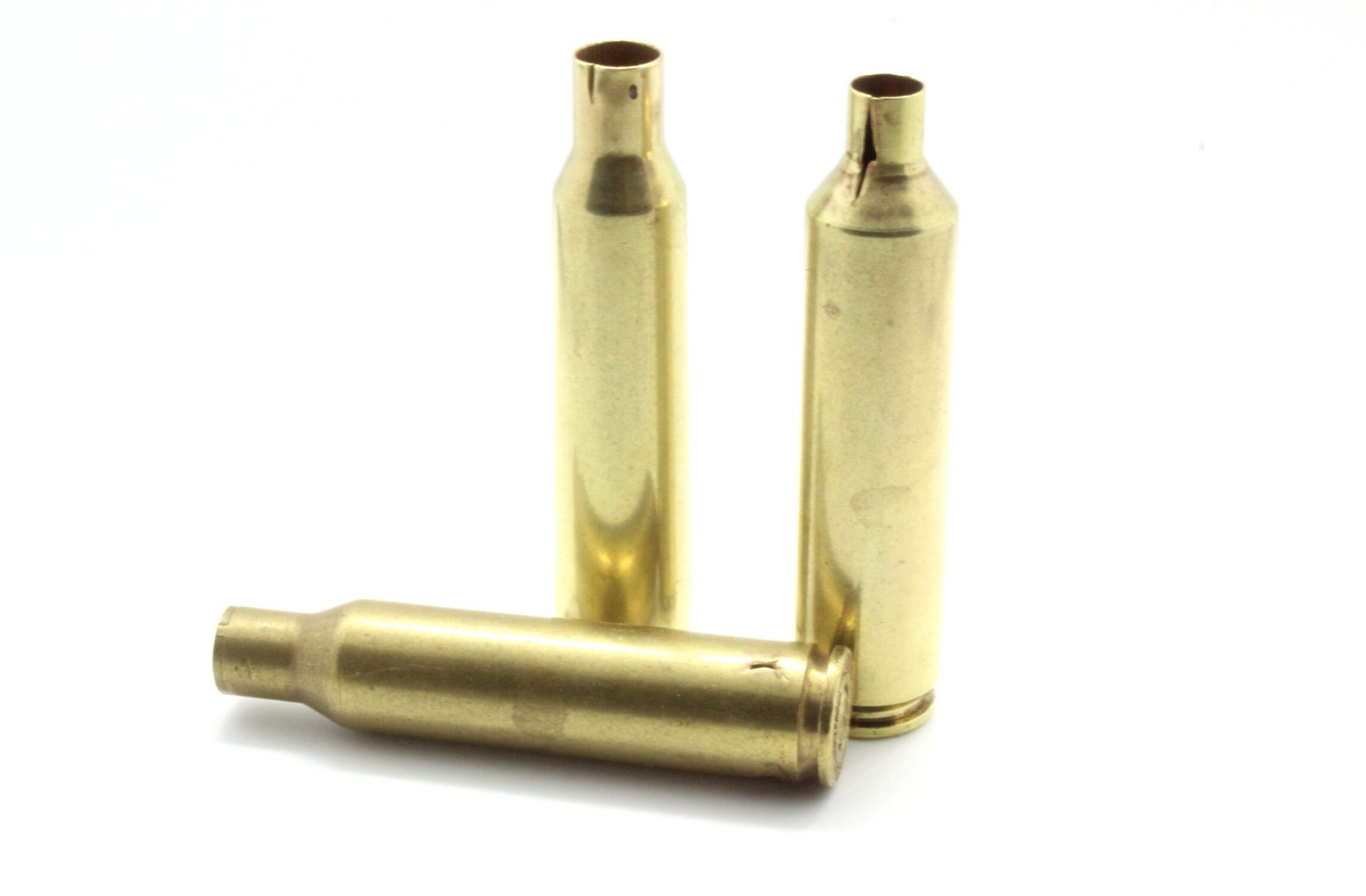
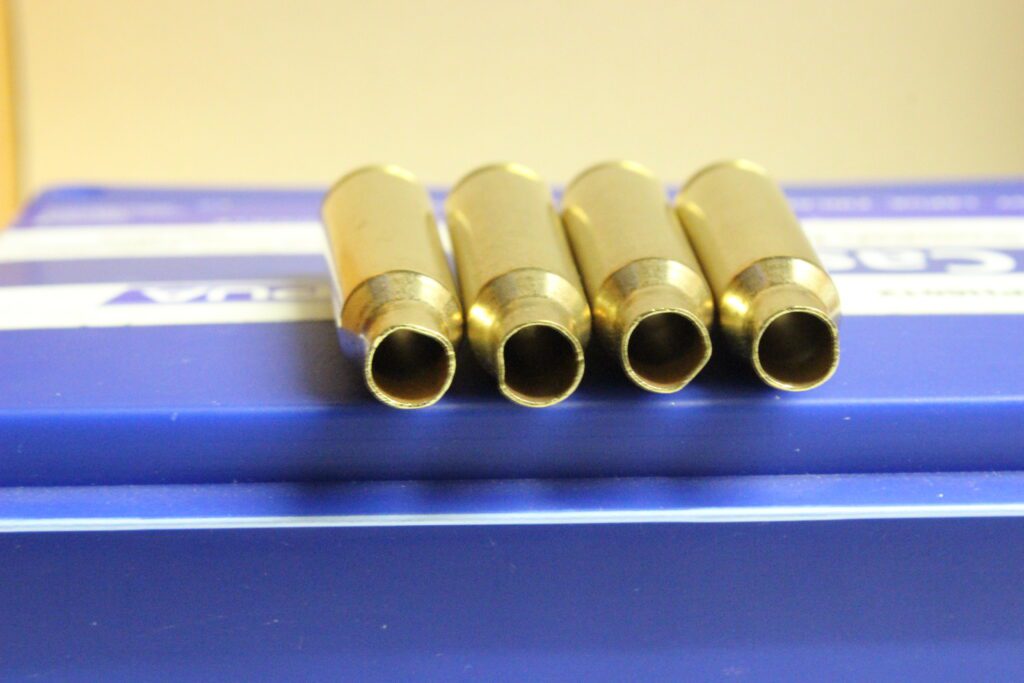
Aside from a reliable manual, the first item on the agenda is to inspect the cases for defects of any kind, as they do occur, even in brand new cases. Bulk packed cases in plastic bags can suffer from case mouth defects of one type or another and need resizing to ensure they are perfectly round before loading.
In an earlier age it was common to only use new cases for load development. However, you can anneal used cases each time they cross the reloading bench and employ them for any load development. At this stage, if using annealed cases, it is also necessary to check overall case length. They will grow with use but if over-length, they will probably cause excess pressure and another ‘flyer’ on the target, plus they may be difficult to load. This length is the most basic of measurements in the reloading process but is often ignored. Over-length cases are a function of both case design and load intensity.
The use of an incorrect powder when reloading can, and has, resulted in catastrophic blowing up of the rifle concerned. Usually, the culprit is fast pistol powder in a rifle case. You need to be specific about the powder you use in a particular rifle cartridge case and only ever have a singular can of powder on the reloading bench at any one time. This simple practice will prevent a potential problem. Also check that the used powder agrees with the powder recorded on whatever is holding the loaded rounds.
It’s obvious from the continual stream of the same query on the internet that the selection of propellant powder when reloading is not well understood. It seems those who ask these questions are trying to avoid load development as such, but this is a false economy. To overcome the confusion, any reputable reloading manual will give the answer.
Let us look at the .223 Remington cartridge in a current manual and a possible choice of a 55gr soft-point projectile. Note that not all manuals will necessarily provide this specific information. The manual provides a list of powders from the fastest to the slowest.
All would be safe in this cartridge provided you proceeded from the starting load and did not exceed the specified maximum. However, be alert for any possible pressure signs each and every time you are firing a powder charge higher than the last or change to a new powder.
In any rifle the maximum load achievable may be less than that specified in the manual. A practical choice in any calibre is a mid-range powder. Usually several may be suitable. If the chosen powder proves to be unsuccessful according to your personal parameters, you can move to either the next fastest or slowest powder.
For any calibre cartridge, should the selected powder prove to be unsuitable, convention suggests that for heavier projectiles you should move to the next slowest powder. However, this logic is not cast in stone. Sometimes the next fastest powder will deliver a better result.
If there are different projectiles of the same weight, you could average the starting loads. Proceed carefully, looking continually for signs of excessive pressure of any sort. The waters become considerably muddier if dealing with a wildcat cartridge, but this would be unusual for a beginning reloader.
In a similar fashion, let us look at the .270 Winchester cartridge using the 130gr Hornady soft-point projectile. My personal rifle prefers AR 2209, close to but under the maximum. What is interesting with this load and rifle is that different 130gr projectiles use the same load with accuracy. It seems to be a balanced and flexible cartridge, which might be considered unusual.
Different projectiles can be another minefield for the new reloader, particularly when you consider the numbers available in any given calibre. New ones appear in the gunshops and on the internet literally on a weekly basis.
Many new reloaders think that just because two projectiles are of the same calibre and weight, they have the same dimensions, but almost certainly this is not so. Further, when measuring the overall length of any cartridge, mainly to ensure it fits in the rifle’s magazine, measure from the base of the case to the tip of the projectile.

So, if our new reloader changes projectiles and seats them at the same overall length, they could be causing another problem. The measurement that really counts is between the base of the case and the ogive of the projectile. Two projectiles may weigh and look the same but almost invariably this distance will vary, and so will the bearing surface in the bore. Both will affect the pressure developed.
The net result is that the projectile with a longer bearing surface will create more friction upon firing and the pressures generated will rise, sometimes quickly. The lesson is to not assume anything and when in doubt, measure. There are simple tools available – Sinclair’s Comparator is one and Hornady has another. Just be aware there will be variations in length depending on which brand of tool is used. Secondly, if you change any of the parameters during reloading you must conduct the whole load development process again. Roll with the ‘ABC’ method – assume nothing, believe nothing and check everything.
The distance between the case base and the ogive also affects the relationship between the ogive and the start of rifling in the bore of an individual rifle. Just remember that all these minor variations affect the final result in relation to both velocity and group size, even though they may not look different to the naked eye. Because the same questions keep being repeated it is obvious that new reloaders are not doing sufficient research before attempting the process. You must understand exactly what is required.
Usually, manuals will include a maximum overall cartridge length to ensure that the loaded round fits in the rifle’s magazine and, more importantly, chamber. Yes, many have been guilty of not checking this, usually when a new projectile is involved. It is annoying to arrive at the SSAA range, or even worse when hunting, to find that your new load fails to chamber.
Another question not often asked relates to primers and whether it is safe to use magnum primers as a substitute for standard primers. Modern research suggests that in an average cartridge the pressure difference is some 5/7000 pounds per square inch (psi).
If you are operating a load near the maximum, it is enough to put the pressure into dangerous territory. The rule of thumb is the same. Whenever you change a component, it is necessary to redevelop the load again, with no exceptions. This simple rule will keep you out of trouble.
Another issue that is rarely talked about is loading or attempting to load the wrong projectile in a particular case. It may well be okay if you only load for a single rifle, but it’s easy to mix components when many cartridges are involved. It is, for instance, difficult to tell the difference on sight alone between a .277 diameter projectile and one of similar design that is 7mm in size. Again, like a powder container, only have one on the bench when reloading.
The decapping and sizing die can cause problems if not set up correctly. Use the maker’s instructions when in doubt. It’s important that the internal stem be locked in position with the expander ball a suitable distance from the bottom of the die, so that when the case is fully inserted within the die, the expander ball does not bottom out on the case base.
The other problem with dies is the recurring one of lubrication. Obtain a stuck case removal kit because you will eventually have to use it. The old method of a lubricating pad and rolling the cases on it works well. Just be aware that if you are processing a lot of cases, you will have to reapply the lubrication at some stage to ensure a constant supply. The problem seems to be the newer spray-on types. The STP Oil Treatment will prevent a stuck case – it has the consistency of glue. Another lubricant is common medicinal lanoline. It’s preferable to keep dies clean both inside and out, and when not in use to store them in the original plastic box. Also, lubricate the inside of case necks when using the decapping die.
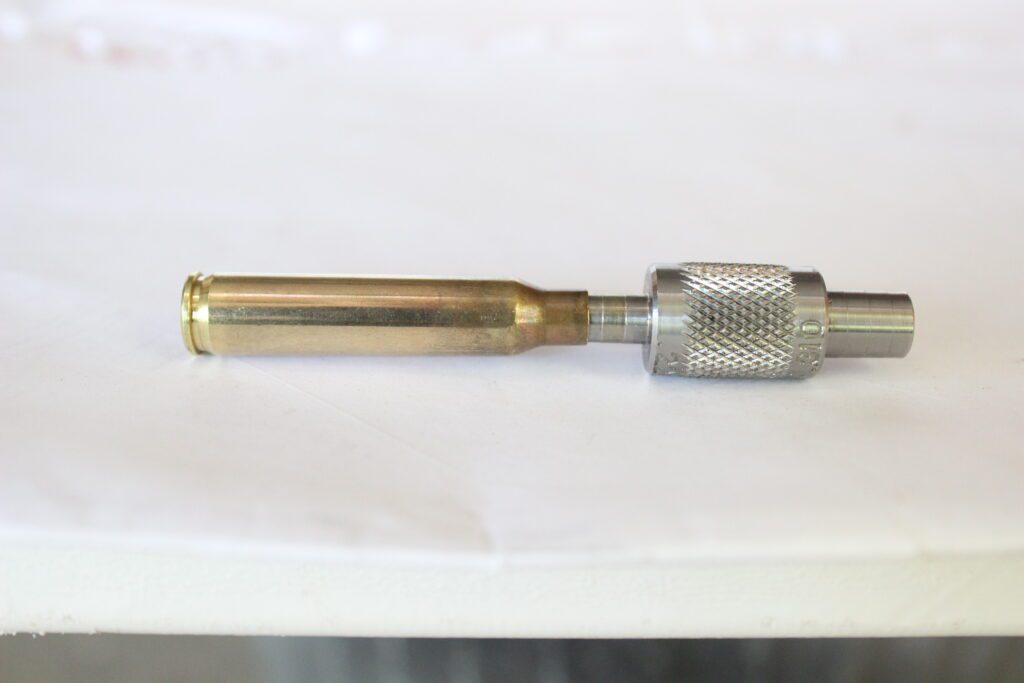
A dedicated decapping die for removing primers is preferable, simply because it never contacts the neck of a cartridge as such. Besides, you can insert it in the press and decap multiple type cartridges at a singular sitting.
When load developing, each batch of test loads should be placed in an envelope or similar with all the relevant details on the outside. This prevents mixing with any other reloads. Keep a permanent record of all loads as this averts future repetition and keeps track of the projectiles used. Never rely on memory when reloading and consult the manual at all times.
There is a saying in hydraulics that ‘cleanliness is next to godliness’. Be fussy about clean brass. There are several reasons, mainly because it avoids long-term wear on all associated components. Furthermore, if there are brass defects it allows them to be easily seen.
Finally, reloading is a process that requires concentration without any external distractions, including small children, the radio or television and your best mate chatting about his new car.
Share this article

Related
Articles

![IMG_1572[1]](https://australianhunter.com.au/wp-content/uploads/2026/08/IMG_15721-150x150.jpg)


Related
Recipes
Sorry, no related items found.