


Less is more: The benefits of reduced loads
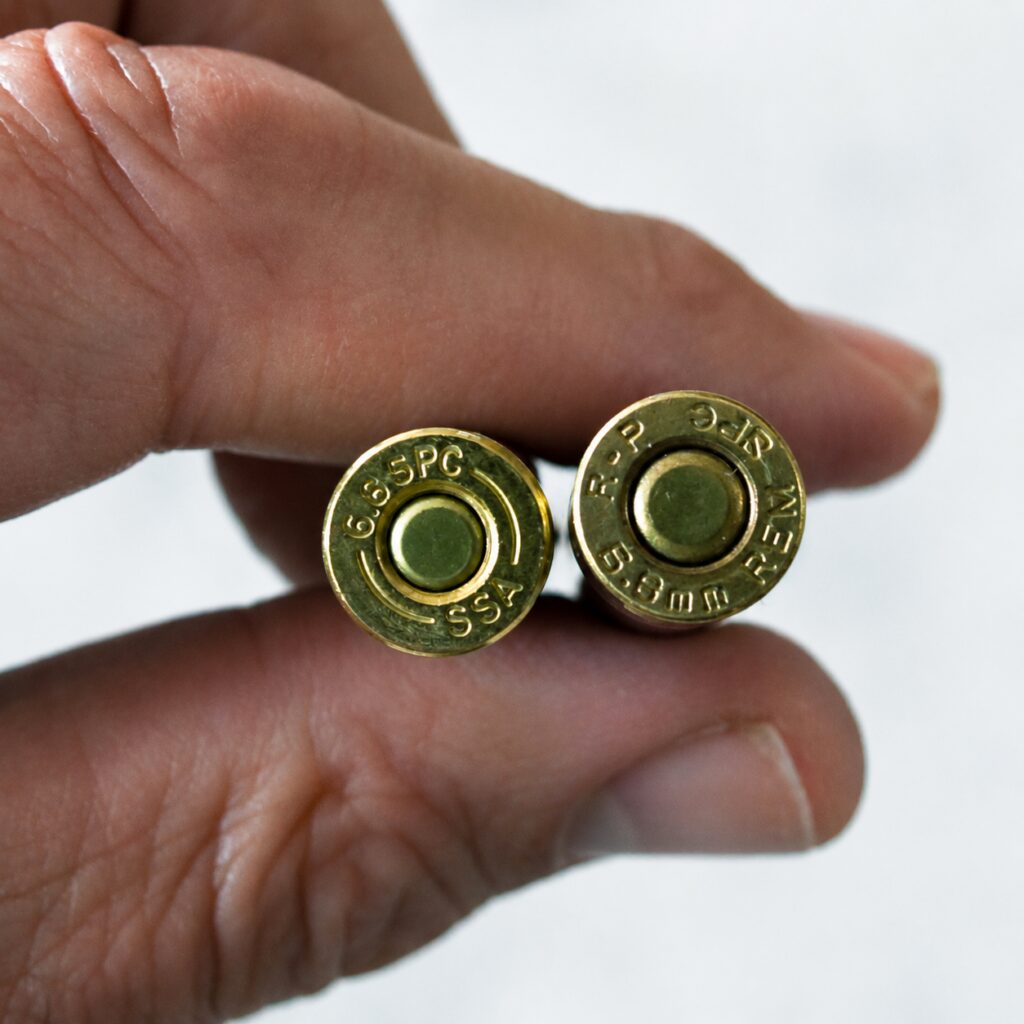
A cool autumn morning greeted me as I headed out to spend the day wandering in the bush. I fitted five reduced loads in the internal magazine of the Sako and had 15 in my backpack. I also had 10 full power loads. The reduced loads were intended for small game and used 110-grain Sierra Pro-Hunters which exited the muzzle at around 1780fps so as not to waste too much meat. The full power loads were using the same projectile at 2820fps out of the 22″ barrel and these were for any pigs, goats or small deer I might come across. My rifle was chambered in 6.8 SPC and has the Spec II chamber.
I was heading for a gully that usually has rabbits running about early in the morning when a flash of orange running through the bush caught my eye. It was a fox and he had seen me first. Taking the rifle off my shoulder I chambered a round and shot the fox through the shoulder. The reduced load hadn’t done much damage, a small entry hole and marginally larger exit. Full power loads flatten foxes faster but leave a big exit hole.
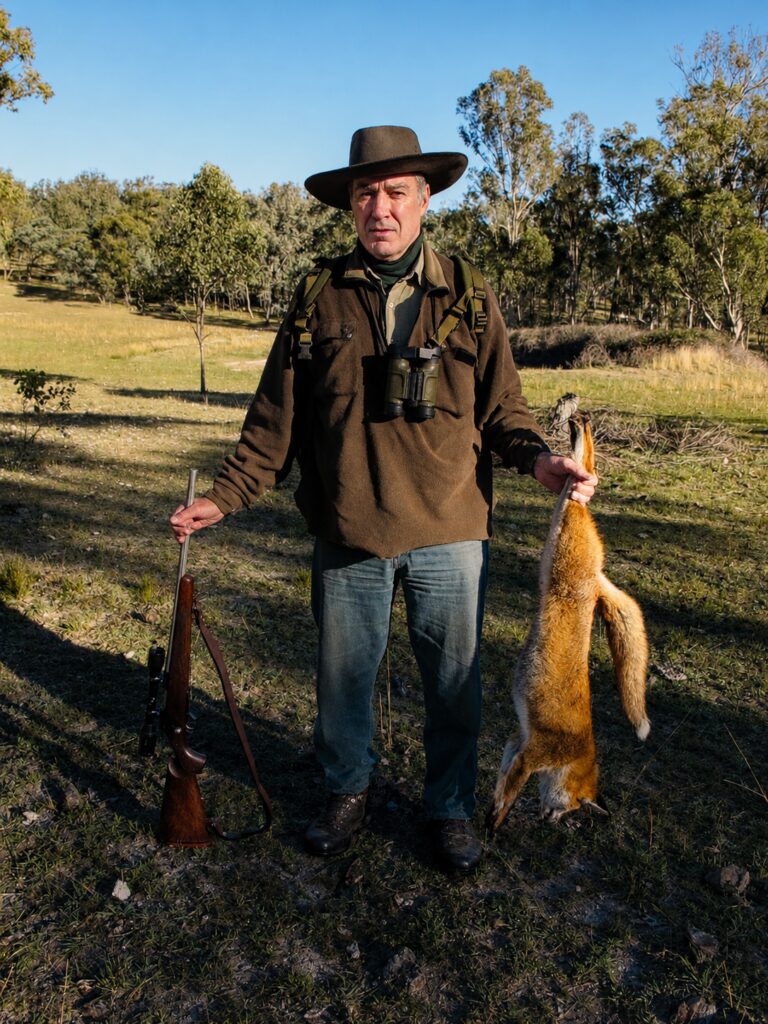
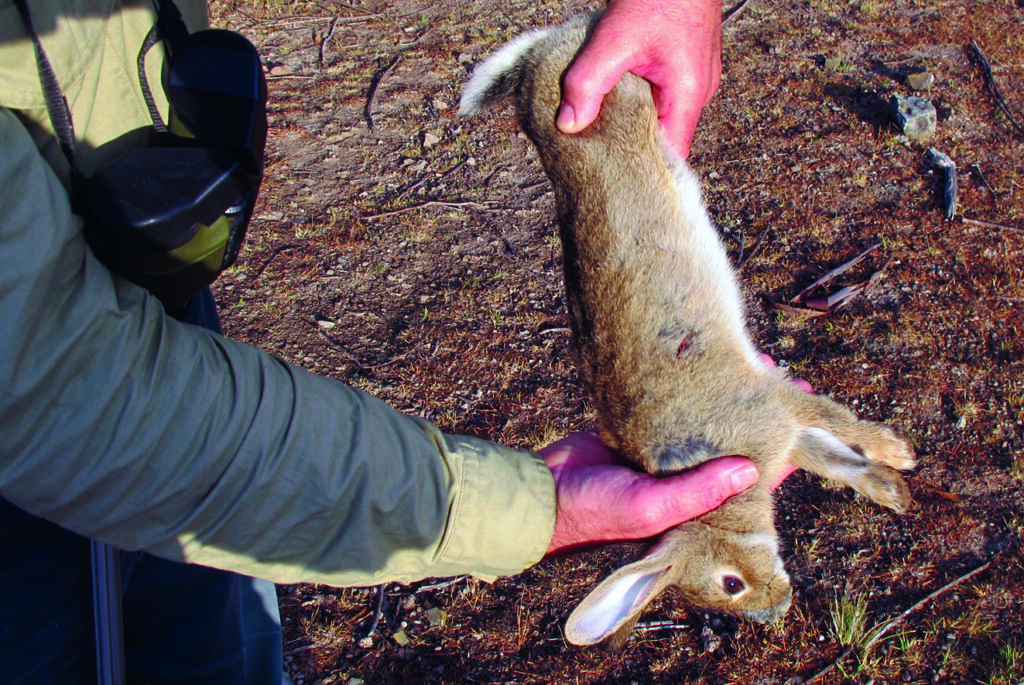
There weren’t the rabbits in the gully as I’d expected but I knew of another spot with lots of blackberries that often holds good numbers of rabbits. When I reached it, a few bunnies were too fast for me, ducking behind the blackberries or scampering down their burrows. One stopped long enough in the dry creek bed for me to take a shot, and when I picked him up the projectile had gone right through him without leaving a huge exit tear.
The idea of using reduced loads on small game for the pot is not new. Early explorers, adventurers, prospectors, trappers and hunters who could be out in the wilderness for weeks or months on end, would rely on game they’d shot for fresh meat. Although they had their big game rifle with them and would try for big game that would last some time, they needed small game loads in case they were unsuccessful. For new shooters, using reduced loads is a way of familiarising themselves with a big game rifle before using full power loads.
More than 100 years ago, high-power factory cartridges were expensive and there was a desire for an inexpensive load using a lead bullet the rifleman could cast himself. This load would not only be used for target practice but for small game too. The large diameter projectiles used in black powder rifles were too big for small game loads so the aim was to fit a reduced load in .30 calibre, which it was thought would make an ideal all-round calibre.
Developing reduced loads was a problem as the black powder wouldn’t work in them and early smokeless powders wouldn’t burn well. The lead bullets would lead the bore badly, which was put down to the quick pitch of the rifling. Achieving acceptable accuracy was also a problem.
Horace Kephart, a prominent St Louis rifleman and author of Our Southern Highlanders, worked to develop a bullet suitable for reduced loads in the .30-40 Krag cartridge. The Ideal Manufacturing Company made moulds for Kephart’s bullet in 125 and 170 grains and the mould was designated as Number 308206. At around that time DuPont developed its No.1 smokeless powder, which would burn satisfactorily in small charges for use in black powder rifles. Further developments were soon made in both powders and projectiles suitable for reduced loads.
Later, Townsend Whelen used reduced loads extensively on small game. He recommended the 150-grain sharp point fully-jacketed bullet in his .30-06 at a velocity of 1600fps. From 1925 he started to use the .270 Winchester and concluded the .270 was better than the .30-06 for reduced loads by reason of the smaller diameter projectiles. He recommended the 110-grain Sierra at 1750fps in his .270 for reduced loads.

I made my way along a watercourse which had pockets of water but wasn’t flowing. I came to a dam with some blackberries and saw a rabbit through the trees about 75 paces away. I aimed at his shoulder and he dropped on the spot. On picking him up he was young and healthy so I skinned him and checked the fatal wound – the damage was comparable to that of a .22LR.
I put the rabbit in a ventilated container with shade cloth in the lid which let the fresh air in but would stop the flies, ants and crows. As I planned to be out much of the day and it was still early I didn’t want the meat going off, so found a stretch of water in the creek and used rocks to prop up the container. The water would keep the container and the rabbit cool.
I went looking for pigs in thicker bush in a more remote part of the property. I adjusted my scope elevation by lowering it 20 clicks so the full power loads I was about to use would be the correct elevation. The reduced loads are sighted in to be 1″ low at 90m, meaning I can hold dead on any small game up to around 90m. Most small game is taken well within that distance. The full power loads I sighted in at 2¼” high at 90m and this gives a maximum point-blank range on medium size game of about 225m. The reduced loads were replaced with full power loads.
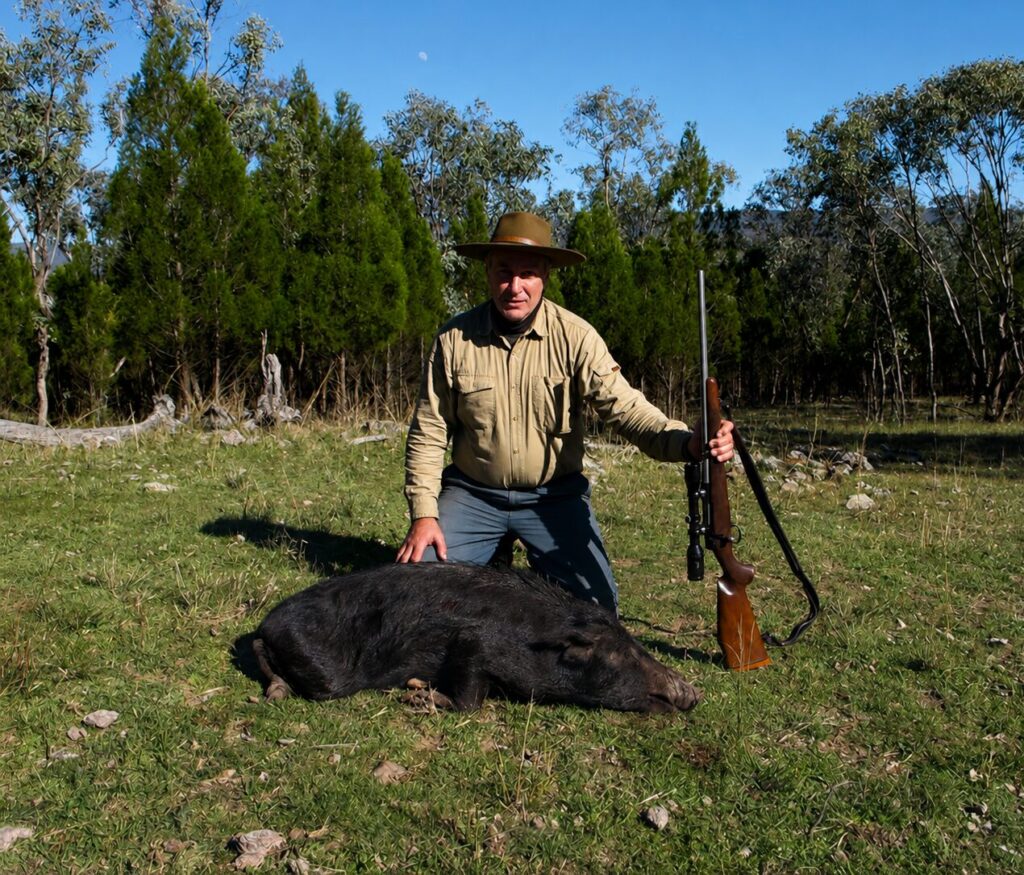
I followed a game trail through thicker bush and spotted a mob of 10 pigs, including piglets, on an open hilltop where they would bed down during the warmer part of the day. They were only about 30 paces away but hadn’t seen me or caught my scent. I shot a medium boar with the full power loads.
With most powders it’s not safe to reduce the load to less than the recommended minimum in the loading manual. There is one powder that has been thoroughly tested for reduced loads and that’s our ADI AR2206H, which in America is sold as H4895. However, even with AR2206H there’s a rule which may be referred to as the 60 per cent rule to achieve the minimum safe reduced load.
Only if the cartridge you’re using has a published maximum load of AR2206H in the ADI manual or H4895 in the Hodgdon reloading manual, then you multiply that maximum load by 60 per cent to give the minimum reduced load that’s safe to use. For example in the .270 Winchester, the ADI loading manual states that 45 grains is the maximum load of AR2206H with the 130-grain projectile. To work out the minimum safe reduced load multiply 45 by 60 per cent which gives 27 grains of AR2206H, with the 130-grain projectile. I tested this load in my .270 Winchester and got an average of 1785fps as my minimum safe reduced load with the 130-grain Pro-Hunter. In my 6.8 SPC II, I tested 20, 21 and 22 grains of AR2206H and found that 21 grains with the 110-grain Sierra gives best accuracy at 1780fps.
After the pig was harvested I made my way down the hill and built a fire to boil the billy. But first I needed to head back to the creek for the rabbit and some water. Some rocks were collected and put in a circle, the fire lit and the billy boiled for a cup of coffee while the rabbit and some spuds were cooking. A damper was later put on the coals.
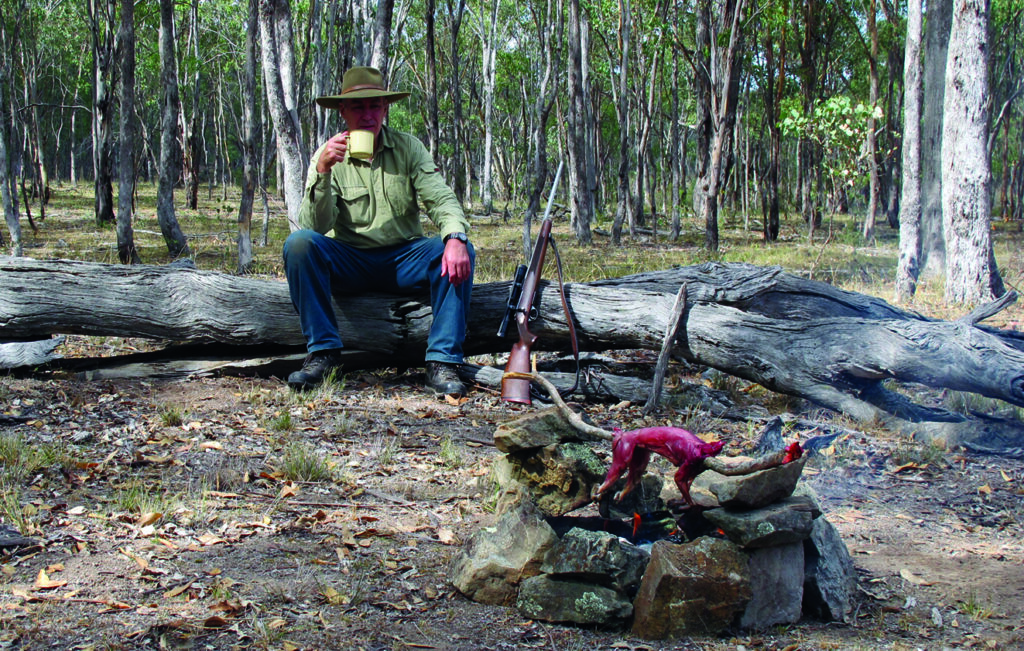
When I looked at the sky, despite it having been a nice morning dark clouds were rolling in from the south. A storm was brewing so I headed back to the cottage just as the rain arrived. I’d had a pleasant day and was happy with the returns from my reduced loads.
Share this article

Related
Articles


Related
Recipes
Sorry, no related items found.