The enduring appeal of the .22-250
If there’s one thing interesting about getting on in years, it has to be the memories of times past. I can still recall necking down .250-3000 cases to form what was then known as the .22 Varminter. Today, it’s called the .22-250.
Born of a time when ‘wildcatting’ was in its heyday, the .22-250 was one result of this sort of experimenting that really took off. We can credit a fellow called Captain Grosvenor Wotkyns with the early development of this round. He began back in the 1930s when experimenting with other cartridges using the .22 calibre bullet. Once he decided to use the .250-3000 case, the rest was history. He faced two hurdles though. One was World War Two and the other was Remington’s introduction of the .222 Rem.
But after the hostilities were over, the .222 found favour with the early bench rest shooters, while the .22-250 went on to become a popular small game, or varmint round. In fact, even before the .22 Varminter became a factory round, Browning chambered rifles for it. Then in 1965 Remington chambered their Mod 700 for it, and decided that while they were at it, they may as well make factory ammo too. It then became the .22-250 Remington.
So popular is the .22-250 today, you would be hard pressed to find an arms manufacturer that doesn’t chamber a rifle for it. There is a wide range of ammo available in all sorts of bullet weights, but like most cartridges, to get the best out of it you need to handload. Part of this is because most factory rifles use a one in 14″ twist. This is fine if you want to only use light bullets. In fact, some will tell you that anything over 50gr will not shoot well.
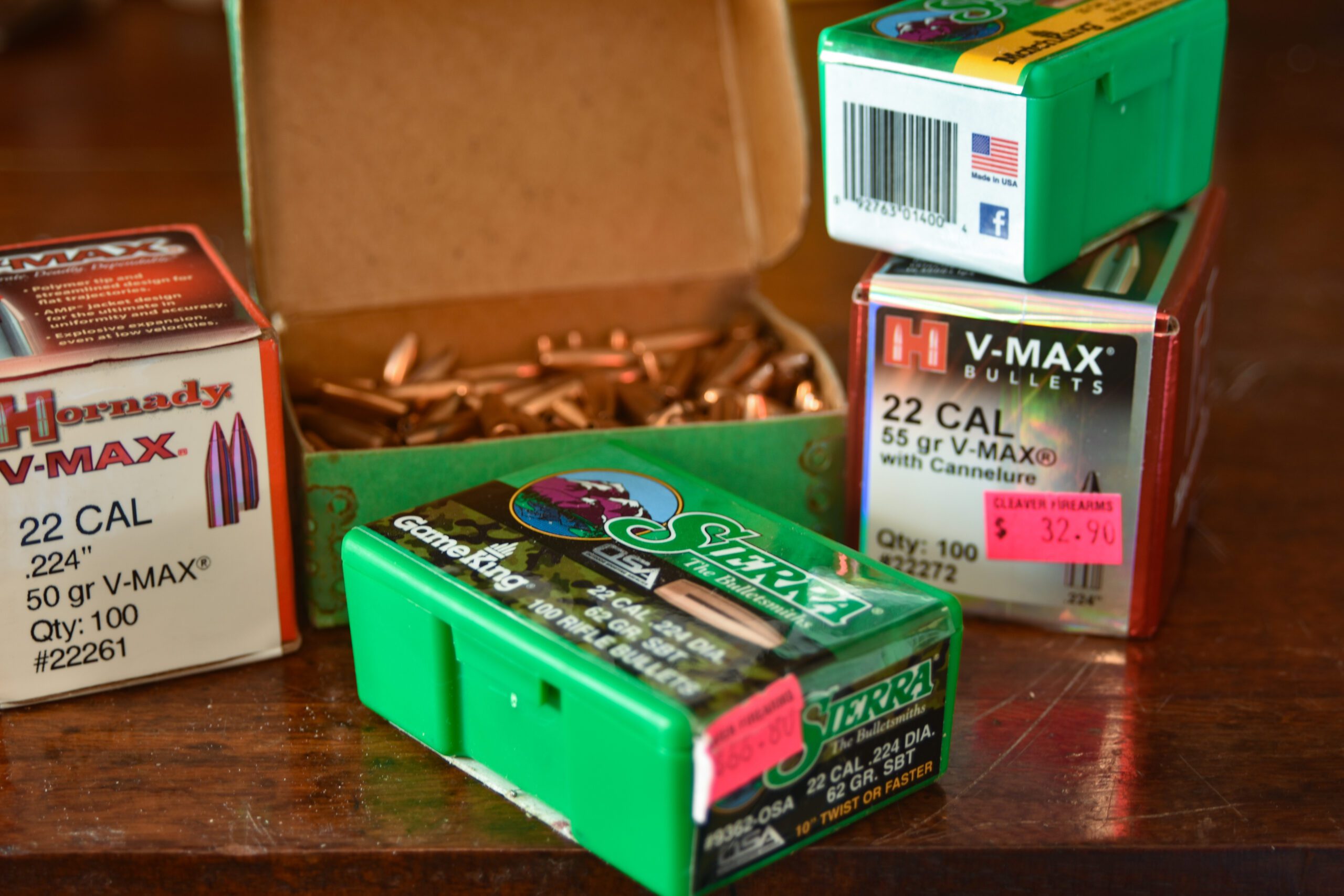
But they are wrong. I decided that when I got myself another .22-250, I’d shoot nothing lighter than 55gr bullets. Accordingly, I got together a number of them, and found the 55gr V-MAX to be one of the best. I also tried an excellent bullet by Sierra, a 62gr soft-point boat-tail. At 100m the groups are pretty damn good. As far as powder is concerned, I had a good quantity of ADI 8208 so I worked up some loads with that. Later on, I also tried 2208 and had good results, so this bears out the belief that the cartridge is not difficult to load for.
To be fair, there is a wide variety of factory ammo for the .22-250, but it has always been a handloaders’ round. That probably stems from its heritage as a wildcat. But at least you can get just about anything in factory ammo that will suit your rifle.
The 55gr Hornadys are stepping out at 3650fps, and the bigger Sierras at just over 3400fps. Now I admit these are not the sizzling-hot numbers beloved by many high velocity fans, but they are accurate, which is more important. Besides I already have a .222 and it loves a 40gr Varmageddon. I can’t see the need to heat up a barrel when there is no good reason.
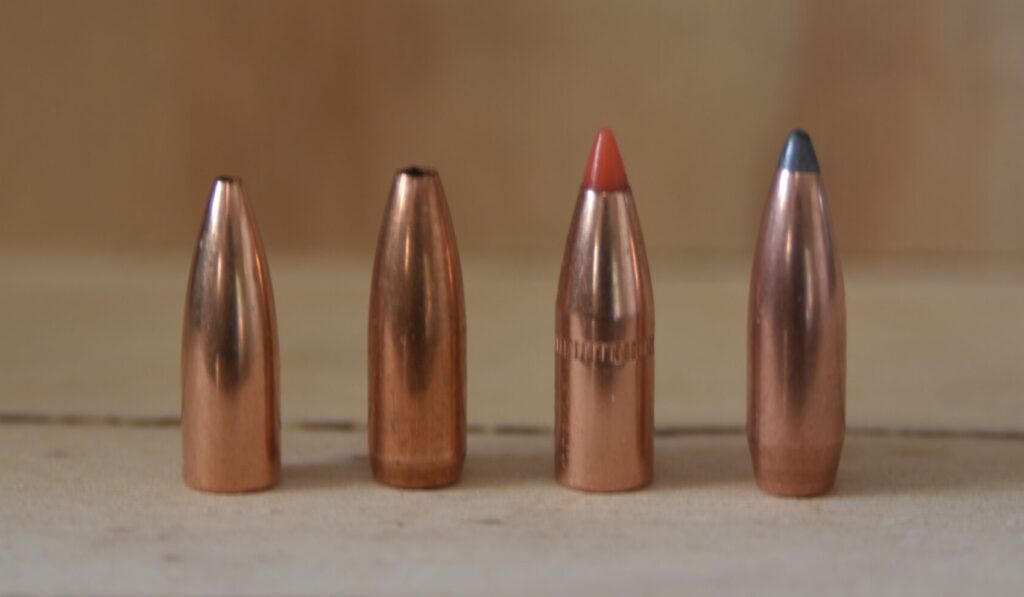
Now most experienced shooters will understand that a light bullet starts out very quickly, but due to the ballistic coefficient (BC) factor, they tend to lose speed almost as rapidly. This to the point, whereas the range stretches out a bit, the heavier bullet with superior BC will not only catch up with the faster bullet, it will deliver better terminal performance.

People who want to justify the use of a 40gr bullet in the .22-250 point out that they are destroying rabbits and foxes at long range, and that’s true enough. However, these light bullets push fast and have been known to disintegrate, the light jacket unable to handle the forces involved. There is also the fact that the .22-250 can be used for other animals, like deer. Trawling among the numerous online websites you can find coming from the USA, there is massive support for the .22-250, and not all of them shoot woodchucks and prairie dogs. There are plenty of states over there that permit the use of .22 calibre rifles on whitetail deer. But you can’t do that with a 40gr bullet.
I found that there are a wide range of bullets in the 55-60gr weight that will stabilise in a one in 14″ twist barrel. There’s even a Nosler Partition. There is no reason whatsoever that a .22 calibre can’t shoot lighter species. I have a mate who swears by his .222 on pigs, while for a time the little .222 was used successfully for culling deer in New Zealand. As everyone says it’s all about the right bullet, then placing it where it will do best.
For a long time, the .22-250 and the .220 Swift were cousins in high velocity .22. Today there are a couple more, including one from Weatherby, while Winchester brought out the .224 Super Short (fat) Magnum. Neither of these, or any of the wildcats that spring up from time to time, have so much as scratched the paint on the .22-250, or to a lesser extent the Swift.
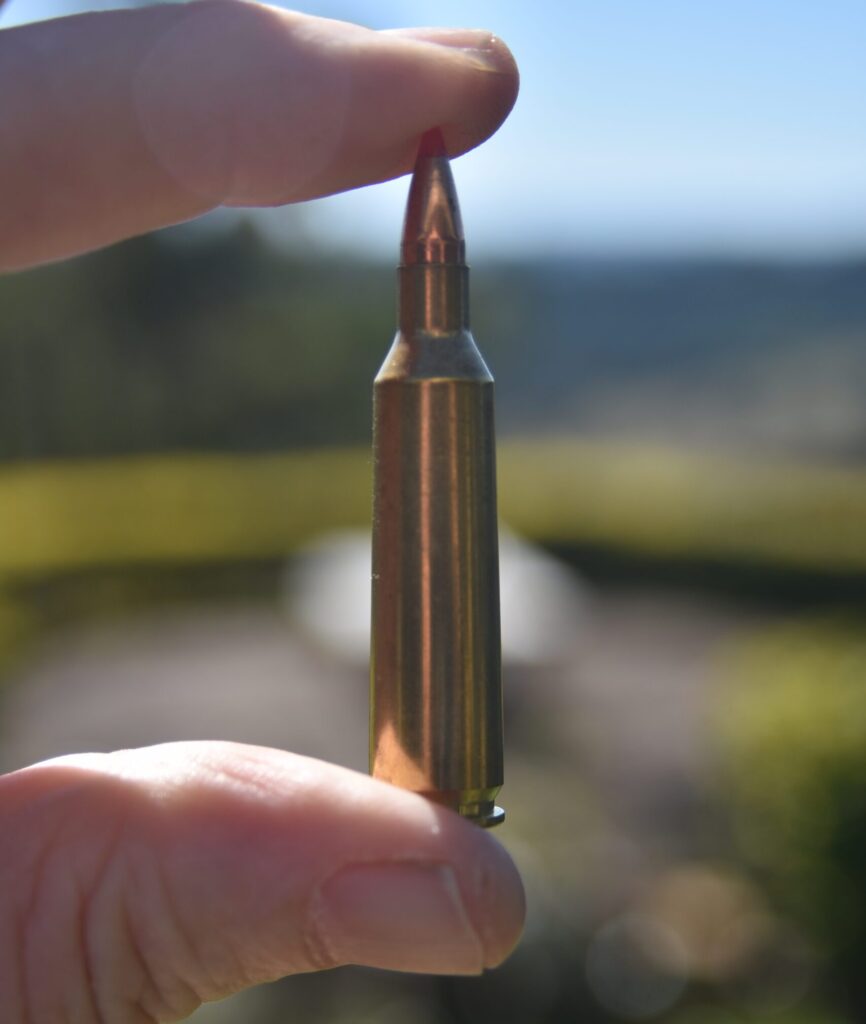
The trouble with the Swift is that it uses the old 6mm Lee Navy case as its parent. This case has an odd rim on it which looks like a cross between a rimless and a rimmed case. This probably scares a few people off, in particular those of us who prefer the .30-06 case head that supports the majority of centrefire cartridges.
There are plenty of shooters and hunters who see no reason to go past the .223 in a .22 centrefire. That’s fine with me because we all have our preferences. Most detractors of the .22-250 cite short barrel life as the reason. And that’s a valid concern, but only if you do a lot of shooting and the barrel gets very hot. Once again harking back to the US varmint shooters, they tend to fire a lot of rounds and the barrels do get really hot, to the point they will have more than one rifle, allowing one to cool down so they don’t miss any of the action. In this situation, using hot loads and light bullets with the resulting high velocity, barrel life is going to be maybe 1300 rounds if you’re lucky.
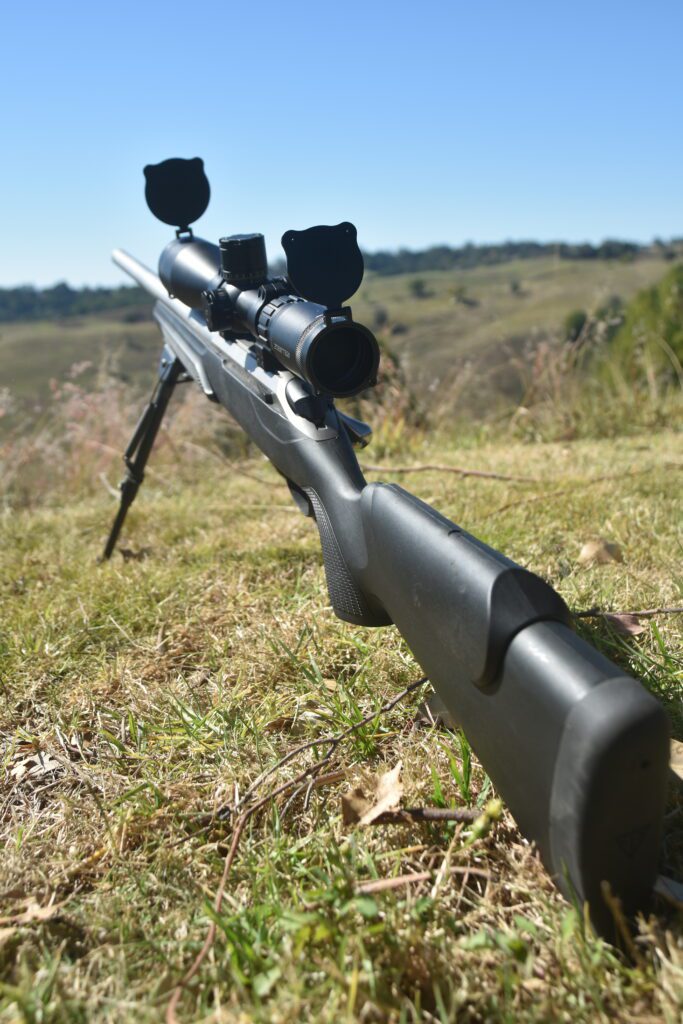
A pretty good reason to opt for a heavier barrel. Better accuracy and better resistance to heat. I went for a Tikka Varmint with a heavy 24″ barrel. Not because I was going to shoot a lot of rounds, but because I wanted the sort of accuracy available. It’s never going to be the rifle you carry for long distances over hard country. This one will be my ‘sit and wait’ rifle. As we get older, sometimes just picking a spot and waiting for an animal to come by is not a bad option. I also believe it will be a decent fox rifle – particularly when you get a shy one that doesn’t want to jump in your lap.
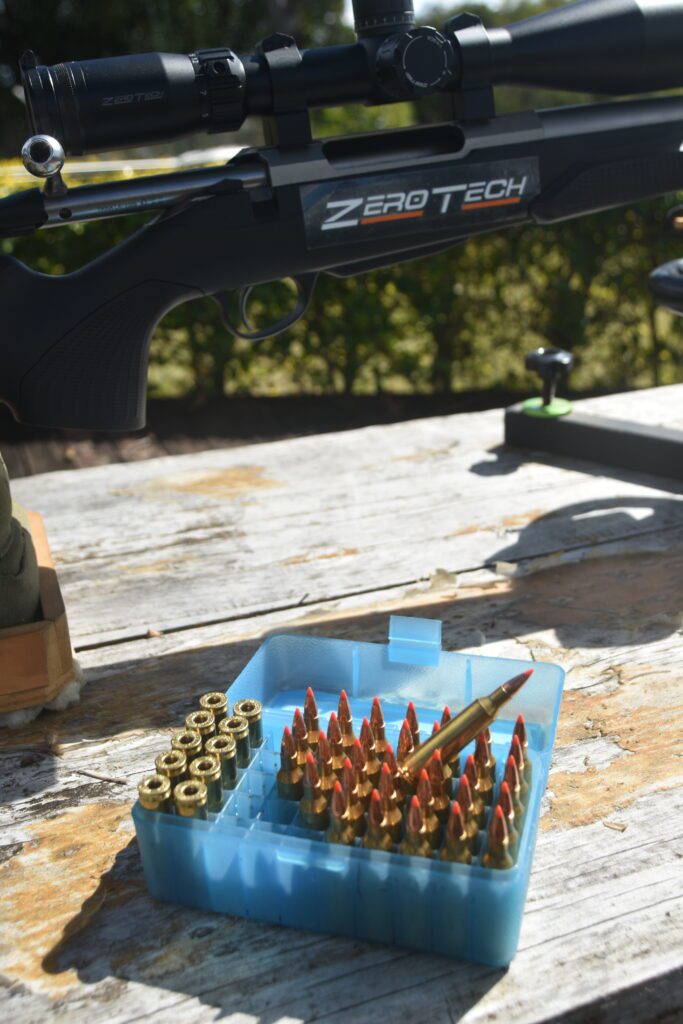
So, the .22-250 is well into its senior years, and like many other cartridges that have endured like this, it has lived long enough to take advantage of the improvements in barrel steel, propellants and projectiles available. Not all of them will be the heavy barrel type, and you see plenty of light barrelled rifles. But the cartridge made its name in the open country of the United States, and in Australia we accepted it across the board, including quite a few professional roo shooters. Australian shooting conditions bear plenty of similarities to the land of its birth. The .22-250 is one of those timeless cartridges that just plain works well.
Share this article
Related
Articles


Related
Recipes
Sorry, no related items found.