The .22 WMR: 40 years, one rifle, hundreds of rabbits
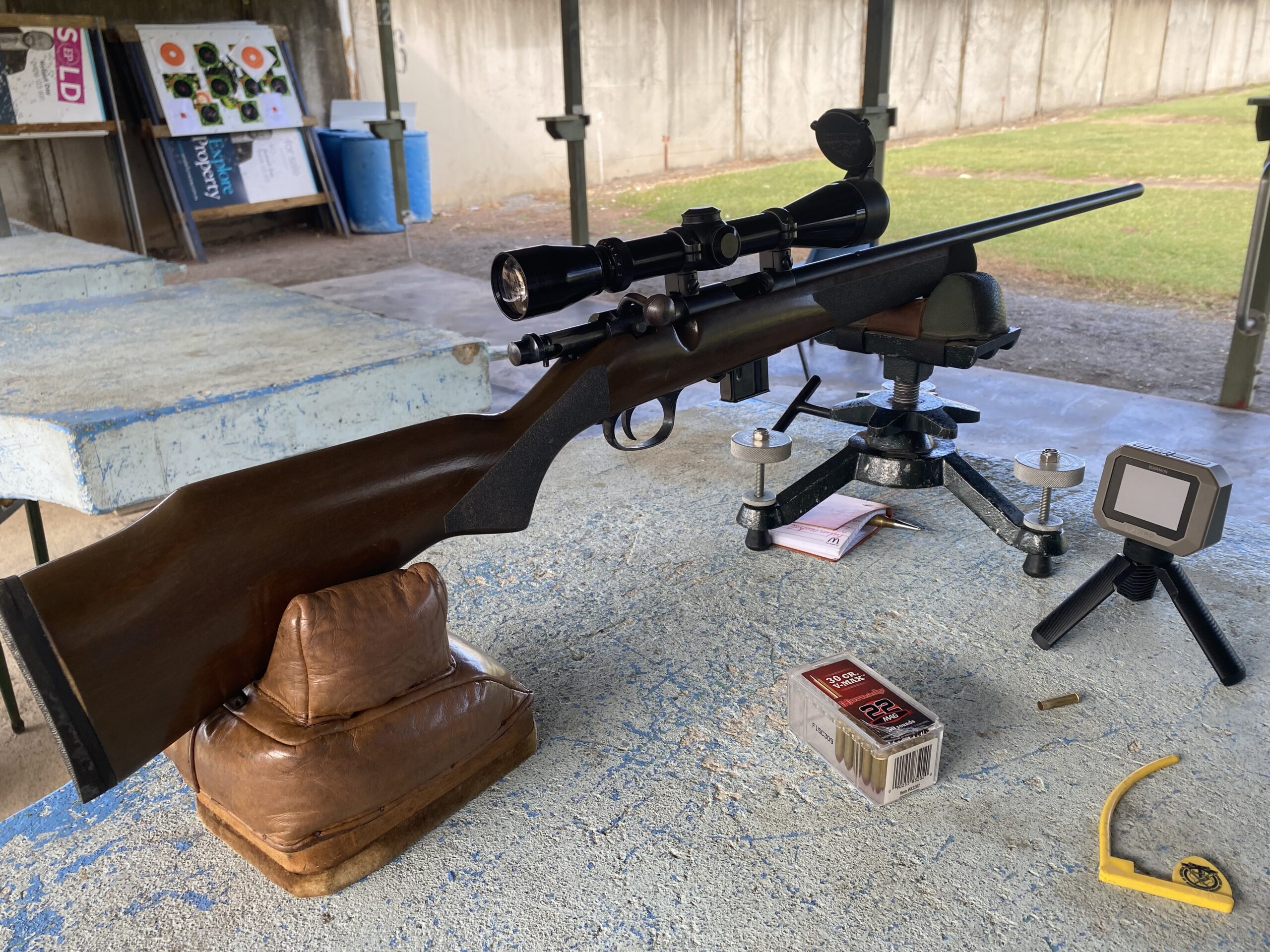
My humble .22 Magnum is the first rifle I bought when I was a teenager. It isn’t flash but was all I could afford when my only source of income was pocket money and cash birthday presents. It has served me well for nearly 40 years, never letting me down.
It’s on its third scope, and the current one has been on it for a while. I believe it’s perfect, for reasons I will explain later. I am onto a winning rifle, scope and cartridge combination.
The .22 Magnum was developed by the Winchester Repeating Arms company in 1959 and was called the .22 Winchester Magnum Rimfire (WMR). It had a substantial improvement in velocity over the .22 LR, which to me meant I could target rabbits and foxes out to 140m, rather than my 70m limit with the .22LR.
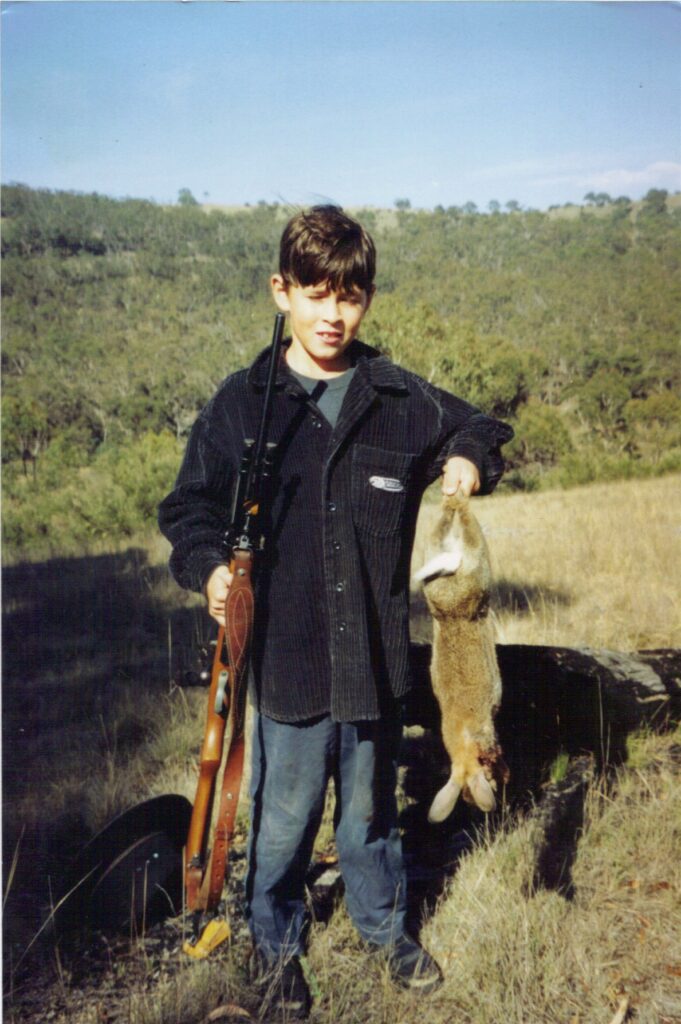
Choosing the .22 WMR as a teenager was a wise choice, as it has stood the test of time – bagging me hundreds of rabbits, scores of foxes and hares, some feral cats and even a small feral pig.
Rifle
Mine is a Marlin 25M, which was the base model with no chequering, plain non-descript timber and open sights, but with a dovetail for mounting a scope. It came supplied with a steel 7-round magazine from factory. These are still in production and available for purchase. Improvements have been made over the years to make it what it is today.
One of the first improvements I did was to get a gunsmith to add an action screw behind the triggerguard. From factory, it only had one in front of the magazine, which meant the barrel and action contacted the timber stock. By drilling and tapping this second action screw, the action was held securely, allowing the barrel to be free floated. This made an improvement in accuracy.
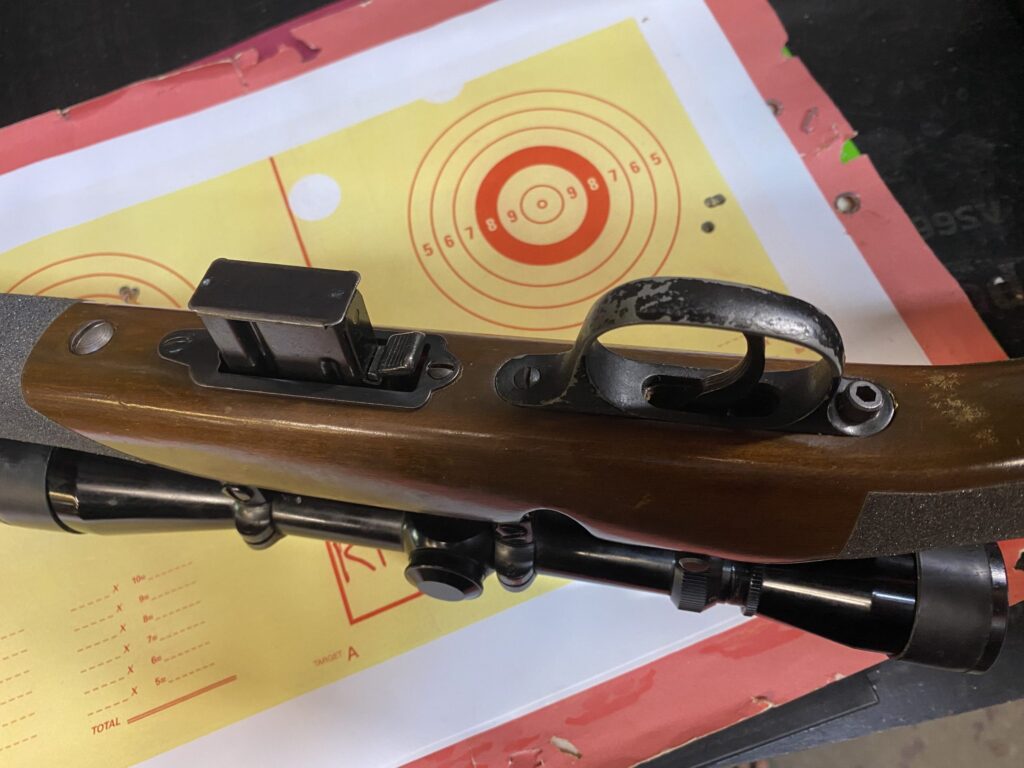
While the gunsmith had the rifle, I also got the trigger lightened to 950g (2lbs) and had moving parts polished to remove the creep. The trigger now breaks cleanly and repeatably; this is most important in a rifle.
Over the years I also played around with different finishes on the stock – it was a blonde beech stock from factory. I stripped this back to bare timber, stained it dark walnut and added clear varnish over the top. In my eyes, it was looking better.
As it didn’t have any chequering and I wasn’t prepared to get it chequered, I opted for skateboard grip tape in the areas where chequering normally is. This provided a good grip and was a cheap fix – it has now been on there for about 12 years and still works fine.
The final improvement for the rifle was at the rear of the stock. It came with a plastic recoil pad, which is all the .22 WMR needs with its nearly non-existent recoil. But as I have learnt from years of shooting SSAA Field Rifle, especially the Sitting Post event, you don’t want the buttstock slipping down or moving at all when squeezing the trigger. This results in poor accuracy and could mean a missed shot. So, a very thin rubber recoil pad was fitted, which ensures consistent and repeatable contact with my shoulder.
The complete rifle only weighs 3.1kg (6.83lbs), so when it has been handled by children over the years, they find it easy to hold and shoot, plus light enough to carry on a sling while hunting.
All these modifications have contributed to an accurate hunting rifle that I have confidence in taking target game in field positions.
Scope
The original scope when I purchased that rifle all those years ago was a 4×32 Marks scope. At the time it served its purpose, but it was a budget scope. When I could afford it, I upgraded to a 6×40 Tasco. The extra magnification was a vast improvement when trying to place accurate shots on rabbits a bit further out. It was clear enough and did the job for many years.

Several seasons later, when I had a family and my children wanted to try shooting, I decided to change the scope again. This time a Leupold VX I in 3-9×40. This was perfect when teaching children, as I found that when first starting out, they all struggled to find the target due to limited field of view. So, with this new scope, I could wind it down to 3x power which made it a lot easier for them to find the target.
Then as they got more familiar with the scope and rifle, I could gradually increase the power to a setting that they liked. With each child it was always a different setting, and being a variable, this was easy to change.
When they were confident and capable enough to go hunting for rabbits, I would always leave it on 3x power, so it was easy to locate the rabbit in the cross-hairs. If they wanted more magnification when they located the rabbit, I could turn it up for them. We usually didn’t go higher than 6x power.
The other advantage is that if I encounter a rabbit at the limit of range for the .22 WMR, I can increase the magnification to enable me to take a precise shot off a bipod. It is also great at the SSAA range for trying different brands and weights of ammunition. I can turn it up to 9x power, which allows me to gain the best accuracy and see which ammunition suits my rifle. A 2-8×32 scope would also be perfect, but they are harder to find and are usually more expensive.
Ammunition
Back when I first bought the rifle, there were sufficient factory brands and types of ammo available – mainly Winchester and PMC. You could get FMJ or copper-jacketed hollow points in 40gr that did the job on rabbits, hares and foxes.
But it wasn’t until about 10 years ago that lighter polymer-tipped ammunition became available. To me, these were a real game changer. The 30gr projectile was dynamite on thin-skinned varmints including foxes, but they increased the velocity quite dramatically, which in turn flattened the .22 WMR’s trajectory.
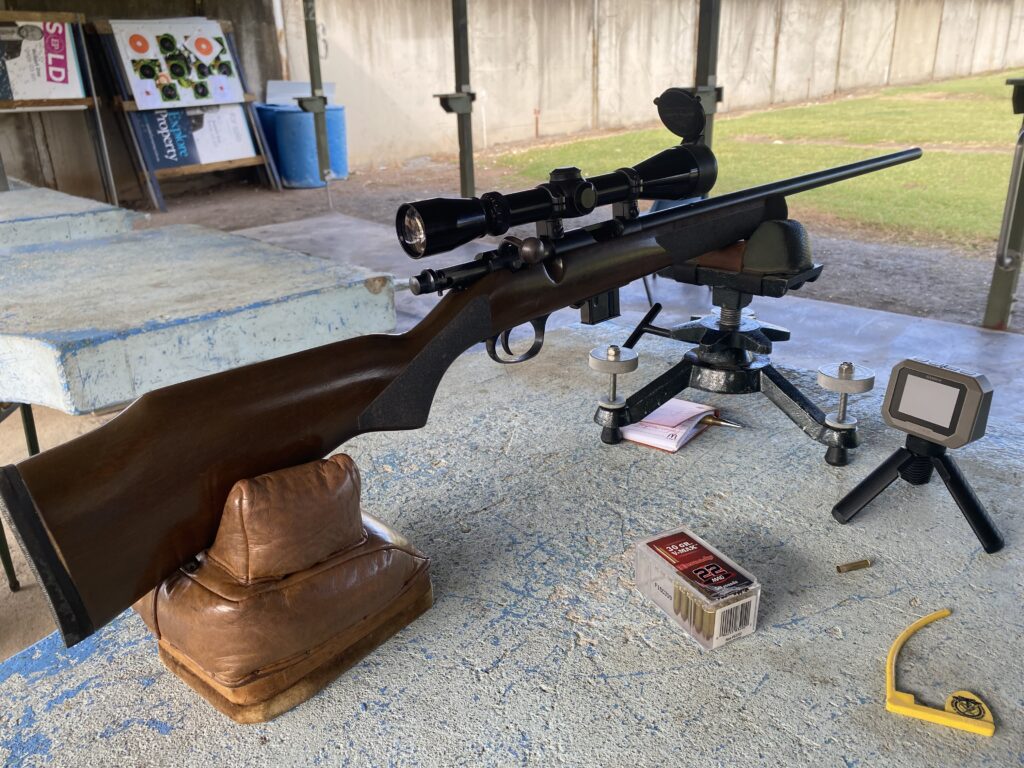
I settled on the Hornady V-Max as it was the most accurate in my Marlin. Over the chronograph, the average velocity was 2287fps with a standard deviation of 29fps. The older 40gr factory ammunition was averaging 1670fps.
This flatter trajectory of the V-Max means at 50m I have it 18mm high. This gives me a 100m zero and it is only 18mm low at 140m. This allows the shooter to aim dead-on at small game anywhere between a close shot and all the way out to 140m.
This flexibility means that when I take younger inexperienced hunters, they don’t have to worry about holdover or different aiming points. This in turn increases their strike rate, which in turn increases their confidence and enjoyment – meaning they are more likely to want to continue and enjoy the wonderful pastime of hunting.
A good choice
My experiences with the .22 WMR have been positive enough that others thinking about buying a rifle for hunting small game in Australia should consider it. The choice of rifle will be up to you.
I have often thought about upgrading to a nice CZ in .22 WMR, but then what do I do with the Marlin? I can’t sell my first rifle, which I would like to pass on to my children one day.
The scope size and ammunition are what have worked best for me, especially seeing now the rifle is mainly used by others that are still learning.
If you are targeting small game, then I believe you can’t go wrong with .22WMR.
Share this article

Related
Articles


Related
Recipes