What to carry hunting: Essential gear for safety and success
I try to be a minimalist and not carry too much kit when out hunting. So, I am constantly refining and altering what I lug when on foot. What I cart depends on the location and the game. At the barest minimum, for a short-notice mission, I will involve only my rifle and a few rounds of ammo. However, normally I try to include a bit of kit. Rather than convey everything I might need, I pack what is specific to my essentials on the day. To do this successfully requires a degree of organisation.
Being able to hunt within a few minutes’ drive of my home led me to becoming a little complacent and I started to bring less and less with me. Then, in the space of a few days I received two timely and valuable reminders about sensible kit and preparedness.
The first occurred when I was conducting an early morning hunt for wild dogs, with no intention of leaving the open paddock I know like the back of my hand. I called in a pair of marauding wild dogs and shot the male. The female bolted for distant dense cover. As they often do, she paused briefly on the edge of the jungle. I took the shot and she tumbled into the thick jungle, but I could not find her in the thorny undergrowth for some time. Meanwhile, the sun had become obscured by clouds and I was without a GPS, leaving me bushwhacked for a tense couple of hours until I found my way out.
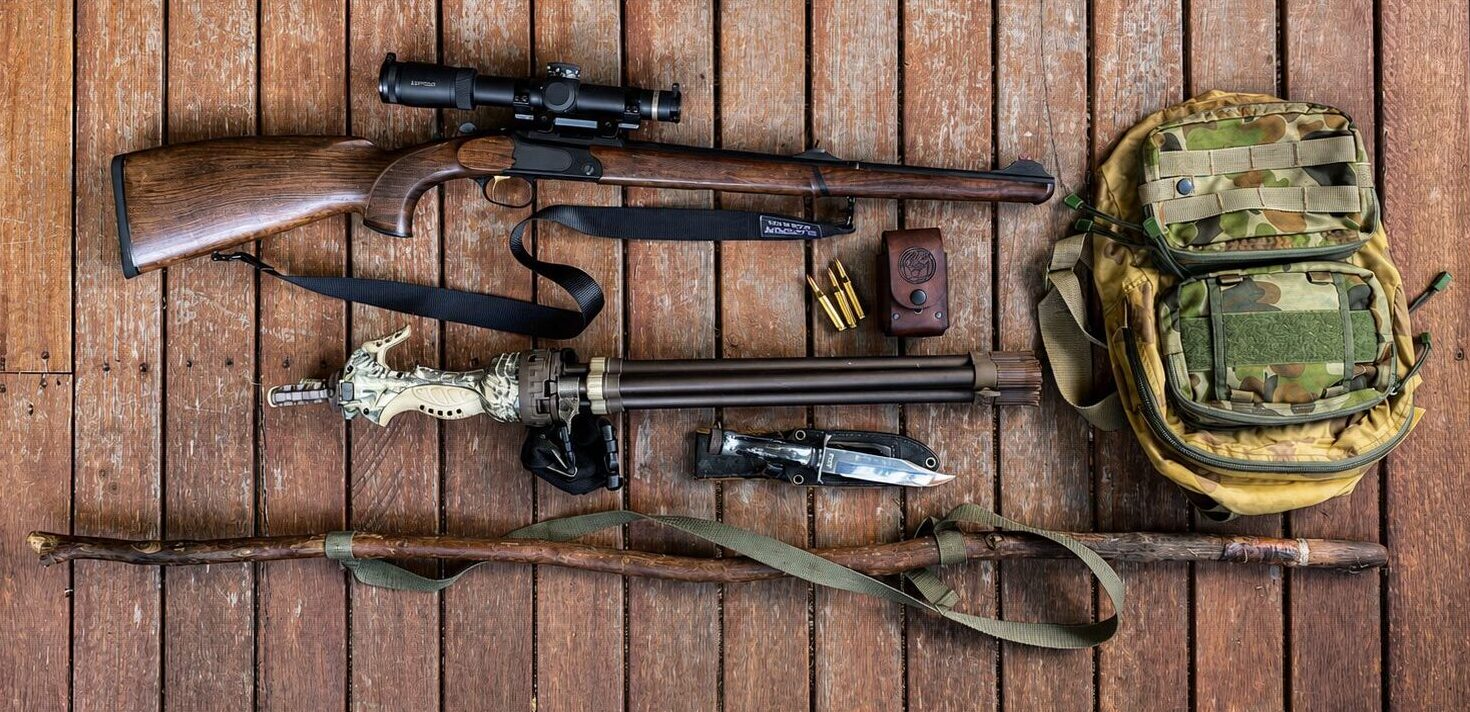
Only days later, I received my second warning from a sow who launched into a flat-out charge towards me. In my haste, I closed the half-open bolt without chambering a round and hastily reloaded to drop her just in time. I should have made sure my rifle was ready to fire and been with a Bowie knife, my last line of pig defence for decades.
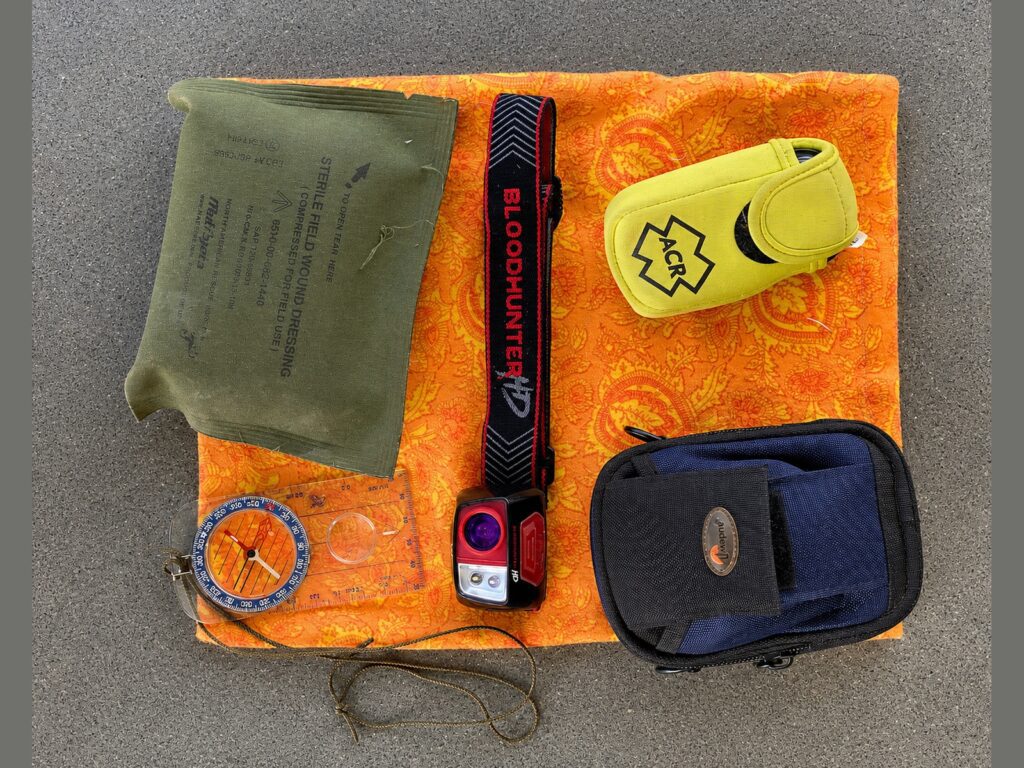
I returned home determined to lift my game. My wife kindly sewed a number of small bags for me. On these I wrote what they would contain. One bag is bright orange. It carries my emergency gear and the intention is that it will always be in whatever backpack I choose to wear out hunting. My emergency bag contains a personal locater beacon (PLB), compass, military sterile field dressing, headlamp and mini-survival kit. The mini kit holds a space blanket, pressure bandage, pocket knife, matches, whistle, signal mirror, some strong paracetamol and 10 metres of light cord.
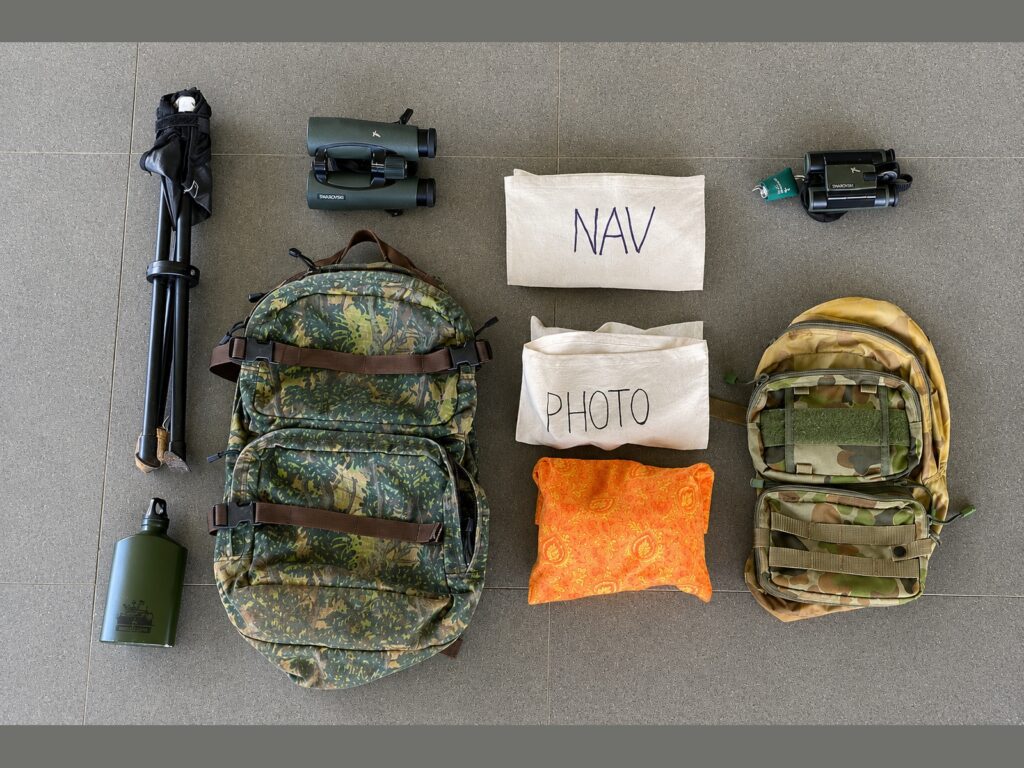
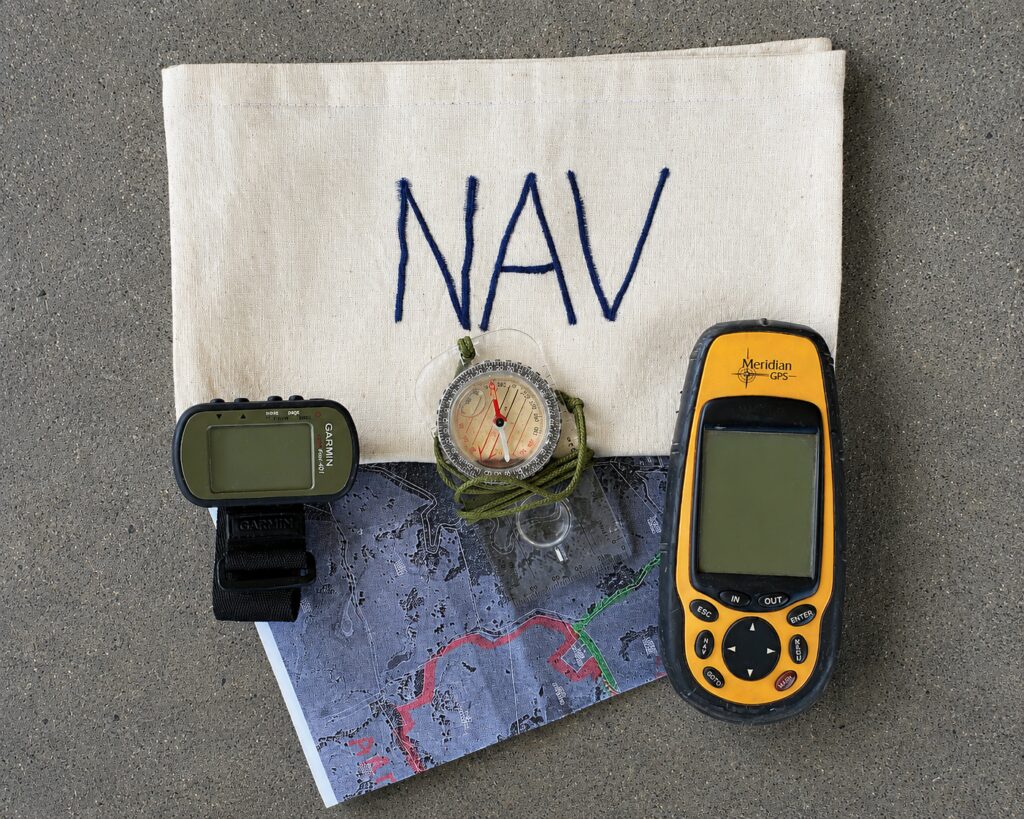
The other bags I carry depend on what I intend to be hunting. Most times, my camera and iPhone video cable are with me. Ditto my Nav bag which holds two GPS units, a compass and a map of the area I am hunting. I print these specific location maps from Google Earth along with latitude and longitude scaling so I can work out precisely where I am.
Other bags hold camo gear in the form of a face mask, tactical mitts and an army soft hat. There are also bags for holding my various game callers, specific to dogs, pigs and deer.

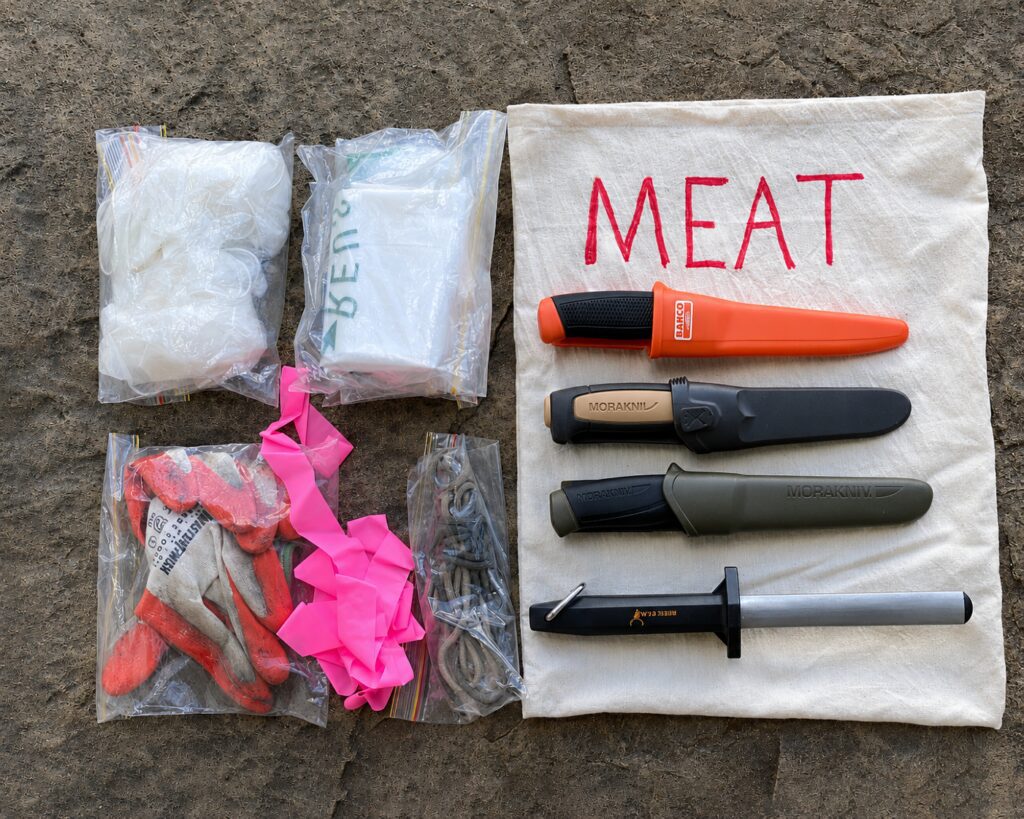
My meat bag has what I need to butcher a deer. There are three colour-coded knives – one for skinning, the next for cutting through leg joints and gristle, and another for boning out the meat. I also have a short sharpening steel, a bag of disposable surgical gloves I use for boning out the meat and a pair of heavy-duty gardening gloves I employ for positioning the carcass, dusting the hide down and then skinning. There’s also a hook with a short length of cord I implement to suspend the thighs from an overhead branch while I bone them out. I carry three packs of compressed plastic bags into which the boned-out meat goes to protect it from dust and flies. Lastly, is a metre of bright fluoro tape that I use to mark the location should I decide to walk out and bring a vehicle to the kill, rather than backpack the meat out.
For a stalk where I do not expect to be sitting in wait for long, or at all, I turn to my small daypack and my lightweight 10×25 stalking binoculars. For a pre-dawn start where I intend to sit and call for an hour or two, I will rely on the larger backpack with a folding tripod stool and a canteen of water. The stool is useful when the grass starts to grow long, or it has been raining and I wish to avoid sitting in the mud. On these lowlight hunts I carry my larger 10×42 binoculars.
Two other items I look to are a Primos Trigger Stick and a walking staff. The trigger stick I sling from a bandolier around my neck. That leaves my hands free for using my binoculars and handling my rifle. The trigger stick is one of those items I wish I had discovered years earlier. It makes the placing of long shots so much easier and certain. With the trigger stick, I now take long shots at wild dogs that I would previously have passed up.
And, for game like pigs and deer, it makes for precise bullet placement out to 200-plus metres. My walking staff is useful for negotiating rough and sometimes slippery steep terrain. I apply it a lot, poking and tapping ahead of myself when negotiating deep summer grass in the hope it will move any hidden dangerous snakes out of my way. I have also fitted a sling to the staff. That allows me to hang it over my shoulder and have both hands free for my rifle when in thick cover close to wild pigs.
Obviously, what and how you carry your hunting kit is a personal decision. In detailing my items, the intention is to encourage you to consider what you should have available and how to organise that, rather than duplicate my approach.
The other aspect of compartmentalising your gear is maintaining the discipline to sort it back to where it belongs after each hunting trip. That includes replacing any articles consumed, cleaning and sharpening knives and making sure your batteries are carrying a decent charge.
Sure, for a walk about in an open paddock in broad daylight you don’t need most of that. You save such kit for those occasions where, despite your best intentions, you find yourself in rough country, possibly in the dark as well. Under those circumstances those trappings are worth their weight in gold.
Share this article
Related
Articles

Related
Recipes