

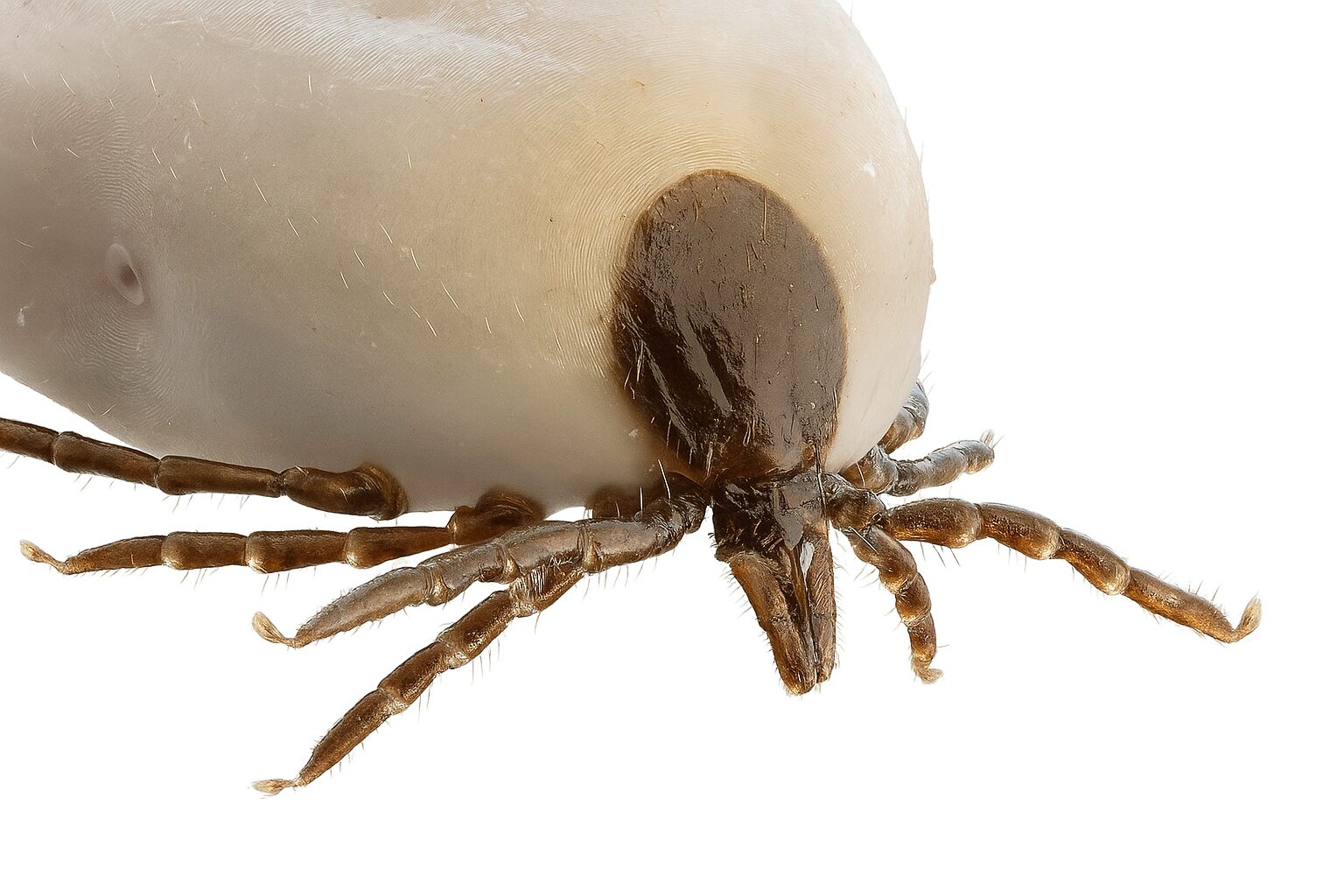
Tick bites: What everyone should know
I visited a pharmacy to get a new tube of Lyclear scabies cream. When queried by the pharmacist, I told him I spend a lot of time out bush and, as a result, on most outings I pick up a few pin-prick ticks. I added that Lyclear killed such ticks quite effectively and was the recommended treatment. He disagreed, saying that was not so. Lyclear was out of stock anyway, and the best way to remove ticks was to just get some tweezers and yank them out.
I was a little shocked at that advice, figuring it to be an outdated treatment. I knew that it was wrong and thought the correct approach had been well advised to medical personnel. In fact, updated government guidelines on the correct treatment of tick bite were released in late 2022
The medically-recommended method of treating tick bite is currently different in Australia than it is anywhere else in the world, where the tweezers approach is still recommended. However, the rest of the world will need to follow our lead. The recommended treatment for tick bite has been changing over the past decade or two.
Interestingly, since tick-induced mammalian meat allergy has been discovered and documented in Australia, overseas research has shown it is present in many other continents as well. Initially, it was thought that the Australian paralysis tick was the sole culprit, but more recently other tick species have also been implicated. So, any tick bite should be considered potentially harmful and treated accordingly.
Just what the risk of tick bite is, and how it was discovered, is a fascinating story. Back in 2007, intrigued by a recurring cases of mammalian meat allergy in her area of Sydney, Dr Sheryl van Nunen poured through patient records trying to find a common denominator. The patients were of diverse backgrounds and ages. Their red meat reactions came out of the blue, with no previous history of that complaint. Eventually, she found they all shared a history of tick bite.


Mind you, in that tick-prone area, tick bite was quite a common occurrence. Out of all those cases, a small percentage resulted in mammalian meat allergy. And, there could be a long time between the tick bite and the allergic reaction. The reaction, when it came, could be severe and life-threatening.
Tick-induced mammalian meat allergy has since become an emergent allergy worldwide after van Nunen et al first described the association between tick bites and the development of mammalian meat allergy. Professor (Dr) van Nunen says tick anaphylaxis and mammalian meat allergy can be prevented with proper tick prevention and by treating biting ticks appropriately. Using tweezers to remove ticks can greatly increase the risk and should not be done. Tweezers squeeze the tick and can make it regurgitate saliva into the bite wound.
The Garvan Institute of Medical Research reported in 2022 that, unlike all other mammals, humans and the higher primates do not produce a particular blood sugar molecule, called alpha-gal. Alpha-gal is present in mammalian meat and animal products such as cow’s milk, soft cheeses and gelatine. When humans are bitten by certain tick species – such as the paralysis tick endemic to eastern Australia – the immune system can detect alpha-gal as harmful and instigate an allergic response at the time or in later encounters. That vigorous response to a perceived threat can trigger anaphylactic shock, a potentially fatal condition.

Firstly, for anybody with a known allergy to tick bite, the discovery of a biting tick should be treated as a full-blown medical emergency of life-threatening consequences. Emergency services should be informed immediately, and the risk of imminent anaphylactic shock stressed. The patient should be lain on the floor with legs elevated. If they have an epi-pen, that should be used at the first sign of breathing difficulties while awaiting the paramedics.
For most people, with no history of tick allergy, the response is less urgent but nevertheless the correct response to tick bite should be initiated at once. The key point is to kill the tick where it is and make no attempt to remove it until it is dead. Ideally, the dead tick should be left to fall off. The prompt treatment of tick bite greatly reduces the risk of developing tick-induced mammalian meat allergy and anaphylactic shock.
A tick removal mantra devised for the community is:
For ticks you can see (adult ticks)
‘Freeze it, don’t squeeze it!’
Use an ether-containing spray e.g. Tick Off and remember:
‘Household tweezers are tick squeezers.’
The ether-containing spray, Tick Off, should be used to kill ticks in situ. It is recommended that this product be used to quickly and effectively kill the tick. Other ether-containing sprays have been used in the recent past but are not recommended because they may initially disturb the tick and prompt regurgitation into the bite. In most cases the specific ether-containing spray will kill the tick within five minutes, and it will drop off the skin later.
The second tick removal mantra devised for the community is:
For ticks you can hardly see (larval and nymph stage ticks)
‘Dab it, don’t grab it’
(Apply the tickicide permethrin cream Lyclear).
Permethrin based creams are available from chemists. Apply at least twice with a 1-minute interval between applications. Scrape the tick off after 60-90 minutes using a sharp-edged scraper (taking care not to damage the person’s skin with the scraper).
On hunting trips of a few days, I used to leave treatment of tick bites until I got home. These days, I carry Lyclear, adhesive bandages and ether spray for immediate application on finding a tick. For pin-prick ticks, a dab of Lyclear with a covering adhesive bandage ensures the treatment is not dissipated. Larger ticks get the Tick Off freezing spray and an adhesive bandage as well.
Share this article

Related
Articles



What to carry hunting: Essential gear for safety and success

Related
Recipes
Sorry, no related items found.