

Why rifle groups throw fliers
If you own a rifle, somewhere along the way you will shoot a group, or groups, either for accuracy or load development. Realistically, the most common reason projectiles refuse to group is that the twist rate of the rifling is incompatible with the projectile. The twist rate for a projectile is a function of projectile speed and its length. It’s a problem common for older cartridges confronted with modern projectiles of greater weight within the calibre, propelled by modern, slower powders. Very few rifle manufacturers have allowed for this fact, even though the cartridges concerned can handle the bigger projectiles.
There are many reasons why a particular load is accurate. The aggregation of these positive reasons results in a tight group. It is, therefore, reasonable to conclude that there are a similar number of negative reasons that produce a less-than-acceptable group, including the inevitable ‘flier’.
Fliers are a complicated subject, and the causes are not well known. The biggest issue with fliers and poor groups could be the human element. Are we willing to admit that, perhaps we, the shooter, are the real cause of the problem? In that last group that contained a flier, did we hold the rifle the same as the previous two shots? Was the rifle set up on the bags in the same position? Although we may be loath to admit it, perhaps being human plays a much more important role than we realise.
It is claimed that if the group is vertical, more powder is required. If the group is horizontal, the projectile was driven sideways by the wind, or it was a sighting problem. I am not convinced. If the wind is almost non-existent or zero, and the sight picture is correct at the time the trigger breaks, what then causes a mysterious flier?
It has happened to us all at one stage or another and will continue to do so. However, recently we were attempting to develop a load using a commercial hunting projectile. The initial groups were great but the subsequent proof groups were both unacceptable. The velocities were all extremely similar, there was no wind and the sight picture was correct… so, why? The short answer is that we simply don’t know. There must have been other unidentified reasons.
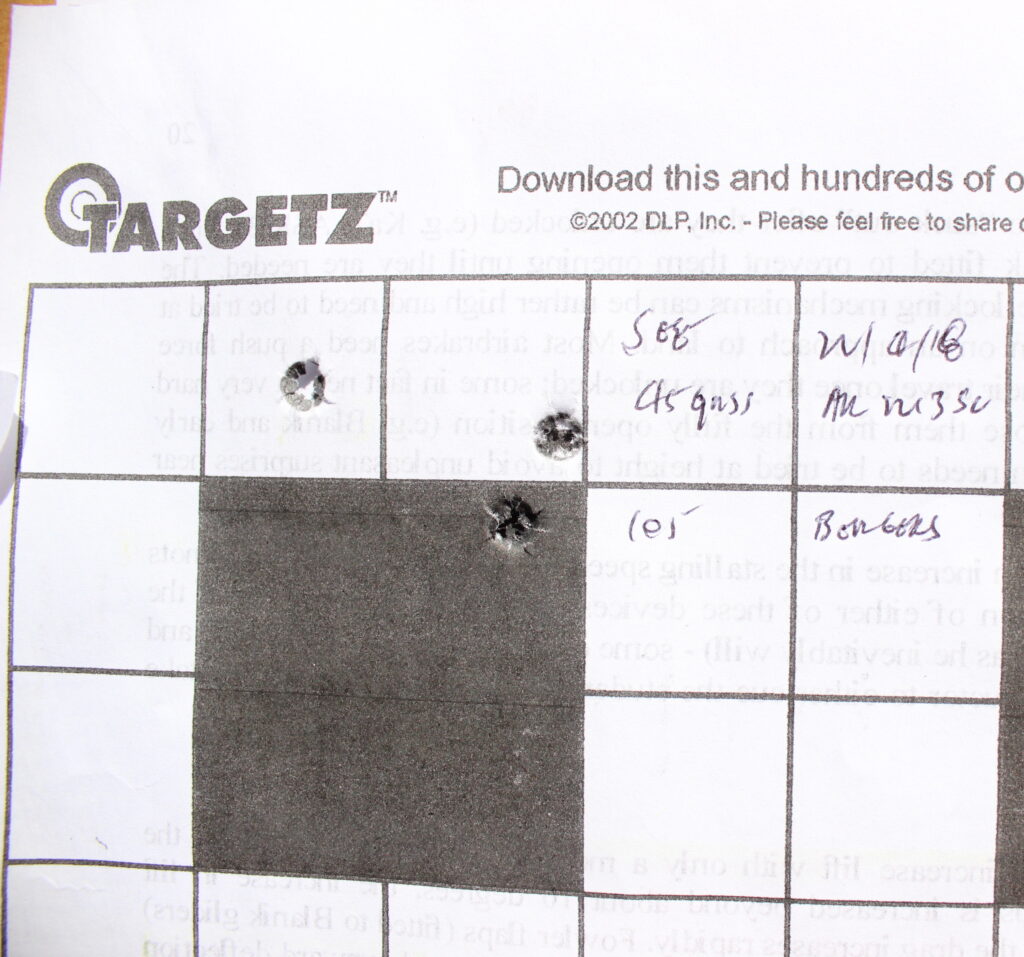
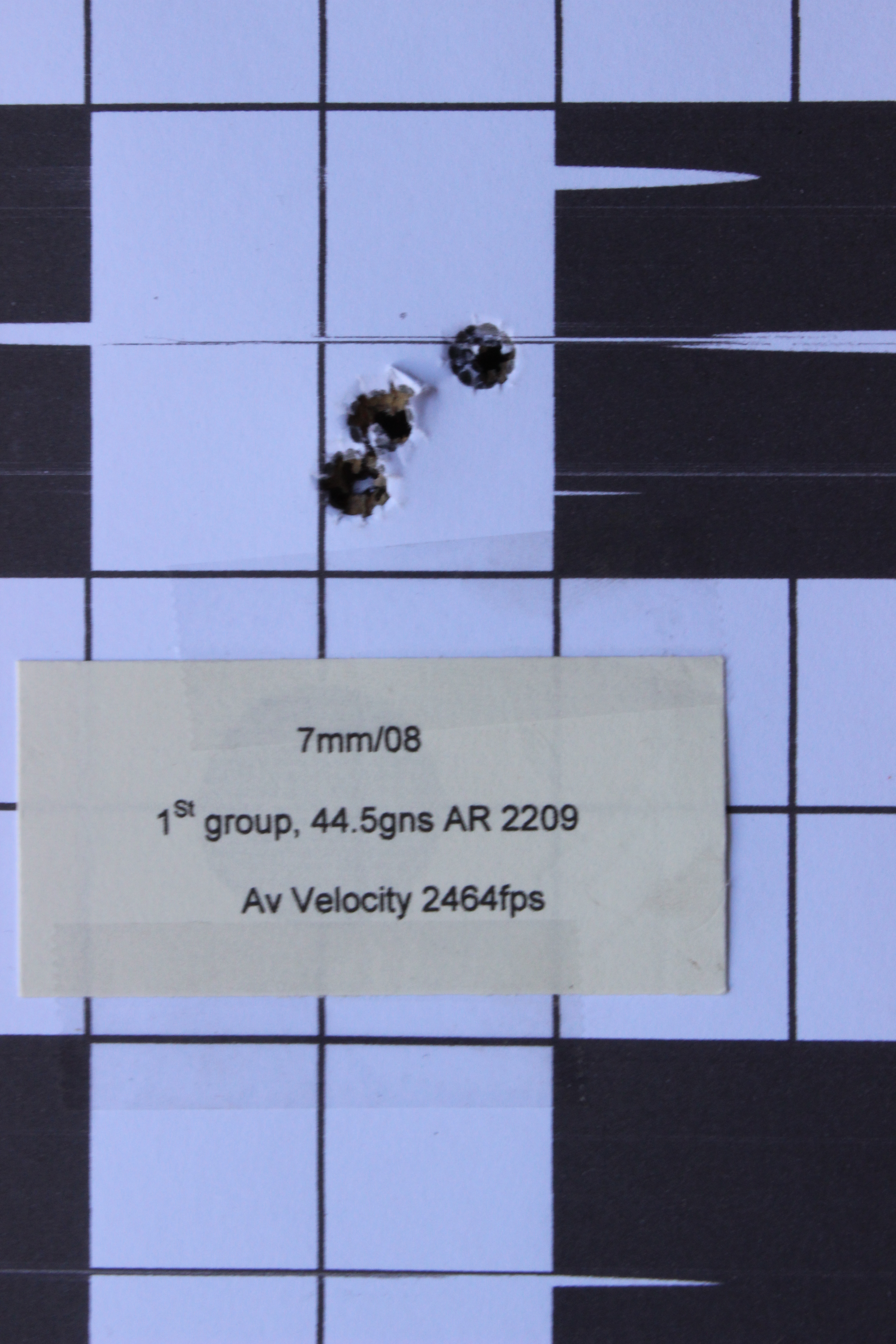
So, we conducted a series of tests, with different calibres, projectiles and their weights and lengths tested. We found that projectile length and distance from the base to the ogive both varied about 0.008“. However, despite variations, groups were tight at times and presented a flier at others.

In researching the problems associated with groups and fliers, there are certainly no easy answers. You can have the best equipment and take exceptional care to develop your ammunition and still there will be fliers at odd intervals. The more groups you shoot the greater the odds that you will shoot a flier. While premium hunting projectiles usually do what they are designed for, the distribution of components within the projectile does not always provide the best possible accuracy.
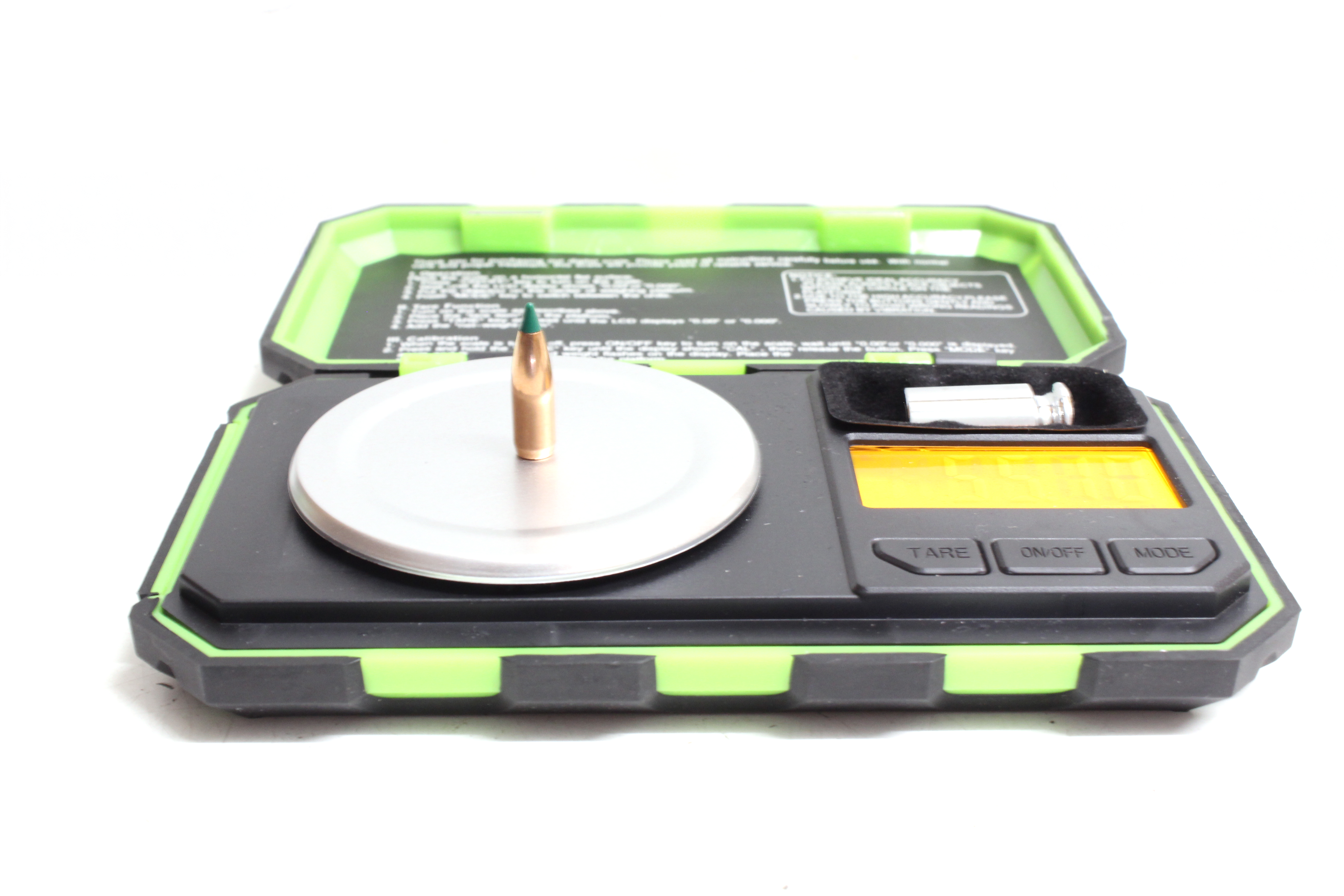
Another subject relates to the weighing of primers. It is claimed that there is a direct relationship between the heaviest primers and the highest velocity. Although minute, in conjunction with other unmeasurable items, they combine to either produce an acceptable result or shoot a group with or without a flier. The variation we found by weighing was 0.14 of a grain for a particular brand of benchrest primers.
Previously, we had on odd occasions weighed projectiles but never measured them, assuming that all were equal. Just what part or portion these dimensional variations play in the causing of fliers I am unable to quantify. The same applies to projectile weight variations, we simply don’t know. If, as suggested, many small factors contribute to the overall accuracy and/or fliers, how are we going to measure such items? Do we need to change how we develop ammunition for testing?
It is thought that the slow increase in speed was due to increasing barrel fouling – all shots were fired at a comfortable pace. According to our extensive reloading records, where the extreme spread (ES) is less than 20fps, there is a 57 per cent probability of the subsequent group being less than an average of 0.60“. Certainly, since we began annealing each case, every time it comes across the reloading bench there is a documented drop in ES over all calibres that we load for. We also noticed over several calibres that either within a group or groups, the lowest ES normally had the smallest group. The difference was tiny, but it was there. Again, one small factor contributes to overall accuracy.
It’s enough to convince me that a low ES is a contributor to reducing group size. Exactly what causes fliers continues to be investigated.
Share this article
Related
Articles

Related
Recipes
Sorry, no related items found.