

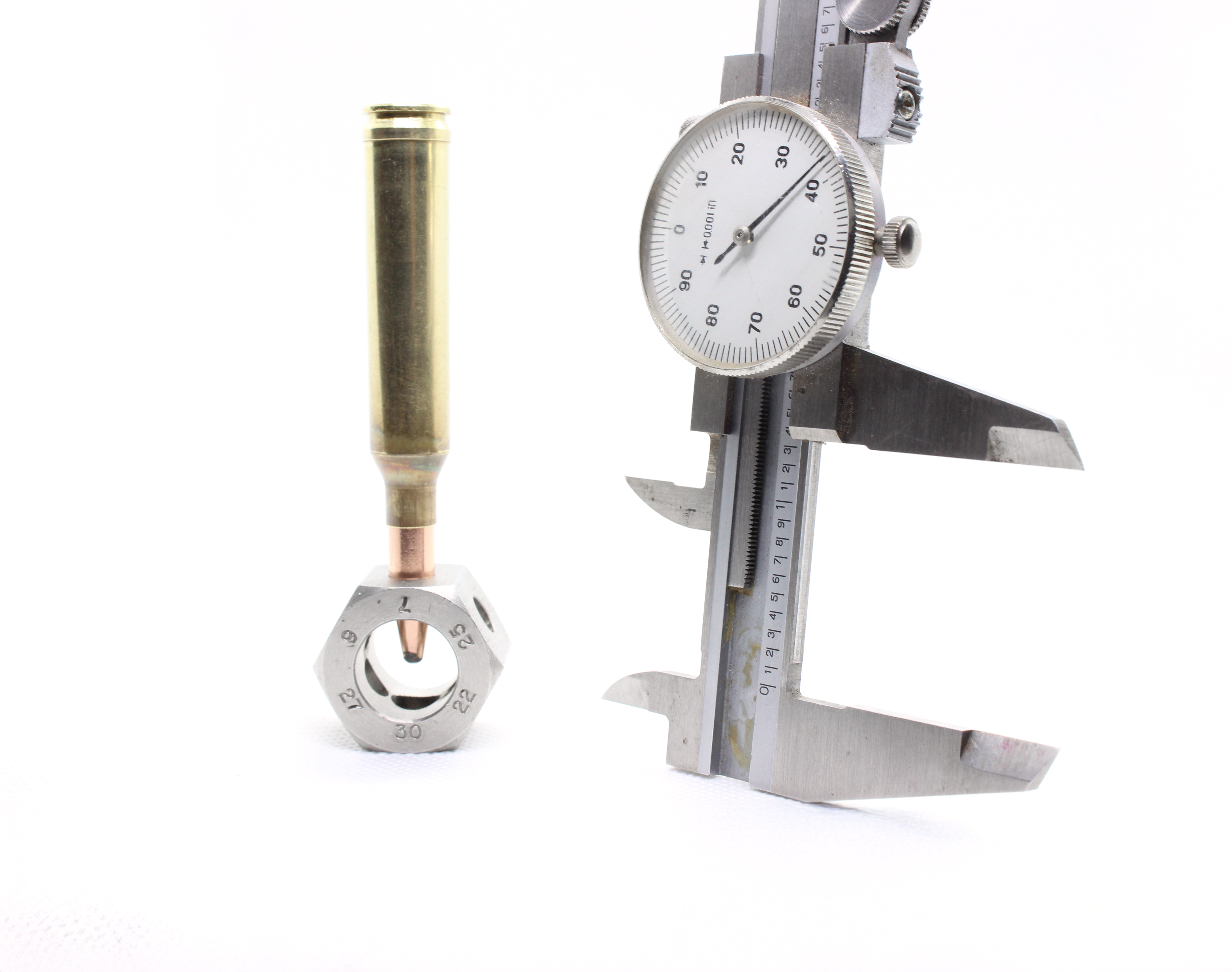
Why seating depth and neck tension matter for accuracy
Of all the items that affect rifle accuracy, perhaps none have as much effect as the area surrounding the neck and the mouth of the cartridge case. You might have the best rifle in the world but ignoring the cartridge’s seating depth and the tension on the projectile will affect accuracy. What on the surface appears to be inconsequential is a veritable minefield of misinformation when we talk about accuracy. All items are interconnected, change one and you alter the rest, the good news is that what we cover is under the control of the reloader.
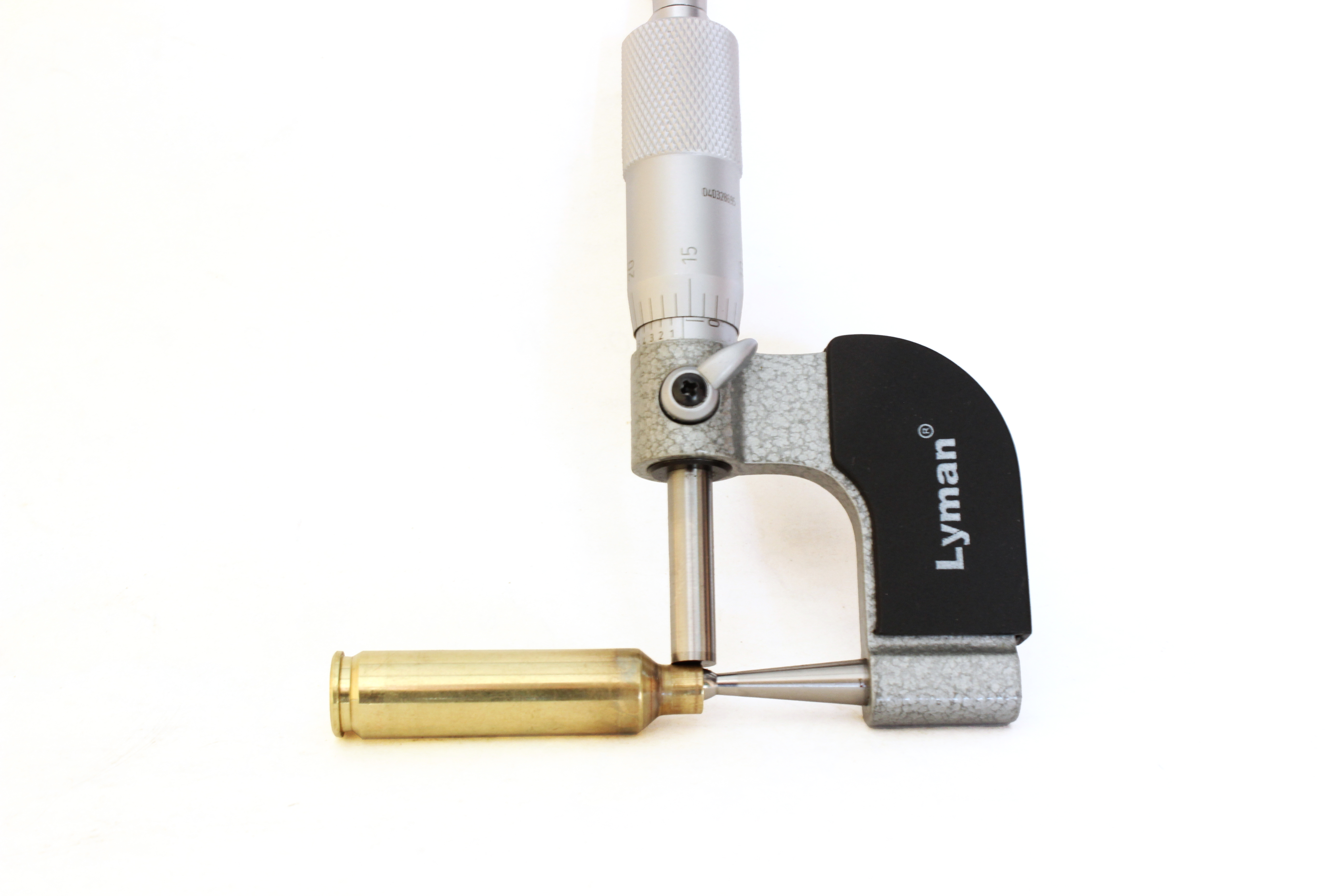
The very first consideration about cartridge case tension relates to just who made the cases. True, all cases will have the same external dimensions as they must conform with SAAMI standards. But if we weigh the cases according to brands and check the neck thickness with a tubing micrometre there will be differences. The normal .243 Win cases in my reloading cupboard are made by Winchester and Remington in America, Lapua in Finland and ADI in Australia. The normal Lapua cases are of custom quality, and I reckon the ADI brass is of equal quality.
The average neck thickness is:
- Winchester: .0135″
- Remington: .0144″
- Lapua: .0140″
- ADI Standard .243W: .0146″
- ADI .308W: .0160″.
Thus, from this initial measurement, it can be reasonably claimed that ADI brass would impose the greatest grip on any given projectile in an untrimmed state. In addition, with a projectile seated in the neck of such cases, because of the extra outside diameter the axis of the projectiles will be more co-incident with the bore of the rifle. A slight difference perhaps, but remember accuracy is the summations of many parts.
In the beginning, we must make decisions about projectile type and the powder to propel it, ensuring the selected projectile is compatible with the barrel twist of the rifle.
In addition, the type of projectile may have another further effect depending on whether it is flat-based or has some form of boat-tail. A singular question invariably opens another multitude of others.
To ensure that the best accuracy is obtainable from any rifle projectile combination, the reloader must ensure that the twist of the barrel will stabilise the chosen projectile. If a projectile is on the edge of stability, it is better to choose another more stable projectile that will over time be more consistent.
It is merely a function of projectile length and velocity; the necessary calculations can be accessed via the Berger website and some computer programs. In round figures, the boat-tailed projectile will require a twist rate approximately 1″ faster than flat-based for the same weight. At high projectile weights and calibres, this may be the deciding factor if the barrel will stabilise a particular projectile. Once sure that the two are compatible, we can now work on the case neck to extract the absolute best the rifle is capable of. The quality of the ammunition is irrelevant if these initial criteria are not met.
To ensure some initial consistency, all new cases should be lubricated and run through your normal decapping and sizing die. At this point, it’s possible to measure the amount of ‘grip’ imposed on the shank of the projectile by the case mouth. Ballistic Tools (in the USA) makes several case mouth and neck tension gauges for popular calibres. In the case of .22 calibre mouths, the gauge is cut on .224/.221/.218 and .215″ diameters. It is immediately apparent what a case mouth size is, either via a normal expander button or one reduced in size by a selected bushing. I sort cases according to size using these gauges, which is better than no measurement at all. It is another addition to the array of measurements and processes that provide the most accurate ammunition.
The amount of grip on the projectile shanks alters just how a case shoots. It is a complex subject but ignore it at your peril. The starting point must be the thickness of the case neck, which varies between makers so is best measured with a tubing micrometre.
Benchrest and shooters of custom rifles with fitted necks turn case necks because they must – their custom rifle chambers are machined to fit a smaller than normal case neck. The logic behind this is twofold, the amount of neck expansion when the case is fired is controlled and thin necks are easier to reduce in size via a bushing in a straight-line reloading die.
While many issues affect case mouth tension and/or grip, the one that appears to have the most effect is annealing, or lack of it. Work hardening of the brass case occurs at every stage of use. If you don’t do anything about it, eventually the case neck has no grip at all, and the new projectile will simply slide into the case without any resistance. As the ductile property of the case changes due to work hardening, so does the velocity, affecting accuracy. Annealing prevents this by restoring the ductile properties of the brass to its original state. Cases should be annealed after every firing. While this may be considered by some as extreme, many Benchrest shooters do so for supreme accuracy.

The use of straight-line dies or dies with internal bushings to reduce the size of case necks by a specific amount may require some experimentation. While convention suggests a reduction of .002″ less than the loaded round, you might find with thinner than normal necks a greater amount of reduction is required. Unfortunately, there is no magic formula to discover the correct amount, it is simply a matter of trial and error.
When we come to the seating of the projectile, we open a proverbial can of worms! The first issue depends on whether the rifle is a factory or custom model. With the custom rifle there are choices. With factory rifles, other than the fact that those chambered for Weatherby cartridges will normally have a longer throat, you must accept how the factory has cut the chamber. The other issue with the factory rifle is whether it is a single shot or fitted with a magazine.
Annealing and/or ultrasonic cleaning of cases will remove the carbon residue, providing a form of lubrication on the insides of necks when seating another projectile. This may be replaced by dry lubricant (graphite) if considered necessary, although this basic ‘lubrication’ may play a part in the firing sequence.
Normally, overall cartridge length is controlled by the magazine, and this is specified in reloading manuals. However, there is no guarantee that this overall length is the most accurate for the individual projectile. If the best accuracy is obtained with a length longer than the magazine, you can load individual rounds up to the point where the ogive of the projectile comes up against the lands of the barrel.
Another problem that occurs when we start altering seating depth is the relationship between the neck of the case and the amount of the projectile within the neck. Changing the relationship will change the amount of grip imposed.
There is a lot of rubbish written about the pressure increase when a projectile is in touch with the lands of the barrel. If in the normal course of events, a load is developed under such conditions, there shouldn’t be any problems. Certainly, there is potential for a rise in pressure when a load is developed off the lands and another projectile is substituted that looks the same. If the distance to the projectile’s ogive is longer then a problem may arise.
Aside from any other factors, the seating depth of an individual projectile may well depend on whether it’s either flat or boat-tailed. In the simplest of terms, flat-based projectiles are not fussed about seating depth but boat-tailed are a different kettle of fish and can be very touchy regarding length. The real problem with boat-tailed projectiles is that there is again no magic formula to discover the most correct seating depth. What is certain is that such projectiles almost invariably produce their best groups when ‘off the lands’.
It is very much a shoot-and-see situation to discover which distance the projectile prefers. Berger has an excellent description on their website on how to conduct the process. You start with the projectile seated into the lands of the barrel and reduce it by a specific amount for each group of shells – one group will be better than the other.
With some there is little difference, and a recent experience with the .243 Ackley cartridge was enlightening. The projectiles had the same nose profile and weight at 103gr. The boat-tailed version proved to be superbly accurate with good velocity, but I did wonder if a flat-based version would be much different.
To find out I had Brisbane projectile maker Gary Little make up a batch of 50 with flat bases. The short story is, there was not much difference between the two. With the same powder charge and primers, the boat-tailed version just shaded its flat-based cousin by 13fps in average velocity but there was nothing between them in terms of overall accuracy.
I have used a variety of projectiles with rebated boat-tails and am not sure exactly where the distinctions begin or for that matter end. Do you class the Nosler AccuBond projectile as a boat-tail? To me, it resembles more of a bevel.
We have discussed most of the problems associated with projectile grip and seating depth, overall, a complex subject whereby minor changes in one item affects every other item in a small way.
Share this article
Related
Articles


Related
Recipes
Sorry, no related items found.