


Building a custom .470 Capstick hunting rifle
There are many great rifles on the market, some well out of budget constraints and more of a dream, while others are affordable but don’t offer the individuality sought. Hence my need, or want, for individuality becoming the driving force behind me building a .470 Capstick custom rifle.
I was born right-handed but with a lazy right eye. When learning to shoot, I was encouraged to shoot left-handed, which proved challenging until the muscle memory had been created. The 1970s was the era of Monte Carlo stocks with their sharp rollover combs, revealing a problem for left-handed shooters who used right-handed rifles with substantial recoil.
My answer was to contact a custom stock maker to manufacture a left-handed stock for a Mauser 98 right-handed action. This worked well, of course, but I went with the fashion of the day, having him include a Monte Carlo cheekpiece. My rifle was therefore uncomfortable for a right hander to use… not a great move when it came to selling it.
This stock served me well for many years but the bug of bigger and better had bitten. I had been posted to Darwin and predominately chased buffaloes, so needed a larger calibre. Having acquired another Mauser action during my travels, a .300 Win Mag sounded like the goods. Local gunsmith Vic Pedersen completed the metal work. At the time, not having a sporting stock available for the rifle, I used an old military stock I had sporterized.
However, the stock had too much drop, ensuring the .300 bucked and kicked like a mule. It was also heavy to carry and at the time, the choice of projectiles was limited. The projectiles available proved inconsistent on buffaloes, lacking penetration. Due to these inconsistencies, I purchased a Sako L61R in .375 H&H, while the .300 spent the next couple of years gathering dust until I was posted to Sale in Victoria.
In Sale I renewed my friendship with Dave Toohey, a hunter and shooter who was the RAAF base metal machinist. It was about this time muzzle brakes were growing in popularity. After being inspired by an article I read on magnaporting, I thought it was time to resurrect my .300 Win Mag.
Mulling over the benefits of a muzzle brake with Dave, he suggested creating our own. Having read up on the theory of muzzle brakes, a plan was developed. From memory, we simply cut three parallel slots across the muzzle end of the barrel with a rearward angle, 10mm apart, starting 10mm from the crown. Apprehensively, we test fired the rifle. The annoying muzzle jump instantly disappeared, so the rifle became my go to for sambar.
In the 90s, I purchased my first L/H rifle, a Remington 700 BDL in .270 Win. Over the next 20 years I replaced the wooden stock with a composite stock, shot out three .270 barrels and replaced the last .270 barrel with a .240 WBY Mag. The .240 WBY chronographed spectacularly but due to high velocities the .243-6mm projectiles couldn’t handle it. I sold the rifle and bought a .25-06.
In the early 2000s I planned a trip to Canada with my late mate, Roger. With black bear in mind, I was unsure the .270 Win would be suitable. A visit to my local gunshop resulted in me purchasing a L/H Savage Weather Warrior in .338 Win Mag, which I used to great effect in Canada.
Although an extremely accurate rifle, with a 20“ barrel, plus 50mm of muzzle brake, it suffered a lack of velocity. By now, plans for a trip to Africa were being made. I hankered for something flat shooting and hard hitting for plains game. Tony Argent had recently taken over TSE and was attending a Brisbane gun show, with a .338 barrel for sale. The .338 RUM had recently been released, so that’s what I went for.
Tony had a .338 RUM reamer, so he fitted and chambered the .338 RUM for me. While the rifle was being rebarrelled, I purchased an MPI composite stock. When reassembled, there was little semblance to the rifle I originally bought.
For the next 10 years, including two trips to Africa, numerous visits to Victoria and the Northern Territory, the .338 RUM remained my go-to rifle. It constantly shot under ¼“ and killed game emphatically. That is not to say it didn’t have negative pay offs. If you think you might like a .338 RUM, it is a great calibre, but make sure you aren’t recoil shy.

By now I was hooked on customising rifles and began formulating a new plan. With deer hunting my main passion, requiring oodles of mountain climbing, accompanied by long walks without firing a shot, I needed to rid some surplus hunting gear. My hunting pack weight, for a weeklong hunt, was reduced from 25kg to 15-18kg, making a hunt so much more pleasurable. Though my rifle remained a tad heavy.
Having a Ruger Hawkeye in 7mm Rem Mag in the safe, I began formulating a plan. A discussion with Tony from TSE saw my Ruger placed on a crash diet. Weighing approximately 3.3kg bare when dropped off, Tony shaved 1kg off the action, replaced the barrel with a needle thin .300 Win Mag barrel and re-stocked it with a super lightweight MPI composite stock. The whole rig now weighed 2.7kg, including scope and three rounds of ammo.
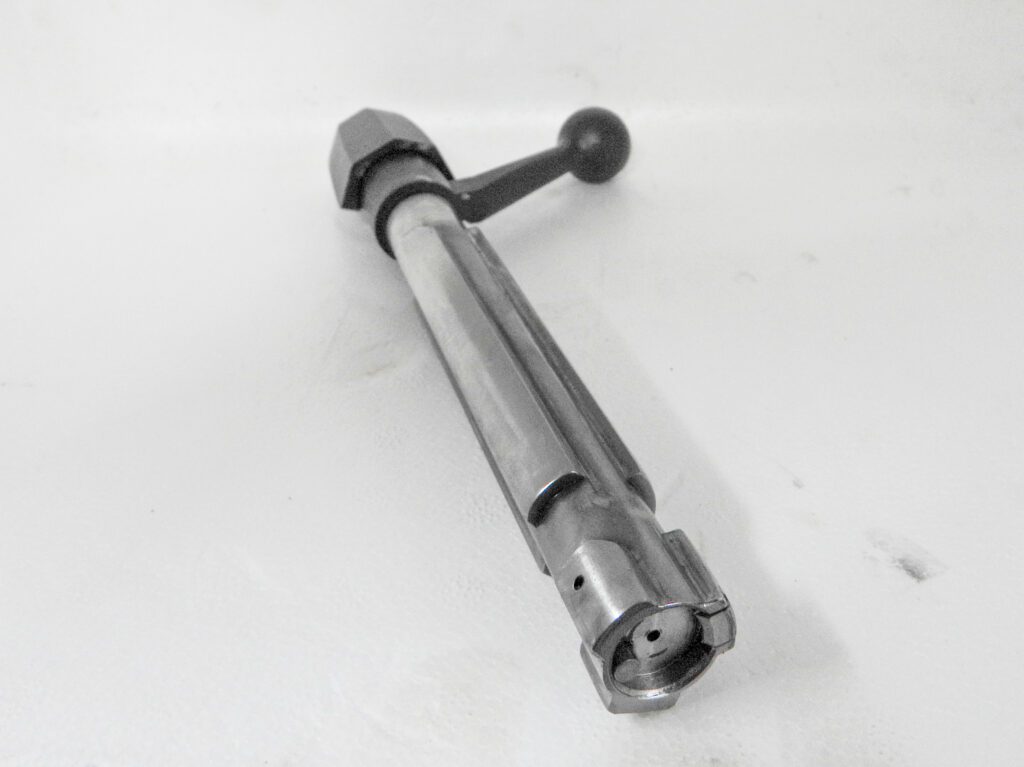
By now the custom build bug had me in its grip. To me, any rifle reflecting a personal touch is something to be admired. My latest project was years in the making. Some years ago, I bought a Champlin Magnum action. Champlin are machined from a billet, in the US, primarily for custom rifle builds. The next step was to choose a calibre. This required considerable thought, especially about what the rifle would be used for.
I deliberated with this quandary of calibres for some months, skipping from one to another, but always coming back to the .500 Jeffery. Why? God only knows, it just seemed like a good idea. But a phone call with Tony Argent put paid to that.
Unfortunately, Champlin actions won’t accommodate the diameter of the .500 Jeffery, which is designed around the .375 H&H. I had to come up with another calibre. After the initial disappointment and considering that my action was made for .375 H&H, I decided to go for a parent cartridge to the .375 H&H case. This helped resolve the cartridge diameter problems. So, I chose a .470 Capstick.
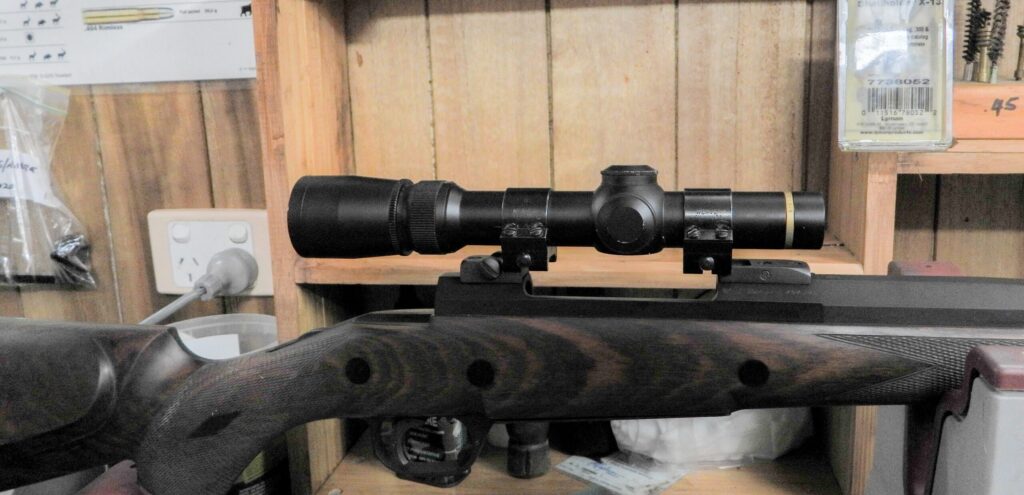
Having decided the .470 Capstick was my cartridge of choice, it was time to discuss the build with Tony. I wanted something visually aesthetic but also on traditional lines. A half round, half hex barrel was decided, topped off with iron sights but with provision for scope mounts. When the build was completed, for durability, all metal parts would be Cerakoted, resembling a deep blue finish. With the metal work underway it was time to organise the stock blank, design, shape and chequering.
An upcoming hunting trip had me travelling to Victoria, arranging to stop by Roger Vardy Rifles & Stockwood, a procurer of walnut blanks. Expecting to see 20 or 30 blanks, I was blown away with the number and quality. They literally had thousands of walnut blanks, catalogued with time, date and place of acquirement. Roger appeared to have a personal connection with each piece of walnut. Easy to talk to, while listening to my ideas, he advised astutely on what he thought was needed.
After a couple of hours of consideration and deliberation, we narrowed my choices down to two blanks. Each had various characteristics I liked, though neither had the panache I desired. Roger’s expertise came to the fore and he could tell I wasn’t 100 per cent happy. He grabbed the stocks I was deliberating and placed them back on the shelves, then took me to another rack and said: “Have a look at these.”
My eyes lit up as my dreams were fulfilled. Choosing the correct timber proved one of the most challenging tasks of building this rifle. Knowing I needed a good straight grain timber, for serviceability, yet wanting something with flair or panache, was not easy to find. Roger was the right person, and my patience and time was well spent in my quest for the right timber.
With the timber chosen I stopped off to see Brett Rossouw on my return to Queensland. Brett had built other stocks for me and his patience for what he does defies belief. After he had taken measurements, we talked about enhancing the finery of the grain, without making the stock too ostentatious and keeping it traditional. I left it with the professional to do his mastery.
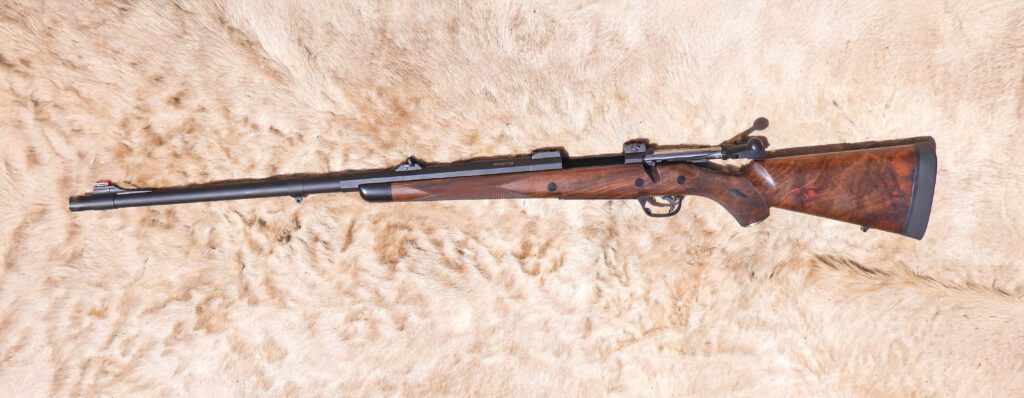
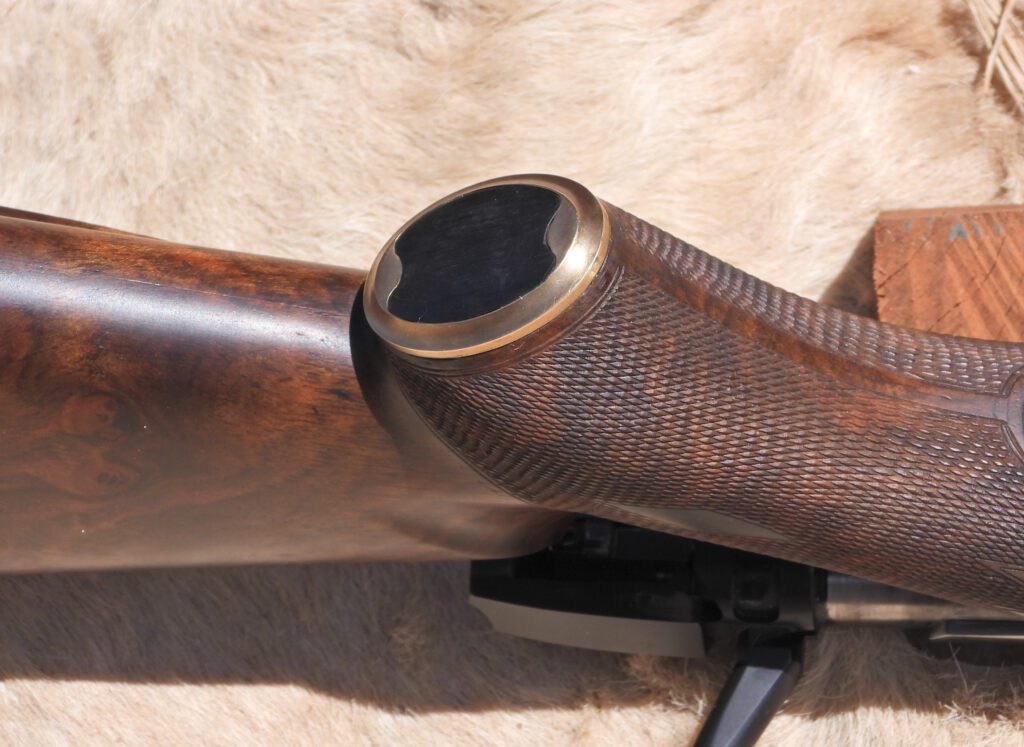
Leaving the finery of building my stock to Brett was another masterstroke. He included an ebony tip with ebony inlays within the chequering, polished brass pistol grip surrounds and masterfully fitted an appropriate recoil pad. He finished it off with a nice oil finish to make the rifle look like it came from a bygone era.
It has been some five years since purchasing the action and, despite the challenges involved with powders and having such an obscure calibre, I couldn’t be happier with how my custom Capstick has turned out.
Share this article
Related
Articles



Related
Recipes
Sorry, no related items found.