Condor Bushglider: Budget blade or bushcraft bargain?
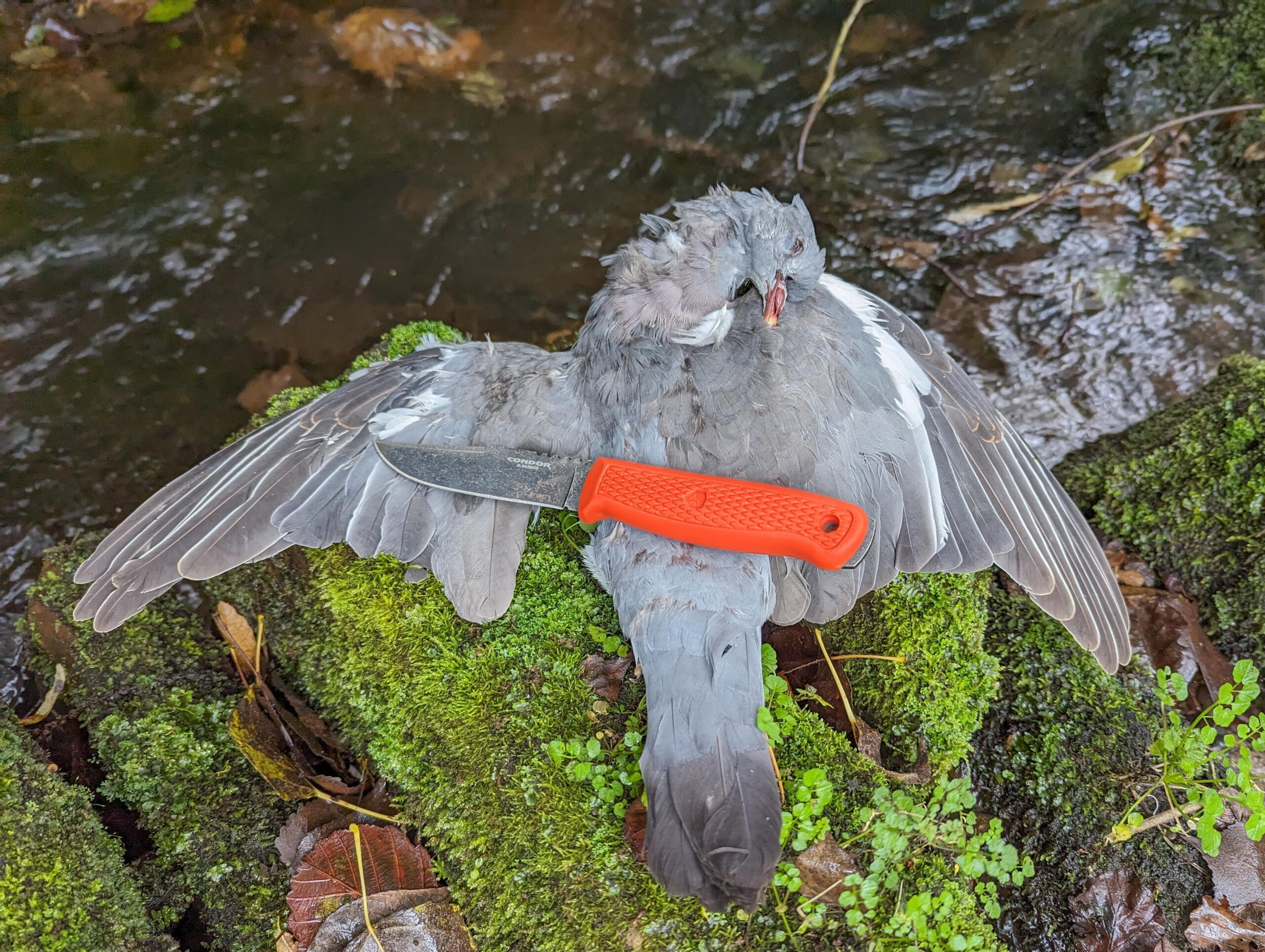
With an ongoing search for good value for money knives, the extensive Condor Tool & Knife catalogue can’t be overlooked. Seeking a medium-sized fixed knife with a blade offering sufficient belly for skinning, if and when required, led me to the attractively priced ‘Bushglider’. The design is simple, as is its construction. Available in a variety of colours, the orange version provides easy visibility in the field and around camp.
Condor Tool & Knife (Condor) traces its roots back to 1787, which is the year the Gebr Weyesberg Company was founded in Solingen, Germany. This company would go on to found IMACASA in El Salvador in 1964. Subsequently IMACASA was sold to local investors in the 1980s. While historically focused on the production of agricultural, building and other hardware, IMACASA has grown to be one of the leading global producers of machetes. Building on their expertise and expanding into knives and tools, Condor was founded in 2004. Contrary to many other manufacturers, most of their products are not outsourced to China, but produced in El Salvador.
The knife weighs in at 159g and has an overall length of 230mm. The grip at 124mm works well, even for those with slightly larger hands. It is made from high impact polypropylene. The clip point blade in 1095 high carbon steel measures 107 x 3mm and has an easy to maintain flat grind. No hardness is listed, but 1095 steel typically sits between 55-60 HRC, depending on (heat) treatment. When it comes to the sheath, you get a colour-matched high impact polypropylene tube that is attached to a leather belt loop.

When unboxing the Bushglider, nothing seemed out of place, so all good. Upon closer inspection, the bevels and grind were rather rough and fairly uneven. Nothing that is not easy to remedy on a stone though and within acceptable parameters for a knife in this price class.
The blade seems to be etched or otherwise darkened, which was a bit of a surprise because the finish listed by Condor is ‘natural’. It does seem to offer a slight degree of protection from corrosion, which is nice to have on a 1095 steel blade. The knurling on the spine of the blade is very pronounced but sufficiently finished to not cause discomfort. The Bushglider has a full tang design and the protruding metal at the end spans the entire width of the knife. Both are what you want. The grip is sufficiently long and super grippy, even when wet or greasy.
The sheath, basic as it is, serves the purpose and retains the knife well. The belt loop is a combination of a plastic part that holds the actual sheath and a non-removable belt loop. The latter is riveted to the plastic part and specified as being leather but feels rather plasticky. So far, the sheath has done the job. A pleasant, and somewhat unexpected, surprise is that the main sheath can be removed from the belt loop (the plastic part). This allows turning the sheath around for ambidextrous use. It does not make the sheathed knife much flatter, so there is little point in removing it when carrying the knife in a pack.
In the field, while the Condor is great to work on larger animals and portion meat due to its slim and longish blade, it is much better suited to do light skinning and for more delicate work on smaller game. This may in part be because the knurling on the spine is set fairly-far forward, making the blade easy to manoeuvre more precisely.



In addition to this, prolonged use of the Bushglider for heavier work like boning out a deer caused some discomfort due to how pronounced the knurling is. Of course, this is highly objective, and you may actually like it. On this note, it would be great if you work with gloves.
Where the Bushglider is a real joy to use is back at camp. It works great for smaller jobs, including food prep and cleaning small game. The pommel is handy for cracking nuts or opening a bottle and after use the knife is easy to wipe down and clean. It also sharpens easily, which leads back to the limited hardness of the steel.
The sheath has a hole at the tip to allow water to drain, while the Bushglider’s resistance to corrosion is a bonus. Always wipe down and clean knives after use, generally with some oil for 1095 steel as it can oxidise quickly once it has had blood or water on it. Having said that, with the Bushglider, it hasn’t been much of an issue, even in humid conditions out bush.
The Bushglider has turned out to be a suitable knife for various purposes. Once past the slight imperfections, like the uneven grind and non-modular sheath, at this price, there really are no issues. I regularly grab it when I got out with the shotgun to shoot some birds or rabbits. It has also found its way into my camping pack in favour of many other knives.
If you like to get good bang for the buck, like a slightly larger grip and pronounced knurling, you will love the Bushglider. For all others, it is certainly worth a look if after a knife in this style and want something that is not made in China. All said and done, it is an effective general-purpose tool.
Check online for your preferred stockists, with pricing generally under the $90 mark.
Specifications
Style: Fixed blade
Overall length: 230mm
Blade dimensions: 107 x 3mm
Blade shape: Clip point
Type of blade steel: 1095 high carbon
Hardness: Unlisted, estimated 56-57 HRC
Edge: Straight
Material handle: High impact polypropylene
Weight: 159g
Right or left-handed: Ambidextrous
Price: Around $90
Share this article

Related
Articles


Fox hunting with a button whistle

What to carry hunting: Essential gear for safety and success


Related
Recipes
Sorry, no related items found.