

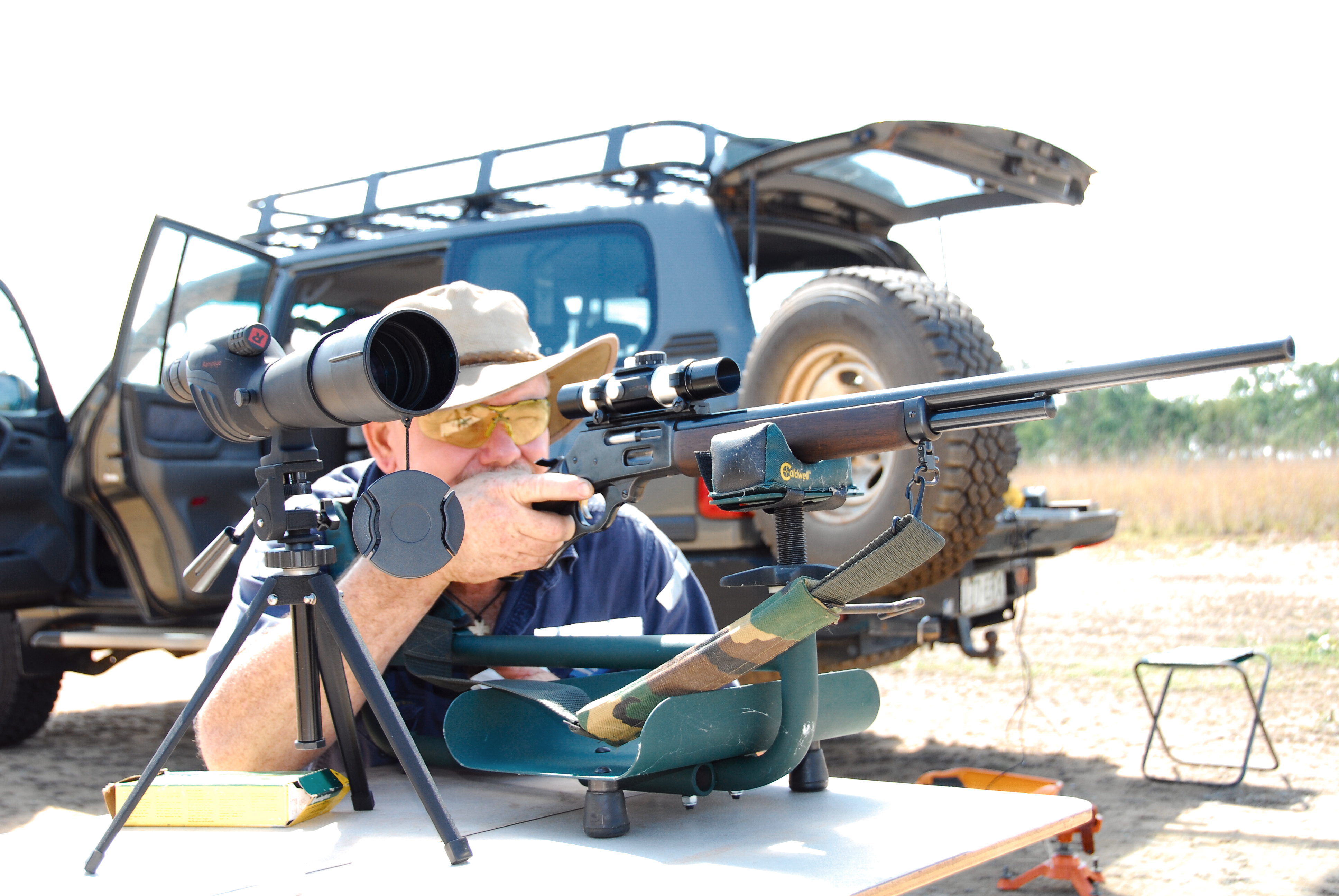
The magnification mistake hunters keep making
Experienced hunters well know that having a riflescope that delivers an instant sharp image and fast target acquisition is the difference between a hit and a miss on a moving target. When a snapshot is offered, the scope should be able to centre the target fast enough that there is little need to align the reticle. You just place it and lead the target to where you want the bullet to hit, providing you follow through and don’t slow your swing down.
This is simple if the target is in the same plane as the centre of the reticle and your eyes don’t have to adjust to focusing and wasting time trying to centre it. Many hunters waste effort following a moving boar trying to centre on it, and when they do catch up, abruptly stop the follow-through sweep, jerk the trigger and miss.
When you raise your rifle, the scope should have an instant bright and sharp picture of the target. If not, you lose valuable time picking it up, something which is almost a guarantee if your variable scope is set to high magnification, for instance 6x and over.
This can be avoided by using a low-powered 1-5x model scope, which has plenty of magnification for hunting. There’s more than enough light than the human eye can use, as 6x permits a 7mm exit pupil – all that the eye can handle, even in total darkness and with a 40mm objective.
When the scope is set at 1x for close range scrub shooting it means that when you lock onto the target, you don’t waste time aiming at it because you can shoot with both eyes open. This is similar to using a red/green dot sight. To put this into perspective, 1x magnification at 100m is the accepted standard but if you look at that setting at 600m, you understand why larger magnification is better for long-range shooting.
Close-up hunting is all about field of view (FOV). The wider the picture the quicker you see the prey, meaning rapid target acquisition. Many modern hunting rifles are fitted with large and heavy variable scopes better suited to target rifles. The magnification is too high for fast action on moving targets and they also make the outfit too unwieldy.
FOV is rated in feet at 100m, while in binoculars and spotting scopes the FOV is stated at 1000m. Ocular lens diameter affects FOV, though it’s not noticeable. Most scopes are designed to be mounted for 7-10cm of eye relief, important in high-power rifles to prevent eyebrow and nose damage from recoil. Scopes designed for carbine barrels and handguns have a smaller FOV.
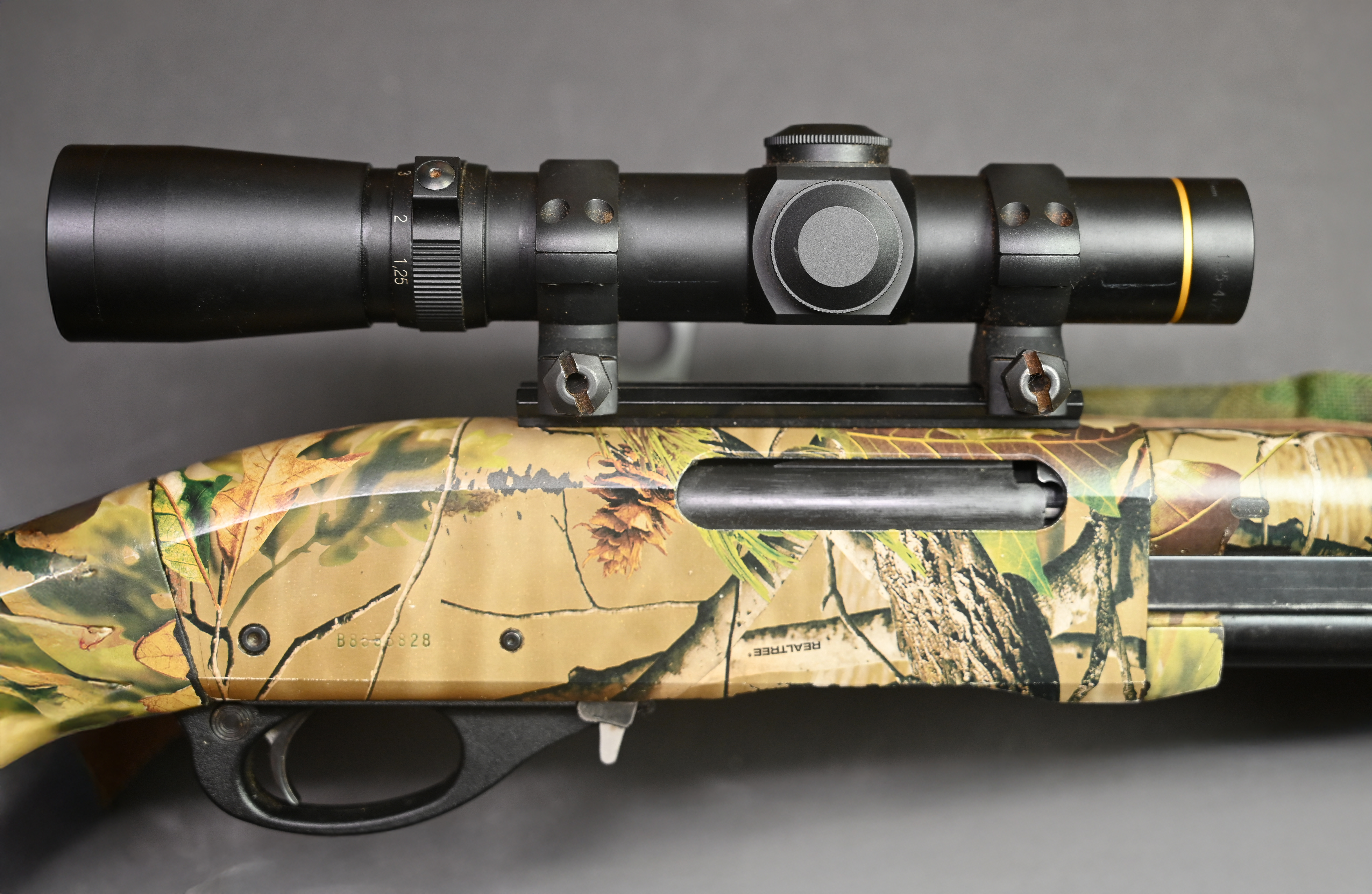
To put that into prospective, at 1x power, the scope is like what you see with the naked eye, which can see and identify objects faster because it’s not altered. The FOV of low-powered scopes enables quick target acquisition and a rapid shot because it’s akin to a natural response, with no time wasted trying to find the target. With a high-powered scope, the FOV is severely restricted.
By keeping a low-powered hunting scope set at, for instance, 2.5x, you have an immediate clear picture that when used with uncluttered cross-hairs, or similar, gives an instant sight picture without annoying and disturbing edge curvature.
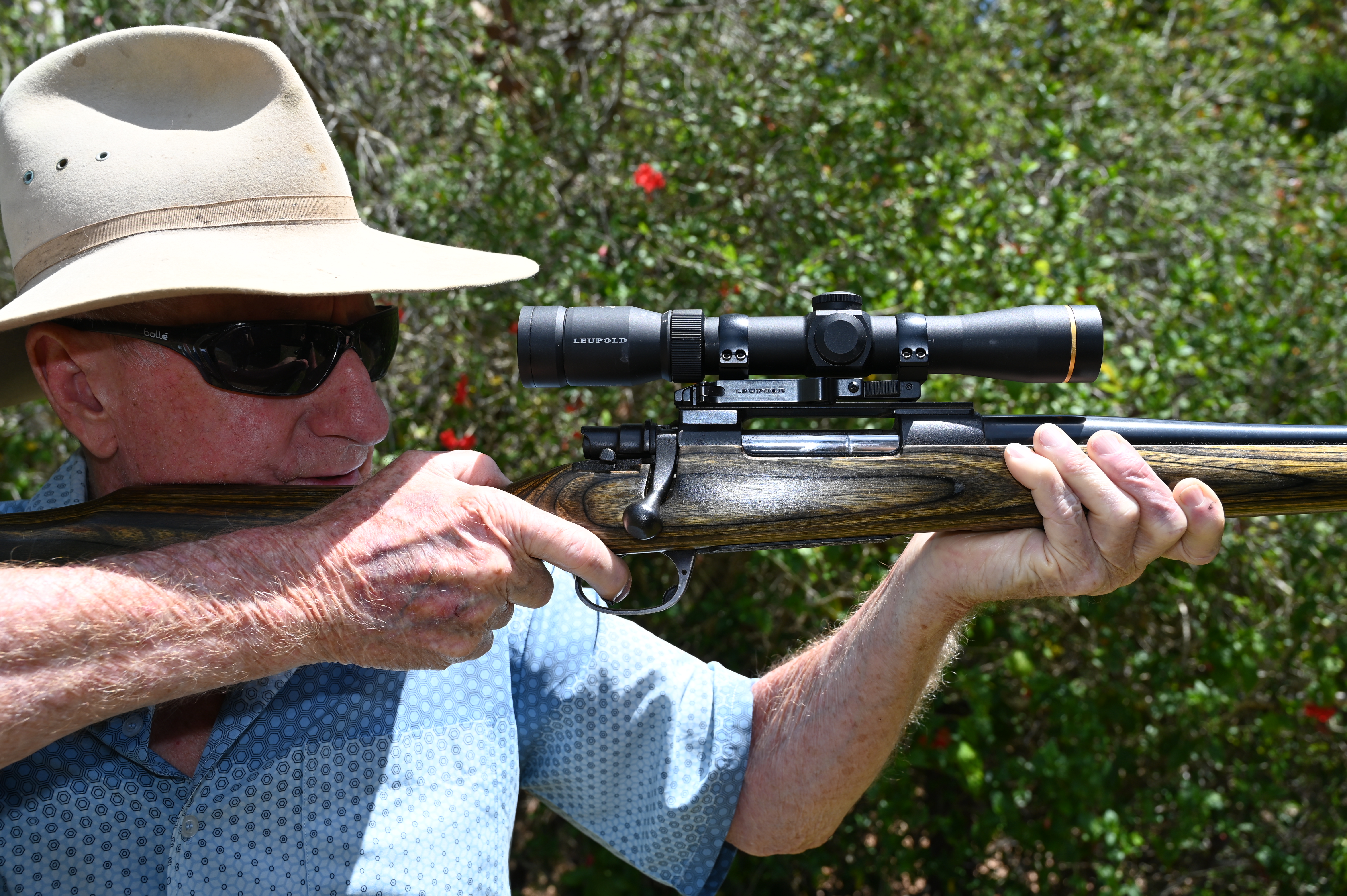
I recently shot five pigs, all moving swiftly through open country, while old mate was vainly trying to find them in his variable scope that he accidently had set on 12x. If you want a generous FOV, fit scopes no larger than 5x power on a hunting rifle for rapid target acquisition. I have a 4-12x Leupold on my .308W Sako rifle, but rarely feel the need to power it above the 4-6x setting – about the maximum power needed for most hunting.
Not that magnification is bad, far from it, but I tend to have this scope turned to the lowest setting unless I want to increase the target magnification. Until then I keep it on 4x for tight cover and 6x for open woodlands and hills.
Low-powered scopes have less eye relief, meaning that you can mount it a little forward on heavy recoiling rifles and avoid the real danger of a ‘Weatherby eyebrow’, not something you want to happen on a hunt, especially if you are a bleeder.
The lower the scope power, the faster the sight picture, and more importantly, a moving target is picked up and locked onto. I have seen it often, and it has happened to me on occasions, when the scope power was too high and finding a fast-moving target on that setting was more luck than skill.
Not long back, I noted a wild dog some 300m away loping along at a steady pace. I cranked the Leupold scope to 12x on the .308W Sako rifle and picked him up. The first shot hit the dirt behind him because I did not lead enough. Surprisingly, he turned around to check the disturbance, which gave me the chance to put the calf killer down for the count.
A couple of hours later, old mate and I surprised a mob of pigs under a shady place in thick scrub. They scattered and he shot three while I failed to find one in the scope, because you guessed it, I had forgotten to turn the power back to 4x. It happens and again proves that wider is better for stalking. I would not be the first to have forgotten to turn the dial down and missed close-up running targets because the FOV was too narrow for a snapshot.
A wide FOV is much faster with low magnification than with high magnification, while the picture is also brighter. However, all good brand scopes nowadays sport full multi-coated lenses that are coated inside and out with rare earth elements for increased light transmission across the total range of wavelengths. For instance, uncoated lenses may lose over 4 per cent light reflection and refraction, which does not sound much until you multiply it with other air-glass voids within the tube. This is a reason to avoid cheap copies of the real thing.

The exit pupil is also important for brightness as only a beam of light, about 4mm, reaches your eye. The lower the magnification, the brighter the image, which is not to be confused with the increased size of an object.
A sharp sight picture starts with a good quality scope that has highly polished glass, something that is missing in poor quality scopes. This is best judged by brand and price. Many modern target, and some hunting, scopes have external focus parallax adjustments and more, but most hunting scopes are set on about 100-150m.
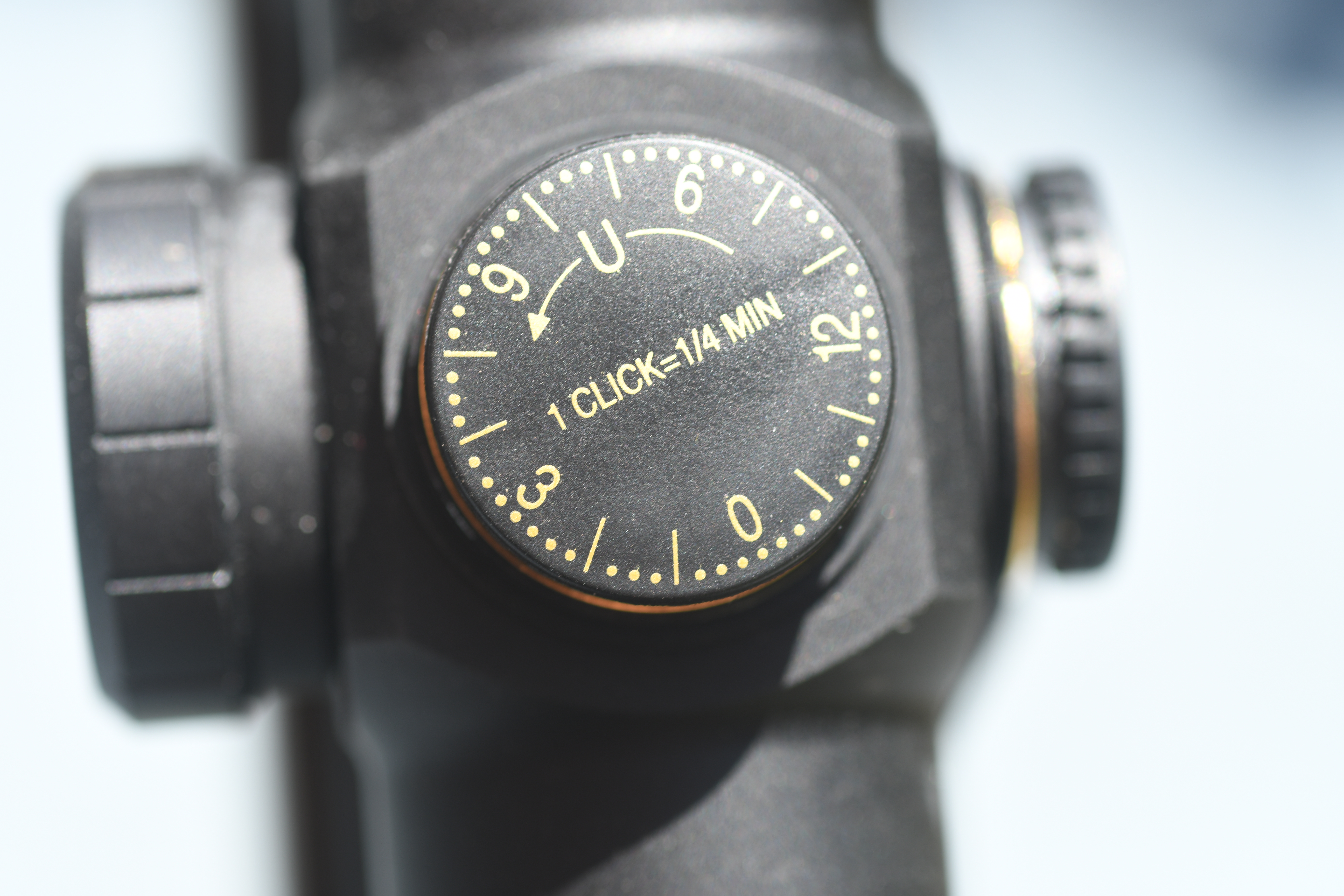
Earlier high-range models were fitted with indexed objective bells, but focus is now manually done with a dial knob on the turret with crisp, backlash-free quarter-minute clicks that won’t budge from heavy recoil. More hunting scopes are being fitted with improved devices and we may see the day when loosening the lock-ring and using the thin eyepiece threads to bring the cross-hairs into focus will give way to turret adjustments. I generally point the scope into a clear blue sky and turn the eyepiece until the cross-hairs stand out in sharp relief. It works for me, but many new scopes have a fast-focus or helical eyepiece fitted and no lock-ring, although few hunters bother with it in the field, leaving it whatever it’s set on.
Another factor is that the once popular 1″ (25.4mm) tube has been largely replaced by 30mm tubes or larger. These offer an increase in elevation adjustment, as extra adjustment parts can be fitted inside it, an asset for long-range shooting.
However, they are not needed for short-range shooting. But for purpose, high-powered long-range scopes intended for target shooting, the 30mm tube’s extra internal adjustments make a difference.
For instance, the Leupold Mark 5HD 3.6-18x44mm scope has a 35mm tube with several features, including reticle travel of 35 mils elevation and 17 mils of windage. It’s an amazing scope for long-range shooting, with precise adjustments and range dialling possible from the turrets, but it’s unsuitable for hunting, a job far better done with a 1-4x scope.
A common belief is that a larger tube allows extra light in and that they have a somewhat wider FOV, but that is false as the objective size and the eyepiece do not change, both which determine the light-gathering ability of the scope.
Many experienced hunters have a steadfast belief that 4x is all the power required for a hunting scope, and indeed years back most scopes sold were in that power range. Variable scopes were suspect as being too fragile for harsh field conditions, but that is now in the past and both variable and fixed-power scopes from top makers are totally reliable.
Thus, it matters little what tube size you pick, but if you hunt in harsh conditions you may want to check out the 30mm tube as they are supposedly more robust than 1″ tubes. It’s a matter of preference. For instance, the 30mm tube is better suited to a centrefire hunting rifle than a. 22 rimfire, which is fine with a 1″ tube.
And don’t forget that you require different sized scope mounts for different sized tubes. The objective lens rules what size and how low you can mount the scope on the rifle, the lower the mount, the better and faster sight acquisition in the field.
Several of my hunting rifles are fitted with low 1-4.5x power scopes, including my .22 rimfires used for bunny hunting. I hunt in environments ranging from rainforest, scrub, farmlands, monsoon woodlands and open plains, using rifles that are purpose selected for the job. For instance, the .308W Sako is fitted with a 4-12x Leupold scope and can be adjusted for short and long-distance game, even though 4x is on the upper limit for close-up hunting. My .270 Weatherby Magnum is fitted with the same model scope and it’s my rifle of choice for plains game pigs and deer, both having been taken beyond 500m. This is not my favourite form of hunting, but on the plains and in open forest it may mean missing out if the shot is not taken, though such shots are rare.
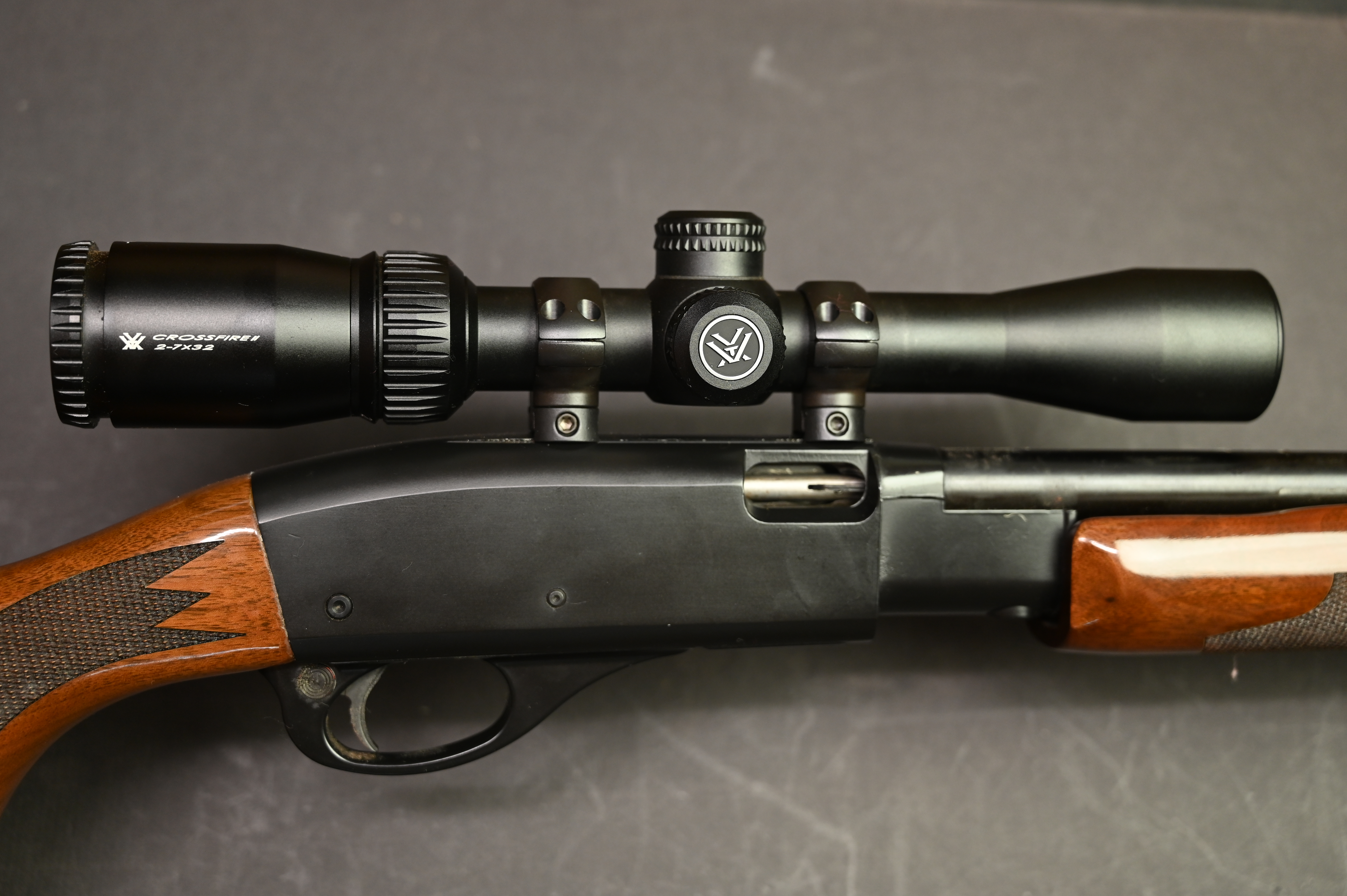
Another 4-12x Leupold scope is on my .223 Magnum Sako rifle because when hunting on inland plains and tropical regions, lifting mirage is a real problem that blurs images, especially when enlarged too much. Generally, 12x is about the upper limit for most conditions on hot days, even for short distances.
To sum things up, using a low-powered scope means that you have an instant FOV and a target that is picked up into the centre of the reticle faster than is possible with higher scope magnification. Also, low-powered scopes are not cluttered with unwanted lines, dots and dashes that, while being an advantage in long-range shooting, have no place in the hunting field. What one does not need when in a hurry is a cluttered and confusing FOV, thus sticking to the plain old simple ‘cross’ is preferred.
Still, many hunters lean toward high magnification just in case they require more power for a long-distance shot. However, even at a low setting, few are practical for a quick offhand shot. While a valid argument, whether the rifle is also suitable is another topic.
You also need to ensure that the optical glass is free of dust, especially when the scope is not fitted with a dust guard. Dust, scratches and blotches reduce brightness and regular cleaning with a proper lens cleaner is recommended. I use camera lens cleaners but reading glass cleaners are fine.
There you have it, use low-powered scopes on your hunting rifles, especially when short distance shooting is involved. Big, sharp target scopes also increase the overall weight of your rifles, the last thing you need when walking and hiking in rough or mountain country on a hot day.
Share this article

Related
Articles


Related
Recipes
Sorry, no related items found.