The miles that make a hunter
Recently, somebody asked the question: “How far is too far to travel for hunting?” This conjured up some thoughts and experiences from my 50-odd years of hunting. The chap asking the question had done over 1000km and spent $250 on fuel, complaining he only shot one feral cat for the entire trip.
During the 70s I lived in the Townsville region and, along with mates, would often drive 5-6 hours each way to chase goats, pigs and whatever else we could. Many of these trips were spent in an old dilapidated XR Falcon ute or a Series 11 Land Rover ragtop, neither with pleasantries like air-conditioning nor known for comfort or economy.
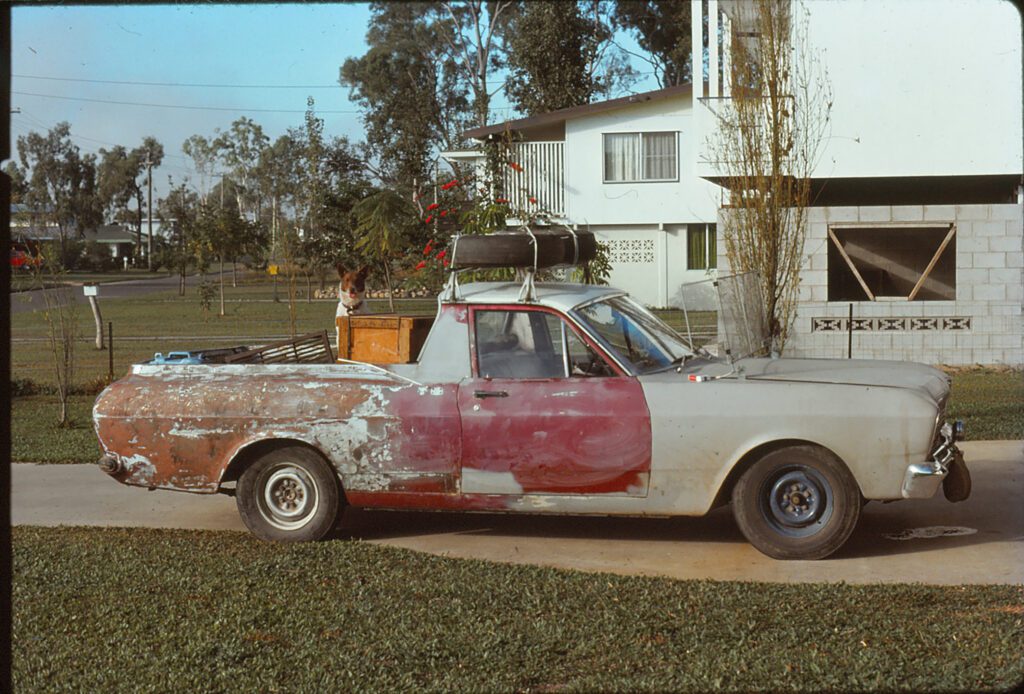
The old Land Rover was memorable for the sounds of flapping canvas and engine noise. When it rained, dripping water became another issue to contend with. Travelling was at speeds of 80kph on the flats, 90kph downhill on single lane bitumen highways or 50-60kph bouncing along seldom graded dirt roads. All this in blistering temperatures of up to 40C and choking on bull dust while the aluminum fire wall transferred engine heat into the cabin.
Arriving at properties in the early morning hours, we’d grab as much sleep as the temperature and local insect life permitted. We would often be woken by the buzzing and biting mosquitos or, days later, when midge bites began to itch. With so little time to sleep before first light, our bed rolls were thrown on the ground for expediency more so than comfort.
Rising before daylight broke, after a quick coffee we’d venture to what might be a productive area to hunt and clamber out of our vehicle to commence walking. Early morning temperatures began well over 20C but by 8-9am they would be close to mid-30C and climbing. All the while we searched for pig or goat sign. Sometimes luck shone our way and we came across a mob of pigs, but often we’d return to our vehicle, around midday, with the temperature at 40C, empty-handed and having walked 10-15km.
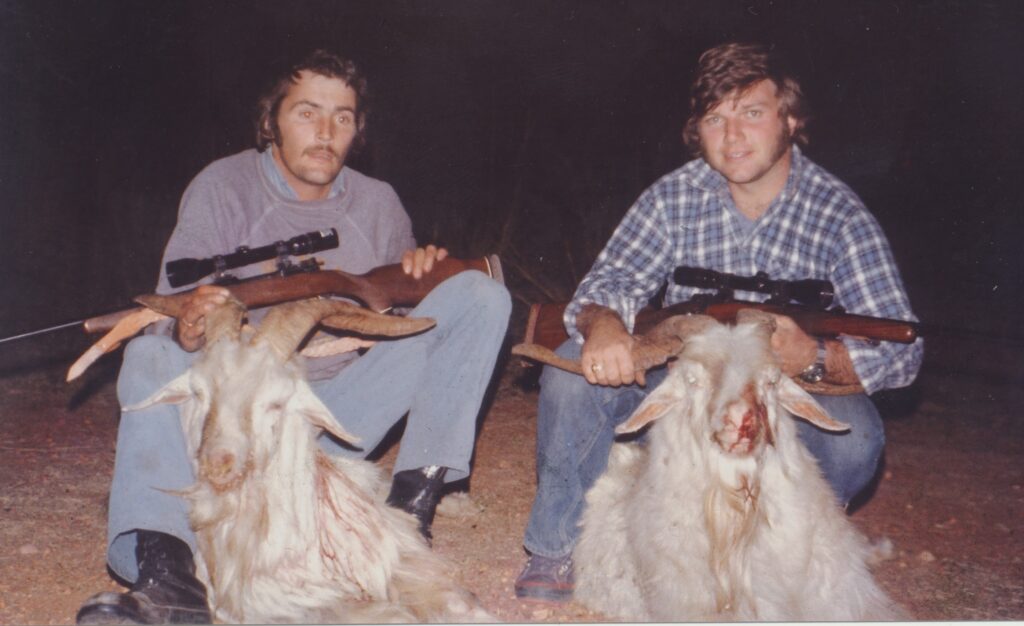
Unperturbed, waiting out the heat of the day, we’d hydrate ourselves and catch up on lost sleep, if the local fly population left us alone. During this break between hunts, discussions in preparation for the afternoon were held. A variety of plans were formulated, in the hope of crossing paths with our prey. We were always optimistic those afternoons, often finding sign but generally returning to camp without seeing any game.
Our time, due to family and work commitments, was limited to a weekend or two every month or so. But without knowing, we were building a wealth of information on our prey and terrain which would eventually hold us in good stead.
We always left it to the last minute before heading home. During the long hours driving, disregarding the engine noise and canvas flapping, we would attempt to discuss what we thought we had done right. Storing it in our memory banks alongside the things we thought we had done wrong, to eliminate them from our repertoire for the next hunt. A couple of weeks later we would head back to the same property, with renewed confidence, believing our lack of success was behind us. We often found that the hunting game shows no mercy.
Eventually, from all our ‘unsuccessful’ trips, with an odd successful trip thrown in, we turned the corner of the J-curve and success came more readily. As the knowledge of the land and game we hunted grew, so did our success. Modestly at first, pig kills were two or three a weekend, rising to 10 a weekend, then 10 a day then we hit 50 for a weekend. I look back over that time with the knowledge our most important lessons learnt, during the lean years, were patience and persistence pays off. This learning helped me years later, when I switched from hunting goats and pigs to deer and other big game.
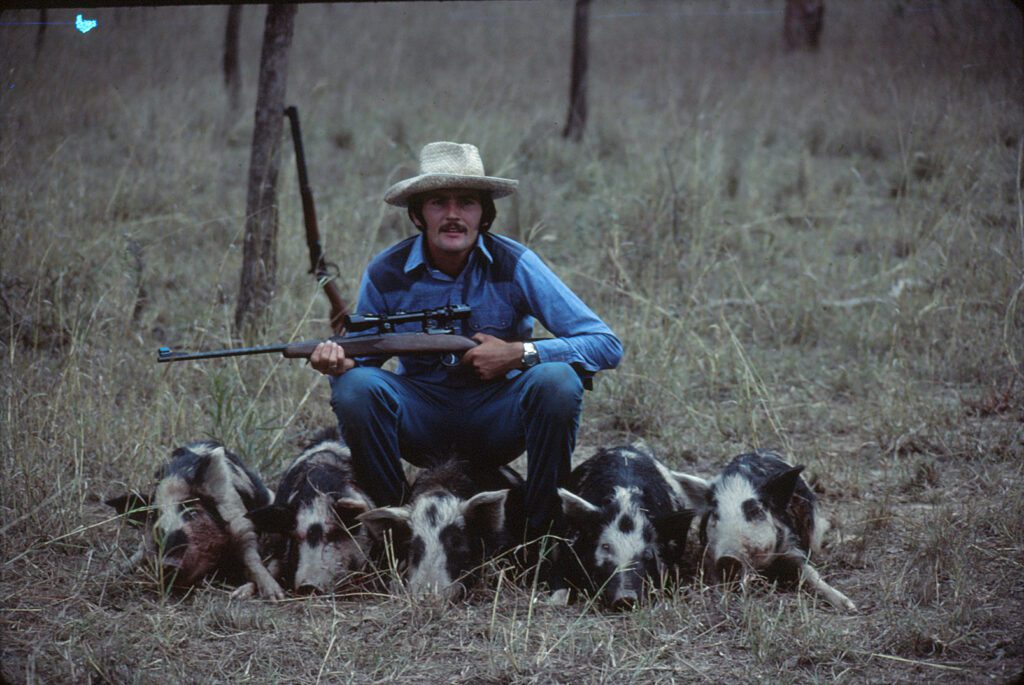
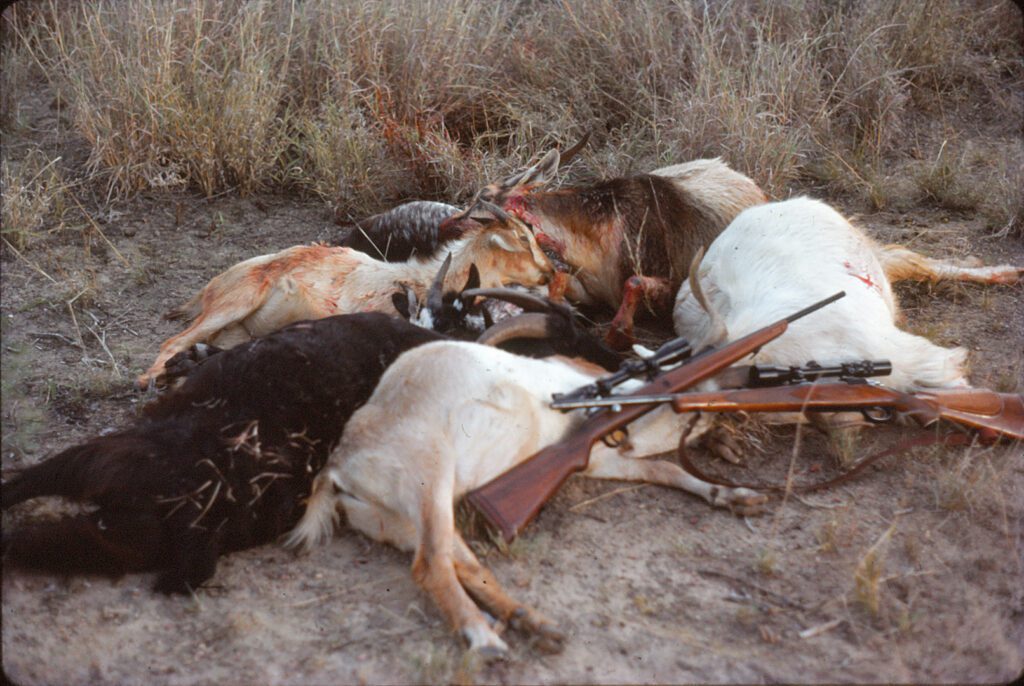
During this period, we built a plethora of knowledge and stories to share with those who were interested. If nobody was interested, we would sit quietly among ourselves and reflect upon times now long gone, which were shared with wonderful people and places. I look back on these times as being the serving of my apprenticeship in hunting.
Col, a great mate who I spent most of my early years hunting with, is now in the twilight of his life. He, unfortunately, is in a care facility, but I am sure as he sits and reflects on his life, I will pop into his memory and he too will fondly remember those times. We experienced hard times and earned our right to hunt.
Working in the RAAF had me being posted to some great hunting locations, but with few hunting contacts, requiring me to search areas for game. Darwin was one such place and of course Asiatic water buffaloes became my goal. I spent weeks researching places to hunt but often would turn up very little. Past experiences told me, if I persisted, my goal would be achieved. Today, I have excellent buffalo trophies but more importantly I have wonderful memories of people, locations and animals.

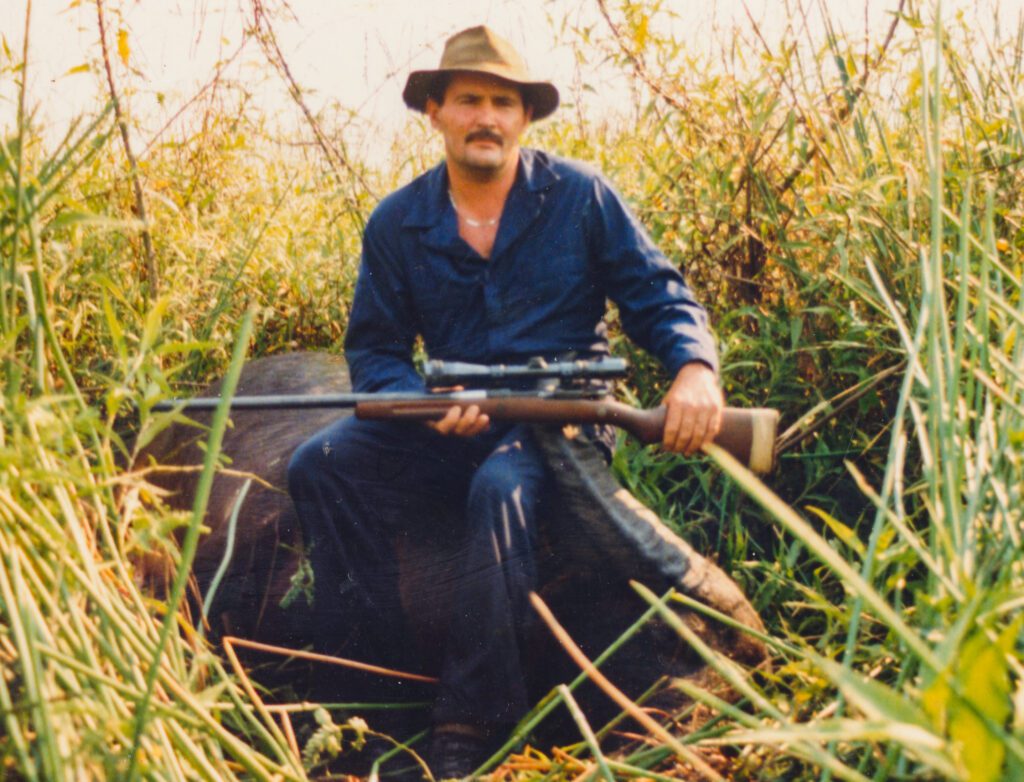
At my final RAAF posting, I was sent to East Sale in Gippsland, Victoria, in the sambar country heart. Little did I know the journey deer hunting would take me on. I spent three years in East Sale, hunting at every opportunity. My only success was a sambar hind, but the deer hunting bug had bitten me. On my return to Queensland and between red and fallow deer hunts, I travelled up and down the highway between Queensland and Victoria two or three times a year. Eventually, after 32 years, I took a great specimen. This proves you don’t have to be a great hunter to take a sambar stag, just be persistent.
Hunting was never about how far is too far. Or about the number of kills made. It has always been about appreciating the privilege of hunting and respecting the species and places hunted. Adventures shared, or by oneself, the good times and bad. I seldom, if ever, recall the actual kills, which represent only an instant in the overall scheme of hunting.
It seems like a quirk of nature that it will not give up game easily. Animals are often found kilometres from roads or tracks, requiring hours of arduous work, up and down mountains, backpacking the meat out, usually in the dark. You then must secure your meat at the vehicle. It is during these laborious times that friendships develop into a brotherhood, where each of us looks out for the other. If one struggles the others lend a hand, at the end of the day developing a bond welded between those involved.
Casting my mind back to the days I professionally guided, each client would arrive at camp a total stranger. By the end, we would be bonded together as mates by the experiences we had shared over the duration of the hunt.
I have been blessed to have hunted many places in this world, by working and saving hard. Generally, I have been lucky enough to come up with the goods. But the hunt I consider to be my greatest achievement, I came away without firing a shot.
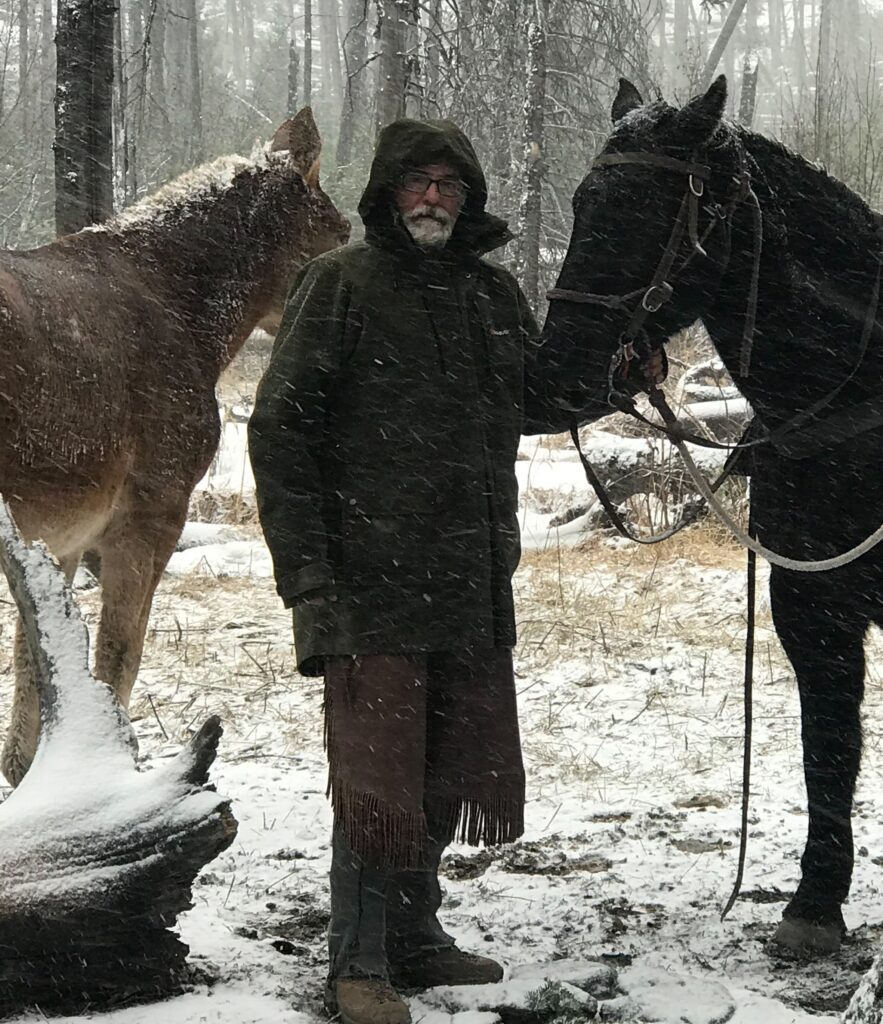
I travelled to Montana with my good mate Tobias, to hunt elks. The area we hunted was just below Yellowstone National Park, where the elks spent summer, between 9000-11,000 feet above sea level. Come winter, the elks normally drop down below the snow line. We got snow but not enough to drive the elks down while we were there. We spent 12 days in a tented camp in a snow-covered forest, horseback riding daily in temperatures from -23C to -10C. I had never experienced such cold but thrived on the experience.
It’s the entire experience that produces the memories to reflect on. Such as time spent just sitting, watching intended prey, which is an amazing way to learn. Or it might be time spent with my four-legged hunting partner developing that wonderful bond between man and dog. Life is too short to ponder how far is too far.
There is nothing I know that compares to hunting. It absolutely fills my soul. I believe man is an apex predator and nothing could be more natural than to hunt. From cradle to grave, we can be involved in hunting. We often talk about hunting as though it’s only the time spent in the bush, but nothing could be further from the truth.
The time spent in the bush is just another small part of our hunt. Planning and preparation for a hunt often take weeks, months or even years. We set our plan into motion, saving our hard-earned pay for travel and chasing game. There’s time researching and choosing the species we would like to hunt. Time spent studying their habits and terrain. Time sharing experiences with others. There is the constant anticipation of hunting new horizons.
Our bodies and minds require exercise, hours of hard slog, to reach fitness levels that allow us to hunt in extreme locations. In turn giving us our best opportunity of success. Finally, our success should be measured as the whole experience.
If we as hunters need to ask how far is too far, maybe we have missed the objective of hunting altogether.
Share this article
Related
Articles



Related
Recipes
Sorry, no related items found.