
What it really takes to hunt the Outback
There is no doubt that responsible hunters make a significant contribution to the control of feral animals within Australia, at no cost to landowners. However, the problem of access is a complicated one. For every farm/station that allows hunters onto their property, there is an untold number that do not. This is not a criticism of farmers or station owners, put yourself in their situation, would you let a group of unknown hunters have access?
The real problem with controlling feral animals is that normally they live far away from civilisation. It is nothing new, as far back as 1985, I was offered unlimited hunting on a property north of Alice Springs overrun with feral donkeys. There were so many that my contact didn’t think that I could carry sufficient ammunition to do the job! One had to be completely self-sufficient. The remoteness of the animals, then and now, protects them from being hunted.
Thus, the logistics of attempting to control feral animals in the Outback by shooting are almost impossible. It mainly comes down to a distance problem. On properties closer to civilisation, where access is available, hunters can keep the numbers in check.
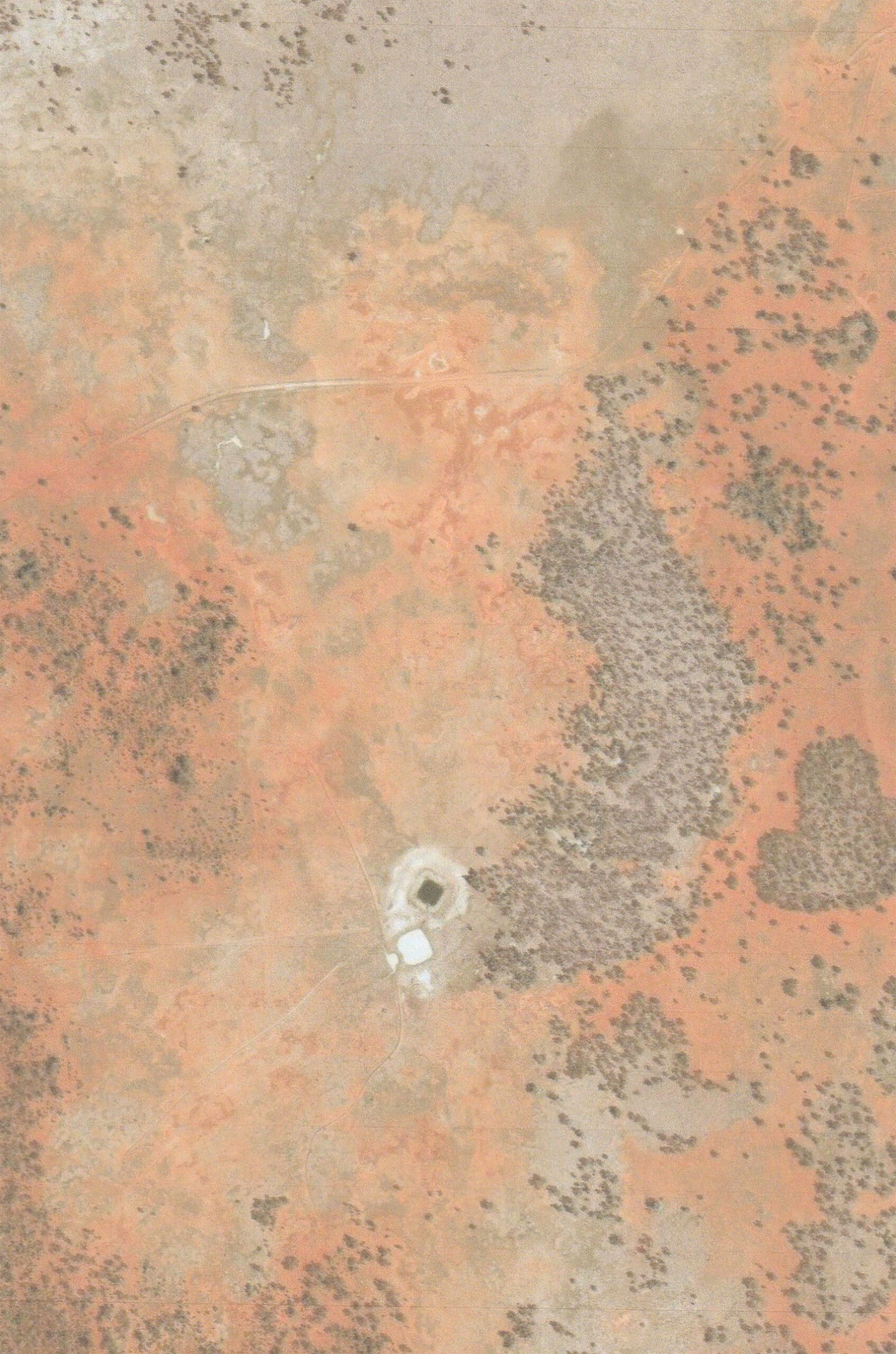
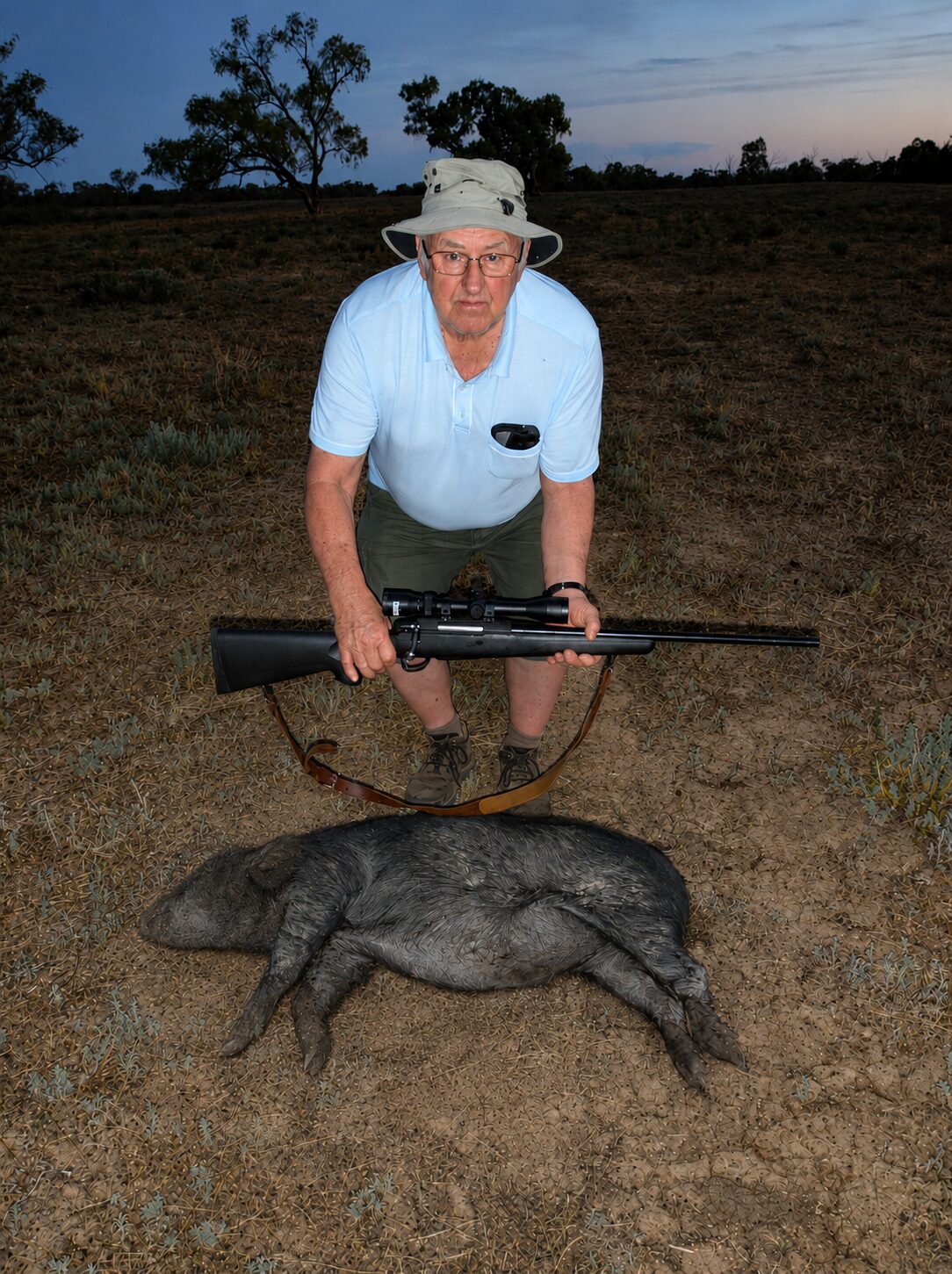
The real problem occurs much deeper into the Outback. Feral camel numbers are about 1,000,000, feral donkeys 5,000,000, and pigs somewhere north of 20,000,000 depending on the season. The first two are anywhere in the arid centre of Australia, with pigs distributed widely in New South Wales and Queensland plus the top of the Northern Territory. The northern parts of Queensland and the NT are simply too far for those who reside in the southern states to even contemplate. Pigs are versatile and may be found anywhere from coastal swamps to arid western plains or cropping areas to the high country.
With access under normal circumstances, a certain amount of control is possible, but it’s extremely difficult when nature follows a different path. Excessive winter rains ensure growth of the pig population, and the remoteness will keep it that way. The same applies to other feral species. Science tells us that pigs don’t move a great deal provided there is water, food and cover but the rules change during a flood situation.
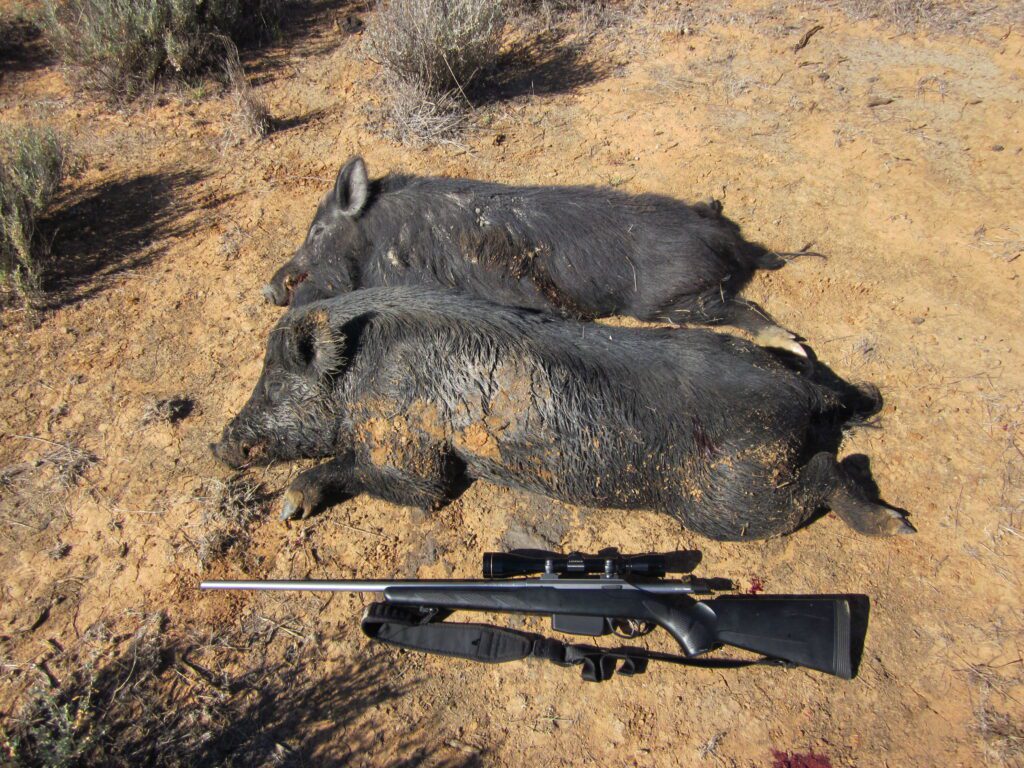
This of course creates yet another problem when trying to control feral animals, with cool temperatures, unlimited water and food, they simply travel or are scattered by the flooding water. In addition, with the extra feed available, the breeding rate increases.
Furthermore, pigs that become trapped by distance during the summer months will return to isolated dams to water, even if being hunted.
For those distant from the Outback, there is a considerable amount of travelling before you can hope to hunt such animals. The other problem for the urban-based shooter is that the availability of animals varies from year to year, depending on the climatic changes. Where we normally hunt is a bit over 1000km from home. It’s a 12-hour trip of constant driving, thankfully mainly on bitumen roads.
However, as lucky as we are to have access to such a property, if another property was much further away, we would have a problem. Our normal pattern is to be away for a week at a time, thus we have five days to shoot and two to travel. To some extent, we are limited by our ability to carry enough fresh food.
A normal trip involves a minimum of two vehicles, sometimes three. Having an independent vehicle separate from your own is an important safety issue. Therefore, cost rapidly becomes an issue, and effective planning is everything. Camp is a two-hour round trip to the nearest town to replenish supplies, if necessary. We are on the edge of the true Outback, and this is where the logistics come into play. The first is fuel, and the further from civilisation, the greater the cost of diesel.
Yes, you can and should carry fuel with you, but you will soon run out of room attempting to carry excess amounts. Getting to a property is one issue, but you need fuel to move around. Inland properties tend to be large, and you may have to travel a considerable distance each day to hunt. Aside from the cost, think about how far you need to travel to obtain fuel, food and water if they aren’t available on the property.

Say you have gained access to a property, some 2000km from home. The total cost of the fuel bill for four hunters and two vehicles would be at least $500 per person for a two-week trip. The other issues about vehicles are twofold.
The first is mechanical. Garages to fix mechanical problems are few and far between in the bush. The necessity to employ spare tyres is common. Secondly, there is also the possibility of an accident in the Outback.
You need at least one person in the group that is first aid qualified. No matter how careful you are, accidents can and do happen. Like the Boy Scouts, be prepared. We always carry a comprehensive medical kit in the hunting vehicle/s.
If you travel thousands of kilometres to get to your hunting area, it may well take you three days of constant travel, camping off the road each night. We have a dedicated enclosed trailer that carries most of our other equipment, including rifles and ammunition. It has external racks on top that allow the carriage of bulky items, such as extra spare tyres. Vehicles, of course, need to be 4WD.
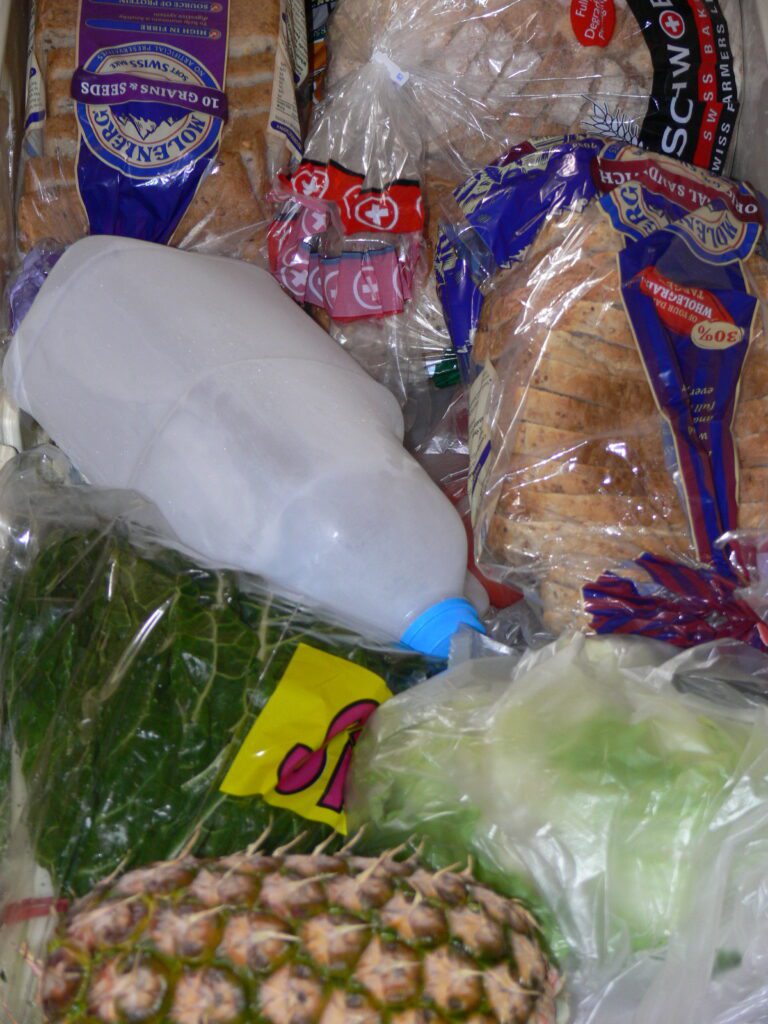
Aside from the vehicles and fuel, the second biggest logistical problem is an adequate supply of fresh food. There is a need for a freezer and some form of basic refrigeration. Certainly, in our early days in the bush, a good tin opener probably provided the most meals, but we soon got sick of that.
Having said that, there is a need to carry a certain amount of tinned and other packaged food as an emergency supply if you get caught out with the weather. Just how much you carry is a matter of judgment, and exactly how far you are from civilisation. To some extent, the amount involved will be dictated by the space available. What should constitute your emergency supplies requires research. The more remote the area the more you need to carry.
Preplanning of meals is a requirement to cut down freezer space and the amount of produce needing some form of cooling to keep it fresh. Some foods may be carried in cans to save refrigeration/freezer space… again, planning. We use gas stoves and the campfire for cooking. Solar power is used for the freezer via a heavy-duty battery, and it also provides camp lighting. But again, it is all equipment that needs to be carried, as is a backup generator and fuel for the same. We have often had to use it when the sun didn’t shine long enough.
The peripheral equipment is almost as important as the vehicle when travelling in the real Outback. We use small radios for personal communication when hunting. There needs to be at least one satellite phone available for communication should an emergency occur and you are remote from a homestead. The same phone should be able to access weather forecasts for the area.
Urban-based hunters must realise that once you leave bitumen roads the rules change dramatically. The deeper into the Outback you go, the greater potential problems faced. At least one vehicle should carry a basic set of gear to assist another vehicle from a bog, whether it be sand and/or mud. Straps, ropes and a pair of bog recovery tracks plus a stout shovel are a good starting point.
There are many more issues that need extensive planning before committing to any Outback trip, particularly if you are new to travelling there. Take your time planning and don’t be afraid to ask questions of those who have been there.
It’s a tough, unyielding, unforgiving environment, be sure to always carry water within the vehicle and on you. Stay hydrated as the humidity is usually much lower, particularly in desert country. If you have access to a property, ask the owner for advice and heed any restrictions. Above all else be responsible with your firearms, no doubt you would like to be asked back again.
Share this article
Related
Articles



Related
Recipes
Sorry, no related items found.