
Why this custom Finnish knife earned a place in my pack
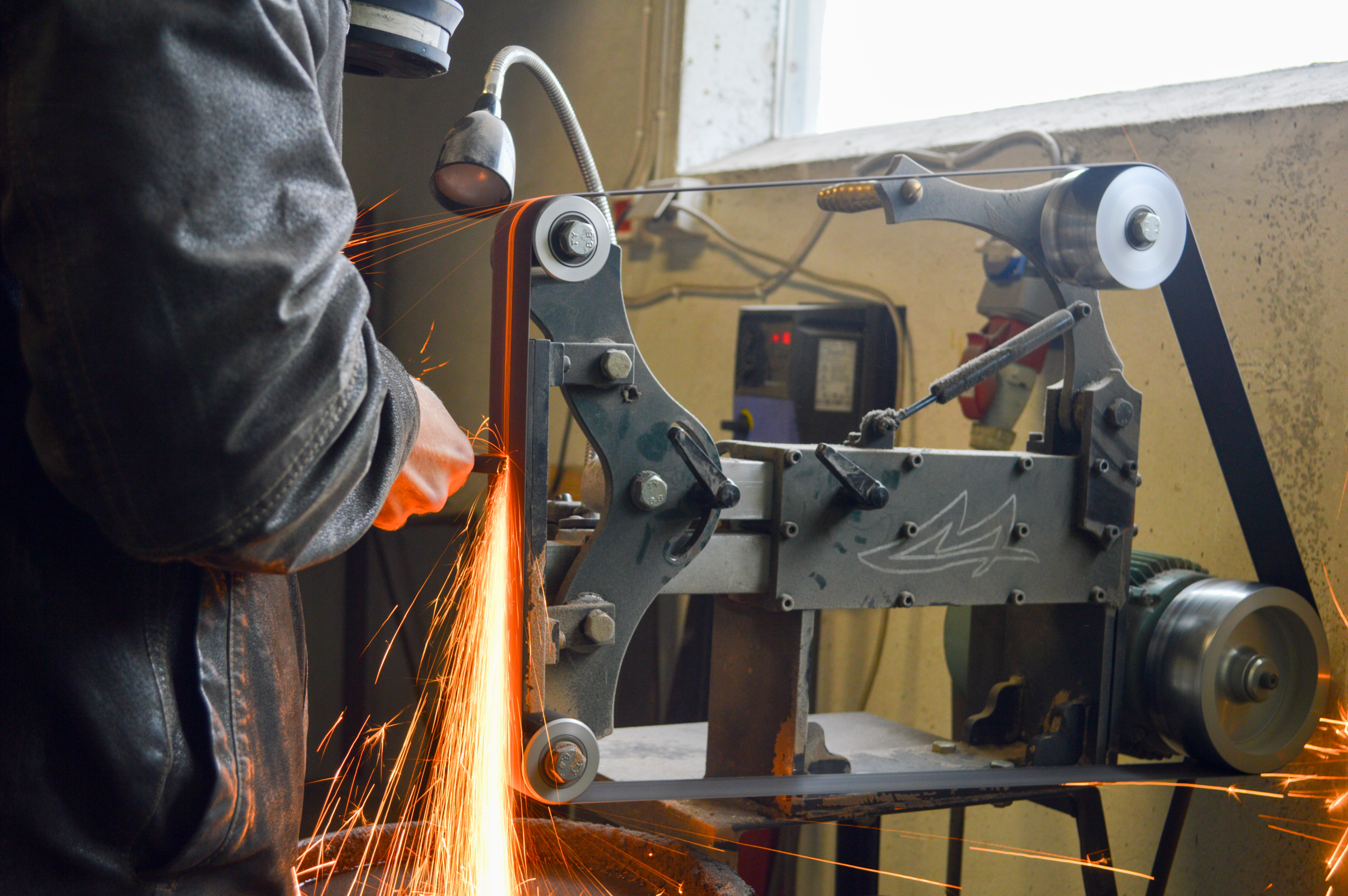
Scandinavian design is renowned for its ‘form follows function’ philosophy. Much to the benefit of hunters and outdoors enthusiasts across the globe, many knives that hail from the cold north are no exception. While I generally like Scandinavian blade design, nothing beats a custom knife that is made to your specifications. However, many bladesmiths are not young and live largely offline, which makes them notoriously hard to find. The best way is to ask around within the knife community. Doing just that got me in touch with Martti Lehtonen, who produces custom knives from his forge in Finland.
Contrary to many knifemakers from the ‘old guard’, Martti speaks and writes English with ease, which greatly facilitates communication. Upon request, I was provided with many photos of knives he had produced and a pretty much endless list of options for a custom product. Rather than opting for a traditional puukko design, I explained to Martti that I was after a medium-sized hunting blade for all-round use. Other than indicating a preference for stabilised or otherwise weatherproof wooden handles over the often-used birch bark, I let him use his experience to come up with a design.
As with any custom product, the creator needs time to fabricate a knife. The custom blade by Martti was no different. It was, however, done more quickly than most custom orders I have placed, and he touched base during the process a few times to provide updates. Upon arrival, I was astounded with the knife’s workmanship and design. I put it straight to use in the field, using it as my main blade for several months to see whether it worked as well as it looked.

Contrary to factory knives, there are no standard measurements or sizes. My knife is a medium-sized fixed blade that weighs in at 180/128g with and without the sheath. It measures 212mm overall, with a 94mm long blade that is 22mm wide and about 3.5mm across the spine. The blade steel is 80CrV2, which Martti treats to get it to a hardness of about 61 HRC. During his treatment, the steel is normalised and austenitised in a heat-treating kiln, quenched in fast quenching oil, then tempered in an oven. The grind is convex, with a micro-bevel edge. On blades with an unpolished finish, Martti stamps his logo, but on this particular blade, which is polished, it is electrochemically etched. The bolster is nickel-silver, and the handle is in X-cut ziricote wood (Cordia dodecandra). The knife came in a custom leather sheath that was handmade by Martti to exactly fit the blade. A big thumbs up on the packaging too. The knife came well protected in a box with a flyer with basic care instructions. This may just be a small detail, but it is nice and testament to the care and attention that goes into the process.
By now, the knife has seen a lot of intensive use. Fortunately, it has proven to be a joy and performed admirably. My main shooting has been a broad range of birds, with a few deer thrown in the mix to keep the local farmers happy and to restock the freezer. The slight belly of the blade makes it easy to skin larger animals and the treated 80CrV2 steel keeps its edge well. Though it is not a fully stainless steel, I have not seen any traces of oxidation, and with some basic care, you wouldn’t either. It has not chipped in use, but I have not abused the knife and mainly use it to process young deer and birds as well as a few rabbits and hares. The handle is comfortable, even during prolonged use and it is sufficiently large for my sizeable hands. The ziricote wood used for the handle has natural rot-preventing properties and while not stabilised, has only gotten nicer with time. It has developed a slightly darker patina and shows no other signs of wear. The bolster has similarly developed some patina, which to me looks nice. The sheath has worked fine too and is well made. However, I have made a small sheath that just covers the blade and often carry the knife in my pack or a deep pocket on the side of my leg. This saves space and is more ‘civilised’ when I traverse areas where I am likely to encounter farmers and other people. Around camp, the knife is great for dinner prep and general chores.

One minor detail is that the sheath did not have a drain hole at the bottom, something worthwhile for blades that are not in fully stainless steel. I just drilled a little hole and sorted it, so not a problem.

The choice of a convex grind with a micro-bevel edge is fine and easy to get super sharp. It does require a bit of care while sharpening though, both in terms of the micro-bevel angle and to avoid removing too much material, so a fine stone is used.
Another personal preference is to have a slightly raised finger guard. The one on this knife is fairly low, but it fits the design well. It being a smallish blade, means it will mostly see use for more delicate tasks, so I will leave it up to you to decide whether it is good or bad. One thing to keep in mind is that the knife hails from Finland, the land of the puukko, which by traditional design, has no finger guard at all.

Production time is 1-2 months, which is great for the attention to detail. This includes an early sketch of the proposed knife design to the packaging and care instructions to receiving the knife itself. Martti is proud of the knives he makes, and it shows.
Discuss with Martti what you want or need. Yes, you will end up paying more than you would for a factory knife, but in my book it is worth it. Now all I should do is convince myself that this knife is the last one I will need, but of course we all know one more knife is always better.
Prices for a typical puukko knife with an 80CrV2 blade, pressed birch bark handle and custom leather sheath start at around $500 plus shipping. My custom knife with its one-off design and other materials was significantly pricier at $900. A lot of that was to account for Martti’s time in design and fabrication.
In case you are interested in his work, have a look at mlcustomknives.com or shoot Martti an email at [email protected]
Share this article
Related
Articles


What to carry hunting: Essential gear for safety and success


Related
Recipes
Sorry, no related items found.