


Chasing magpie geese in the Top End
Each year towards mid-October I feel a compelling urge to return to Darwin. Most southerners prefer to avoid the Top End during the ‘build-up’, when the humidity nudges saturation point, and the temporary relief provided by monsoonal thunderstorms is still weeks away. But for those of us with a passion for waterfowl hunting, magpie goose hunting in particular, the call north can be insatiable.
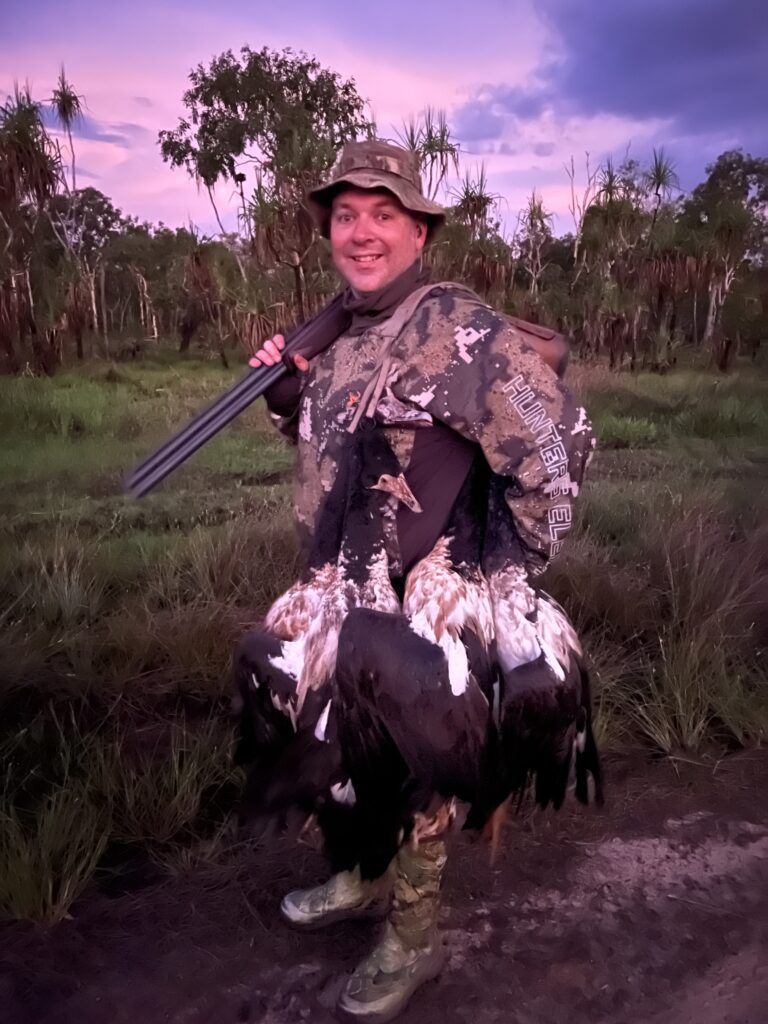
The mosquitoes had finally been defeated; I assume the effort to swim rather than fly through the air had left them too exhausted to pursue me any further. Likewise, I collapsed, under the weight of half a dozen geese and a few ducks, into the scant shade of a pandanus tree. Even the very top of my boonie hat was drenched with sweat. The heat and humidity were truly intolerable, yet I was delighted.
This morning, after several days with scant success, me and Tony had found not only a major flight path but also a location with sufficient cover to conceal our presence.
Sprawled on the black soil plain, I had a moment to reflect on what had brought me here and why. It certainly wasn’t the pursuit of ‘fun’, at least not in any modern-day sense of the word. Few people find immediate pleasure in the sleeplessness, discomfort, exertion and frustration that go hand in hand with a week of Top End waterfowl hunting. Yet there are many people who willingly endure these things.
The two of us were far from alone when we had arrived, full of eager anticipation, on the edge of the floodplain before dawn that morning. The sense of connection to the environment, self-reliance and satisfaction earned through active participation in nature to harvest one’s own meat are far grander than a simple notion of fun.
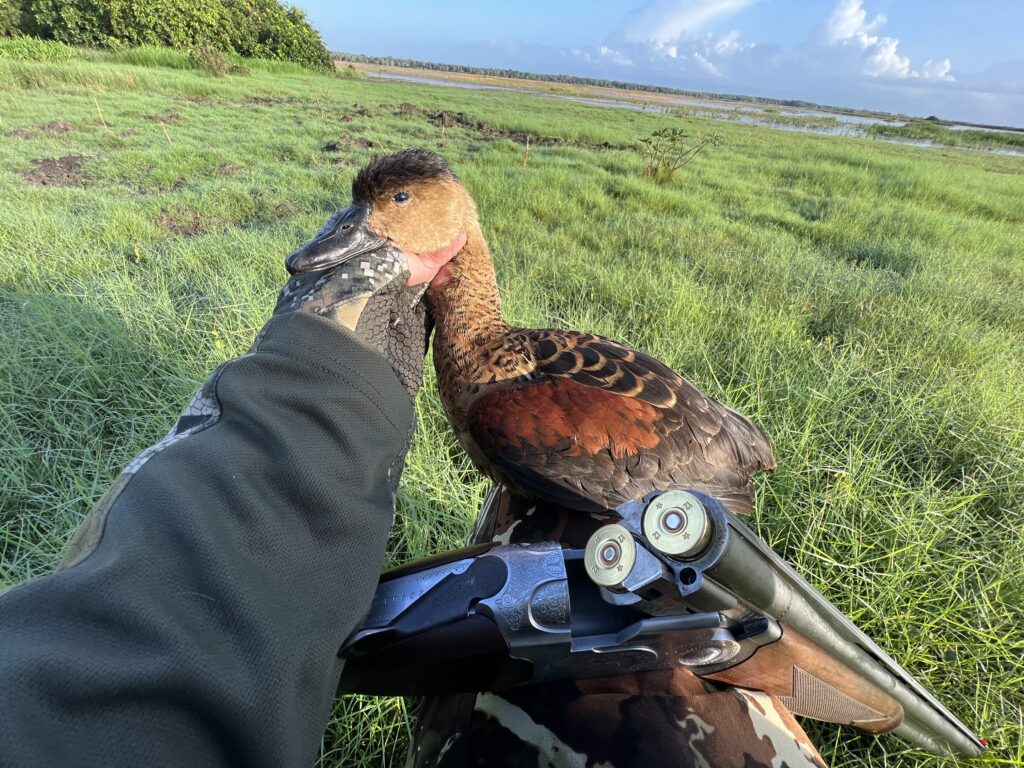
My own motivations are complicated. Providing meat for my family is primary amongst them. But this is not a matter of subsistence as it was for the Indigenous tribes of northern Australia. When accounting for all the costs – flights, accommodation, fuel, ammunition and more – a year’s supply of poultry could be purchased for much less than the expense of the waterfowl I flew home with.
And I could have enjoyed equally as challenging shooting in much more comfortable conditions at any SSAA Sporting Clays ground. No, what draws me north year after year is a complex interplay of factors, which even now I do not fully understand.

What I do know is that for me waterfowl hunting is largely about returning to a place that I fell in love with over a decade ago. But not to simply sightsee, rather to actively participate in that often-harsh environment, relying on my skills with a shotgun, field craft and commitment to harvest geese and ducks. The meat, I will later take great satisfaction in preparing for family and friends. The experience viewed in its entirety is a fundamental human cultural activity. While the technology has certainly changed, the values, ethics, skills and knowledge passed down by mentors and honed by experience in the field remain largely the same.
Sadly, as we know all too well, hunting, especially for waterfowl, has become increasingly unpopular among southern state inner-city voters in recent years. Major political parties reliant on their votes seem all too willing to dismiss ecological facts in the face of emotive minority driven opinion. Those of us who cherish the experience, from the sweltering northern floodplains to the frigid Victorian morasses, must communicate the cultural value as loudly as the ecological sustainability of Australian waterfowl hunting. If we fail, I fear our children will not be permitted to experience the anticipation of their first sunrise with shotgun in hand, nor the profound satisfaction inherent in savouring a meal for which they have been solely responsible for procuring.
From the earliest Aboriginals to the European settlers who arrived many years later, Australians have a long heritage of waterfowl hunting. Magpie geese feature in Indigenous rock art across the Top End, and first handwritten accounts of European settlers are littered with references to both hunting and eating Australian native waterfowl.
Subsisting on hunted game was not simply the last resort of poor and starving settlers. One of the earliest colonial accounts comes from Elizabeth Macarthur, wife of John Macarthur, and the ‘soon-to-be’ matriarch of the wealthiest family in the colony. In 1794 she wrote: ‘…my table is constantly supplied with Wild Ducks or Kangaroos…’ By 1798 the Macarthurs had built a 1000-strong flock of sheep, yet still they hosted dinners of wild duck and kangaroo, rather than slaughtering their livestock.
Struggling to my feet, I swatted the goose lice from my shirtsleeves and neck, re-secured my load and slogged onward to Tony’s Land Rover. While contemplating, how we as hunters can best convey the continued cultural relevance of waterfowl hunting to law makers who are at best casual and disconnected observers of the natural world.
Months later, telling stories like this and sharing meals of game meat with non-hunters is the closest I’ve come to a decent answer.
Share this article
 Instagram


Related
Recipes