

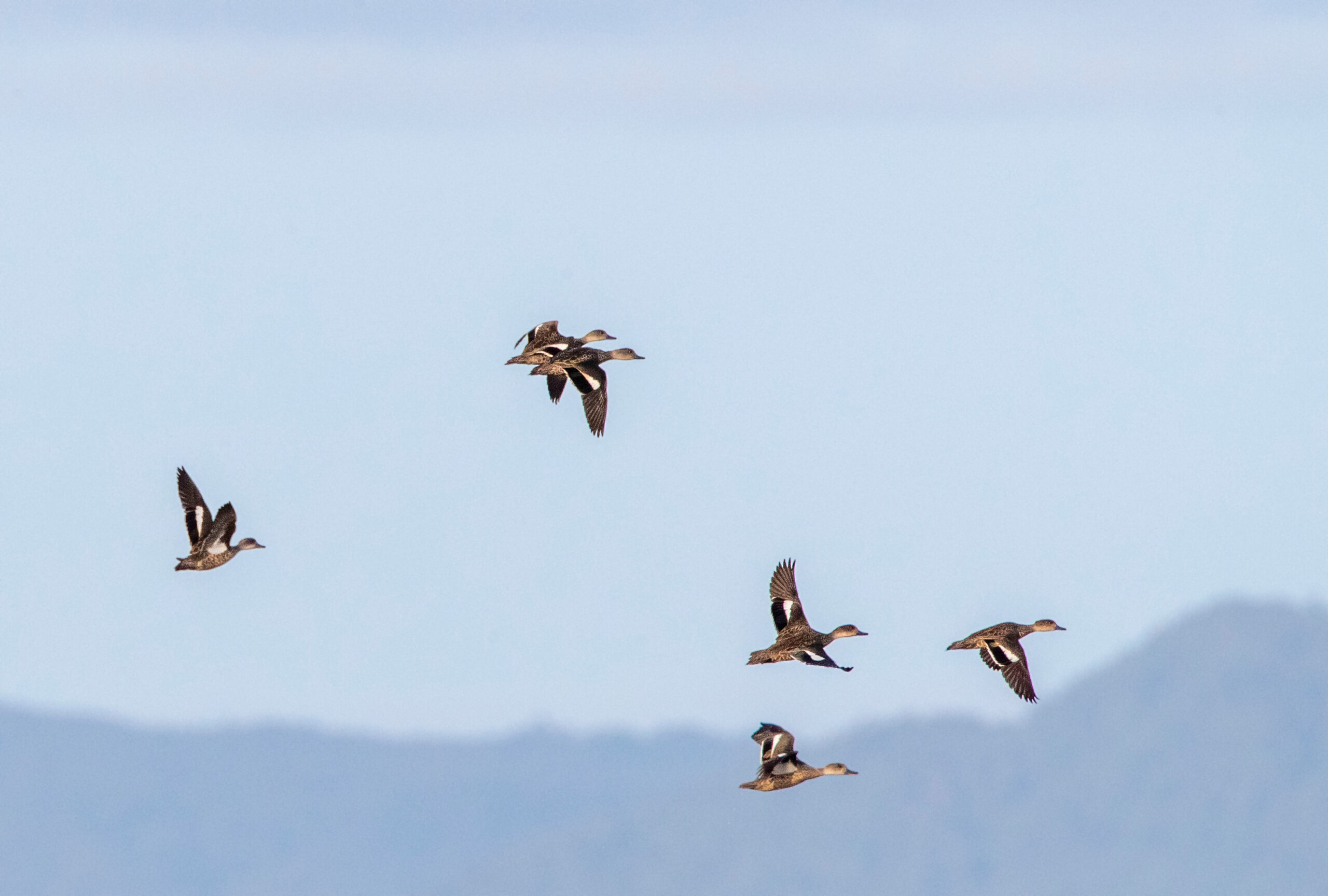
Victoria begins 2026 game duck survey
Victoria’s annual game duck abundance survey is underway, with wildlife biologists counting ducks across more than 860 waterbodies in a survey that will feed into the state’s next round of duck season modelling.
The Game Management Authority began the 2026 survey on Monday, October 5 and plans to continue until Thursday, October 22, although flying dates can change with weather and other conditions.
Most sites will be counted from a helicopter, with ground counts used where aircraft cannot operate. Wetlands, farm dams, sewerage treatment plants, streams and rivers are included.
Satellite imagery will also be used to estimate the amount of water available in game duck habitat across Victoria.
More than 860 randomly selected waterbodies are sampled. The GMA says sites are selected using a stratified random sampling system that takes account of waterbody type, size and region.
During aerial counts, the helicopter approaches waterbodies at about 75-90km/h and generally 30-50m above the ground, causing ducks to flush. Two experienced observers independently identify and record birds.
Those observations are combined with satellite measurements of surface water to model the estimated abundance of each game duck species across Victoria.
The monitoring program was designed by wildlife scientists from the Arthur Rylah Institute for Environmental Research.
GMA Research Principal Dr Jason Flesch said the survey would provide an updated estimate.
“Results from this survey will help to accurately estimate total game duck abundance, based on the environmental conditions at the time,” Dr Flesch said.
Last year’s survey produced an estimated Victorian game duck population of 4.9 million birds.
That was about 22 per cent above the 2024 estimate of approximately four million, although it remained below the estimate recorded in 2023.
Grey teal were the most numerous game species in the 2025 estimate at 1.65 million birds. Australian wood duck were estimated at 1.48 million and Pacific black duck at 838,000.

The Arthur Rylah Institute report attributed the higher 2025 estimate largely to a 68 per cent increase in the number of surveyed waterbodies containing surface water.
Those figures subsequently became part of the Adaptive Harvest Management (AHM) process used for the 2026 season.
Victoria introduced its current Game Duck Harvest Strategy in 2025. Under the strategy, the government set a proportional harvest target of 10 per cent of the estimated Victorian game duck population, while recognising that the actual quota percentage may be slightly higher when converted to a whole-number daily bag limit.
For 2026, the 4.9 million population estimate contributed to a modelled harvest quota of about 486,000 ducks. The resulting daily bag limit was nine game ducks.
The 2026 season ran from March 18 to June 8. Seven species could be hunted, while blue-winged shoveler remained protected from hunting under its year-round closed season.
The current October survey will provide another abundance estimate for the AHM process.
Abundance is not the only figure used. The system also considers habitat availability and previous harvest and hunting data. The GMA uses the information in its modelling and provides advice on the daily bag limit to the Victorian Government. The responsible ministers ultimately determine the coming season arrangements.
That distinction means the October count should not be read as a direct prediction of the next bag limit.
Crews conducting the survey are also watching for signs of mass bird mortality.
The GMA says any mass mortality involving waterbirds or other birds detected during the work will be reported to the appropriate authorities as part of surveillance for avian influenza.
Residents in survey areas may see the helicopter operating at low level for short periods. The GMA says crews will minimise or avoid disturbance to livestock.
Survey work is expected to stay on schedule, weather and operating conditions permitting.
The resulting 2026 game duck abundance estimate will be published on the GMA website in 2027.
Share this article

 Website
 Instagram
 Facebook
Related
Articles


Weipa hunt draws record field

Related
Recipes