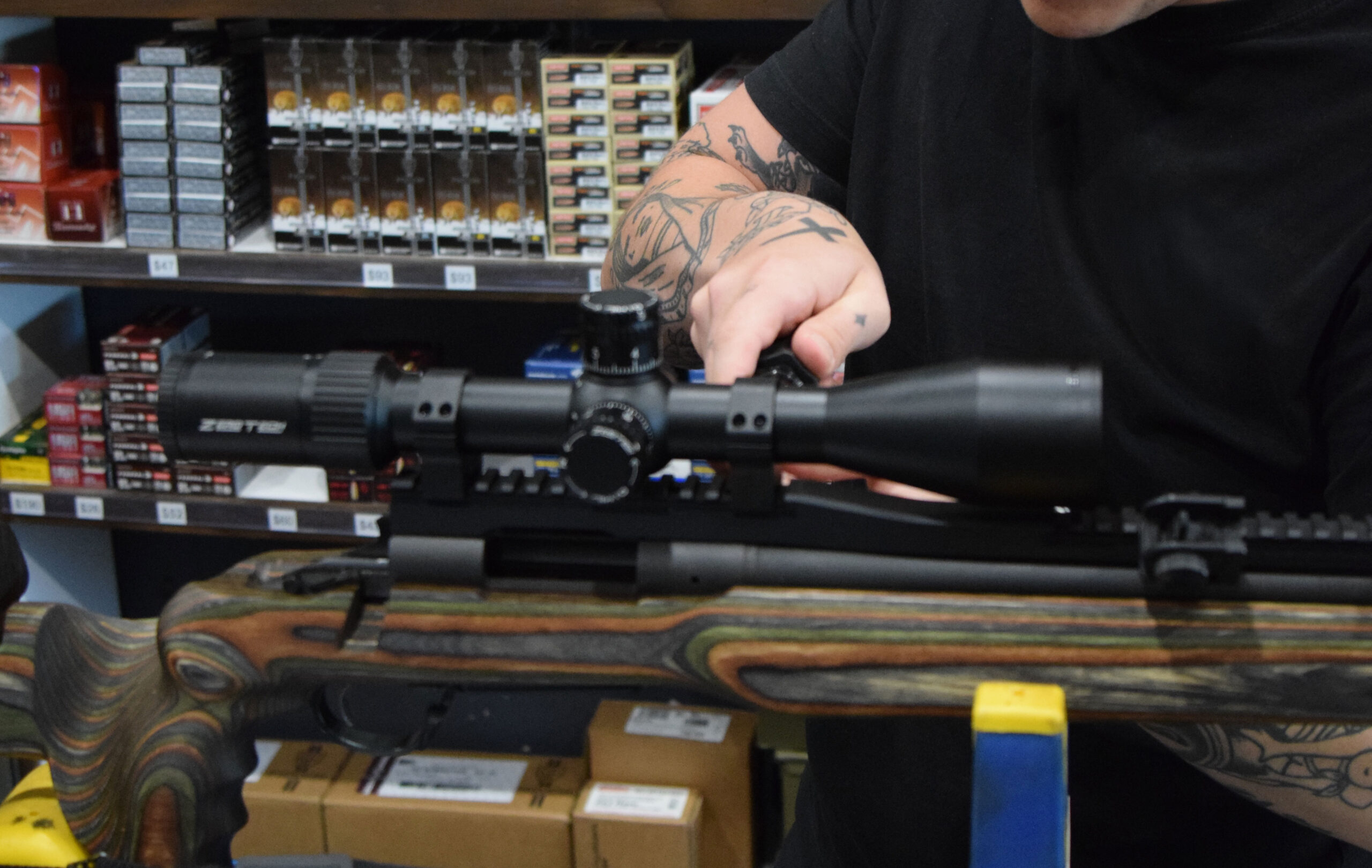
Firearm dealers report heavy losses
Firearm dealers report significant financial losses in the first half of 2026, with New South Wales experiencing the steepest declines amid new firearms laws and the upcoming buyback affecting customer confidence.
A national survey by the Shooting Industry Foundation of Australia, published on September 21, found average dealer revenue fell 38.8 per cent in the first half of 2026 compared to the same period in 2025. In NSW, the average decline was 58.8 per cent.
Firearm sales declined by an average of 47.9 per cent nationally and 76.6 per cent in NSW.
SIFA, which represents the firearms industry and has opposed aspects of the post-Bondi reforms, advises that these figures reflect participating businesses only. The report does not include audited financial results for all licensed dealers, nor does it provide a full respondent count or detailed methodology.
Even with those limitations, the survey gives a clearer picture of what dealers say has happened since the reforms began.
NSW businesses report the biggest losses
SIFA calculated an average estimated financial impact of $211,425 for responding businesses nationally and $315,595 in NSW.
Across the survey sample, businesses reported a combined $22.6 million in financial impact, including $13.3 million in NSW. SIFA put the potential national impact at more than $100 million over six months, although that larger figure is an industry estimate rather than a directly measured loss.
The outlook among respondents was equally poor. Nationally, 70.1 per cent said they were concerned about the next 12 months and 32.3 per cent said they may have to close.
Among NSW respondents, 91.7 per cent were concerned about the year ahead and 47.9 per cent said closure could become necessary.
These are expectations rather than confirmed business closures, but they show how far confidence has fallen among some dealers.
Millions tied up in stock
The slowdown has left businesses carrying firearms, ammunition and accessories they are struggling to move.
Survey respondents reported $12.2 million in stranded stock, averaging $119,706 per business. NSW dealers accounted for $7.8 million, averaging $186,548 each.
Almost 80 per cent said they had inventory that had become harder to sell, move or replace. Accessory sales were down an average of 35.2 per cent and ammunition sales fell 28.9 per cent.
Customer hesitation was the most commonly cited problem, with 85.2 per cent of respondents identifying uncertainty about future regulation as a major pressure on their business.

Earlier ABC Rural reporting found similar problems at individual dealerships. A Dubbo dealer reported firearm sales had fallen by about 90 per cent, while a Tamworth gunmaker estimated his turnover was down around 80 per cent. Those figures describe individual businesses, but they match the direction shown in SIFA’s national survey.
Jobs and hours are being cut
The downturn is also reaching staff.
Nationally, 28.9 per cent of respondents said they had reduced staff hours since January, 22.7 per cent had cut casual shifts and 21.9 per cent had made at least one position redundant.
In NSW, 81.3 per cent reported some form of staffing change, half had reduced staff hours and 27.1 per cent had made at least one position redundant.
Many firearm dealerships are small regional businesses, so falling sales can move quickly from reduced stock orders to fewer shifts and job losses.
Buyback begins in November
The survey arrives ahead of the first phase of the NSW gun buyback, scheduled to begin on November 2.
The NSW Government estimates up to 274,000 registered firearms and around 50,000 licence holders may be affected by ownership limits and firearm reclassifications introduced after the December 2025 Bondi terrorist attack.
Phase one will use fixed compensation rates, including $1000 for a centrefire rifle, $600 for a rimfire rifle and $850 for a double-barrel shotgun.
A second phase planned for early 2027 will provide a separate valuation pathway for eligible firearms with an indicative market value above $3000.
The NSW Government has also announced grants of up to $25,000 for eligible affected businesses, along with $500 in licence-fee relief over two years and advisory support.
SIFA argues the survey shows the losses being reported by dealers already exceed that level of assistance in many cases.
Only 12.1 per cent of respondents said they had a very strong understanding of the policy changes affecting them, while 58.1 per cent described their understanding as limited or general.
With the buyback due to start on November 2, dealers now have only weeks to work through compensation arrangements, stock decisions and further changes to a market that has already shifted sharply during 2026.
Share this article

 Website
 Instagram
 Facebook
Related
Articles


Weipa hunt draws record field

Related
Recipes
Sorry, no related items found.