

Duck hunting Argentina’s Salado River wetlands
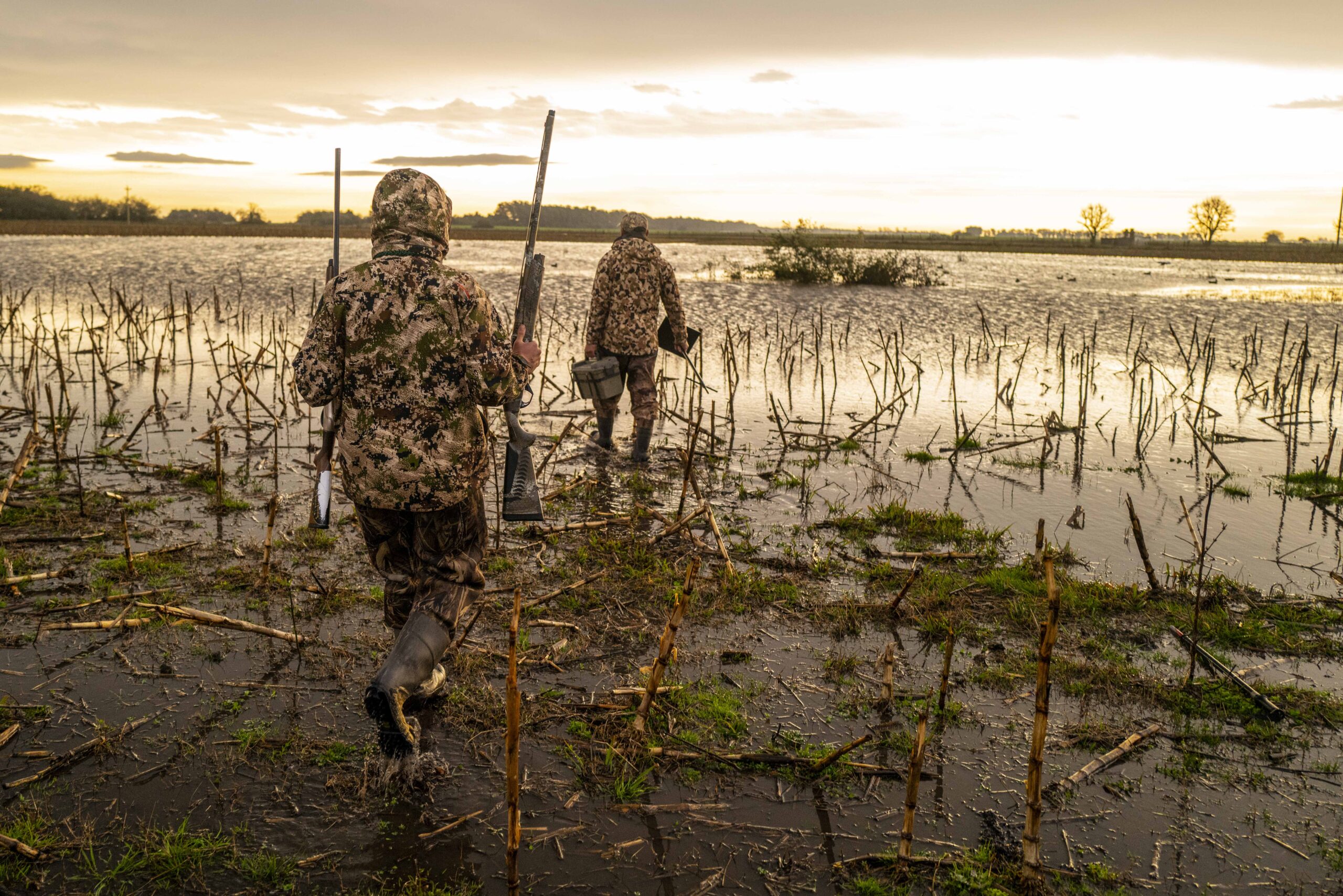
Standing knee-deep in murky water at dusk, surrounded by bamboo screens and the haunting calls of South American wildfowl, I couldn’t help but reflect on how far we’d travelled from the familiar saltings of the Wash or the windswept foreshore of the Solway. About 11,000km in fact. Yet here, in the vast wetlands along the Salado River, was wildfowling on a scale that would make any duck hunter’s pulse quicken.
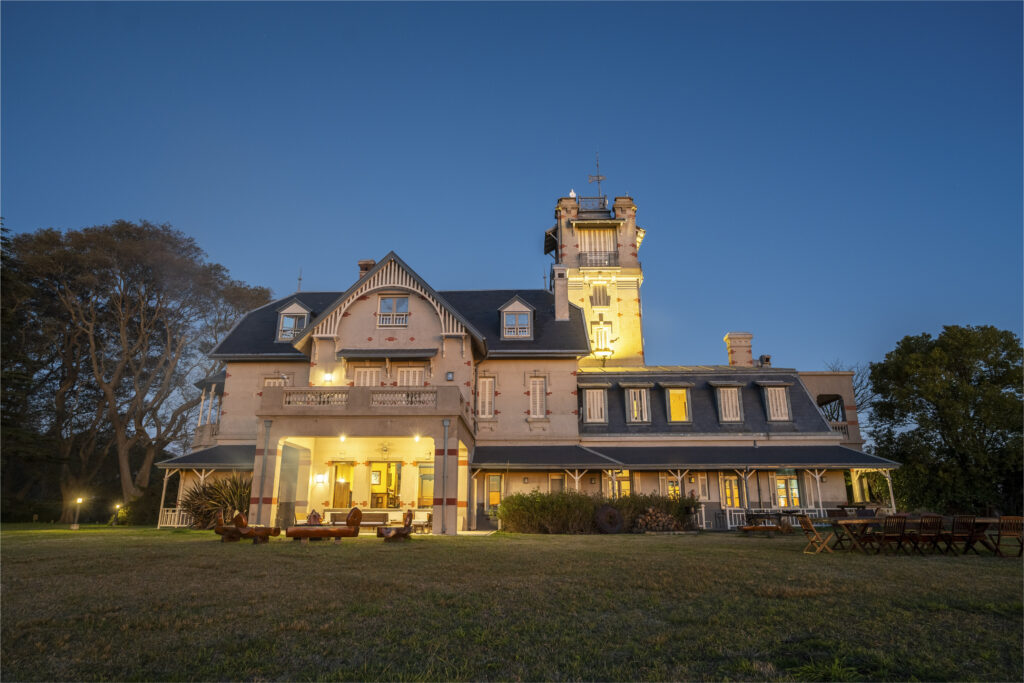
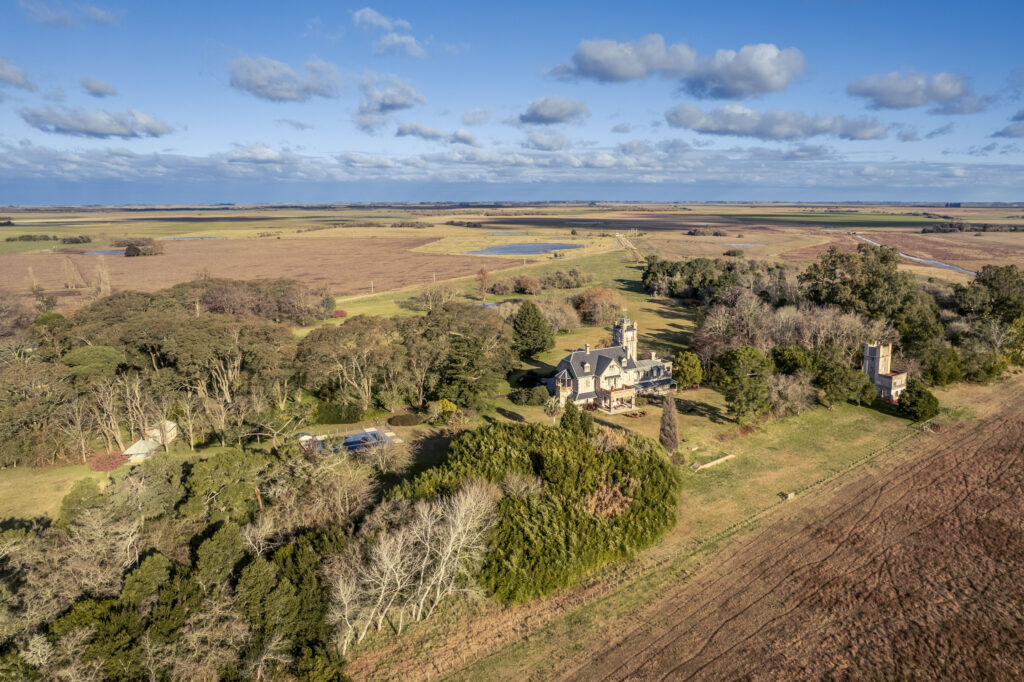
Los Crestones Lodge, situated a mere two hour’s drive south of Buenos Aires in the province’s fertile agricultural heartland, represents something of a revelation for the travelling wildfowler. Run by David Denies, this historic 19th century ‘estancia’ has been meticulously transformed into what can only be described as a waterfowler’s paradise, offering three-months of duck hunting over some of the most productive wetlands in South America.
A different world of wildfowling
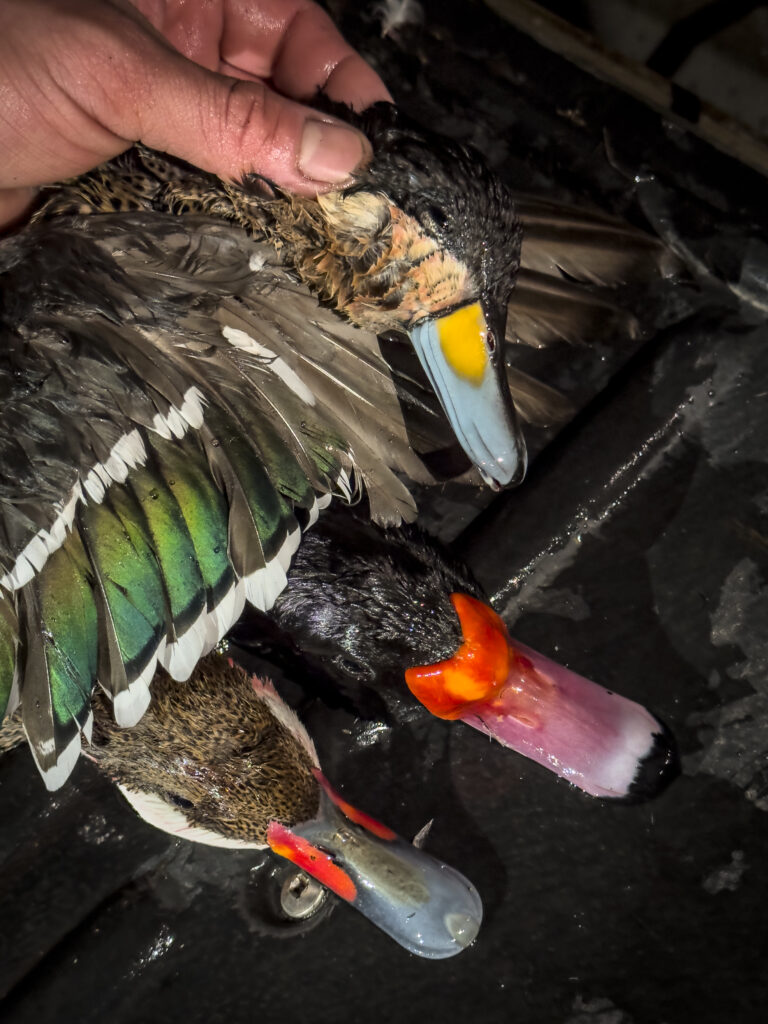
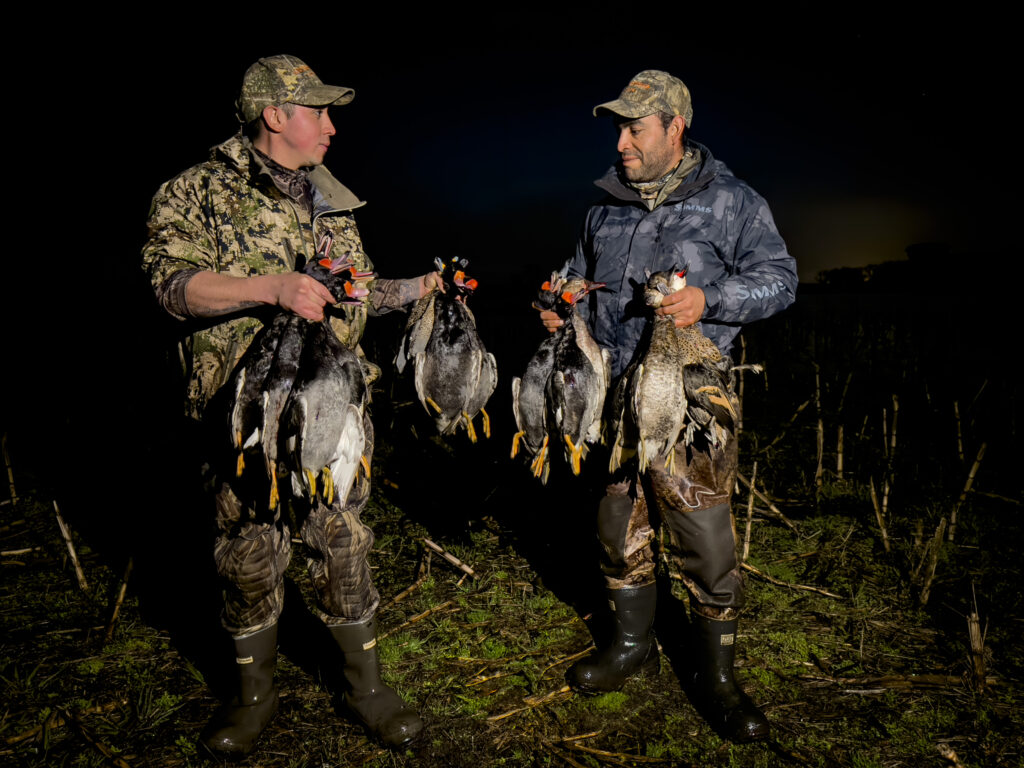
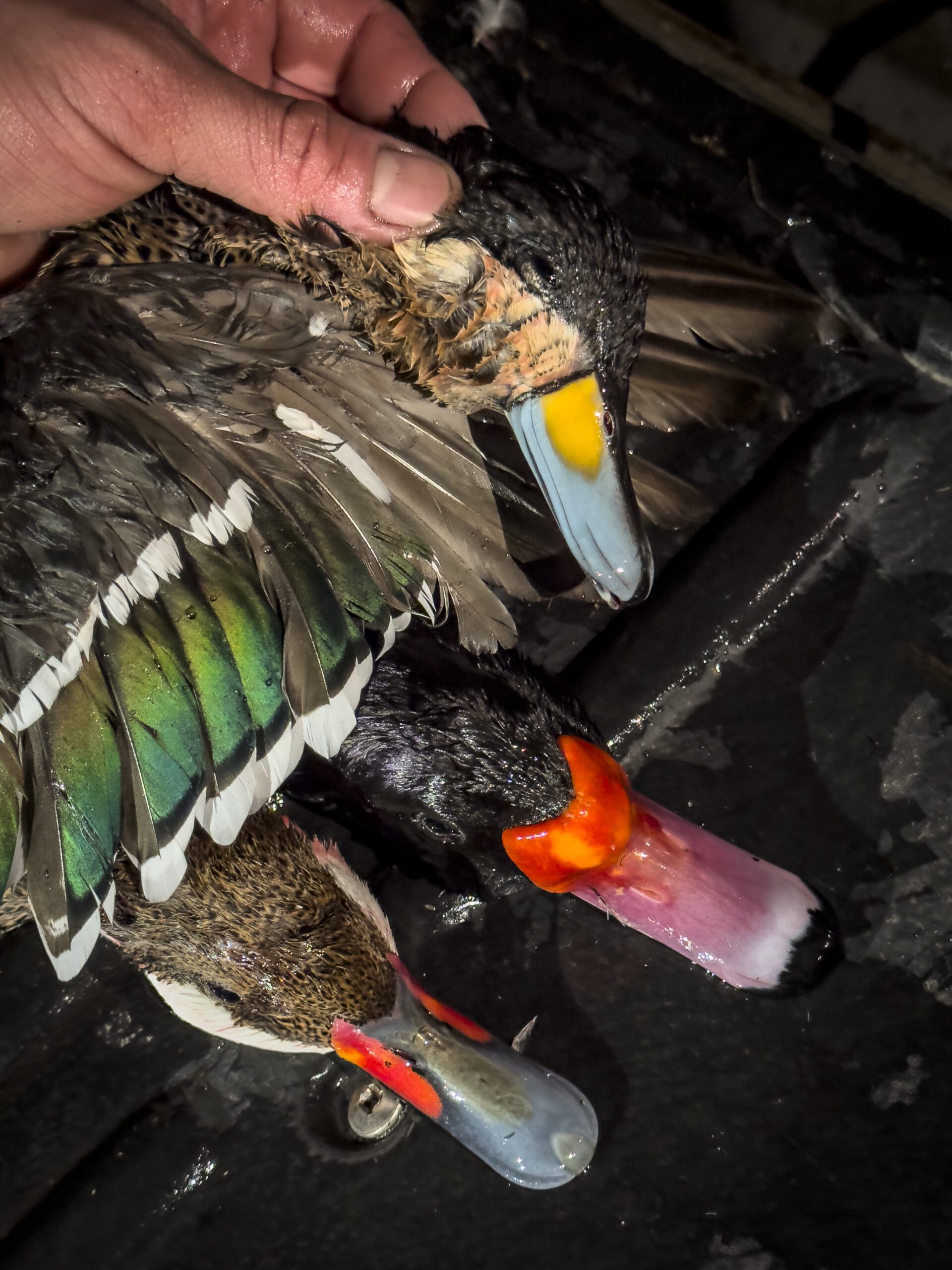
The surroundings may have been familiar, but that’s where the similarity ends. The contrast with British duck hunting could hardly be starker. Where we might count ourselves fortunate to see half a dozen different species in an evening flight, Argentina’s wetlands teem with 13 distinct wild duck species, 12 of which are native to only South America. During our visit, we encountered five of them: the rosy-billed pochard, white-cheeked pintail, silver teal, yellow-billed pintail and the beautifully marked speckled teal.
The complete roster of Argentina’s 13 duck species includes the aforementioned five, plus cinnamon teal, white-faced whistling duck, fulvous whistling duck, Brazilian duck, southern wigeon, southern shoveler, ring-necked duck and red shoveler. Each presents their own challenges: the erratic flight patterns of teal, the wariness of pintail, the sudden appearances of pochard. They all require the hunter to adapt, to read the flight patterns, to understand the subtle differences in behaviour that separate the novice from the expert.
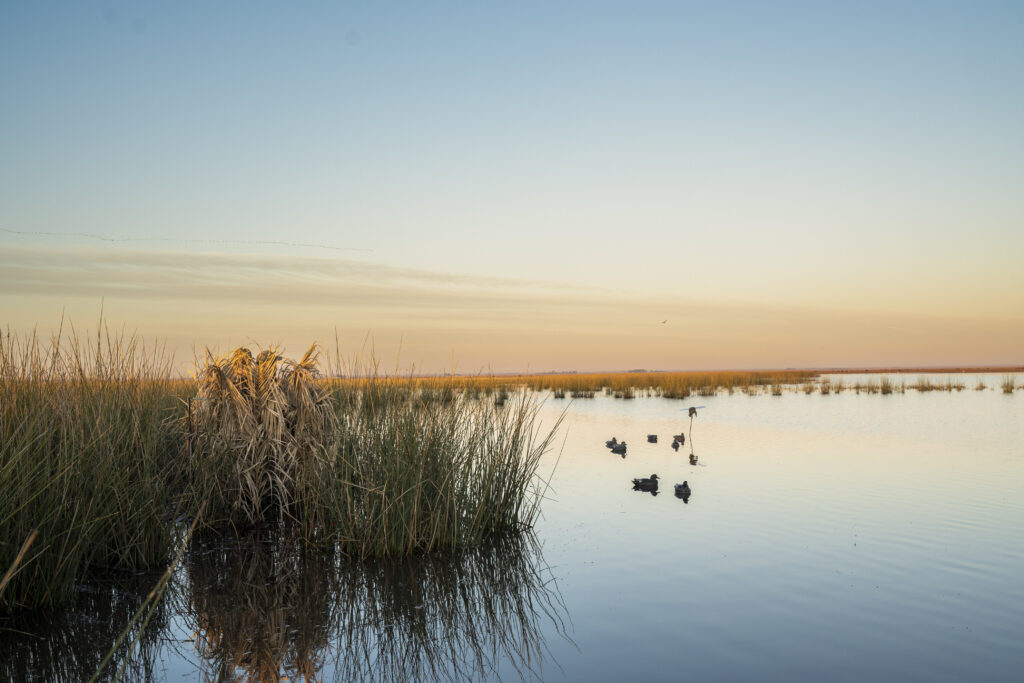
The scale of operation at Los Crestones is genuinely impressive. Working across an area within 50km of the lodge, the team maintains around 100 two-man blinds strategically positioned across the wetlands.
Each day, a dedicated team scouts the different ponds where blinds are located
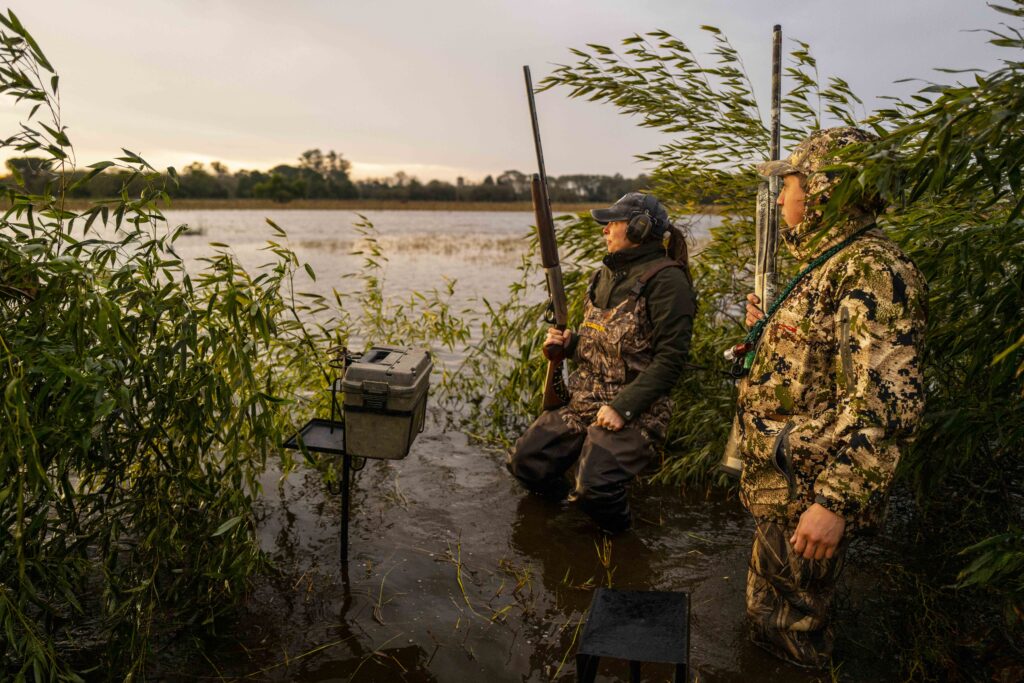
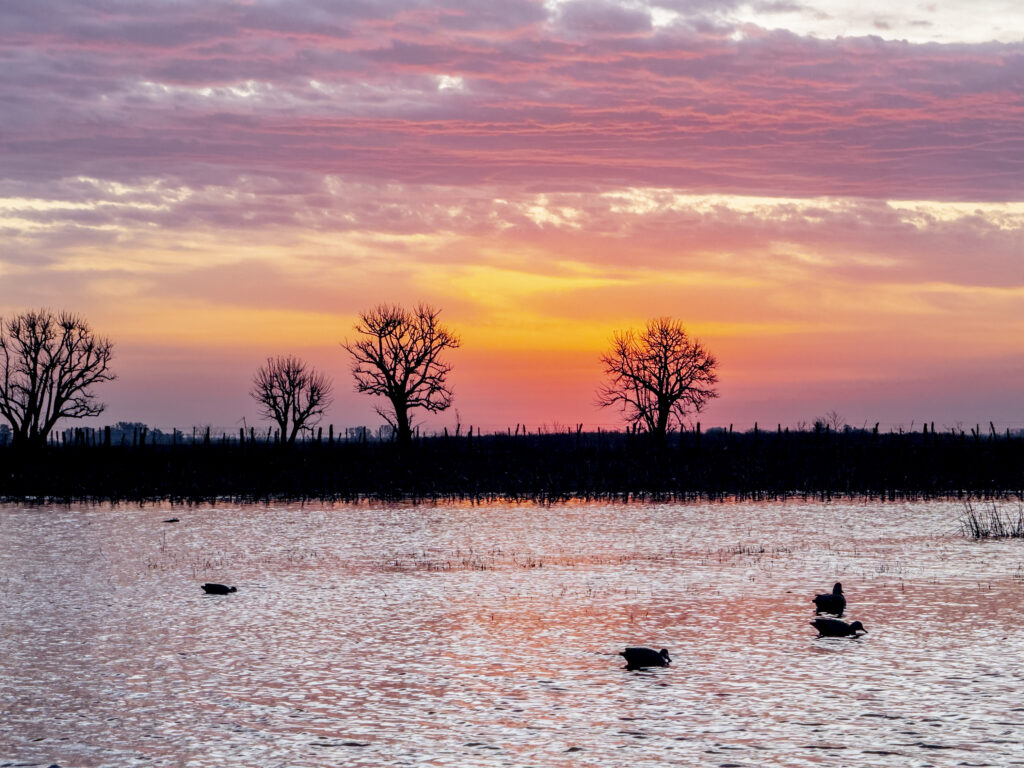
Our guides were Fernandos and Jose, who both spoke impeccable English. Between bouts of activity, they shared the traditional Argentine ritual of ‘yerba mate’, that bitter, energising tea that forms the social backbone of culture here. The bamboo hide they’d constructed was a masterclass in natural concealment, blending seamlessly into the surroundings that fringed the vast splash – a permanent feature that draws ducks throughout the ‘season’. We shot into the sunset with birds silhouetted against the sky. Located just a stone’s throw from the lodge itself, on a flooded arable field, it took less than five minutes of 4x4ing through thick mud to reach the blind.
Challenging conditions, exceptional fun
Our trip began with the kind of weather drama that would be familiar to any British wildfowler: yellow storm warnings had delayed proceedings, with sheet lightning, thunder and hail the size of golf balls. But as any experienced duck hunter knows, dramatic weather often precedes the finest hunt, and so it proved. As the storm clouds gave way to perfect blue skies, the ducks began to move.
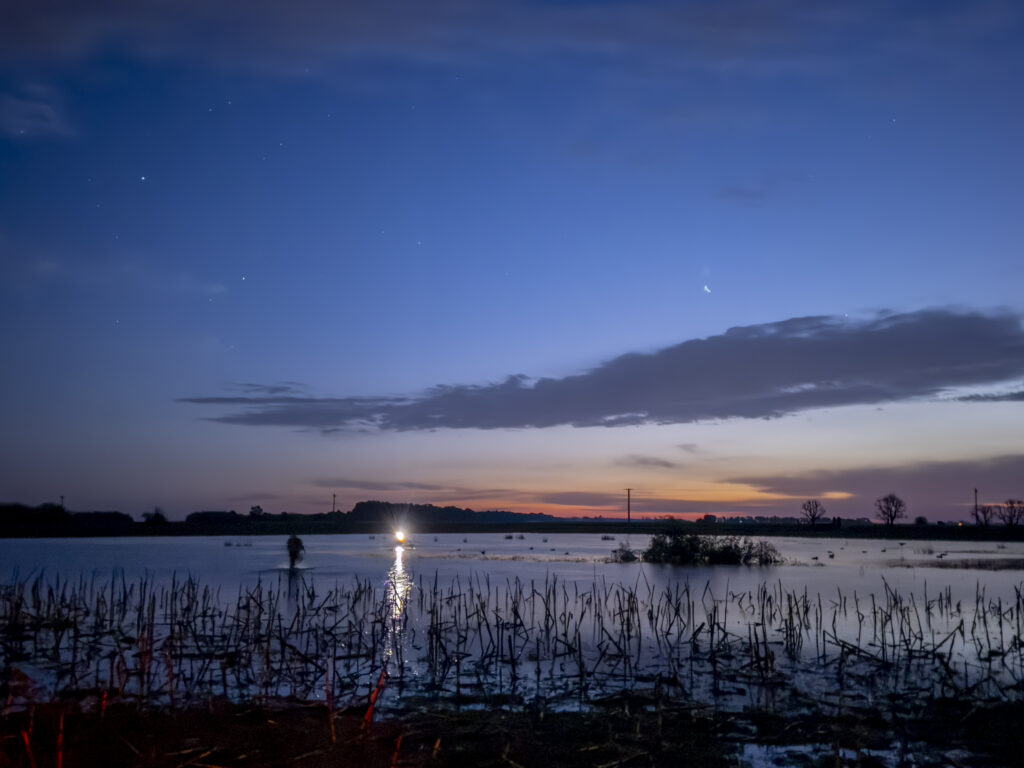
Standing in knee-deep water wearing chest waders, balanced precariously on thick mud that threatened to claim boots with every step, we quickly appreciated the physical demands this style of hunting places on the hunter. The footwork is genuinely tricky – there’s no solid shooting peg or comfortable hide seat here. Instead, simple metal seats provide minimal comfort as you stand ready in the murky water, every sense alert for the whistle of wings. There are two hunters to a guide, and hunts take place from a variety of blinds and scenarios, including platform-pallet blinds and large, sunken ‘bucket’ blinds, as well as their newly designed, custom box blinds.
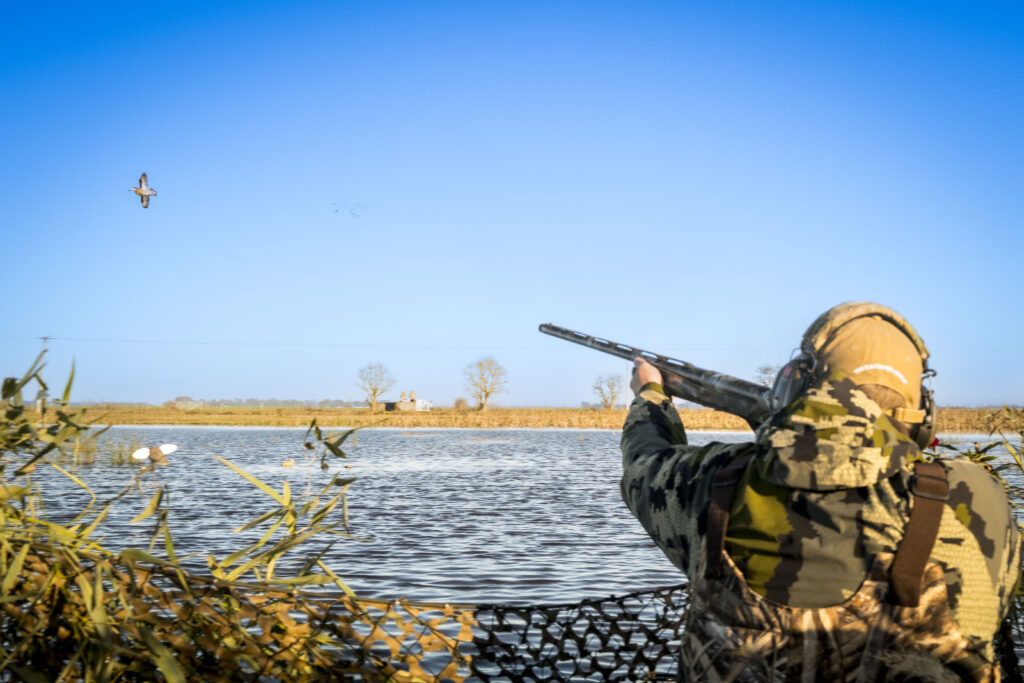
For three solid hours, from first light onwards, we enjoyed a steady stream of ducks that would be the envy of just about anyone. Using calls to lure birds within range, we watched as skeins of pintail swept in, while the distinctive rosy-billed pochard provided challenging shots as they dropped onto the water with characteristic suddenness.
Equipment and logistics
One of the greatest advantages of Los Crestones is the lodge’s pragmatic approach to equipment. Forget the bureaucratic nightmare of flying firearms into Argentina – a process that would test the patience of a saint and likely consume the best part of your holiday in red tape. Instead, the lodge maintains an excellent gunroom stocked with semi-automatic Benelli, Beretta and Breda shotguns in both 12- and 20-gauge, along with all necessary waders and accessories.
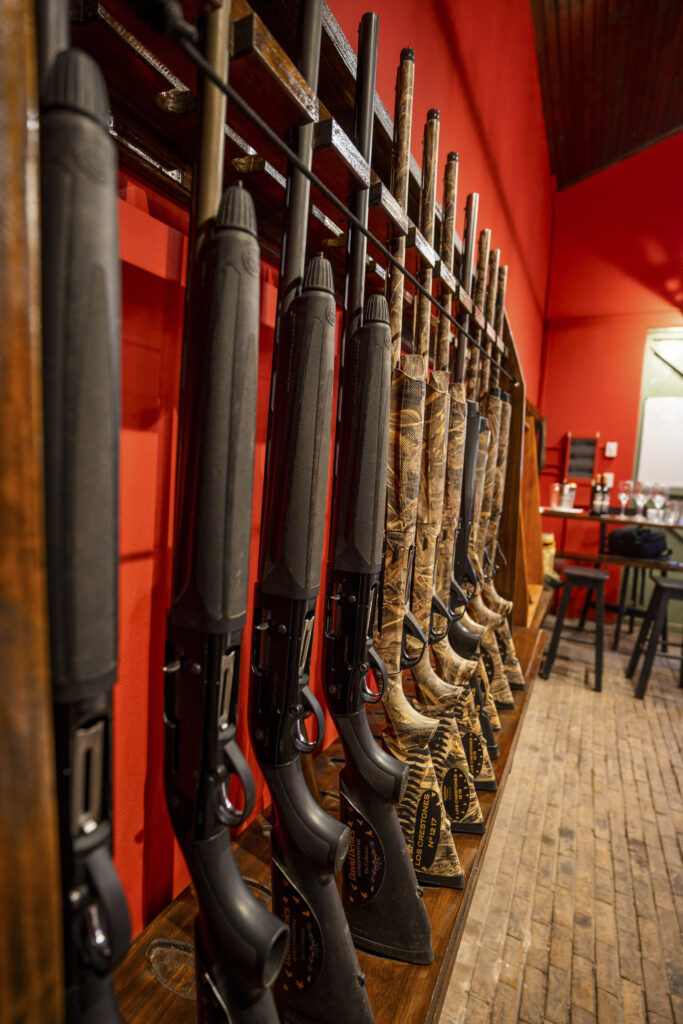
We used Falco cartridges throughout our stay, which are made by Fiocchi in Argentina, that proved entirely adequate for the task at hand. So far it is legal to use lead for wildfowl in this part of Argentina, so we used 32gr #5 shot which has proven over many years to be the most effective load for the style of ducks on offer. The guns themselves were well-maintained and reliable – crucial considerations when you’re standing in water with ducks streaming overhead.

Dead birds are collected by hand, having been accurately marked during the flight – which does require a certain commitment to wading through increasingly muddy water as the morning progresses.
Beyond the hunting
What sets Los Crestones apart from many international hunting destinations is the quality of the overall experience. The lodge itself, managed by Manuel and Gaia, combines authentic Argentine hospitality with the kind of attention to detail that David Denies operations are renowned for. The lodge features a fully stocked, all-inclusive bar ensuring that whether you’re celebrating a successful morning’s outing or simply unwinding after a challenging day in the field, the perfect accompaniment is always at hand.
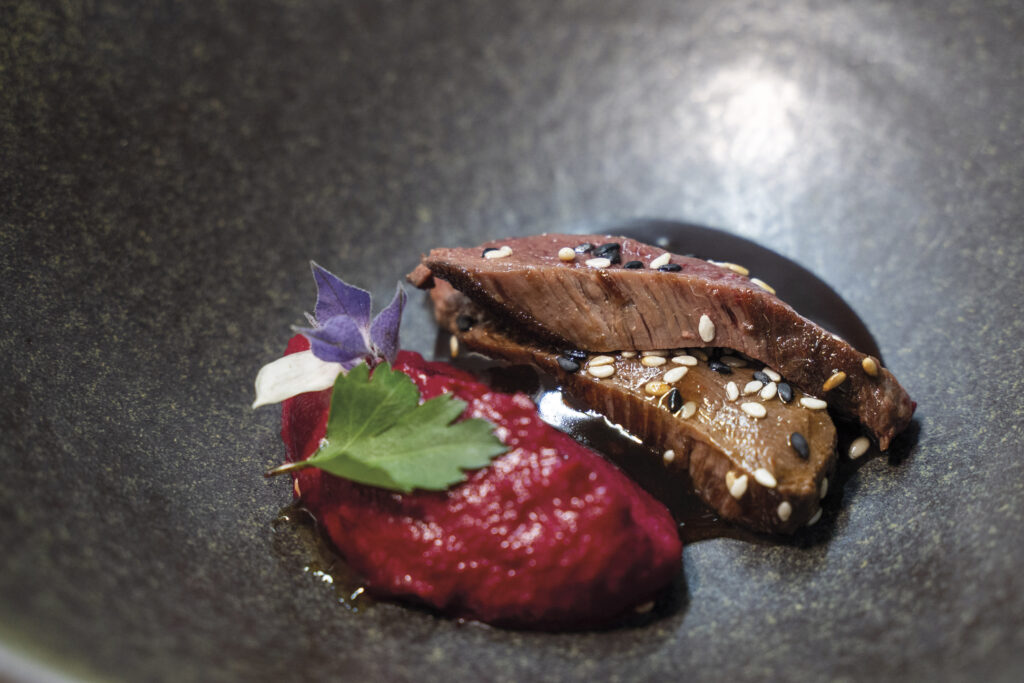
The lodge chef, Marcus, demonstrated his considerable culinary skills by preparing the morning’s bag for dinner after we returned from the dusk flight – a fitting end to a memorable day in the field. Duck empanadas followed by a traditional asado saw us lose all control and eat our own bodyweight in steak.
The shooting schedule follows the natural rhythms of wildfowl behaviour, with sessions lasting approximately three hours at dawn and dusk. This allows plenty of time to explore the lodge’s other offerings such as the spa or simply relax in front of the log fire. The lodge accommodates up to eight hunters, ensuring an intimate and well-managed experience.
The broader experience
For the hunter accustomed to the constraints of an increasingly regulated shooting scene, Argentina offers a glimpse of what wildfowling might have been like in a bygone age. The abundance of quarry, the scale of the landscape, and the freedom to pursue multiple species create an experience that feels both nostalgic and refreshingly modern.
The lodge’s location, just two hours from Buenos Aires, makes it remarkably accessible for the travelling hunter.
Los Crestones also offers combination hunts with perdiz and dove hunting, which Argentina is so famous for, making it an ideal destination for the those seeking variety. The mixed-bag approach reflects the traditional Argentine culture, where different species and different techniques are celebrated as part of a comprehensive hunting experience.
Planning your visit
This is, without question, a once-in-a-lifetime experience for most hunters. The combination of exceptional hunting, magnificent surroundings and professional organisation creates memories that will last long after the last spent cartridge case has been collected from those muddy waters.
Visit daviddenies.com
Quick facts
Location: The Province of Buenos Aires, Argentina
Target species: Rosy-billed pochard, speckled teal, yellow billed pintail and others
Season: May, June and July
Lodge capacity: 8 hunters
Airport transfer time: Around 2 hours 30 minutes
Shotguns: 12- and 20-gauge Benelli, Beretta, Browning & Breda semi-automatics and over and unders
Cartridges: Falco, Fiocchi & Armusa
Hunting method: From blinds
Additional opportunities: Perdiz and dove shooting, blackbuck antelope and axis deer hunting
Share this article
Related
Articles


Related
Recipes