
High-country bighorn hunting
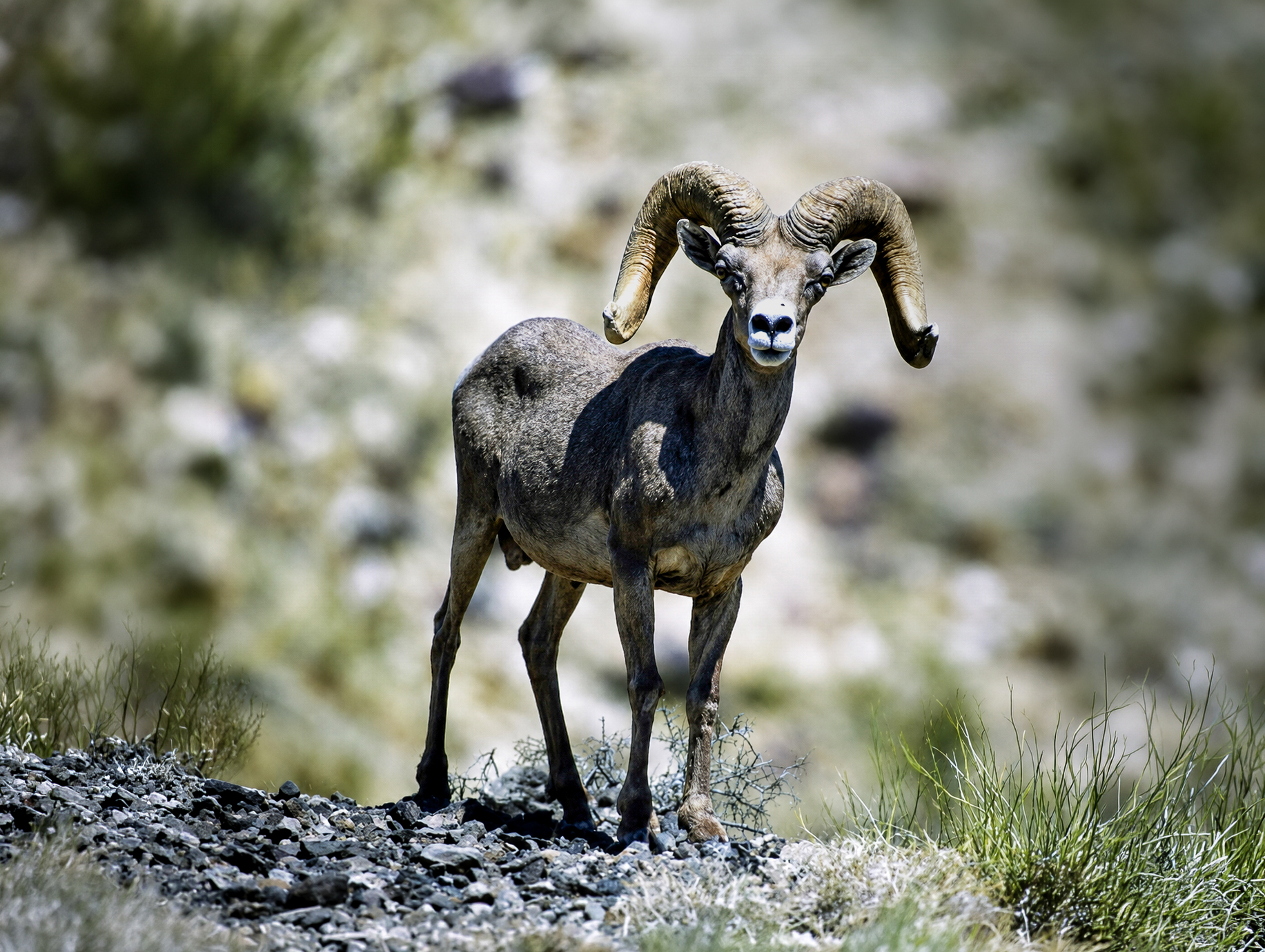
On the top of many hunters’ bucket list of species to pursue is the bighorn sheep. World-renowned outdoor writers like Jack O’Connor, as well as numerous videos and television shows, have portrayed this species as the most exciting and adventurous of all of the world’s animals to track. But while the bighorn remains as the pinnacle of desirable categories for many hunters to go after, few ever achieve the goal.
There are several reasons why that is the case, including the fact that the range of the bighorn sheep is quite limited and in many cases the cost to hunt them can be exorbitantly expensive. Hunts to the northern reaches of Canada or in Alaska typically carry extremely high fees and if you are looking to go in one of the western states of the US those licences are generally only offered on a limited quota, so are hard to attain. For me personally, it took 35 years of applying, many times in multiple states, before I finally became successful. I wrote about the adventures of that hunt for the 49th edition of Australian Hunter magazine.
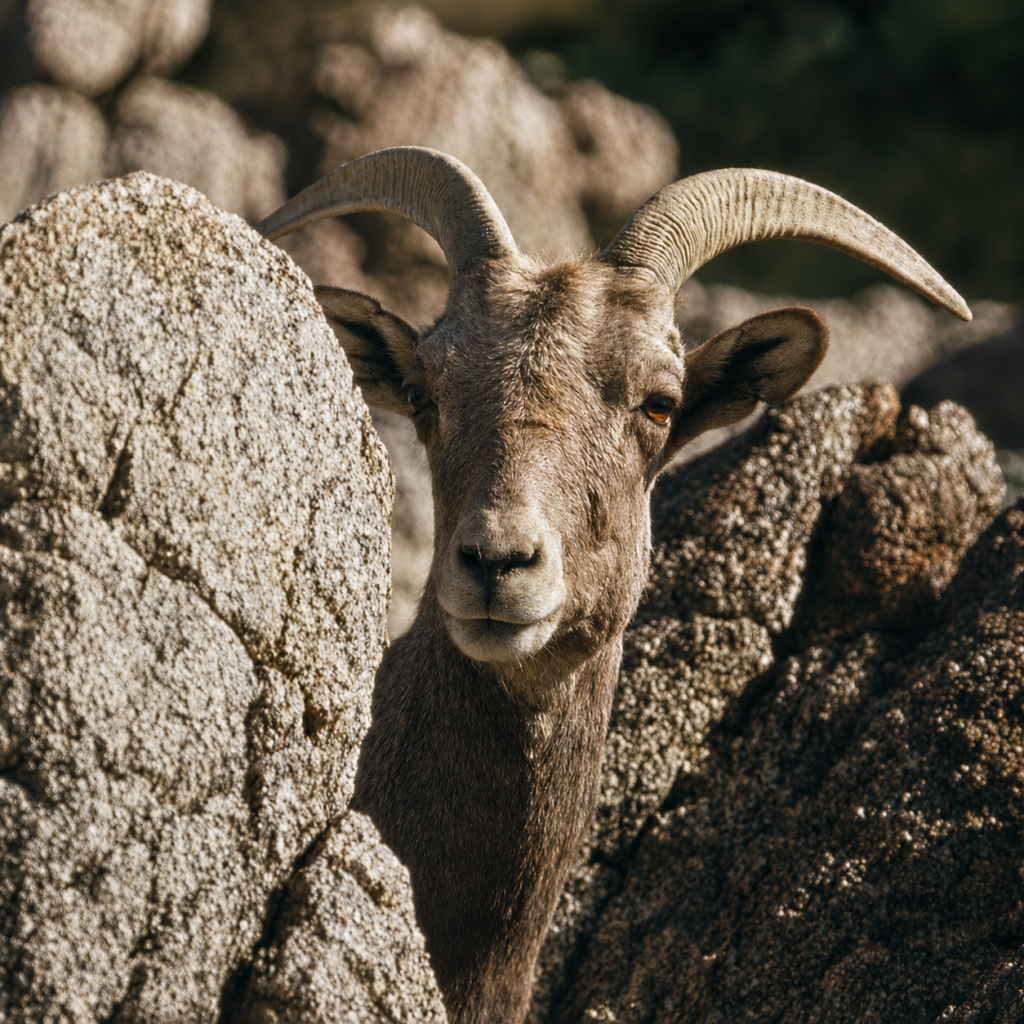
After dreaming of hunting bighorn sheep for so long, it was quite a letdown when I finally came to the reality that my sheep hunting days had ended. But I was wrong. There is an alternative that even I overlooked. In a few of the western continental US states, like Montana, there are opportunities to hunt the female of the species, a bighorn ewe, and those licences are considerably easier to draw than the ram tags.
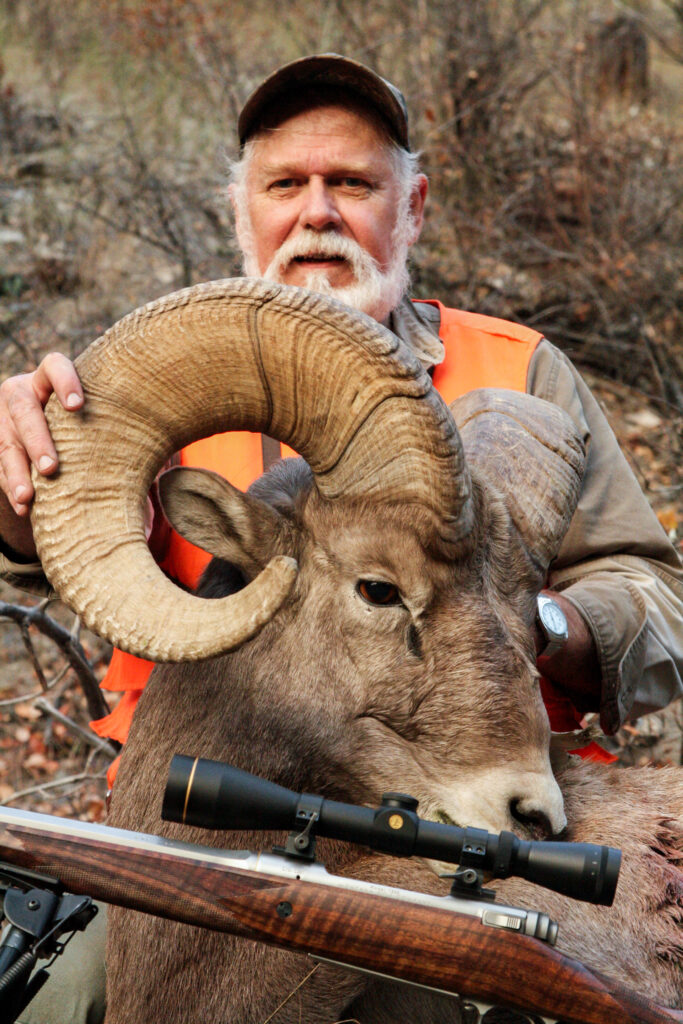
While the horn of a ewe clearly is not as impressive as that of the ram, everything else is essentially on an equal basis; the terrain you will be facing will likely be the same; the challenges are nearly identical; and the excitement of the expedition will be on par with that of a ram hunt. And possibly best of all, while it took me 35 years to land that first bighorn sheep ram licence, it only took three years to procure a licence to hunt my ewe. While there is no way to tell how many years it would take you to be successful to land either a ram or a ewe licence, clearly it is considerably easier to obtain a ewe licence to hunt.
Perils, impediments and advantages
Needless to say, I was elated at having a second opportunity to target a majestic bighorn sheep. Hunts within the continental US states are normally issued for a specified area and in this case my ewe tag was for a vicinity I had never hunted before. Nevertheless, the game department is always very helpful when it comes to information on the locality and the sheep population.
To further increase the odds of success, it’s always a good idea to do a little pre-season scouting, which allows you to gain an idea of the lay of the land. But while my investigations did not turn up any sheep, it did provide an idea of what I would be facing in the way of the terrain.
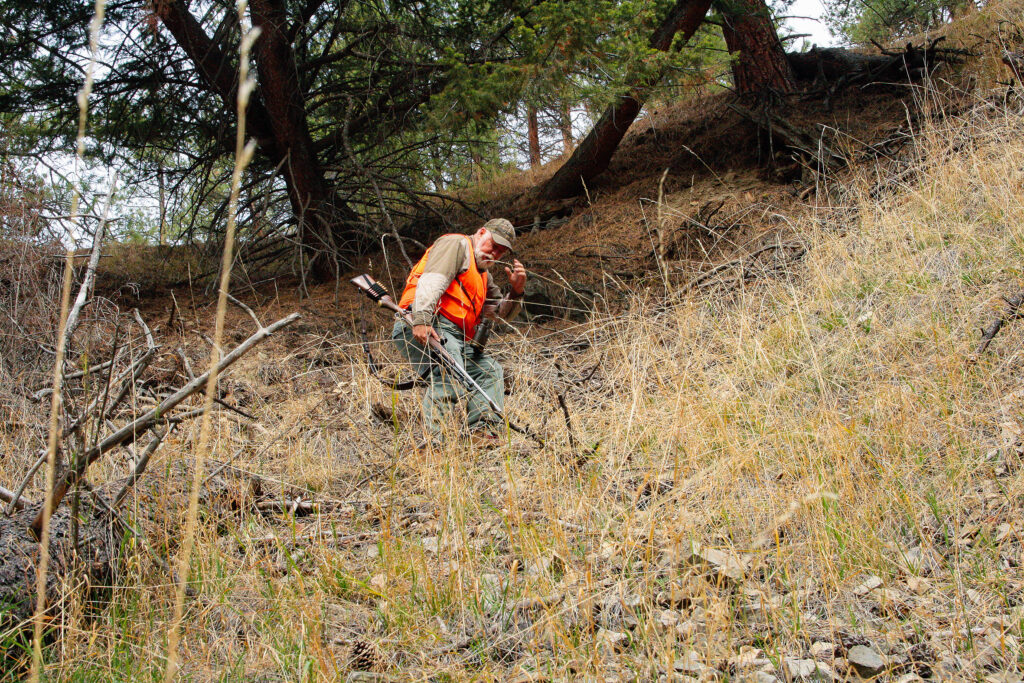
Possibly the only creature that prefers more rugged landscape than a sheep is the mountain goat, but no-one should underestimate the difficulty that you’ll be facing as a sheep hunter, which applies equally to either a ram or a ewe. The area preferred by bighorns will often be closer to vertical than horizontal in nature, plagued by shell rock that frequently rolls out from under your feet and at elevations likely to take your breath away. But as difficult and challenging as this topography is, it also boasts some of the most beautiful and impressive backdrops you will ever encounter.
Because of the rugged environment and often remoteness of sheep country, it’s never a good idea to hunt alone. There are just too many nasty possibilities that you could encounter. Aside from the obvious dangers of becoming injured from a fall or other similar mishaps, sheep habitat is frequently shared by critters that may want to chew on you, such as bears, wolves, mountain lions and more.
The adventure begins
I had chosen to set out with my Savage Arms Lightweight Hunter rifle chambered for 6.5 Creedmoor, which I had equipped with a Leupold VX-R 4-12x40mm scope. I felt the light weight of this particular rifle would be an asset for the high-country hunt and the flat-shooting 6.5mm cartridge made a good choice in the event I needed to take a long shot.
When it comes to special limited quota licences, the state of Montana generally provides you several weeks in order to apply. In this case, the extended time frame helped me to match my schedule with that of my two mates and we headed out about a week after the season had begun.

Sheep move about quite a lot, based on both the weather conditions and the rut. As winter progresses, the bighorns will migrate to lower reaches and as the rut begins the rams become even more mobile while they search for female companionship. However, for us the rut was well into the future and the weather mild when we started our hunt. That would translate into the animals being in the higher climes.
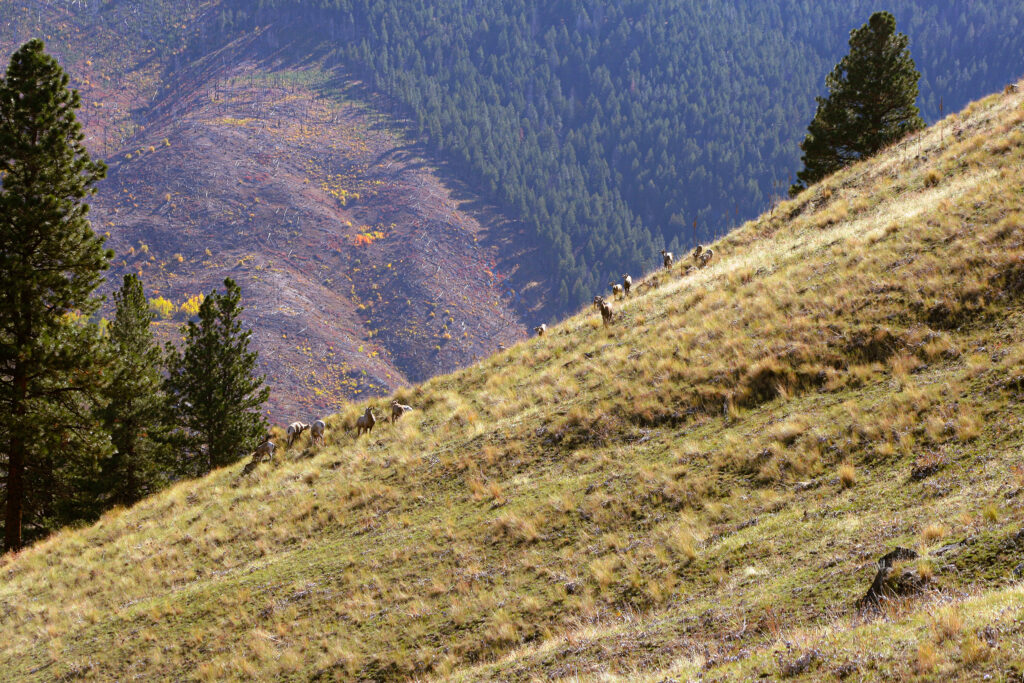
Sheep areas are often massive and frequently consist of a combination of scattered ponderosa pines and vast expanses. Because of the general openness of the country, a wise sheep hunter spends a significant part of their time glassing the area with either good-quality binoculars or a spotting scope. Eventually, that technique paid off for us when John spied a herd of sheep high on a cliff face with some of the animals in the open and others hidden behind scrub brush and trees.
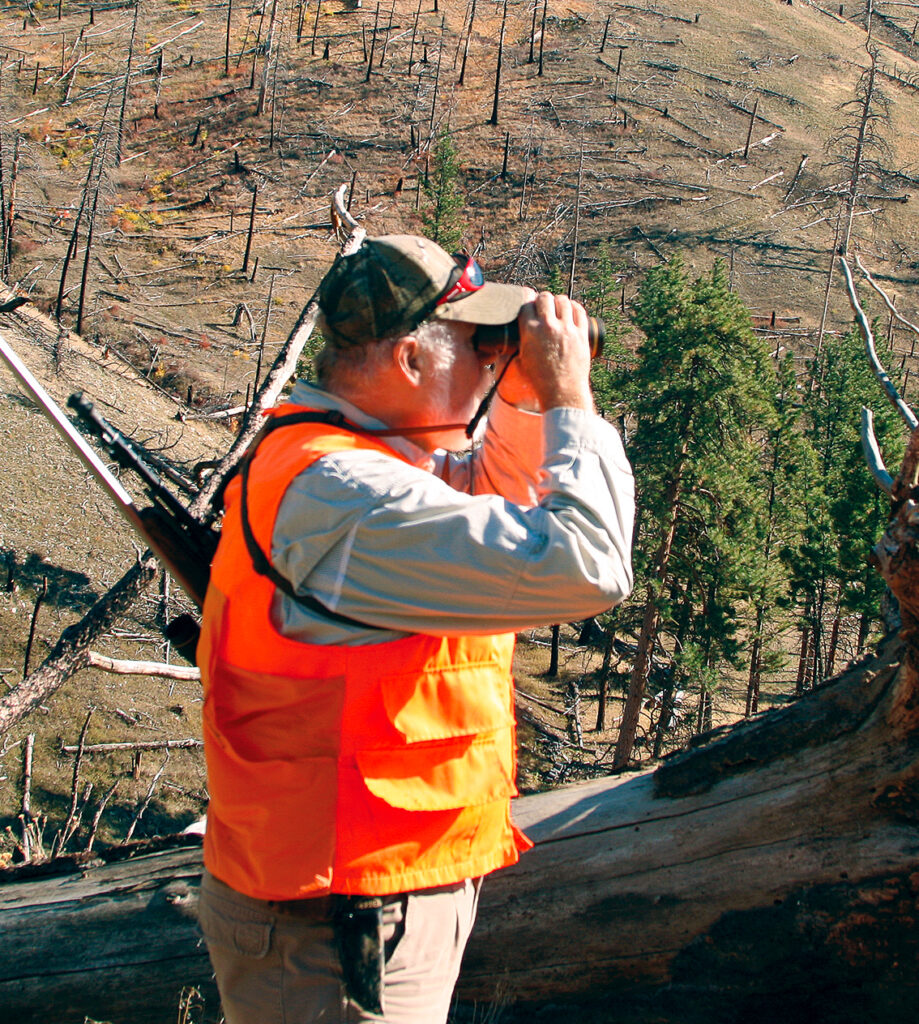
The problem we faced was making an approach in the fairly open territory. With little to hide our sneak and the sheep having a near perfect vantage point to watch from, I feared they would be long gone by the time I settled in for the shot. Even while the herd forged away at about just more than 450m in the distance, I was confident of the Creedmoor’s ability to secure a shot, but I preferred to not chance it if I could close the distance. And being able to observe the herd up nearer would allow me to better judge the animals. I certainly did not want to make the mistake of accidentally shooting a young ram thinking it was a ewe.
Using what little cover we could to hide our approach, we slowly began working our way up the almost vertical cliff face trying our best to stay in a somewhat vertical position ourselves with shell rock moving under foot. Having stopped in an effort to catch our breath, John reached over to tug on my shirt sleeve, then pointed to the far hillside. There, partially hidden by bushes, was a huge black object – a black bear and a big one. Neither John nor I had a bear licence, but our other mate Aaron did. Unfortunately, being satisfied to simply accompany me on my sheep hunt, he had left his rifle at home. I offered him mine to use, but to move within rifle range would likely take a couple of hours and we had sheep to hunt. Reluctantly, after giving the issue a great deal of thought, we agreed to forget about bears and continue our sheep stalk.
While the herd was fully aware of our presence, they seemed somewhat preoccupied at trying to extract whatever nutrition they could from the bushes and grasses that struggled to survive on the rocky hillside. Upon moving within about 100m from the closest animal, I crouched on my knees and extended the legs of my Harris bipod then dropped to my belly, preferring to take my shot from the prone position.
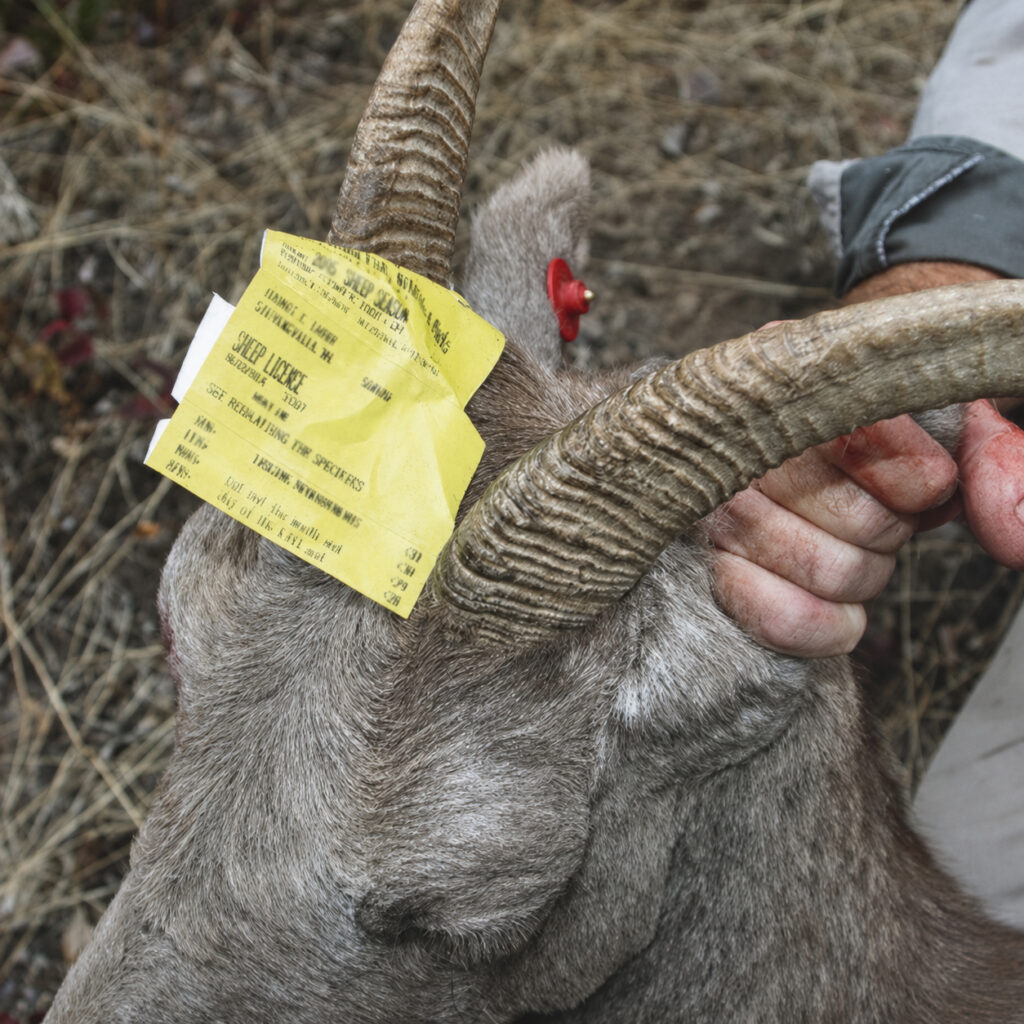
While I was preparing, John was behind me scanning the herd for the best possible animal and soon enabled me to focus my attention on what appeared to be an old, dry ewe partially hidden by a bush. Being confident that this was an elderly animal that would be best culled from the herd, I waited for her to turn broadside for a shot. Feeling just a little uneasy at our closeness, she began to move away and as she turned, I squeezed off my shot. Upon impact of the handloaded 130-grain Nosler AccuBond bullet, the ewe broke and headed down the hillside vanishing from sight. I was completely confident of the shot and after trekking the steep 100m as quickly as we could, we reached my trophy, which had piled up against a bunch of scrub brush. Once again, I was able to hunt bighorn sheep and found even though this ewe did not have nearly as striking headgear as my earlier ram, the hunt was just as memorable and impressive.
Tips for applying for a sheep licence
If you decide to give it a go to try for a licence in one of the western US states, you need to start your plans very early. Some states have early application deadlines. You may in some cases be permitted to apply for a ram tag as your first choice then a ewe tag as a second option. That way if you are unsuccessful in gaining a ram licence, you still would have an opportunity to possibly acquire a licence for a ewe.
In most cases, the licences issued may be restricted to only residents, but other areas may be open to both non-residents and residents. Some jurisdictions may have a points system in place whereby you receive one extra chance at obtaining a licence for each year you have applied and not been successful. In some areas, you may have to purchase a licence in order to apply for the drawing and in most cases that licence fee is generally returned to the applicant if they are not selected, less sometimes a small fee.
The hunting of sheep, as well as all other game species, is controlled by the individual state. Every state has different systems, opportunities and rules applying to the licensing procedures. In most cases, licence application and the regulations are usually available online.
The best advice anyone can take when it comes to sheep hunting is to become well schooled in the requirements of each state and the possibilities that are available to you and be sure to start that research well in advance of any potential hunt.
Share this article
Related
Articles


Related
Recipes
Sorry, no related items found.