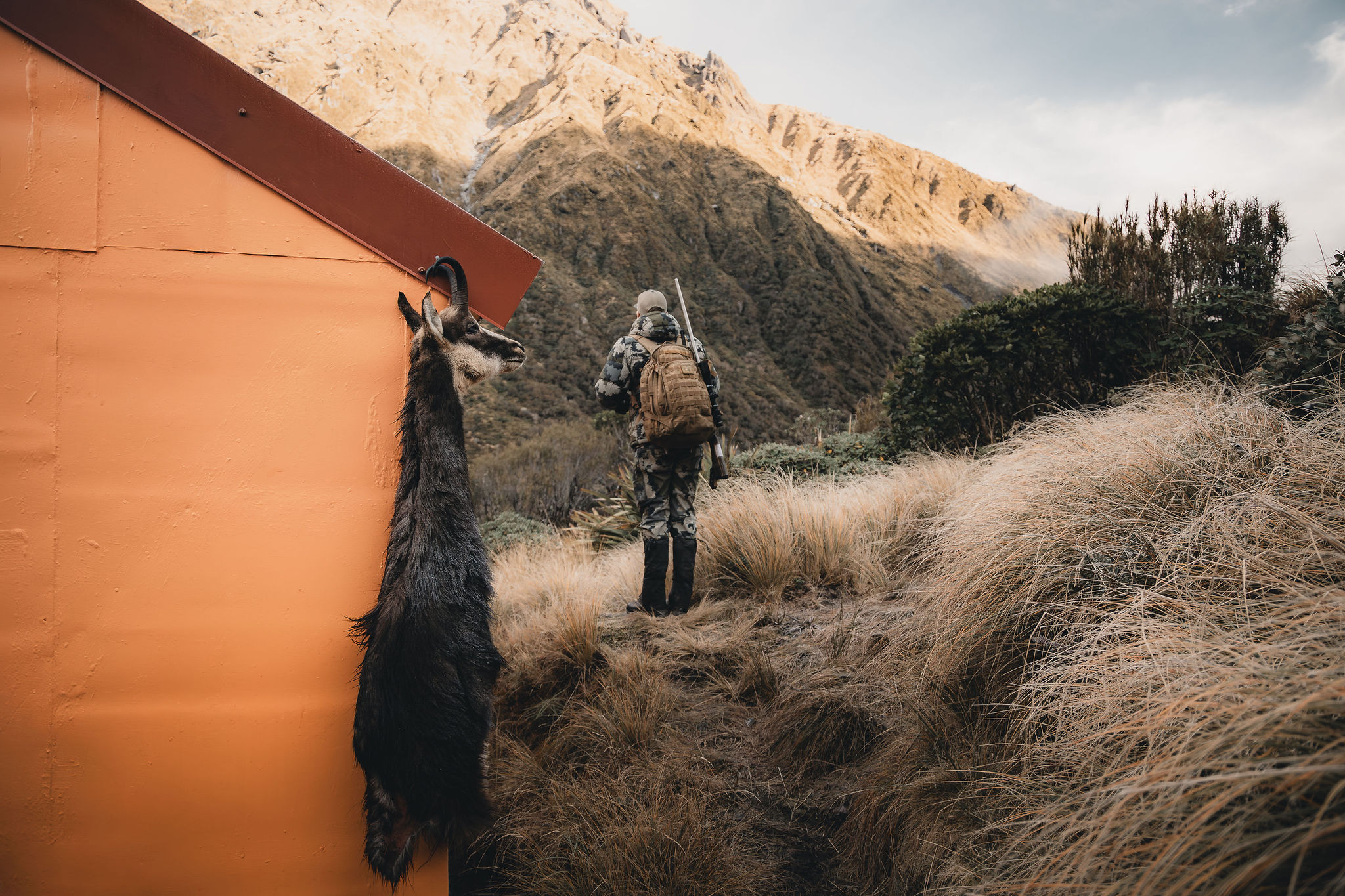
Hunting New Zealand’s West Coast for chamois
Chamois are an alpine goat that live in rugged terrain and can traverse shear vertical rock faces effortlessly. Humans have not evolved to go where they can live, this challenge is what draws hunters from around the world to chase these gorgeous creatures.
The South Island of New Zealand is home to a reasonably steady population of chamois after less than a dozen animals were liberated in the Mount Cook area in 1907. This initial release is responsible for the current population free ranging the wilderness today. How different the world is now compared to 116 years ago; strict biosecurity measures and laws would make it almost impossible to replicate a liberation like this today.
Arriving in Christchurch, early in the morning after the 18:55 Air New Zealand flight from Melbourne, we were met by crisp, sharp air when the airport doors opened as we transferred to the motel. It was a restless few hours of sleep as excitement for the uncharted adventure ahead was overwhelming.
The next morning Dave and Honor from Southern Ranges Safaris arrived to shuttle us to their base in Methven. Soon after arrival, the pilot informed Dave that the weather wasn’t conducive for flying to our initially planned wilderness hunt. A good outfitter will always have a backup plan, so it was decided to fill in a few days on a large free-range private property while waiting for a weather window.
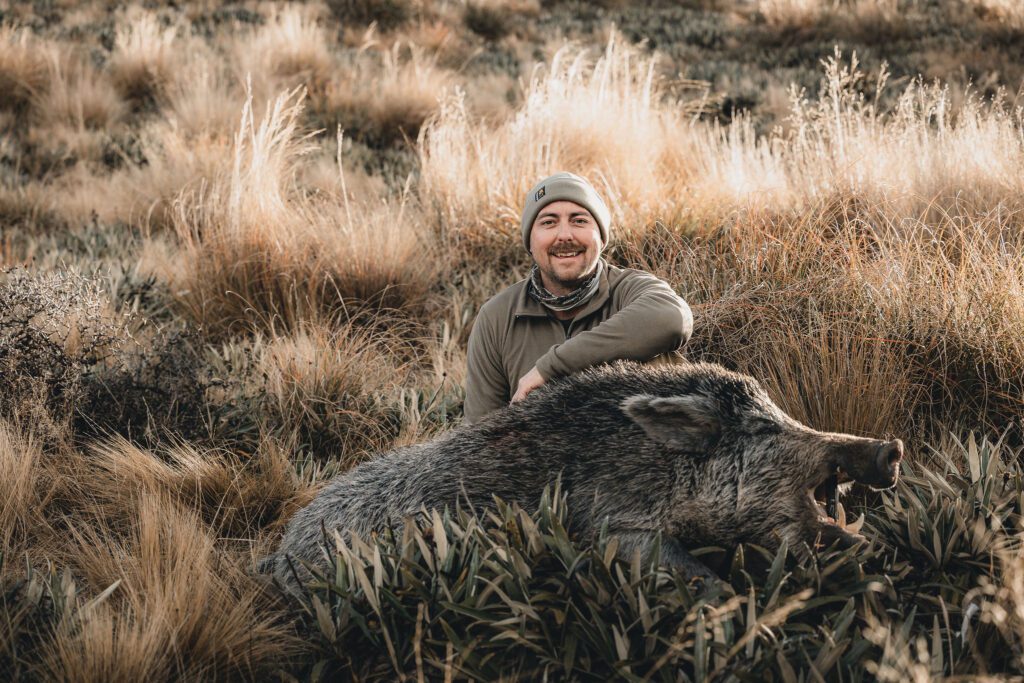
The weather turned nasty on our second day, first 140km/h winds, then 20ml of rain. We hunkered down in a hut, lit a fire and yarned for the next three hours. After the wind died down and rain turned to drizzle, we piled into the side-by-side, leaving the hut in search of animals that were moving about in the better weather. Honor spotted a blue boar on the tussock covered hillside from the buggy. Dave slowed to a stop and we evacuated the vehicle, excited with the prospect of hunting a Kiwi mountain boar.
Honor asked if anyone wanted to hunt the boar, the response was silence. She asked again to the same response. No one spoke up until Honor directly asked me. The response, hell yeah! A short stalk down the steep hill towards where we last saw him ensued. The boar had given us the slip as he ventured down a steep crag in the mountainside. There was a saddle 80m from us, so we waited to watch where the boar was likely to cross.
From 100m downhill, he emerged, broadside in the tussock further past the saddle than expected, directly below our position. Our ambush worked perfectly though, with the boar unaware of what was about to occur. Taking a knee and steadying the rifle above the tussock, the shot process was executed, and the big mountain boar had soon expired. He was a solid lump of a pig with good tusks. His black coat with grey tips made him appear blue in the binoculars and scope. Us Aussies don’t often think of NZ as a pig hunting destination but from Melbourne it’s quicker to hunt there than drive to the north of Australia.
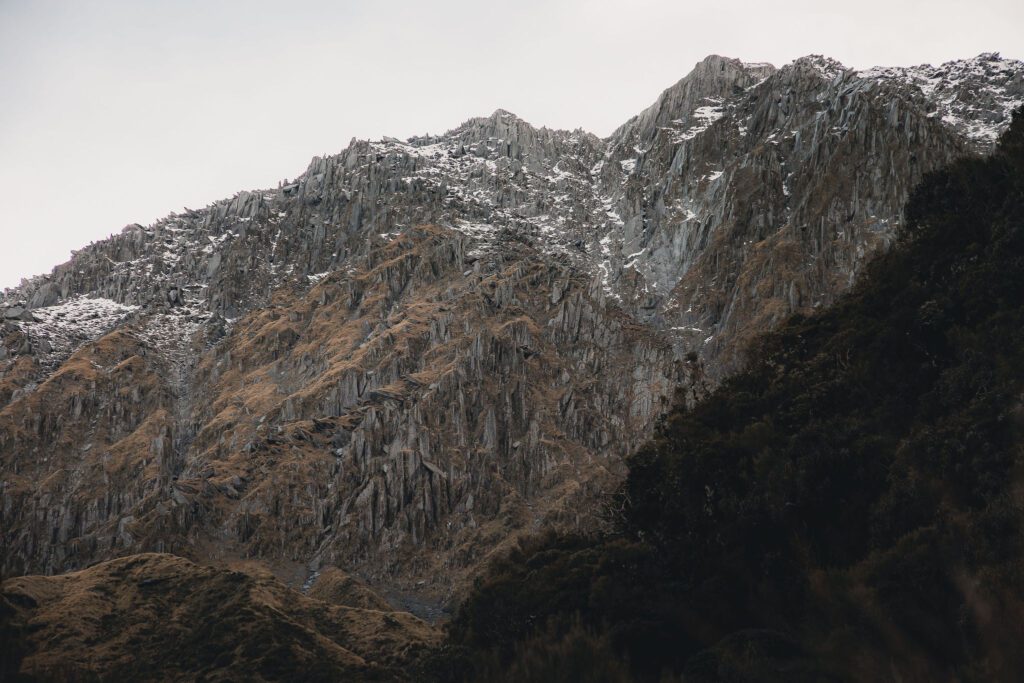
With the bad weather now passed, the west coast wilderness hunt happened on the following day. Scott from Heli Rural flew the Hughes 500D chopper to our DOC hut where we would plan to stay for two nights. The flight through the snowcapped rugged mountains was breathtaking. For the machine to get lift at such elevations we often used updrafts from the mountain to get over a steep ridge, getting in tight to sheer vertical rock walls to catch it. It certainly was an amazing way to experience the area we were about to hunt in. From the air the terrain below looked pleasant, it almost gave a false sense of security.
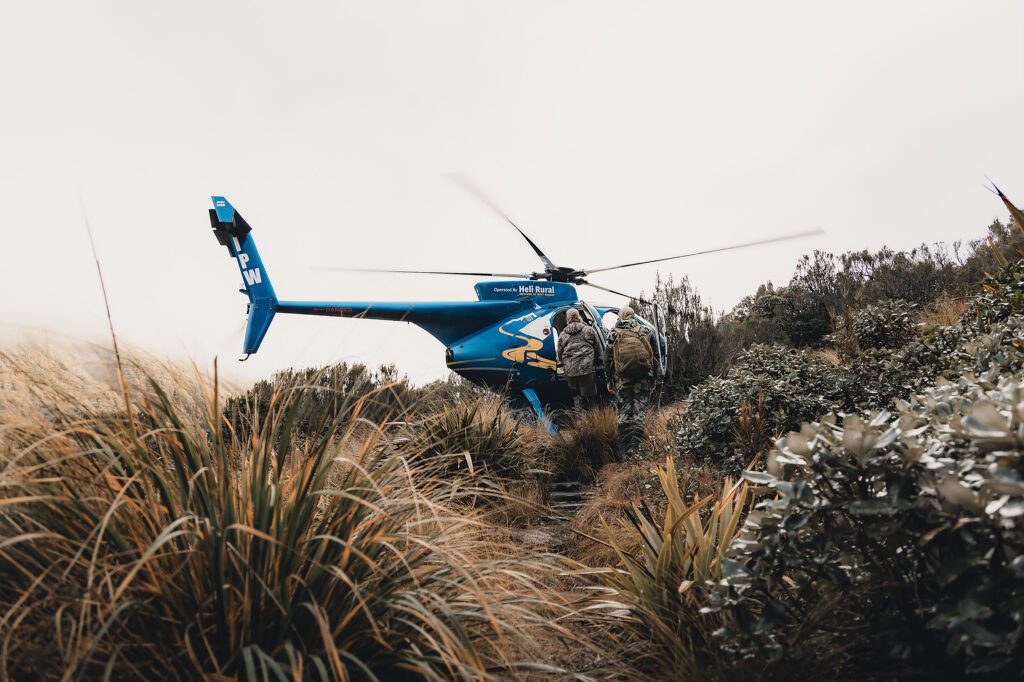
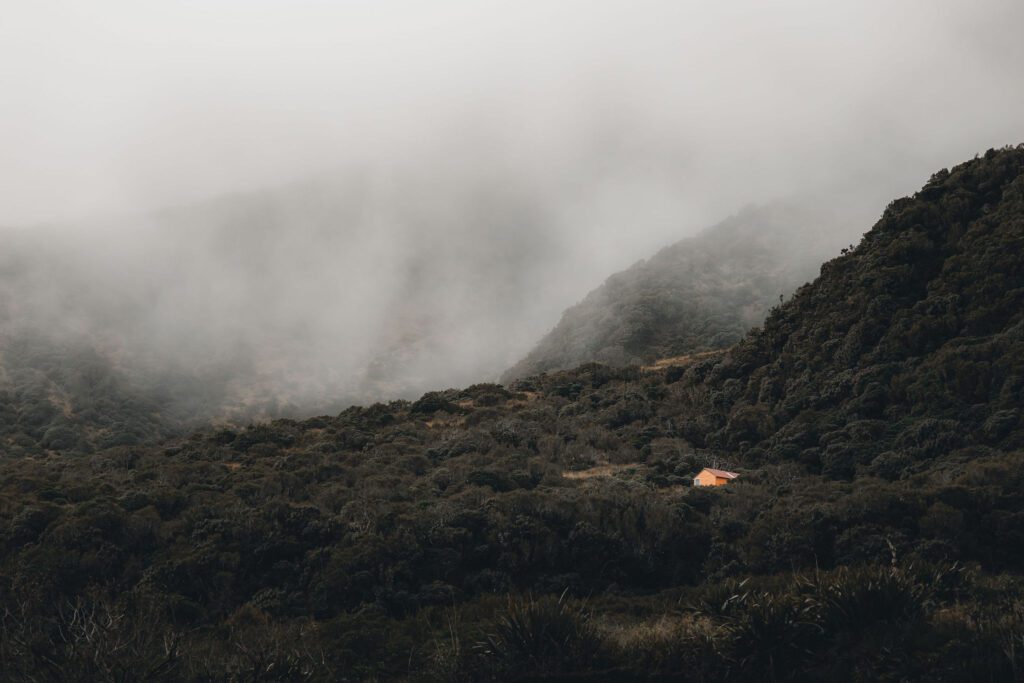
We dropped our main gear at the DOC hut, loaded our hunting gear back on the chopper and hitched a ride upstream 2km to give us a decent opportunity to hunt back to camp for the remainder of the day. With boots on the ground, the west coast country was big, huge would better describe it. Shear vertical bluffs and near vertical tussock covered mountains, down low near the river being monkey scrub and boulders.
It was frosty and cold by the river as we waited for things to settle down after the chopper departed. We gave it half an hour before venturing up the slippery hillside. Jay was looking for the first chamois. Dave said it can happen anytime and anywhere with chamois, you never know. As they crested the first ridge a mature chamois buck bounded away not 25m from them. The buck stopped at 80m. Raising his rifle instinctively, Jay connected with a well-placed shot, dropping the buck instantly. We couldn’t believe it, 150m into our stalk and a chamois was down, proving Dave right that it could happen at any time.
Seeing a chamois buck in person makes you see why hunters from around the world hold them in such high esteem. They are a gorgeous little creature with striking markings around their face and sharp, pointed curled horns. Their behaviour on the hill keeps your attention as they jump around in what looks like a playful dance. We decided to have lunch on the hill next to the buck, taking everything in and experiencing the grand vistas that the west coast is renowned for. Fog started to roll up the valley, topping off the epic scenes. A pretty darn good spot to have a homemade snag roll!
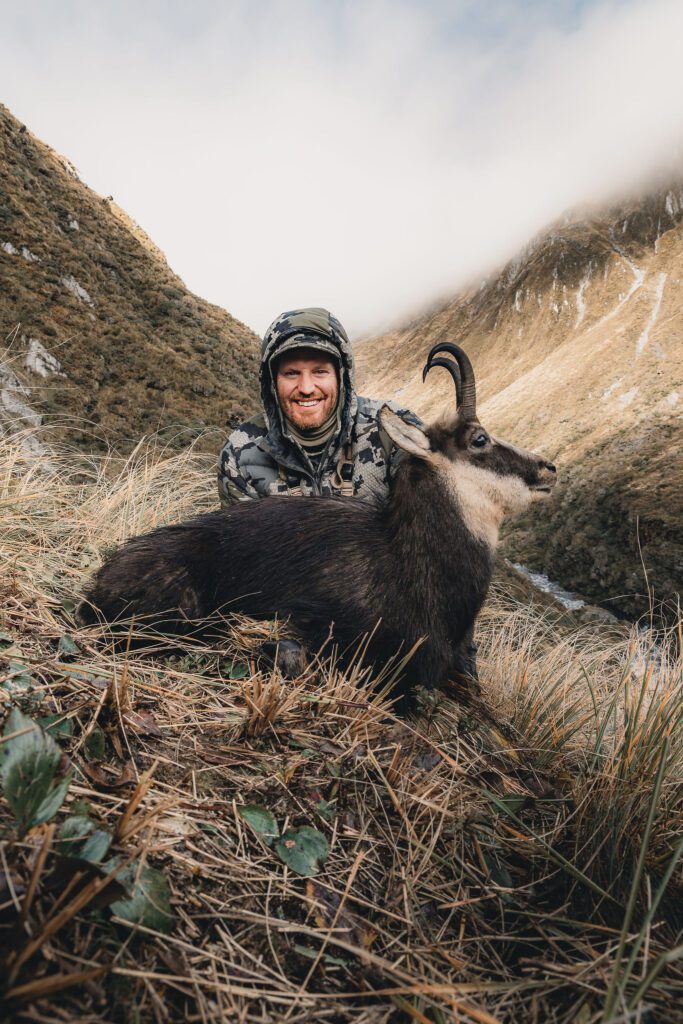
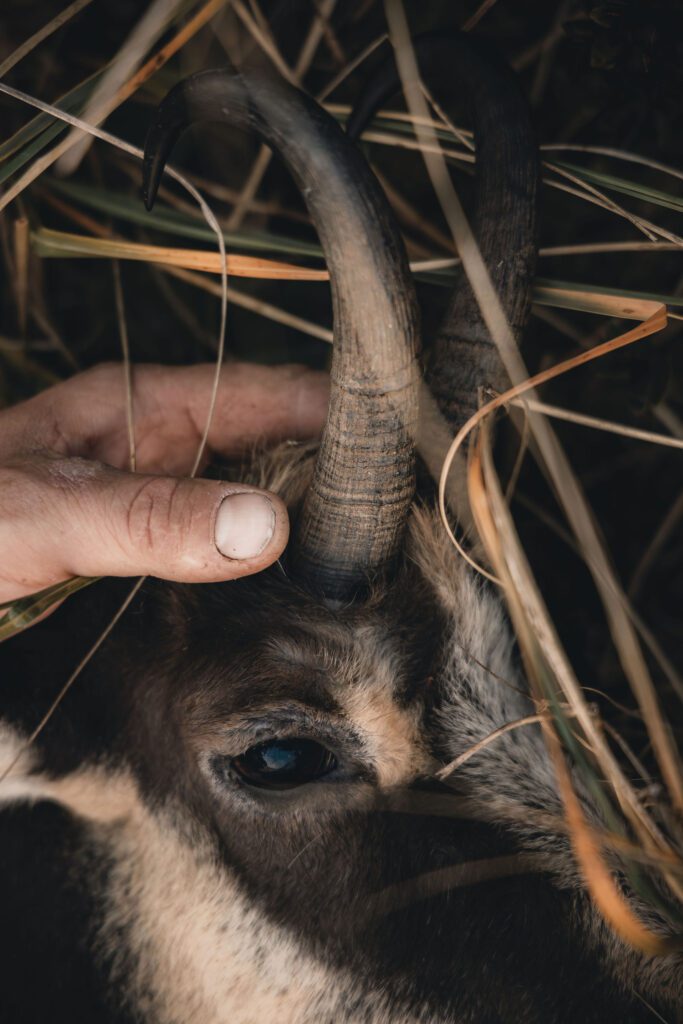
Dave knew his way around a knife and had caped out the chamois in no time. On the way back to the hut we needed to cross the main river multiple times to ensure we made it back with half an hour of sunlight left in the day. What an incredible start to the west coast wilderness experience.
We woke to fog and headed out once it lifted, slipping on cold, wet boots. Across the main river from the hut a group of five chamois were found high on the mountain just below the bluffs. Another single animal was in the gully to the right. All animals were spotted in tussock areas, not in more rocky sections like tahr tend to inhabit.

Being an all-day mission to get up to where these initial animals were sighted, we instead decided to stay on our side of the main river and hunt up a creek that would see us looking down at the hut from way up high on the face.
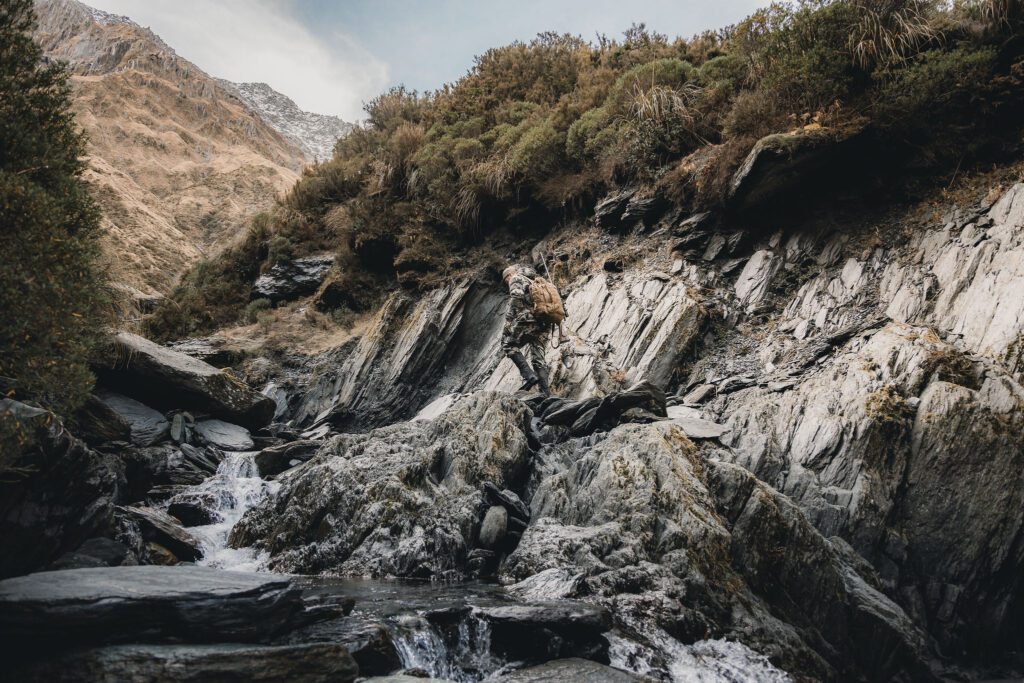
The decision was rewarded with a sighting of nine chamois high in the tussock as we rounded a bend in the creek we were hiking up. Gaining elevation was the plan to allow us to be able to assess if we would make a play at them.
It took the next four hours to get high enough to study the group for a mature buck, climbing near vertical ridges at times. We managed to find ourselves 370m from the mob. After assessing the animals, there was a mature buck but not a huge animal by any stretch. We pushed up and over the ridge we were hiking up, leaving the group as a backup plan.
Once on the other side of the ridge we were walking through tussock which was a little easier going, stopping for lunch with a good view of the next basin. We spotted a lone, unexpected buck way up in the bluffs 360m from us. He was not in a recoverable position, so we watched him while devouring our outdoor gourmet meals.
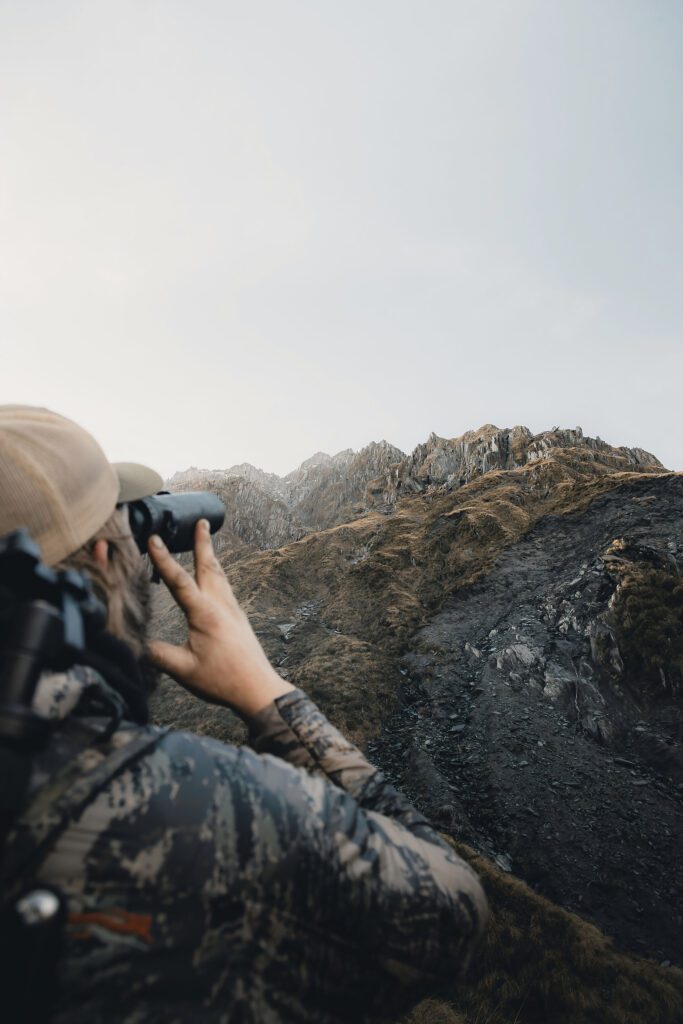
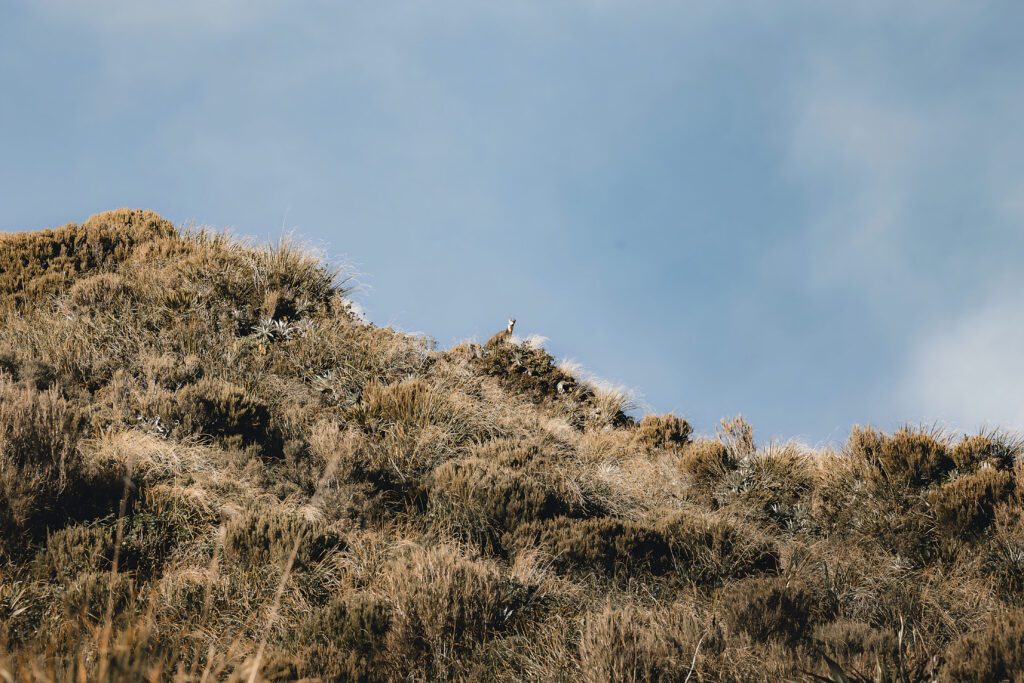
After lunch we headed back to the mob of nine and noticed a bedded chamois way down low on the mountain in a stalkable position. Chamois are renowned for looking for danger from below. We didn’t have the option to get above the original mob, so we hustled down the ridge, over a few gullies and to within 270m of the bedded animal. The mob of nine were now above us by 120m, peering over the edge down towards us making our way to the final ridge.
They took off in the direction of the bedded animal and it got up to watch them. They must’ve been far enough away to not cause much angst because by the time we got to our shooting position the animal had bedded down again.
We weren’t entirely sure if the chamois was the old buck we were hoping for, but we had put in so much effort to get to this point. From what I could see through the scope, it had reasonable horns with decent hooks. The bucks usually have heavier horns with steep hooks compared to a nanny, which can be thinner with less defined curls at the top. I lined up the cross-hairs and squeezed off the shot. The chamois never moved from its bed.
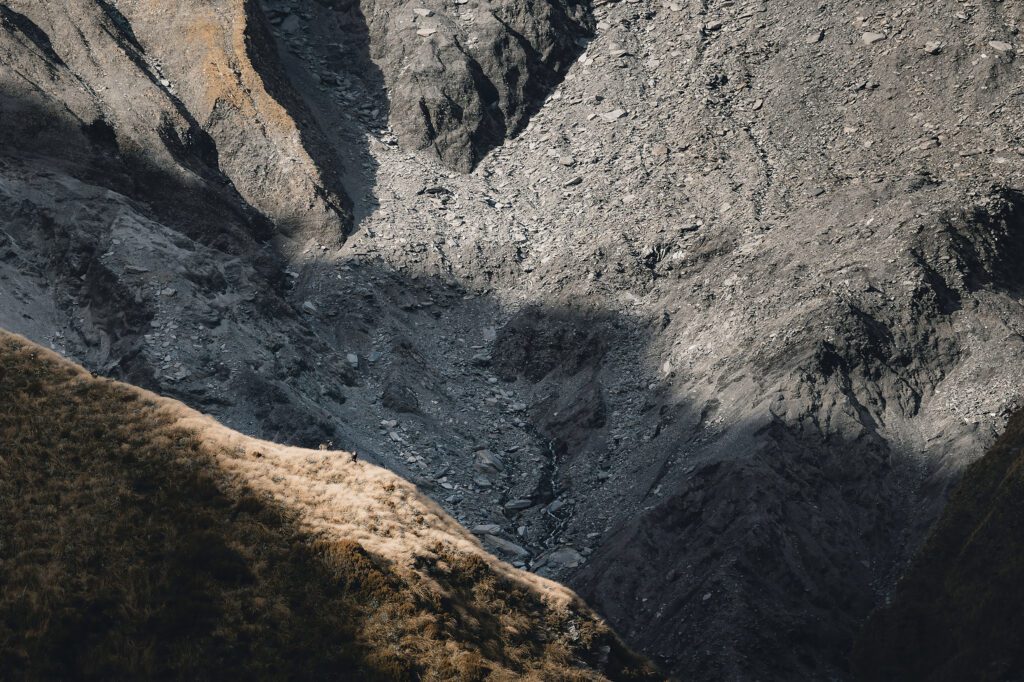
It was a monstrous effort to get to this point; we were all exhausted from the physical exertion required to achieve this moment. At times we needed to grab hold of shrubs and tussock to pull ourselves up the steepest sections of our stalk. It was an entire body workout which ended with a brief encounter with a beautiful chamois buck. It wasn’t until the shot was made that we realised just how hard we’d worked, once the adrenaline dispersed every little ache could be felt.
A drop in elevation almost to the creek and then a climb back up the ridge where the chamois lay motionless were required to reach him. Considering the amount of time taken to get to this point and with only an hour of light left in the day, the decision was made to retreat off the mountain and back to the hut. The chamois would need to be recovered the next day. Making it back to the hut as the last rays of sun disappeared over the mountain confirmed the correct decision was made, one wrong step in this country could have disastrous consequences.
That night in the hut was special, we recounted our wilderness experience so far, drank a couple of beers, devoured the backstraps from Jay’s buck and finished off the night with a couple of ports. Sleep came extremely easy.
Waking up stiff-legged and keen to recover the animal, we packed down our gear ready for the chopper. There wasn’t enough time to hike to the chamois and back, so we glassed around the hut hoping for an easier animal to recover. We couldn’t locate any stalkable animals before Scott arrived to take us up to where the chamois lay. We circled around the spot where the buck was left and located the dark coated animal reasonably quickly. The chopper landed and we jumped out to finally put hands on the buck. He wasn’t an old buck, but he was perfect for my first chamois from the west coast wilderness of NZ.
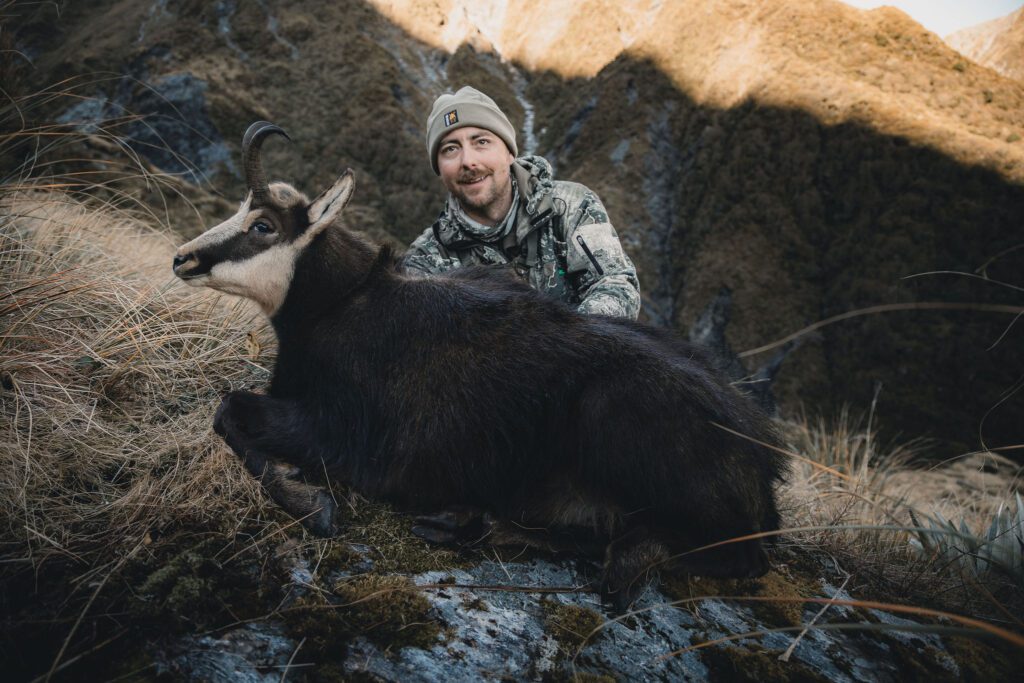
We had reasonably mild daytime weather on this hunt but for those that are interested my gear list it was as follows:
- Crispi Nevada Legend boots
- Swazi Hasbeanie, Hoodoo Bush shirt, Ibex and Ranger socks, Kagoule anorak and Hutties for nighttime at the hut
- Ridgeline Softshell jacket and gloves
- Stone Glacier pants and 5900 pack
- Skeleton Optics Outlaw sunglasses with Zeiss lenses
- Vortex 10×42 binoculars
- One Planet -20 sleeping bag with sea to summit +15 liner
- Olight headtorch.
Share this article
 Website
 Instagram
Related
Articles


Related
Recipes
Sorry, no related items found.