

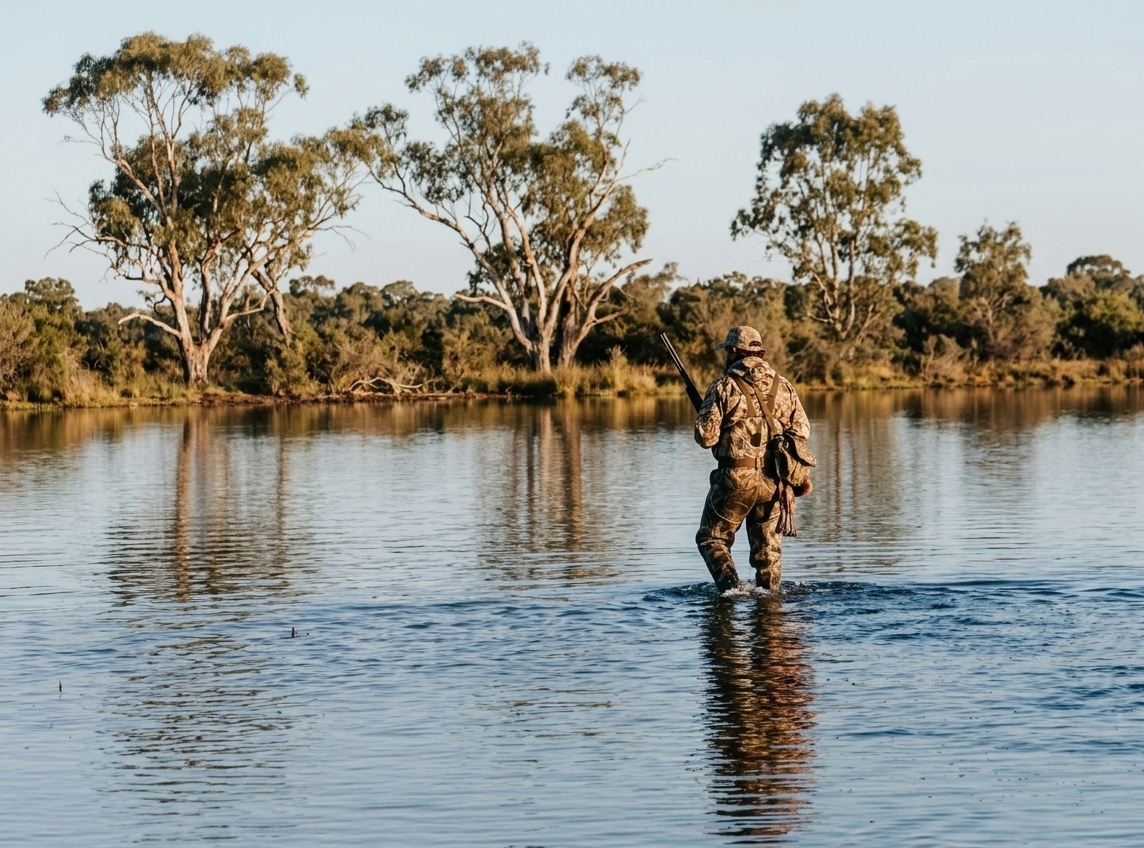
Victoria’s duck hunting future uncertain ahead of election
Victorian Premier Ben Carroll has declined to guarantee Labor’s continued support for duck hunting if it wins the state election on November 28. At the Herald Sun People’s Forum on November 17, audience member David asked, “…will you commit to permanently ending recreational duck shooting?” Carroll opened with “I will look at it”, acknowledged views on both sides of the debate and concluded, “but I will look at it”. Watch the full exchange.
Opposition Leader Jess Wilson pledged to retain existing duck hunting laws under a Coalition government, while Victorian One Nation leader Warren Pickering also committed to supporting recreational duck hunting. The Victorian Greens, meanwhile, want recreational hunting of native waterbirds banned. Those positions put the future of duck hunting in the spotlight ahead of the state election on November 28.
The debate comes as a government-commissioned study estimates duck hunting contributed $76.7 million to Victoria’s gross state product over the 12 months to February 2026. Beyond its economic contribution, the decision will have implications for recreational hunters, regional communities and the sustainable harvesting of native game ducks for the table.
Where the parties stand
Carroll’s answer raised questions about Labor’s position after the election. In its 2024 response to the parliamentary inquiry, the Victorian Government rejected a recommendation to ban recreational native bird hunting, instead supporting continued hunting alongside annual population monitoring and improved hunter education. Carroll’s latest remarks appeared to leave room for that position to change.
The following day, Victorian Labor state secretary Steve Staikos wrote to SSAA Victoria, acknowledging the Association’s research and submissions and stating, “In 2024, the Labor Government made a clear decision to continue recreational duck and quail hunting in Victoria. Our position has not changed. We continue to support recreational duck and quail hunting in a safe, sustainable and responsible way.” Premier Carroll has yet to clarify his remarks publicly.
Wilson backed retaining the current laws, telling the forum, “we will not change duck hunting laws as they are now”. She gave a similarly clear response on 3AW on August 24. The existing framework includes annual decisions on seasons and bag limits. The 2026 daily limit was nine game ducks, although future limits will depend on annual population assessments and the government’s season arrangements.
Victorian One Nation leader Warren Pickering also committed to supporting recreational duck hunting. The party’s published policy pledges to protect duck hunting with current bag limits.
The Greens remain opposed to recreational duck hunting. Their Victorian animals policy calls for a ban on recreational shooting of native waterbirds, with an exception for First Nations cultural practices. Victorian Greens leader Ellen Sandell reiterated that position at the forum.
SSAA Victoria has been actively engaging with political parties to secure commitments on hunting and shooting ahead of the election. Through its election campaign, the Association is encouraging hunters and shooters to compare party policies, examine their records and make informed voting decisions. Its dedicated election website, shootersvote.com.au, provides further information on where the parties stand.
What the $76.7 million figure measures
The Department of Jobs, Skills, Industry and Regions commissioned BDO’s assessment of recreational hunting. BDO and Action Market Research received 2583 survey responses from Victorian game licence holders, examining expenditure on hunting trips and related purchases. The study excluded spending by people under 18 and those hunting professionally.

The research estimated that recreational hunting across the game species studied contributed $559 million to Victoria’s gross state product, with duck hunting accounting for approximately 14 per cent, or $76.7 million. That includes direct and indirect economic activity. Assessing the financial consequences of a ban would require separate modelling of how hunters and businesses might respond.
More than 70 per cent of the total economic contribution from recreational hunting was generated in regional Victoria, according to the state government. While that percentage covers all species studied, duck hunting contributes to regional expenditure on accommodation, fuel, food and other services.
What hunters know about the next season
Victoria’s 2026 duck season ran from March 18 to June 8, with a daily bag limit of nine ducks. Seven native game duck species were permitted, while the blue-winged shoveler remained protected under a year-round hunting closure.
Under the Victorian Game Duck Harvest Strategy, the Game Management Authority (GMA) uses population surveys, habitat conditions and previous harvest data to recommend sustainable bag limits. The strategy adopts a proportional harvest target of approximately 10 per cent of the estimated game duck population, with the responsible ministers ultimately determining season arrangements.
In October, we reported that wildlife biologists were preparing to survey more than 860 waterbodies across Victoria. Aerial and ground counts, combined with satellite measurements of available water, will inform the next statewide population estimates.
The 2025 survey estimated approximately 4.9 million game ducks across Victoria, a 22 per cent increase on 2024, although still below the 2023 estimate. Those figures informed the nine-duck daily limit for 2026.
SSAA Victoria has reported early observations suggesting duck numbers could be higher again in 2026, raising expectations of another strong year. However, the final scientific assessment is still pending, and those observations should not be mistaken for confirmed statewide population figures.
This highlights why duck hunting arrangements must be based on sound scientific evidence rather than hearsay, political pressure or arbitrary limits. Population estimates, breeding conditions, habitat availability and sustainable harvest levels should guide decisions. Where active management of particular duck populations is genuinely warranted, that too should be supported by species-specific evidence and clear conservation objectives, rather than numbers alone.
Regulated hunting already provides an established means of sustainably harvesting game ducks for food, while population monitoring helps protect the long-term health of the species and their habitats. Neither increased duck numbers nor political opposition should replace that evidence-based approach.
Victorians head to the polls on November 28. For duck hunters planning next autumn, the next major development will be the announcement of the 2027 season arrangements. Whether a season proceeds, and under what conditions, remains the critical question.
Share this article

 Website
 Instagram
 Facebook
Related
Articles


Related
Recipes