

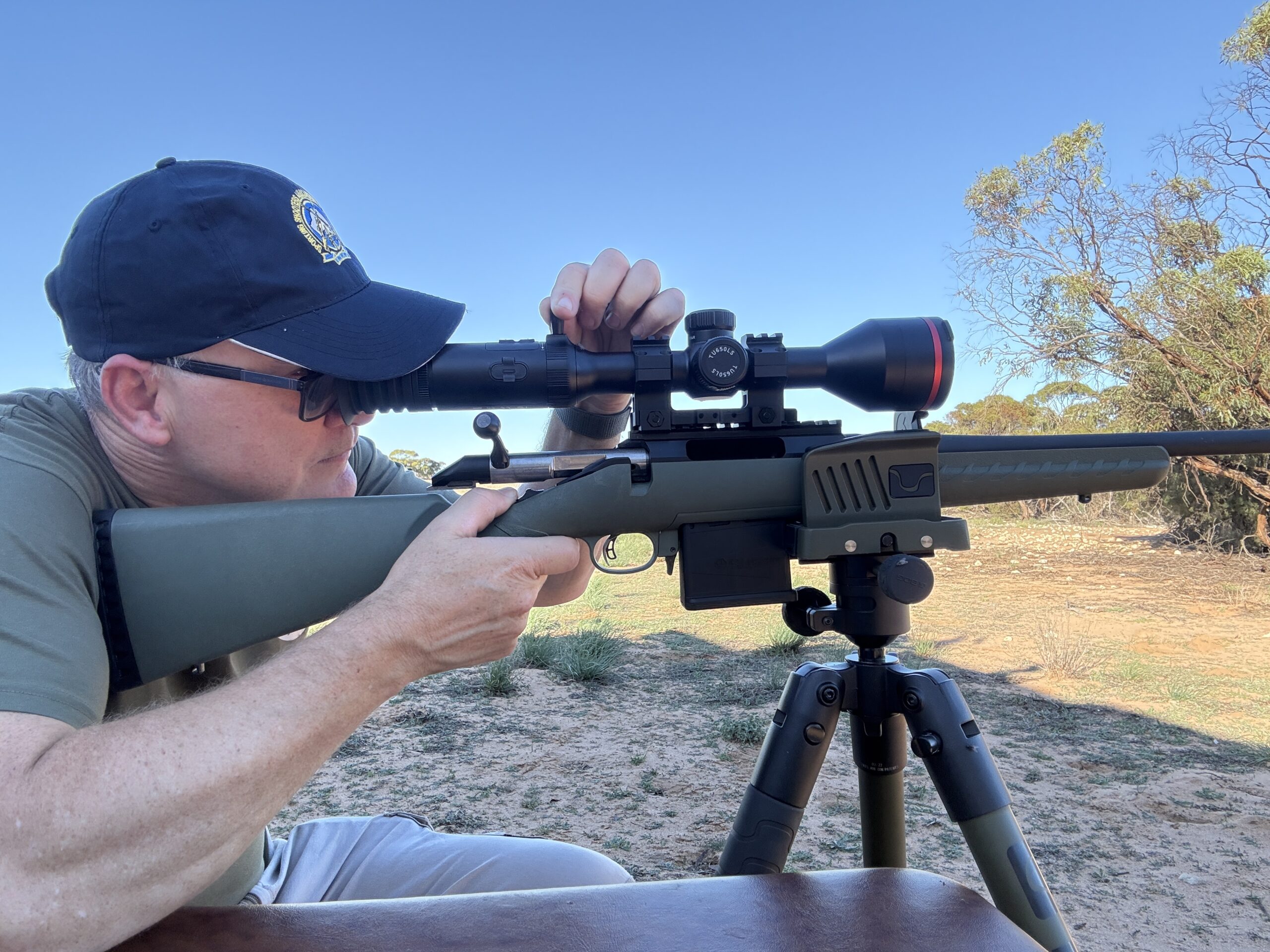
Hunting with the Guide TU650LS thermal riflescope
When I started researching the Guide TU3.0 Series TU650LS thermal riflescope, it immediately stood out as a unit designed to combine high-end thermal performance with practical, in-field usability. With a 640-class sensor, integrated laser rangefinder (LRF) and solid list of modern features, it’s clearly aimed at hunters who want more than just basic thermal capability.
Having reviewed a number of thermal scopes down the years, the key factors I always look for are image clarity, ease of operation, battery performance and how well the technology translates into real-world hunting scenarios. On paper the TU650LS ticks all the right boxes but, as always, it’s performance in the field that really matters.
Build and design
The TU650LS follows a traditional 30mm tube riflescope layout, which will appeal to hunters who favour a familiar setup. Rather than adopting a compact or unconventional look, Guide has stuck with a design which integrates seamlessly with standard rifle setups.
The housing feels solid and well-constructed, built to handle the knocks and bumps which come with regular use in the field. Despite packing in a significant amount of technology, it maintains a manageable weight and balance when mounted, the scope and supplied quick-detach mount weighing 1221g on the office scales (the housing itself is reportedly 935g).
Controls are simple and intuitive. A single ‘click and rotate’ button layout allows users to quickly navigate menus and adjust settings, without needing to take their focus off the task at hand. This is particularly important when operating at night or in cold conditions where gloves are required. The adjacent focusing knob button rotates left and right to facilitate easy corrections for both near and far targets.
Sensor and image performance
At the heart of the TU650LS is a 640 x 512 thermal sensor with 12μm pixel pitch, delivering the level of detail expected from a premium product. Combined with a high-sensitivity 15mK NETD rating and 50Hz frame rate, the scope’s designed to produce clear images even in less than ideal environmental conditions such as humidity, fog or temperature crossover. Using next-generation sensors combined with advanced processing algorithms, the scope enhances image performance with improved clarity, lower noise levels, optimised contrast and greater resolution of fine detail.
The 50mm objective lens provides a good balance between field of view (15m x 12m at 100m) and detection capability (2600m range). This makes the scope suitable for a wide range of applications, from close-range pest control through to longer-range spotting and shooting. It has a versatile digital zoom range of 3.7x to 29.6x. Images are displayed on a high-resolution 2560 x 2560 1.03″ Amoled screen, offering strong contrast between animals and background, multiple colour palettes allowing you to tailor the image to suit your preferences and conditions at hand.
Laser rangefinder and ballistic calculator
One of the standout features of the TU650LS is its integrated laser rangefinder. In thermal shooting, accurately judging distance can often be one of the biggest challenges, particularly at night when visual reference points are limited. This can seed some doubt in the mind and potentially cause opportunities to be passed up.
The inclusion of an LRF removes much of that guesswork. With the press of a button, users can obtain an accurate distance reading up to 1200m, allowing for more confident shot placement, especially when shooting at varying ranges. When paired with the ballistic calculator (which you configure through the TargetIR ballistics app) and user experience over time, this feature becomes a genuine advantage in the field, particularly for those targeting smaller animals like rabbits, where precision matters.

Features and functionality
The TU650LS is packed with features expected in a modern thermal scope, including multiple reticle options, a range of colour palettes (White Hot, Black Hot and more), digital zoom capability, video recording including recoil-activated capture, wi-fi connectivity for mobile integration and firmware update support.

The ability to capture footage, either manually or automatically, is a useful addition for those looking to review shots or record hunting experiences. Battery performance is designed for extended use of up to 14 hours, while the system supports longer sessions in the field without constant recharging, with one built-in battery and two external ones provided.
Setup and zeroing
Initial setup is straightforward, with menus easy to navigate and configure. Reticles, palettes and recording settings can all be adjusted quickly. As with most thermal scopes I test, zeroing began by placing a target at 50m, my approach using a simple but effective method of screwing the cut-off base of a drinks can to a backing board. The reason for this is simple: The aluminium base provides excellent thermal contrast against the timber. In direct sunlight it heats up quickly, alternatively a butane torch can be used to create a clear heat signature.
After firing an initial shot, I take a second can base downrange and position it directly over the point of impact, if some distance away from aiming point. This removes the need to rush adjustments while the thermal signature of the first shot’s impact is fading. With two clearly defined reference points, reticle adjustment becomes simple and precise, usually requiring only one or two additional shots to confirm zero.

Field performance
This is where the TU650LS ultimately proves its worth. The sensor and associated processing deliver a consistently clear image, allowing for confident target acquisition across a range of conditions. Testing on small targets such as rabbits gave a good indication of both sensor performance and effectiveness of the laser rangefinder.
Rabbits out to around 200m were easily detected and ranged, with identification remaining clear at practical shooting distances. Even in early evening I found no need to adjust contrast or brightness settings, with the factory configuration providing an image which was more than adequate for field use. I’m a firm believer in the KISS concept (Keep It Simple, Stupid!)
Across both open paddocks and more cluttered bush environments, the scope performed as expected for a unit in this class. The LRF and ballistic functionality allowed for confident shooting on smaller targets out to around 150m, while on larger-bodied animals such as deer or pigs, this effective range would easily extend depending on shooter capability.

Image quality in the field
Thermal performance is heavily influenced by real-world conditions, and this is where differences between units become apparent. In this case, the TU650LS delivered consistent performance without the need for ongoing adjustment. During early evening use in mild conditions, image quality remained clear and well balanced then, as ambient temperatures dropped, performance improved further, with increased contrast between target and background. Clarity was strong and both detection and identification aligned with expectations based on the unit’s specifications.
Battery and practical use
Battery life is a critical factor for any thermal scope, particularly during extended sessions, the TU650LS being rated for up to 14 hours of operation. With two batteries supplied and a USB charging option, it’s easy to keep one charging while the other’s in use. Battery changes are quick and straightforward and, with an internal power source also in play, the unit can remain operational during swaps without having to power down.
Final thoughts
The Guide TU650LS presents as a well-rounded thermal scope, combining solid sensor performance with practical, user-focused features. The inclusion of a laser rangefinder adds genuine value, particularly in night shooting scenarios where distance estimation can be challenging.

As with any thermal optic, its true value is determined in the field. Based on performance during testing, the TU650LS is a capable option for pest control and general night hunting applications. With an estimated price point of around $5899, Guide offers a three-year device and 10-year sensor warranty.
Share this article

 Website
 Facebook
Related
Articles



What to carry hunting: Essential gear for safety and success
Related
Recipes
Sorry, no related items found.