

Where hunting fits into conservation
It has been said that humans are little more than parasites on planet Earth, altering it in ways that disrupt the intricate relationships between living things, climate and the environment. Whether or not that comparison is fair, there is no denying that human activity has reshaped the natural world on an unprecedented scale.
This reality was recognised more than 150 years ago, when early conservationists began pushing to set aside large tracts of land for protection and recreation. One of the earliest examples was Yellowstone National Park in the United States. Its creation followed the famous moment when four explorers, sitting around a campfire after discovering the region’s extraordinary natural features, resolved to have the area preserved in its natural state for future generations.
Yellowstone became the world’s first national park. Far fewer people realise that the second was Georges River National Park, near Sydney. From there, the idea spread as governments gradually came to recognise the value of wild places – not only for scenery and wildlife, but as refuges where people could better understand nature and humanity’s place within it.
These early declarations were far from easy. They attracted political resistance and opposition from vested interests, and in some cases, governments avoided the issue altogether. Attitudes shifted, however, once national parks began attracting visitors, generating tourism, employment and economic return. From that point on, conservation gained momentum, and today every country on Earth has land set aside to protect ecosystems, landscapes, forests, wildlife and natural history.
National parks now generate enormous income for nations, states and local communities that benefit directly from their natural attractions and wildlife. Yet there is an inherent contradiction: many parks are managed as if nature exists best without human intervention, despite the fact that humans have become the dominant ecological force on the planet.
This raises a fundamental question. Are humans solely responsible for the planet’s decline, or do we also hold the power – and the obligation – to prevent further loss? While opinions differ, it is clear that parks and reserves alone cannot solve the problem. They represent both the triumphs and the limitations of modern conservation. Australia is often cited as a global leader, with more national parks and protected areas than any other nation.
Yet is it already too late?
No place on Earth remains untouched by human influence. From waterless deserts to the frozen extremes of the Arctic, humans have mastered every environment. Along the way, we have plundered natural resources – often with little foresight or regard for future generations.
Ironically, humans were once among the planet’s most vulnerable species. As hunter-gatherers, we lived in balance with other animals and feared large predators. Around 50,000 years ago, that balance shifted as humans learned to trap and tame animals, develop weapons and use technology to gain dominance. As civilisation spread, wildlife paid the price. In the past 300 years alone, countless species have disappeared, driven by land clearing, agriculture, energy projects, mining and unchecked expansion.

Hunting, however, is not the problem. It is the oldest culture in the world. Humans have hunted animals for food, clothing and survival since time immemorial, and animals evolved alongside us to avoid predation. Even today, most wildlife instinctively flees from humans, having learned that the ‘hairless ape’ is not to be underestimated.
Early national parks did not exclude hunting and fishing; in many cases they were established specifically to support them. Boundaries existed, but animals retained a healthy fear of humans. In contrast, many modern parks – particularly those without active management – now host wildlife that shows little fear of people, often to the detriment of both.

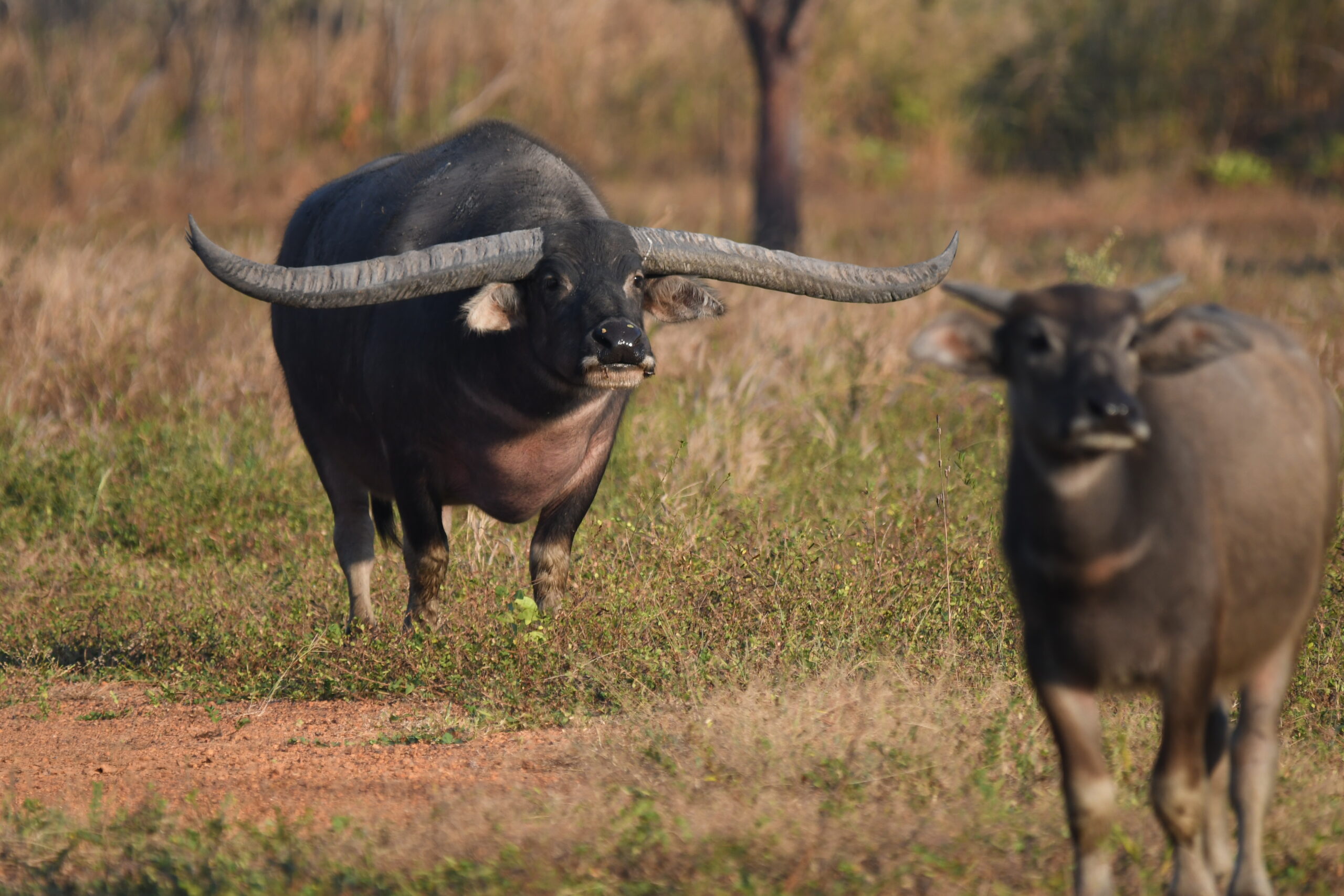
This inconsistency is especially evident in parts of northern Australia, where so-called national parks under traditional ownership allow unrestricted hunting. Kakadu National Park is a prime example. Within this World Heritage area, feral buffaloes and other animals are fenced into fragile wetlands to provide food for traditional owners and recreation for visiting hunters, despite the nearby township of Jabiru having full access to modern food supplies. Trophy hunting also occurs within these enclosures.


Magpie geese and other waterfowl are shot in park zones closed to the general public. Antilopine wallaroos, agile wallabies, bustards and brolgas are taken freely. Added to this are gill nets and extensive burning regimes that damage habitat, destroy monsoon rainforest pockets and further reduce wildlife populations. These practices are routinely ignored by authorities, despite their clear environmental impact.

At the same time, ‘modern environmentalists’ often oppose regulated hunting elsewhere. They protest controlled duck seasons and criticise hunters who assist park managers in reducing feral animal numbers, even though such programs are widely recognised as effective conservation tools.
Globally, hunters have been at the forefront of practical conservation. They have funded and supported countless projects, particularly in Africa, where licence fees and trophy revenues are used to combat poaching, manage wildlife populations and protect endangered species. While critics deride this funding as ‘blood money’, it remains one of the most successful conservation models in existence.
Opponents often claim that hunting and fishing are elitist or immoral, particularly in densely populated countries. Even catch-and-release fishing is condemned, even though licence fees, permits and associated costs fund wildlife management programs that benefit entire ecosystems, including non-hunted species.
Humans also kill animals to protect themselves – from carnivores such as lions, tigers, bears and crocodiles, and from large herbivores like elephants and rhinos. Australia is frequently portrayed as deadly, yet it is statistically one of the safest continents when it comes to wildlife attacks. The only genuine threats are sharks and saltwater crocodiles, both easily avoided.
The saltwater crocodile is one of modern conservation’s great success stories. Once driven to near extinction by uncontrolled shooting, it was protected in 1974 and has since recovered across Northern Territory, Western Australia and Queensland. Today, rising crocodile numbers have led to increased attacks, prompting calls for culling or removal. Without sensible management, public pressure may once again push the species toward persecution.
Conservation is complex. Human populations continue to expand, pushing into remote areas and placing increasing pressure on ecosystems. Nature once corrected imbalance through disease and disaster, but humans have learned to adapt and persist. The question is whether we can now adapt responsibly.
One of the few places where wildlife exists without human interference is the Chernobyl Exclusion Zone. Following the nuclear disaster, humans were removed, and wildlife has flourished despite radiation. Animals there show no fear of people, treating them as just another species. It is a stark reminder of nature’s resilience, but also of an uncomfortable truth: outside exclusion zones like Chernobyl, conservation now depends on informed human management, not absence.
Looking ahead, the future remains uncertain. Will humanity continue down a destructive path, or learn from past mistakes? One lesson is already clear. In the United Kingdom, over-protection has led to exploding deer populations, forcing the government to promote venison consumption as a solution.
It is a powerful example of an uncomfortable truth: preservation without management is not conservation. And time and time again, it is hunters – practical, informed and invested – who provide the balance nature now needs most.
Share this article
Related
Articles


Weipa hunt draws record field


Watagans pest control highlights missed opportunity for recreational hunters


Related
Recipes
Sorry, no related items found.