

Building a dependable .223 workhorse
The .223 needs no introduction to Australian hunters. It is one of the most popular centrefire cartridges in the country – arguably the most popular. Factory rifle options are virtually endless, as is the range of ammunition. The cartridge is widely used in target competitions, favoured by small- to medium-game hunters, relied upon by professional kangaroo harvesters and enjoyed by weekend plinkers alike. Factory ammunition is relatively inexpensive compared to other centrefire rounds, and for reloaders, the variety of projectiles in the .224-calibre is extensive.
My own .223 was purchased and set up as a dependable ‘workhorse’ for SSAA Farmer Assist programs.
Rifle
After my first Farmer Assist trip to Barcaldine – helping a farmer manage kangaroo numbers under permit – I was struck by both the volume of animals and the amount of shooting/ammunition required. The rifles I initially used felt like overkill; they burned more powder than necessary and used costly projectiles that weren’t justified for the task. On the drive home, after discussing it with my shooting mate Bob, the .223 quickly emerged as the logical choice.
More than a decade of Farmer Assist programs later, we still aim to remove around 1000 kangaroos between us over the course of a week. We’ve reached that target many times, so efficiency and practicality matter. For this type of sustained shooting, the .223 makes perfect sense.
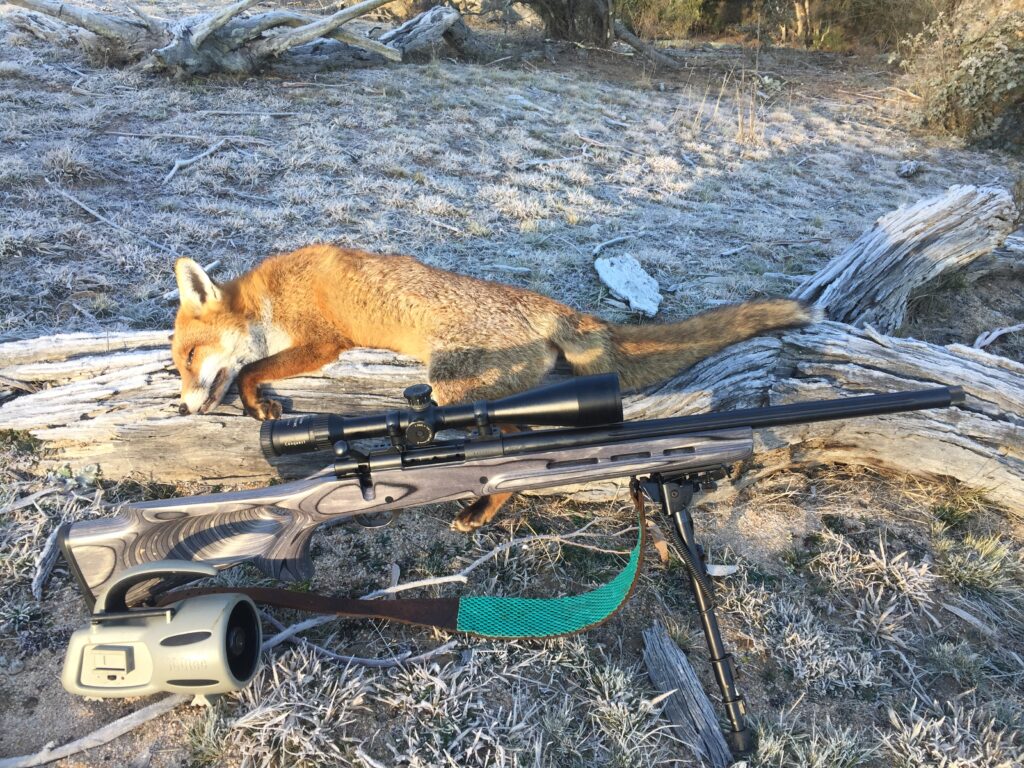
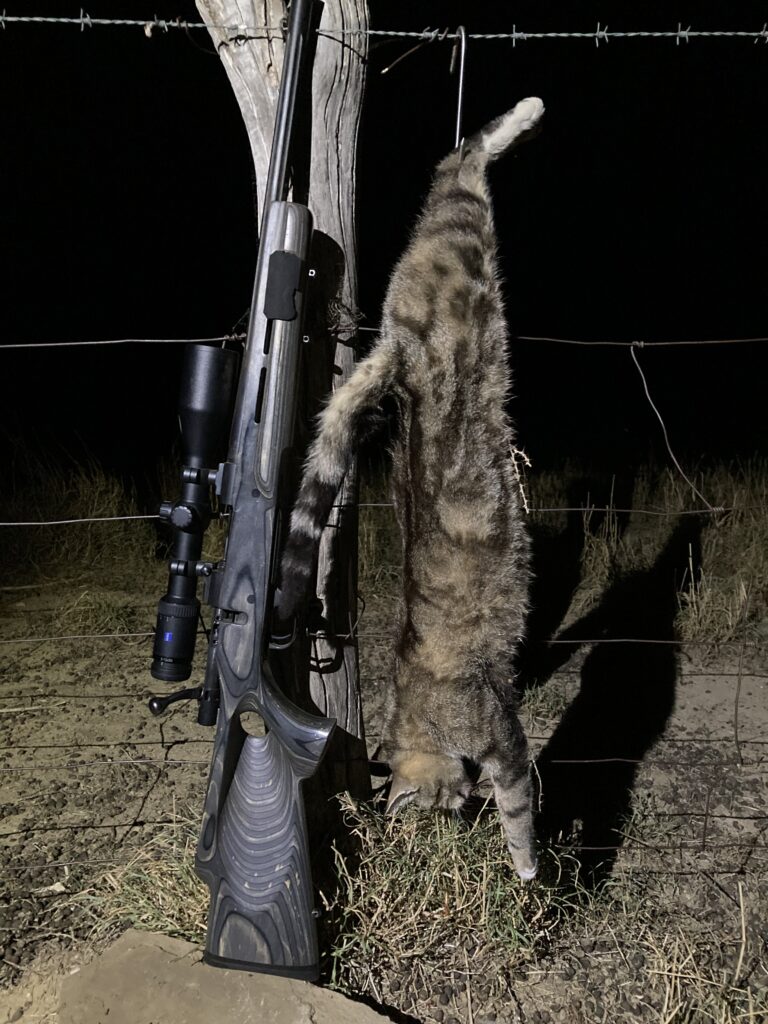
As majority of shots are taken from a vehicle, a heavier varmint-style rifle is ideal. Its wider fore-end provides stability when shooting from a foam rest on the window. I settled on a Howa 1500 with a 20“ fluted barrel, one in 8 twist and a laminated Boyds thumbhole stock. I’ve owned several Howas; they’re consistently accurate, dependable and excellent value.
The shorter barrel improves manoeuvrability inside the vehicle, while the heavier profile and fluting aid cooling during high-shot volumes – particularly when encountering large mobs. The internal magazine holds five rounds, which suits the application well. I favour the thumbhole stock in this shooting position, and the thin rubber recoil pad offers a firm grip with consistent shoulder purchase, contributing to accuracy.
The only modification was a trigger job, reducing pull weight to 1.5lb (680g). While light for a hunting rifle, its primary use from a supported vehicle position mitigates the risk of accidental discharge.
Scope
Given the rifle’s primary role in spotlighting, high-quality optics are essential. Clear glass and strong low-light performance are crucial, especially with long nights in the field – often 8-10 hours at a stretch. Good optics not only improve shot placement but also reduce eye strain, which can easily derail a trip.
I chose a Zeiss scope for its reputation in optical clarity and reliability. Initially, the rifle wore a 6-20×50, which never shifted zero and performed flawlessly – sharp, durable and easy on the eyes. However, in practice it rarely left 10x, where the balance between magnification and field of view was ideal for spotlighting.
Recognising it was more scope than needed, I replaced it with a 3-12×50 Zeiss. This proved a better match: more compact, still excellent in low light and perfectly suited to the task. Both scopes feature a simple duplex reticle – no fuss, just practical functionality.

Ammunition
With each trip requiring 400-600 rounds per hunter, reloading was the only economical option. I sourced once-fired ADI brass, which has proven both affordable and durable. I bought 1000 cases initially and, over 10 years later, I’m still using the same batch. A few have been lost, but none discarded due to split necks or loose primer pockets.
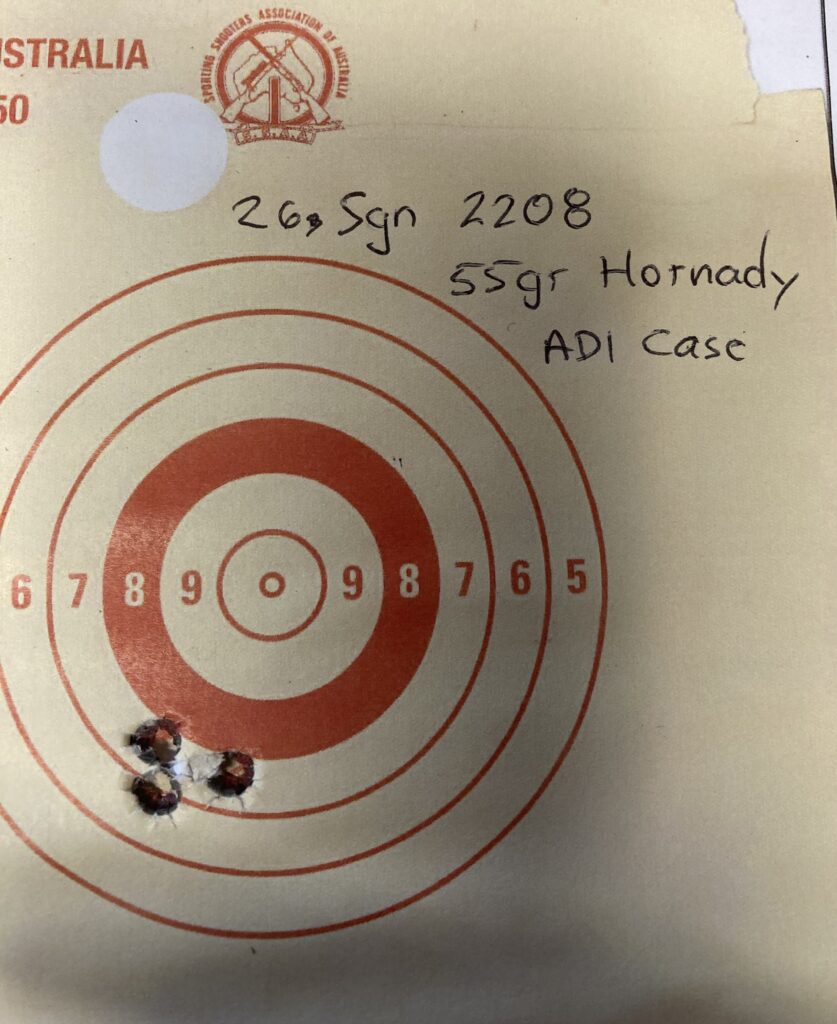
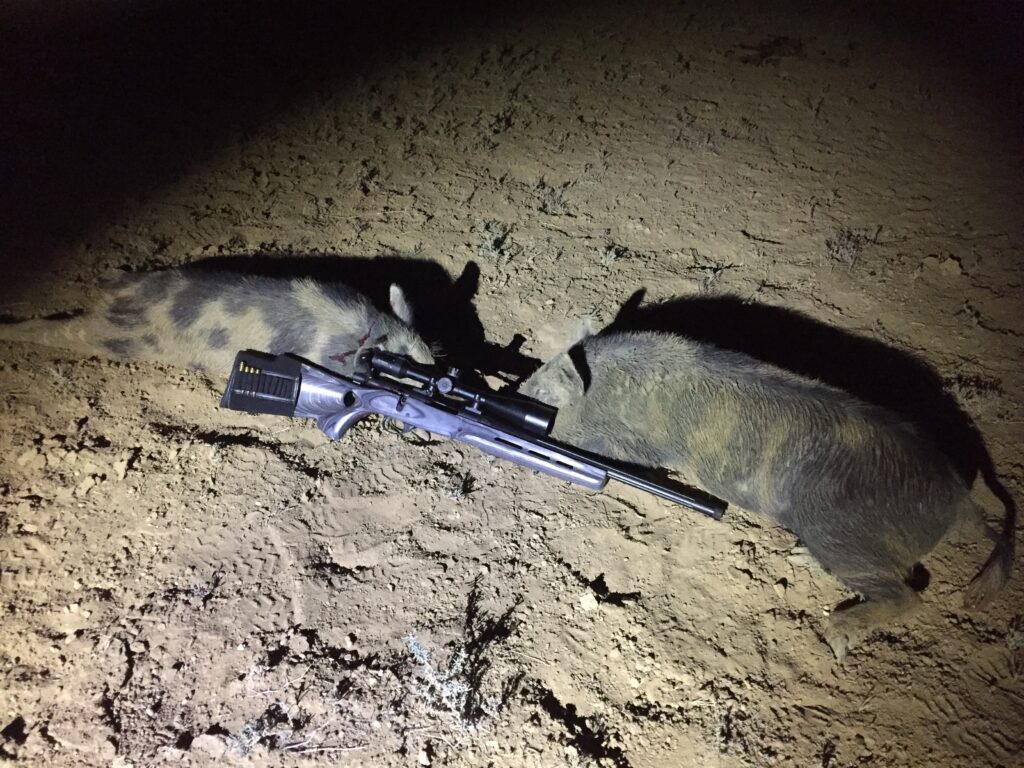
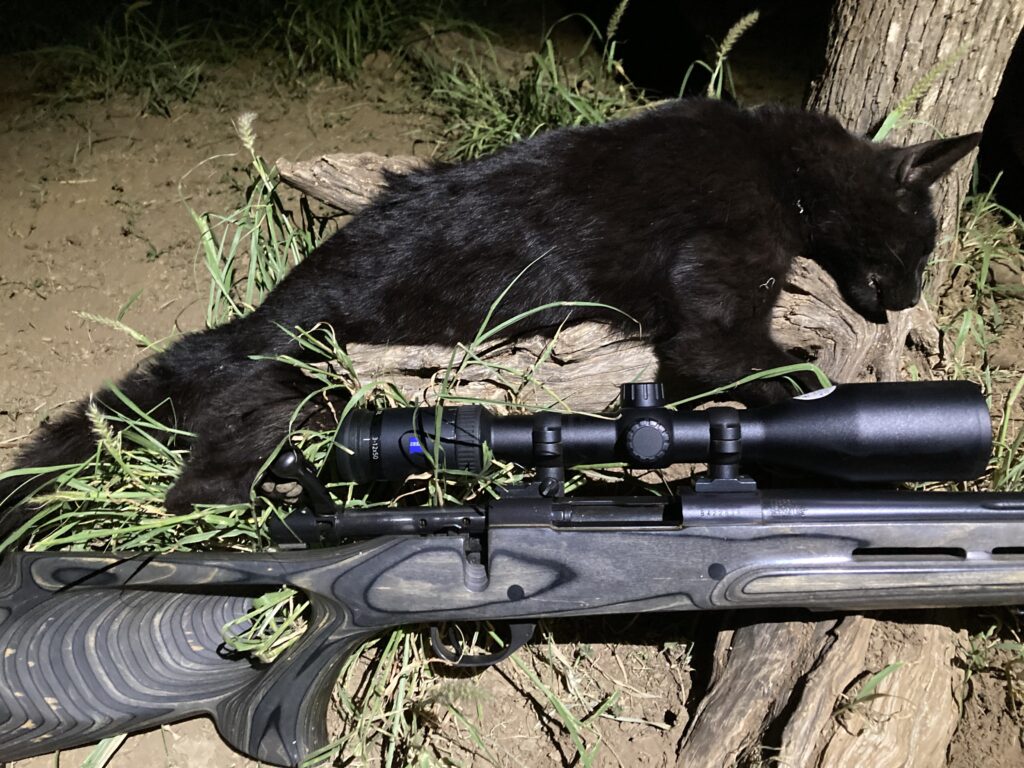
Projectiles were purchased in bulk – Hornady 55gr PSP in lots of 6000, working out to around $12 per 100. So that’s what I went with. While not match-grade, they are more than accurate enough for the job, consistently producing sub-1“ 3-shot groups at 100m. More importantly, they are effective on kangaroos, as well as feral cats and the occasional pig.
ADI 2208 is my powder of choice, valued for its versatility across multiple calibres. Ignition comes from CCI small rifle primers, which have proven entirely reliable.
My loads are deliberately mild, averaging a muzzle velocity of 3042fps. While below maximum, they deliver the best accuracy in this rifle, extend case and barrel life, and remain entirely effective in the field. The rifle is zeroed to sit 40mm high at 100m and 25mm low at 200m (verified). In practice, most shots while spotlighting fall between 50m and 150m, with very few beyond 200m – allowing a straightforward ‘point-and-shoot’ hold for the vast majority of targets.
Conclusion
My Howa .223 isn’t a showpiece – it’s a purpose-built tool. Every component, from the stock and barrel profile to the optics and ammunition, has been selected with function in mind. Reliability and functionality are essential when undertaking high-volume culling in remote areas. There are no gunsmiths on hand, and you’ve often travelled a long way to complete a job for a farmer. A rifle that looks good but fails in the field is of no use.
This setup works for me, and it may offer some guidance for others looking to configure a rifle for similar work.
The bigger picture
The SSAA Farmer Assist program is an outstanding initiative. Bob and I have shared many memorable trips through it. Beyond the significant hunting opportunities, which undoubtedly sharpen your shooting skills, the conservation benefits are substantial.
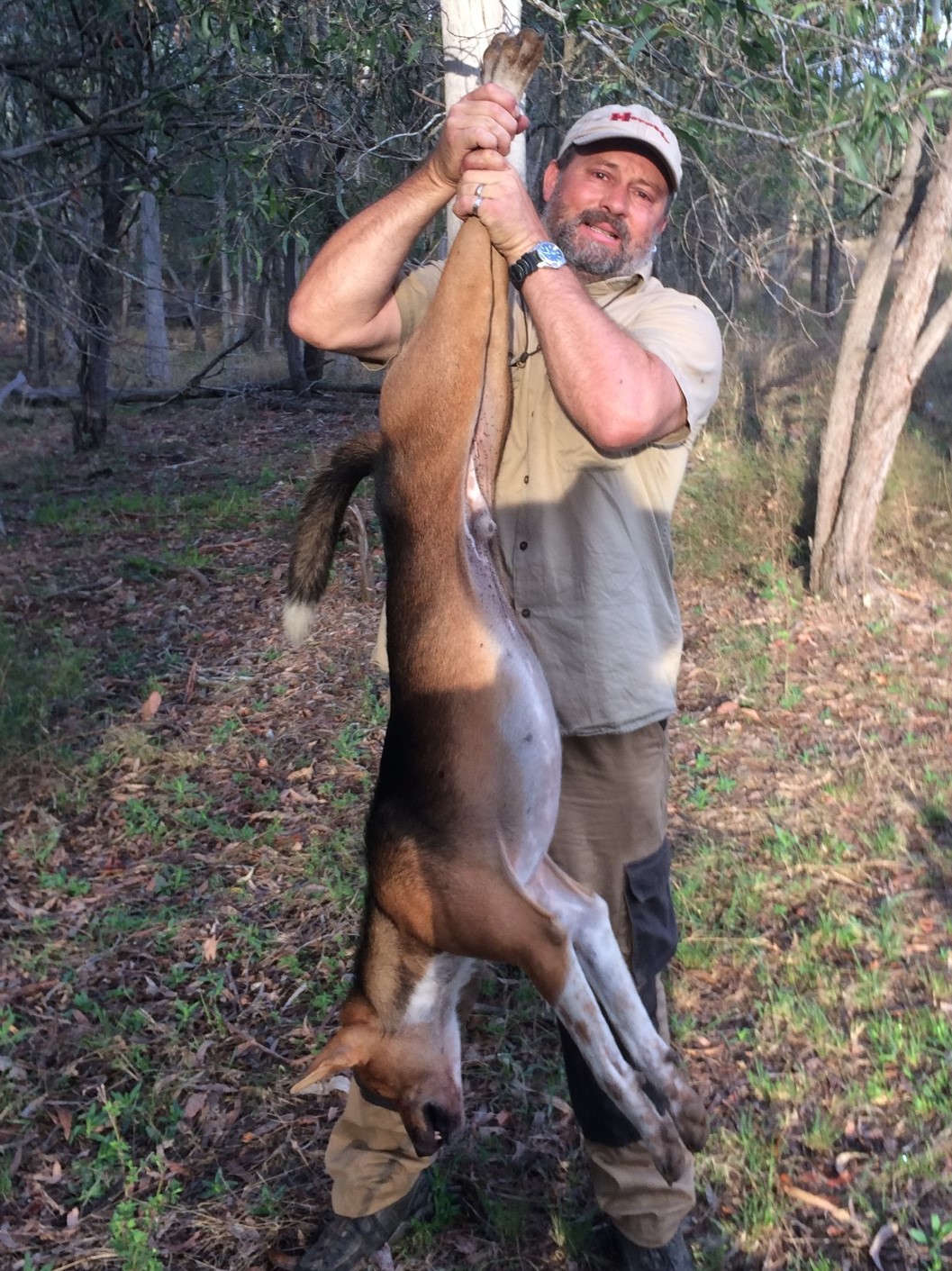
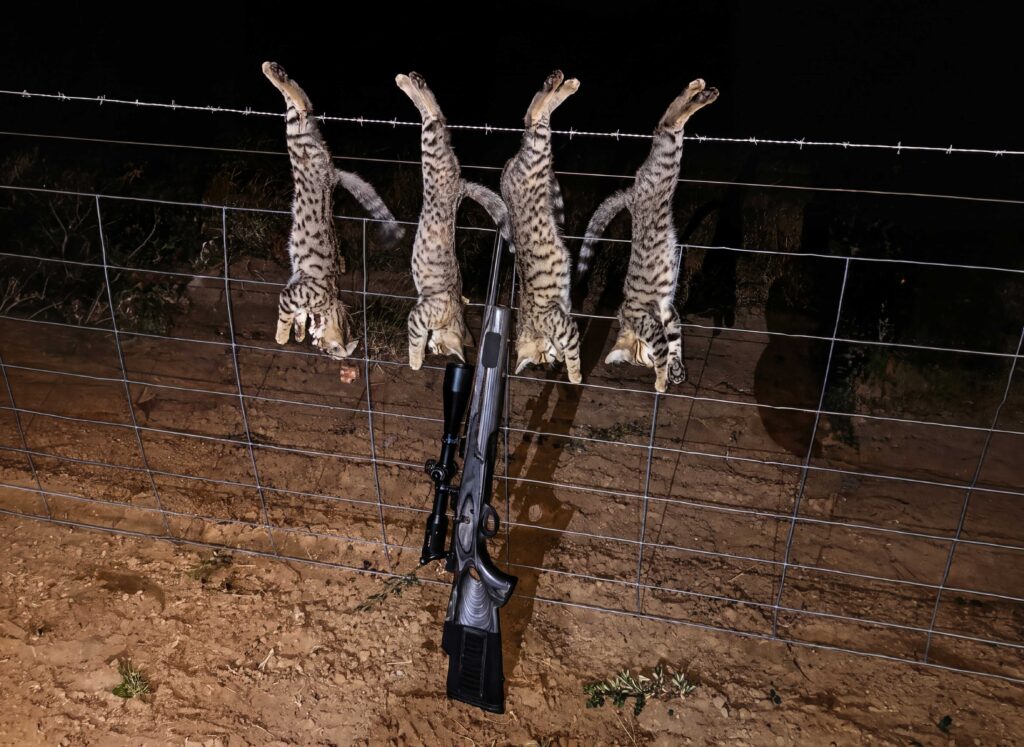
Alongside kangaroos, we regularly remove feral species, particularly cats, with our best result being 14 taken on a single trip. This has a tangible impact on native wildlife. We also encounter and cull wild pigs and dogs, further assisting landholders.
The hospitality from farmers has always been exceptional. Accommodation ranges from basic shearers’ quarters to comfortable air-conditioned cabins, but the gratitude is consistent. Many properties have invited us back repeatedly – so much so that we now have more offers than we can service.
If you’ve been considering getting involved in the program, take the leap. It’s a rewarding experience, both from a hunting and conservation perspective – and one you’re unlikely to regret.
Share this article