
It’s a dog-eat-pig world: Hunting wild dogs over a pig carcass
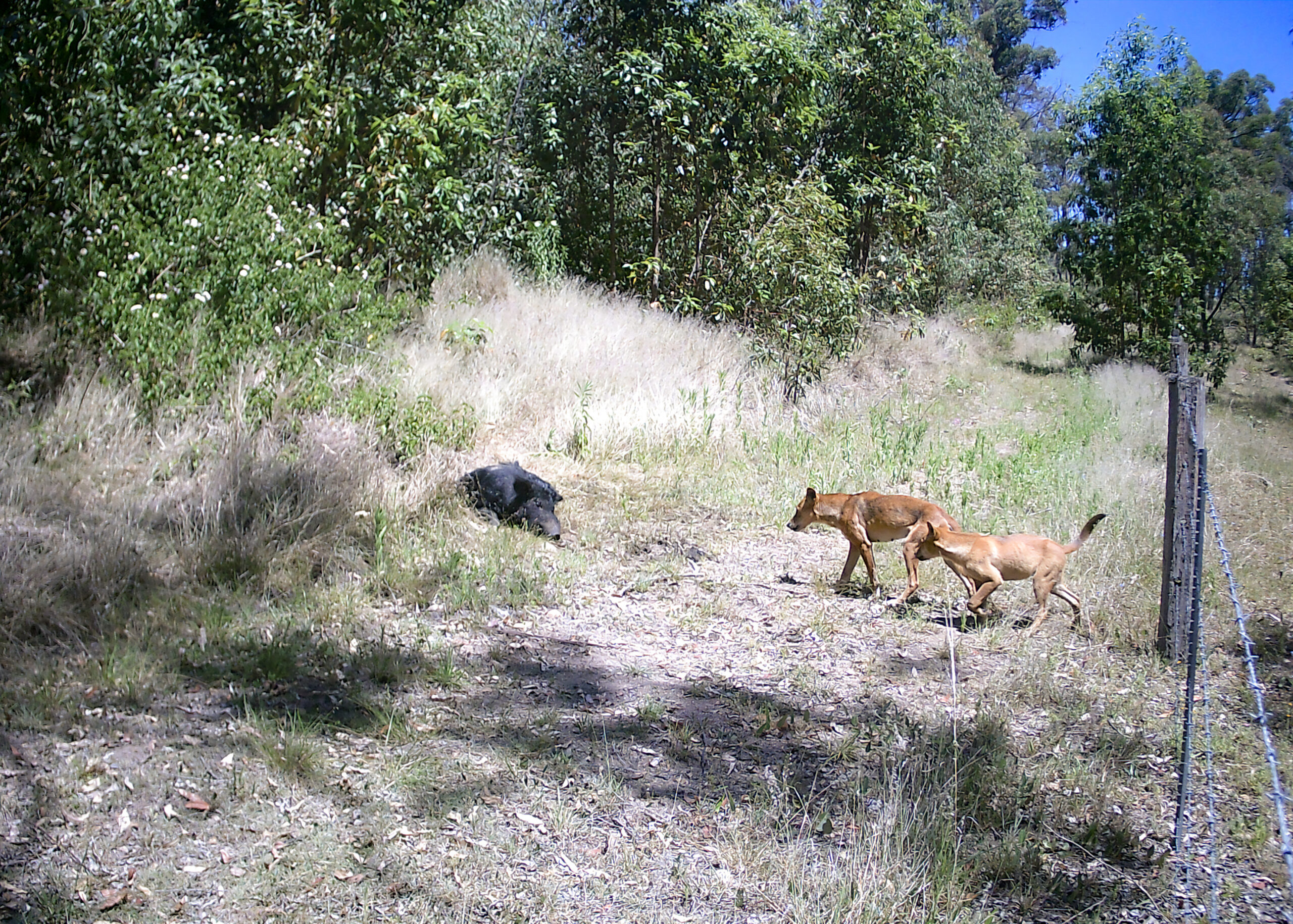
A red wild dog passed under the bordering barbed wire fence and paused briefly in the middle of the firebreak. Without a look in either direction, it went straight on to the carcass of the wild boar lying there.
I had shot the boar at point-blank range a couple of days earlier in an unexpected close encounter. As the wild dog began to tug at the exposed pig flesh, a second red dog came through the fence and went directly to the carcass as well. Eighty metres away, I sat in the middle of the firebreak. The narrow, slashed firebreak ran through thick scrub and forest.

The block I was shooting on had been de-stocked for years and the grass was long. However, other areas of the property, and the neighbours, suffered significant cattle losses due to wild dog attacks. The only decent chance of managing a shot at marauding wild dogs required an encounter on the firebreak, or over a kill in more open country.
Even though I was confident in the effectiveness of my Blackfoot blaze camo, based on many close wildlife encounters, I had zip-tied a couple of branches to the legs of my Primos shooting tripod for a little extra cover. I did not need such precautions for careless young dogs like the two feeding just down the track from me. However, my trail camera had shown more than a dozen wild dogs coming to feed on the boar, and some of those were big, wary old dogs that exhibited much more caution on approaching the corpse.
It was less than an hour to sunset and I had been in position for half an hour. I had stalked the kill on the meandering, roller-coaster path of the firebreak until it just came into view. After a prolonged survey I could see no sign of any early arrivals, so I took up position.
Sitting on the ground in the middle of the firebreak, I positioned my rifle through the branches I had tied to the tripod legs. I checked my scope settings and ensured I could easily move my rifle to cover the full, visible 120m of firebreak. I wriggled myself into as comfortable a position as possible and then froze, intending to remain perfectly still until dusk if need be. I expected the first dogs would arrive before then and so it transpired.

The two dogs at the carcass moved about a bit then settled into steady feeding. One was in plain view, broadside on my side of the carcass. I had the illuminated red dot of my Swarovski scope positioned on that dog but had no intention of shooting it. My interest was in the other dog that was largely obscured by the first dog and the body of the pig. It always pays to shoot the furthest dog first.
I slid the red dot up and waited for an opportunity. After a little while the nearest dog lowered its head for a bite and the second dog lifted its head up at the same time. I squeezed off a 95-grain Fusion from my Merkel K3 single-shot rifle in .243 Win. The first dog died instantly from the front-on chest shot, dropping where it stood. The second dog disappeared into the heavy scrub. I reloaded and repositioned the rifle.

I knew from similar past experiences like this that the surviving dog would have heard the smack of my bullet hitting its companion and would also associate the slightly delayed boom of the rifle with that thud as well. So, all its attention would be fixed on the dead pig where the other dog lay. These were two young dogs, and I was pretty sure I could manufacture an opportunity for a second shot.

The surviving dog would be standing rigid in the scrub within 20-30m of the kill, straining its ears and trying to work out what the noise was that had startled it, and where its cohort was. It would have moved closer to me in seeking to distance itself from the big noise it associated with the pig carcass.
I waited a few minutes and then gave a short, low howl – the where-are-you contact call. There was a rustle in the undergrowth, 20m closer to me than the kill, and the second dog walked out to stand in the middle of the firebreak, staring all the while intently at the dead boar.
The second wild dog collapsed where it stood at my shot. I considered remaining where I was until dark. But the trail camera evidence was that the second lot of visitors would be mature, wary adults. Most likely, having heard the shots, they would wait for dark and be especially careful in their approach.

Reaching home before dark for a change was appealing, so I checked the dead dogs, dragged them off the track, and turned for home. I left my tripod in the middle of the firebreak. Nobody but me visited this part of the property, especially at night, so it was safe. I would be back as first light broke in the morning. I would repeat the careful stalk, sneak in behind my tripod and try for a late-dining dog.
I did that and was surprised to find no dogs at the carcass in the early morning light. I waited patiently as the rising sun filtered through the trees and lit the bush. At that point, there was nothing to be lost in some calling, now that the magic hour had passed.
I gave a call and was pleased to receive an immediate response. I did not reply and some time passed before I had another call. The dog was now closer. I gave a short, encouraging call. Again, a lengthy silence. This went on for about 40 minutes. I caught a couple of glimpses of a big red dog moving cautiously through the thick scrub. There was no chance of a shot and eventually the dog drifted away.
An inspection revealed that the boar, half of which had been there at sunset the previous afternoon, was now totally gone. Apart from a stain on the grass, not a skerrick was left of the hog. There was no point leaving the trail camera, with the attraction now gone, so I took the trail camera home with me, greatly anticipating what it would reveal of the feeding frenzy that must have occurred during the night.
Over coffee, I started to work through the thousands of images. The dogs had been coming and going, with much disputing of the carcass ownership. The body had been little touched up until 9pm, what with all the doggy mayhem taking place. Then, much to my disappointment, the camera had run low on battery power and ceased to function at that time.
All the activity and many photos had drained the power. I gave a wry laugh as I cleared the card. It had served its purpose well, but I would have loved to have seen how those dogs settled their dispute and completely made the remaining half of that dead boar disappear.
Share this article
Related
Articles


Weipa hunt draws record field
Related
Recipes