
Monster wapiti taken near Queenstown
The comment from my guide, “that’s even better than I was expecting,” said it all.
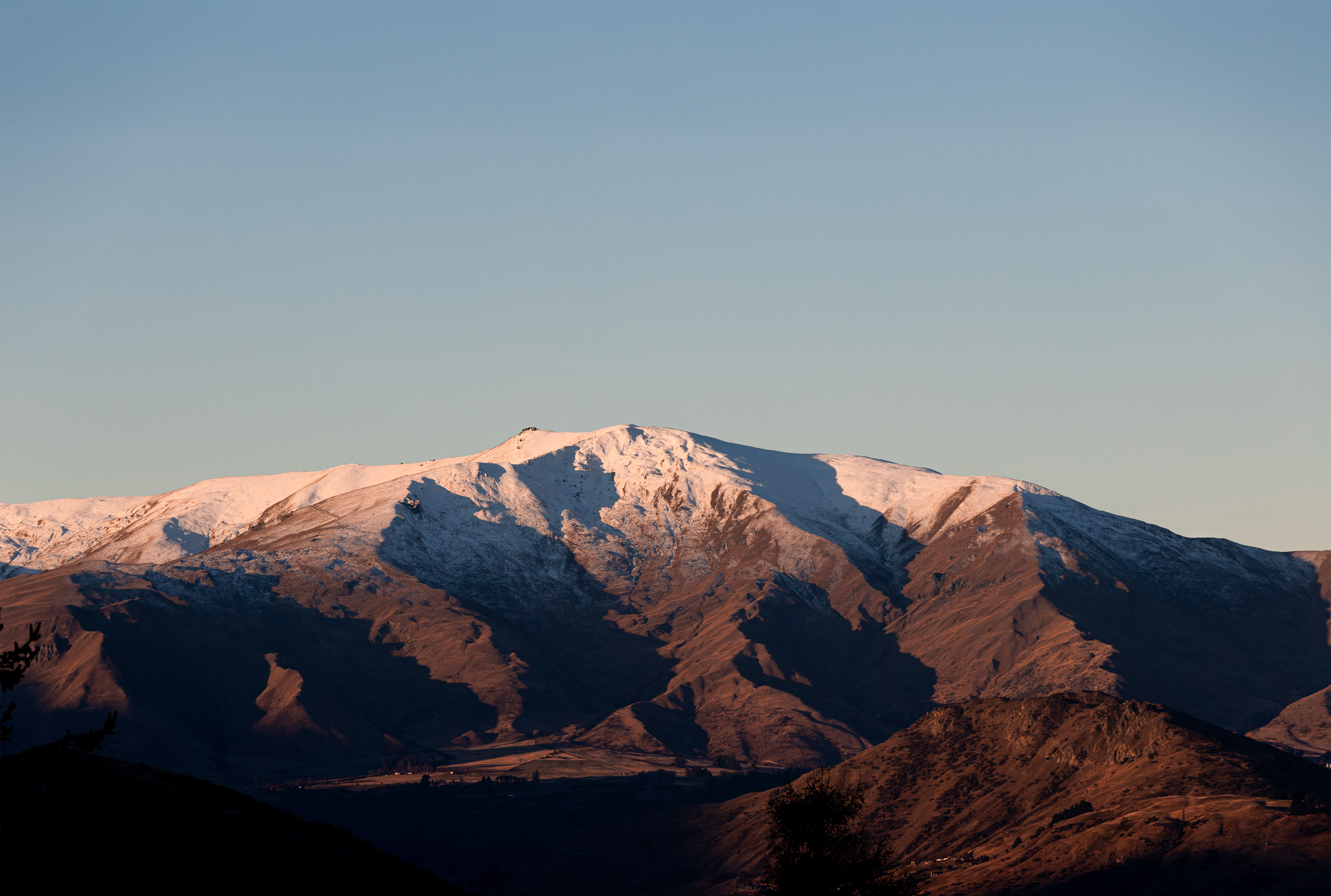
A year earlier my wife and I had begun planning our first overseas holiday with our young(ish) family. Post-pandemic destinations had opened up and airlines desperate to regain money lost during global lockdown meant affordable prices. We finally settled on ‘The Land of the Long White Cloud’ and when it came to the subject of itinerary, I casually mentioned there was some “good hunting to be had out of Queenstown.” My darling wife knows full well that there is no such thing as a ‘casual’ comment from me when it comes to hunting. So, the plan was to fly into Auckland at the tip of North Island, hire a vehicle and wind our way down to Wellington to then fly to Queenstown in the southern end of South Island. There, I would chase a New Zealand red deer or wapiti (elk), and my family would do their utmost to drain the bank account with the sites, activities and shopping in one of the most beautiful cities of the world.
I got in contact with Accurate Hunts, who had organised some Australian hunts of mine, and was pleased to discover they organise international hunts as well. After some to-ing and fro-ing, a three-day hunt was confirmed with Hunt New Zealand. As it happened, I had met the proprietor of the operation, Sheldon, some years earlier when I was flown to NZ for their version of the SSAA SHOT Expo. At the time of planning the trip, trophies were also more affordable than usual due to a surplus, so I ended up selecting a wapiti as my target species.
Like Australia, deer were introduced to NZ by European settlers and flourished due to no real apex predators and a favourable habitat. Unlike Australia, however, they became respected as a profitable asset and NZ established itself as a genuine destination for international hunters.
After 10 days appreciating much of what the North Island had to offer, the hunt rolled around, and I was picked up by Sheldon and Nicole. We discussed what I was hoping to achieve and, as always, I was after a ‘representative’ head only. My suggestion to all new trophy hunters is that it’s better to keep an open mind and a broad approach in these situations. Unrealistic expectations and ‘it must be X number of inches’ etc can add unnecessary stress and pressure to both parties. “That shouldn’t be a problem,” was all Sheldon said.
As this was a family holiday and not a dedicated hunting trip, I had little hunting gear with me. It turned out that Queenstown was experiencing unseasonably warm weather, and what I did have was inappropriately hot. I ended up hunting in civvies: jeans and a shirt.
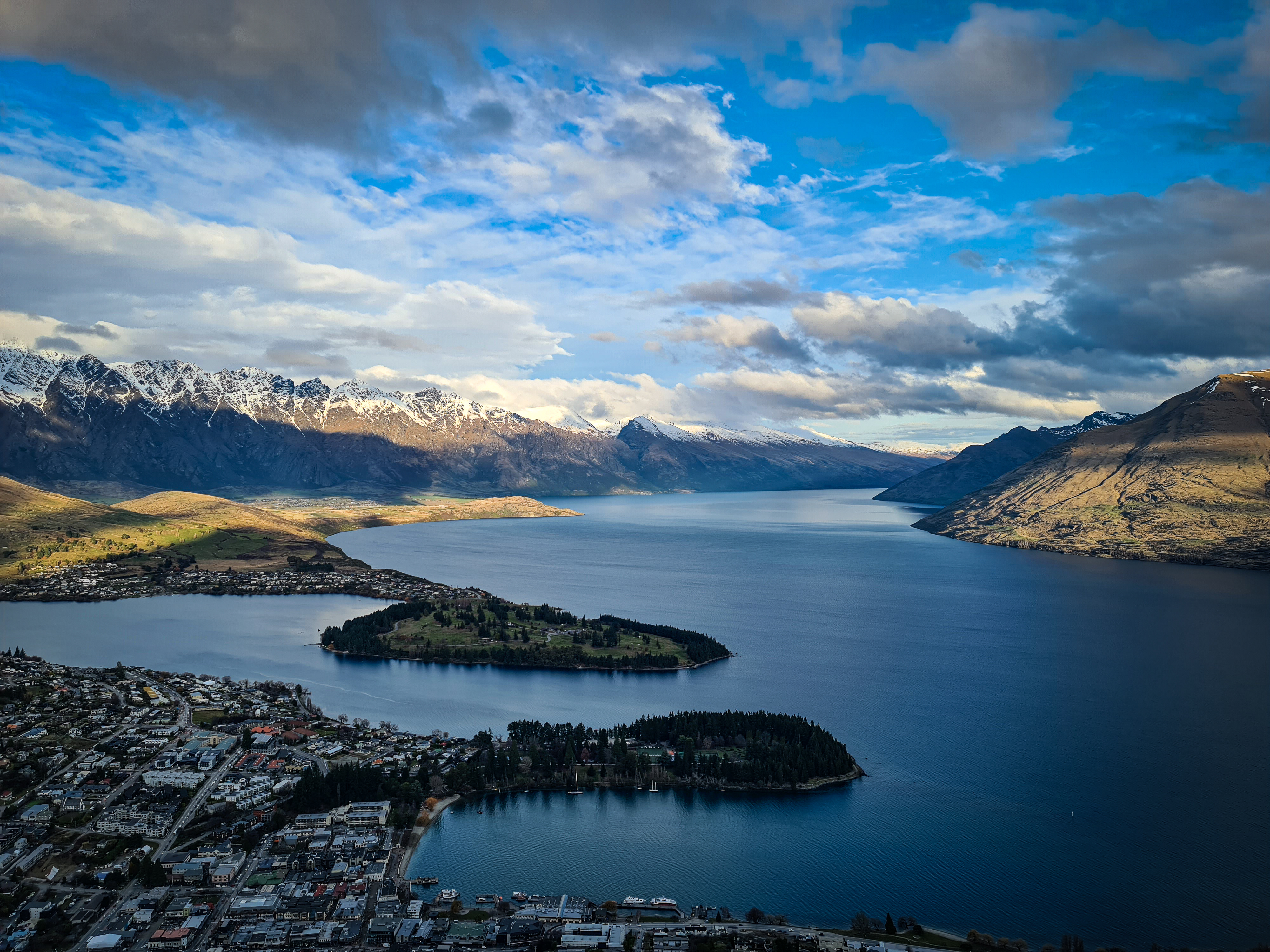
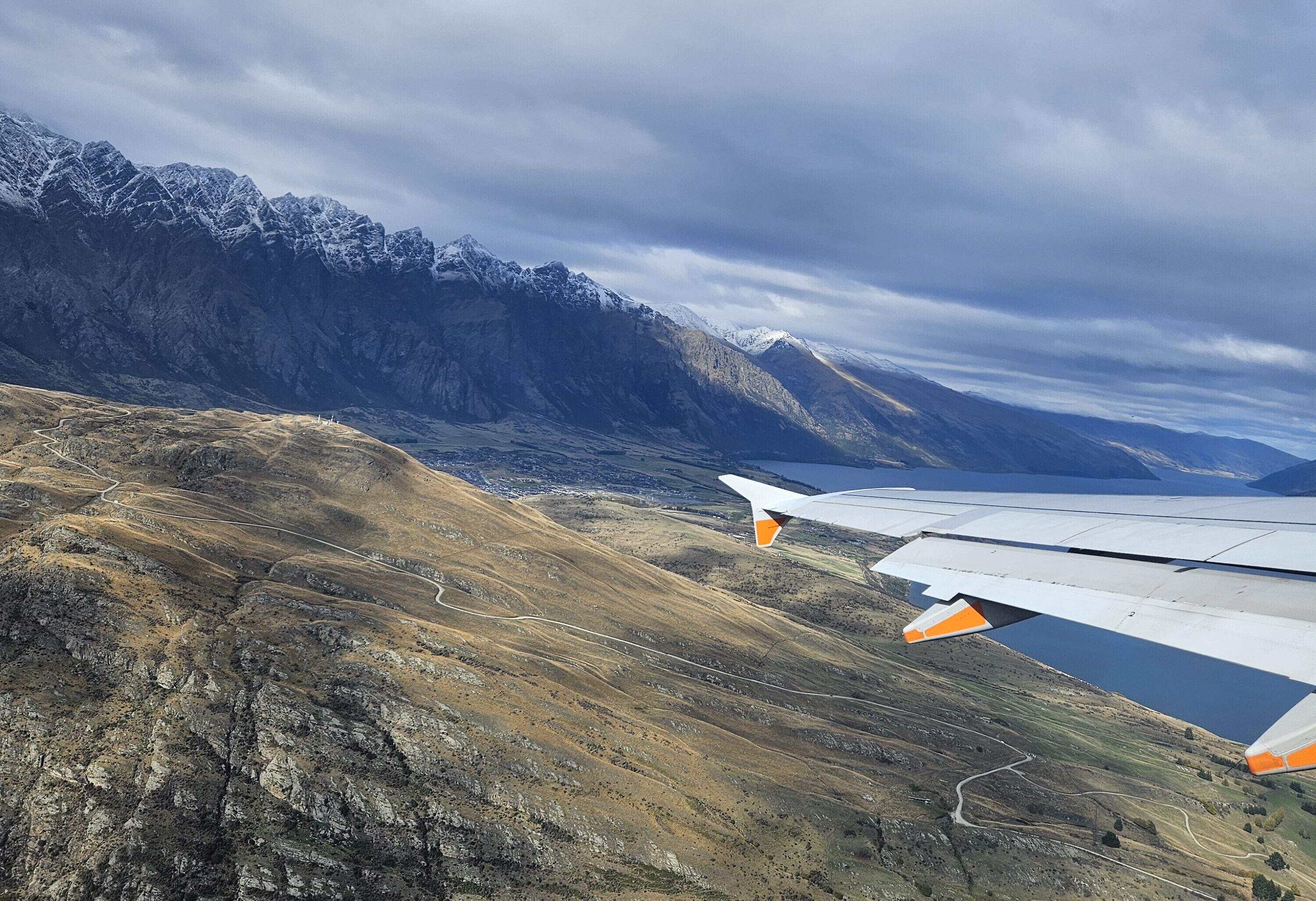
We drove for several hours out to the selected hunting block, which was selected due to game numbers and featuring rolling hills rather than vertical cliffs.
After arrival and a safety briefing, I was handed the rifle I was to use. Featuring a carbon fibre stock and carbon-fibre wrapped, match-grade barrel with a 1:8 twist, the Elevation (made by Proof out of Montana) was topped with a Swarovski Z5 3.5-18×44 scope. It was chambered in the relatively new 7 PRC, which drives a 175gr ballistic tipped projectile 3050fps. I mentioned my unfamiliarity with the calibre and was informed that it had so far accounted for three one-shot kills on wapiti, so there was no pressure… but don’t stuff it up! The rifle was fitted with a large suppressor with integral muzzle brake and my Kiwi counterparts were again amazed to hear that suppressors are still virtually a taboo item in Australia.
We walked for about an hour before spotting the first red deer. There’s something about red deer that I always find majestic, and these animals were no exception. After some time spent glassing we pressed on. After another hour or so I laid eyes on my first wapiti. Although larger, similarities between these and the reds were immediately evident and I could see why they are capable of interbreeding. Further observation revealed that wapiti have a distinctive rear end with lighter ‘bullseye’ type markings. The animal in my binos was magnificent but not on my menu so we pressed on. There was more cover available than I first thought and when walking past some thick stuff I noticed tunnels in the low, dense scrub. I quietly asked if there were pigs on the property and was told that pig numbers were heavily managed, with the tunnelling made by fallow deer hiding away. I had not observed this behaviour before, but on closer inspection I noted that the tunnels were too tall to have been porcine. I still wondered how on Earth fallow bucks would get in and out of such tight spaces.

There was quite a strong a breeze blowing from the north, and I asked if this was the prevailing wind. I was told that it was… until it wasn’t. Right on cue the wind swirled and we heard a clatter of hooves from within the thick cover. With no chance of pursuing that animal we decided to press on, when Nicole made the spot of the day by picking up blonde antler tips through a break in the thick undergrowth. I caught a brief glimpse of ‘up-periscope’ type tips moving quickly through the scrub. The animal was heading southward so we followed, looking for a potential shooting window. But with only another couple of brief glimpses through the scrub, we agreed that he had bettered us. We ate a snack on the go and continued circling back toward the vehicle.
Eventually we broke free from the cover and were traversing a sphagnum moss bog when Sheldon and I spotted a bachelor mob of wapiti, causing us to freeze mid-stride. With the rut just finishing, some of the bulls were forming bachelor mobs again. Of the five bulls we could see, one was staring right at us from 250m away. Shortly every part of my body began to itch, and my legs began to cramp, but neither of us dared to move. After what seemed like an eternity the curious bull went back to grazing and we slowly and silently made our way into cover. With the breeze blowing perpendicular to the deer, we quickly devised a plan to skirt the bog, keeping the scrub between us and the mob until we could get into shooting position. Eventually we slowly eased around the last stand of shrubs and the mob were in full view. After assessing each animal through the binos, the bull to the far left was the obvious shooter of the group so Sheldon set up the tripod shooting sticks and I nestled the stock in the rubber V.
We’d had a conversation on the drive out regarding the aiming point on deer. It can be a somewhat controversial topic but my preferred point of aim for a broadside animal is centre of shoulder-ball, approximately halfway up the thickness of the body, aiming for a double lung shot. Yes, you will lose some meat, but you have a comparatively larger margin of error, as when the bullet penetrates and shatters the shoulder bone the internal damage is multiplied. But I had been told that wapiti were too solid for a shoulder-ball shot. The preferred location was the more traditional one-third up from the underside of the animal, just behind the front shoulder aiming for a heart/lung shot. I began repeating this to myself to keep it in the forefront of my mind.
However, this animal was facing directly away from us. Now, if you haven’t stood on a sphagnum moss bog before, imagine standing on bad-smelling sponge which gives the appearance of being solid enough to hold your weight but in reality is trying to swallow you up like quicksand. After eight minutes of being hunched over the scope, my feet were rolling outward and my ankles, neck and back began to let me know what they thought about holding this awkward pose for an extended period. I ever-so-slowly tried to adjust my feet, and straightened my back out for a brief respite until the animal began to turn. Finally, he was broadside, but the entire front half of his body was obscured behind another big-bodied wapiti. I slipped my cheek onto the stock again and silently willed him to push slightly forward into the clear, but my prayers went unheard. The animal decided to continue his body rotation and ended up sharply quartering towards us. Although this is a routine shot, there is less margin for error. Now aware of our presence, Sheldon quietly remarked, “I think you should target that bull, Ben.” I confirmed that the preferred aiming point was now just inside the close shoulder, about a third of the way up. I controlled my breathing and squeezed the trigger. The suppressor and muzzle did their job, the recoil and report felt like a .22 Mag or maybe a .223. “Great hit,” I heard. “Reload.” We watched as the animal buckled up, turned a semi-circle and fell to the ground behind a small rise, just out of sight. “Really solid hit,” Sheldon said. I made the rifle safe as we began walking up.
I always get a little squirt of apprehension when I lose sight of a hit animal, but I needn’t have worried. He was lying within 2m of where he’d been hit – an autopsy later confirmed the precise shot placement.
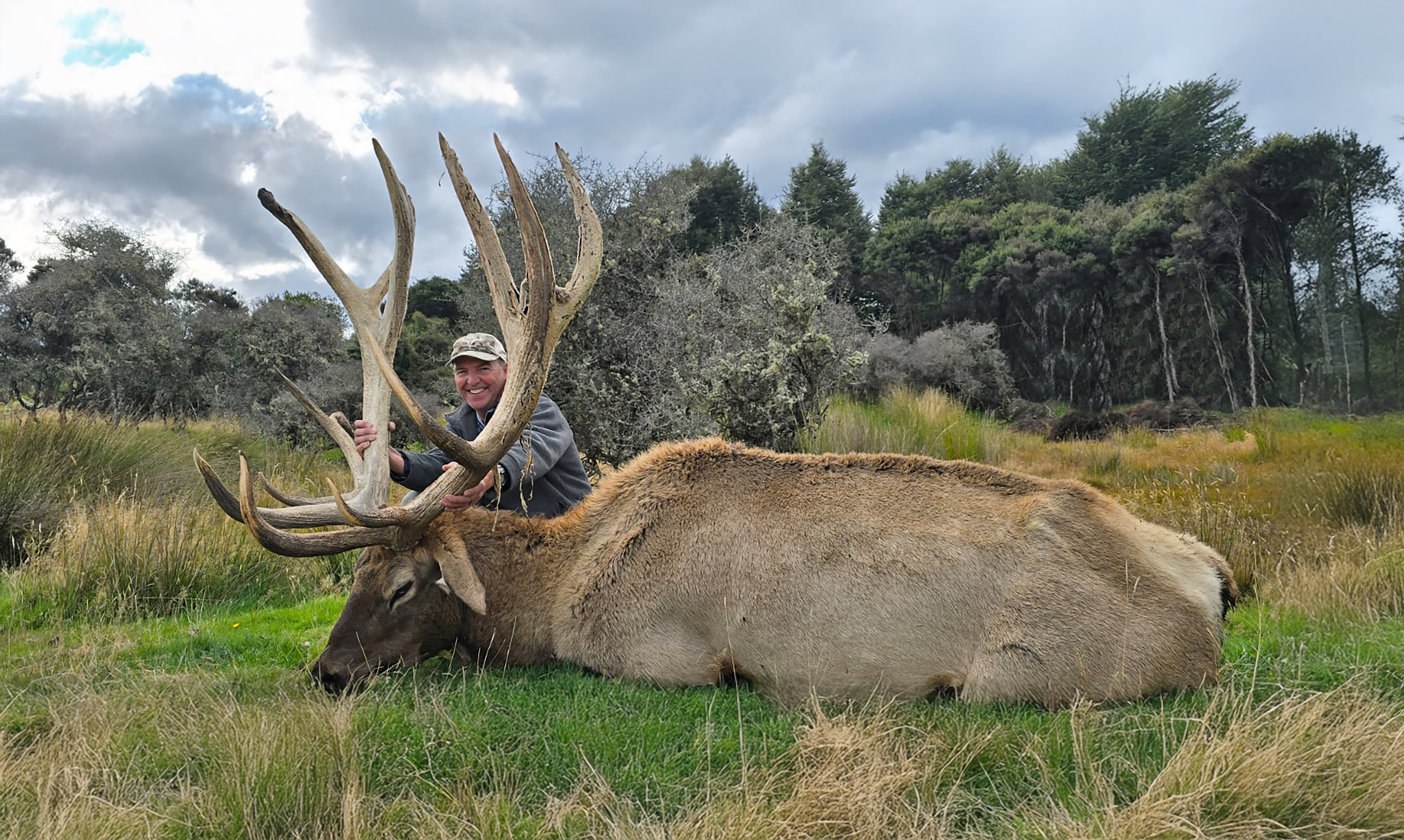
As we approached, my guide uttered the opening phrase of this article, and I simply couldn’t believe how big this fella was. There is no ground shrinkage with these monsters. It took three of us to move him for the photo! He ended up officially taping out at 432 and 6/8“, which the director of the outfitter organisation believed to be the largest NZ wapiti ever shot by an Australian (at the time of writing). The cape is now tanned.
I cannot recommend Hunt New Zealand highly enough, everything about the organisation is friendly, proficient and professional. So, if you’re weighing up the next family holiday or hunting destination, you could do a lot worse than the land of ‘fush and chups’.
For more information visit trophyhunting.co.nz and make contact via their Australian agency at accuratehunts.com
Share this article
 Website
Related
Articles


Related
Recipes