French hunting and game meat lessons
Following on from Europe’s game meat model examined, I continue summarising the report titled To Explore, Review and Document Wild Game Harvesting in Europe by Neal Finch. As stated previously, this report investigates how wildlife is managed by hunting in different countries and is certainly something Australia can learn from. In Europe, hunters whether paid or not, tend to be viewed as the same in terms of their ability to manage wildlife populations, something the Australian pest management industry currently fails to comprehend.
The report continues its exploration of European wild game harvesting with a focus this time on France, which ranks as Europe’s second-largest game meat market after Germany. Damien De Jong, one of Europe’s major game meat wholesalers, is located at Dambach-la-Ville in Alsace, a region with both French and German cultural influences. Originally a fish trading company founded in 1956, the business transitioned entirely to game meat in 1980 and currently imports 45 per cent of its products. While they formerly processed locally harvested carcasses, the company now focuses on value-added products, supplying supermarkets and wholesalers with items made from venison (red and roe deer), wild boar, pheasant, pigeon, partridge, mallard duck and hare. They also deal in exotic meats such us kangaroo, reindeer and ostrich.
The Fédération Nationale des Chasseurs is France’s national hunting body, which employs close to 40 staff in Paris and many more across 94 provinces. France has almost one million licensed hunters, the highest in Europe. The Permis de Chasser (National Hunting Licence) allows access either nationally or within specific provinces depending on fees. Applicants must pass an exam and while licences don’t expire annually, safety updates are provided every 10 years, this single licence allowing for both recreational and commercial harvesting.
France’s main form of big game harvesting is the battue, a driven hunt akin to Spain’s Montería. For meat to enter the commercial chain, at least one participant must be trained in game meat hygiene and all wild boar must be tested for trichinella, a parasite not found in Australia. Veterinarians employed by the government inspect carcasses but don’t have access to viscera (internal organs), with this inspection handled by trained hunters. Hunters may also sell meat directly to butchers or restaurants if eviscerated and skinned within 80km of the harvest site and documentation is provided.

Most hunters belong to either an Approved Communal Hunting Association (ACCA) or Approved Intercommunal Hunting Association (AICC). Stalking hunts, while common, rarely contribute to the commercial supply chain due to the low volume and distance to processors, though those who undertake meat safety training can sell directly to a butcher or restaurant.
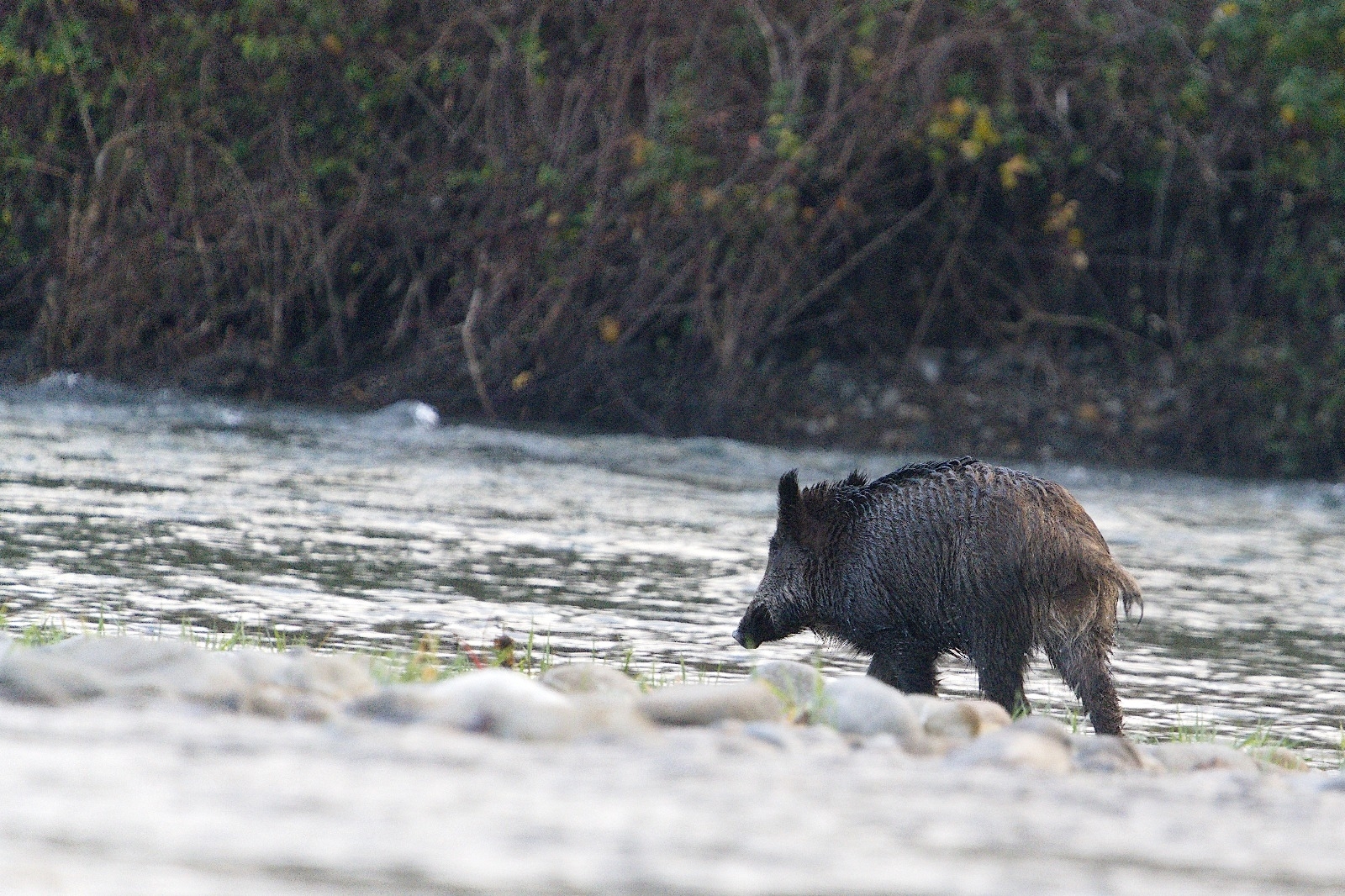
Like Spain, France views hunting as a primary wildlife management tool, especially for overabundant species. In 2019, the country merged its biodiversity and hunting offices into the Office of Biodiversity, signalling the government’s integrated approach to conservation and harvest. In 2023, 850,000 wild boar were culled due to escalating numbers, with 55,000 entering the commercial supply chain. Deer season runs from September to February, coinciding with cold weather for hygiene and occurring after young have been weaned to minimise welfare concerns. Some regions have no closed season for wild boar due to overpopulation.
It’s estimated almost a third of large game (deer and boar) is consumed directly and more than half sold outside the formal processing sector, highlighting the importance of informal meat distribution networks in France. Like Spain, shoot-to-waste is rare and the cultural norm prioritises full utilisation of harvested animals. Wild game meat is commonly sold in supermarkets or served in restaurants with kangaroo products also available, reflecting the export relationship with Australia.
Overall, France’s approach again reinforces the theme that recreational hunters play a central role in both wildlife management and commercial meat supply, an integrated model largely absent in Australia.
Share this article

 Website
 Facebook
Related
Articles


Weipa hunt draws record field


Watagans pest control highlights missed opportunity for recreational hunters


Related
Recipes
Sorry, no related items found.