

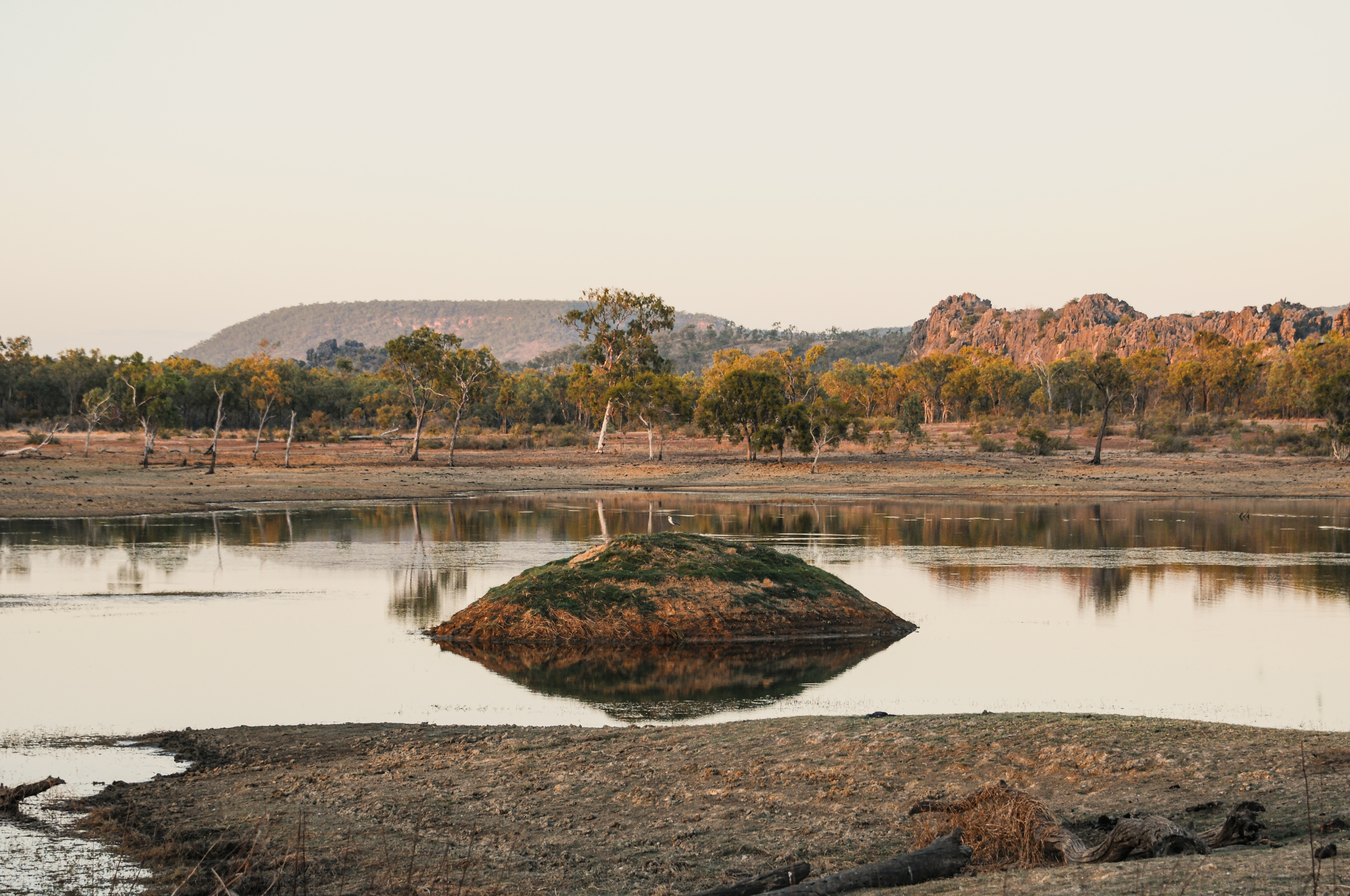
Pig hunting around Gulf stock dams
It was hot, blazingly hot, as is expected in mid-November in the northern Gulf Country, a time when people with self-preservation relax in their air-conditioned homes instead of chasing boars about drying stock dams.
Lucky John Stirrup and I had the relative comforts of the station quarters and my air-conditioned Toyota HiLux for some respite from the trying heat. Overhead the sky had turned white, yet there were no clouds on the horizon, the harbingers of summer storms that signal the build-up of the wet season. Nothing, just endless sunshine that hit 42C by 11am and continued until 4pm. There was a little hope one morning when a cloudy sky turned into an amazing display of colour as the sun peered over the horizon, but an hour later it burned the promising clouds up.
We were on a three-day hunting trip hoping to shoot big boars. They don’t wander too far from water at this time of the year. And they did not, as we soon discovered on arrival at the station.
After dropping unneeded gear off at the quarters, we headed out to a series of dams by mid-afternoon. There were a few water birds and ducks, but the dams were devoid of hogs. We turned toward the river and dropped a couple of cherabin pots in. Cherabin are big and tasty freshwater prawns highly sought after by people when camping along tropical rivers.
Unlike the drying dams, the river was still running well. The property has 70km of the river running through it. Pigs congregate about the stream, but it’s hard yakka walking along the rock-studded shores and under the thick scrub and paperbark trees, especially when it’s so hot. So, we decided to stick to patrolling the 30-odd stock dams on the 22,000 km2 station.
Day one of hunting
The sun had lost a little heat when I pulled up alongside a herd of bellowing Brahman cattle gathered by a feed bin holding stock lick, a food that sustains them during the height of the dry season and helps to break down the dry grasses they eat. They took no notice of the HiLux, probably thinking more food was arriving.
Below us was a big enduring dam where ducks and waterfowl were active. But it was the area behind the dam wall with a big patch of thick scrub, mostly introduced rubber vine, that was our goal. John, who was carrying my .308 Sako Finnlight, walked down the dam wall into the scrub, while I stalked along the top of it.
A shot suddenly erupted the torpor, and instantly alert, I waited for pigs to break from cover into the open country beyond, but nothing happened. I called out to John, who was about 30m away, but totally hidden by the scrub.
“You got one?”
“Yes, a nice boar.”
“Okay, I am coming down.”
I found John standing alongside a good boar that had succumbed to a 150gr Nosler Ballistic Tip. We dragged it out and took photos before making our way out of the cover. We had only walked a few metres when we were alerted to rustling behind us. Turning around, rifles coming to battery, we saw the rear end of a big boar rushing away in the scrub, but he was too fast and vanished in a second.

That sort of thing happens when it is hot, the hogs lay up in thick cover and must be flushed out like quail. This one had been within 15m from us the whole time, yet we had not seen it in the dark shadows of the undergrowth. By the time we walked back to the HiLux the sun had set.
Day two
We were in the bush early. But the first couple of dams proved fruitless before we saw a big boar having a mud bath in another. John took him out with a good 150m shot. We walked across the dam with thick scrub below. Suddenly it erupted as several pigs rushed down the gully. We only got a brief look at them as they vanished into the dry stream.
After dragging the boar from the water and taking photos of the stinking pig, we headed to the next dam, only to have another mob of pigs rush out and flee into the scrub. It was becoming frustrating.
Other dams proved fruitless, though I missed an easy shot at a sow before we drove across a high mountain range into another valley. The first dam was almost dry and while there were signs of pigs, we failed to see any. I dropped John off at the top of the next big dam so that he could walk upstream and check out the cover. I drove on for about 400m, parked among bellowing cattle that were gathered about a feed bin, and climbed down a steep slope below the scrubby dam wall.

I saw movement about 10m away, the flick of an ear of a pig that was looking directly at me. I had set the 1×4 Leupold European scope to its lowest setting, enabling me to pick the animal up as I quickly raised my .308 Remington 7600 Camo rifle, squeezed the trigger and ended a big sow with a 150gr Nosler Ballistic Tip. I use the same load in both of my .308 rifles.

I worked this load up using 46gr of ADI 2208 powder, primed by a CCI Large Rifle Primer. At the time the weather was cool, below 30C, but I noted a slight cratering on the primer when I used the ammo in the trying 42C conditions. Nothing to worry about as the cases ejected easily in the Remington, while the Sako-fired shells were normal. Still, it indicates that temperature conditions must be taken into consideration when loadings are at the top of the recommended listings in some rifles. I will be dropping the load down by half a grain next time. The hogs won’t know the difference.
I ejected the shell, pocketed it and saw movement on the dam wall, 20m away. A big boar stood there, looking at me. He dropped like a rock when I shot him. I stalked further into the thick scrub but saw no more game. I made my way back across the dam where John was checking out the boar I shot.
After more photos with my Nikon Z6 mirrorless camera, we moved on, checking out two more dams, before ending our drive on the river for a welcome lunch and a spell under the shady Melaleuca trees. Both of us avoided as much contact with the pigs as possible as they smelled of carrion, with most covered in stinking mud and rotten flesh. Not something you can wash off in the bush, though we did so when near the vehicle, which has a water tank.
Later, with the sun sliding down into the west we drove back to the station. John took a nice boar that was having a mud tub before we decided to call it a day and cool down. The manager dropped by and after some beverages and a feed, it was late in the night when we hit the sack.
Day three
After a light breakfast we were back on the track. At the end of the day, we had covered 150km on rough bush tracks that led across high mountain ranges, wormed past termite cities and snaked through stunted tropical woodlands. But the HiLux took it all in its stride as I pushed it across washed-out gullies, sandy creeks and around fallen trees.
We encountered much wildlife, antilopine wallaroos were everywhere on top of the hills in search of a cool breeze while doves and little, but shy, Gouldian and black-throated finches fed on grass seeds on the track. Squatter pigeons reluctantly fluttered away or risked being run over. Gouldian finches were recently discovered on the station. They appear to have escaped their endangered status in the north to become a more common sighting across the tropics.
I parked the HiLux about 200m away from a drying dam where antilopine wallaroos were drinking from it. I ‘shot’ a few with my Nikon D500 and the Nikon 200-500mm lens. I enjoy photographing wildlife as much as hunting and fishing. This part of the Gulf Country has plenty of wildlife and I often spend more time photographing wildlife than hunting pigs.

The bottom of the dam wall was covered with thick rubber vine, yet another introduced species that has gone rampant in the northern Gulf Country. We walked onto the dam wall and peered into the thick brush. Suddenly there was movement as two good pigs erupted from it and fled into the bush. I fired two shots, John one – and we both missed easy 20m targets.
The same happened to me three more times during the early part of the day before I took out two big running boars at 200m.
No doubt the ‘cooling session’ the previous evening had something to do with my early morning misses. I missed four simple shots at good boars that morning, though John was in better shape and took out three boars with the Sako at long range across the bonnet, all of them having a mud bath. Oddly, unlike previous hunts, we shot mostly boars, as sows were largely missing in action.
Pigs wallow on dam edges and dig out large holes that are full of sloppy mud. The mud holes trap cattle that drink from the dams. Unless discovered early and pulled out they die a lingering death. Earlier in the year I shot a big boar that was eating the rear end of a bogged cow, while she was still alive!
John had brought along his .58 calibre black powder Pedersoli Kodiak double-barrel rifle. He wanted to blood it, but due to the slow process of reloading it he had up until now gladly accepted my offer to use the Sako. But I knew of a small soak below a dam wall where he might just get a pig with his own rifle.
The soak is in a deep steep gully. We stalked to it and saw movement below in a shallow pool. John aimed at a boar that was blissfully slumbering below in the cool sandy water, unaware of its impending doom.
‘Boom’, brimstone and blue smoke engulfed us. Some 15m below in the soak, the pig kicked out his back legs and died, the 500gr lead bullet killing it instantly. It never ceases to amaze me that big lead bullets kill so well. I have used them in .44-40s and the .45-70 and seen a mate with a single-shot .50 calibre Hawken rifle drop pig after pig. He shot donkeys, brumbies, camels, scrub bulls and big horned water buffaloes on a Top End trip with the same rifle, all one-shot kills.
I took a running shot at a big boar at the next dam, a solid hit, but it took off into the thick bush. We followed close behind it and split up when the cattle pad that it was on divided. I found the boar piled up in a gully, a heart shot that had set the adrenalin surging through its body and enabled it to rush away. That sometimes happens when an animal is shot in the heart.
Later in the day, after collecting five big cherabin and the pots, we managed some more pigs before heading back to the station for some super-cold drinks as we celebrated the end of yet another successful hunt. In all we ended up with 17 pigs, mostly big tusky boars.

Share this article
Related
Articles

Weipa hunt draws record field


Hunting monster boars and Outback ferals

It’s a dog-eat-pig world: Hunting wild dogs over a pig carcass
Related
Recipes